 CryptoChain Blog
Introduction to El Salvador's Bold Bitcoin Experiment
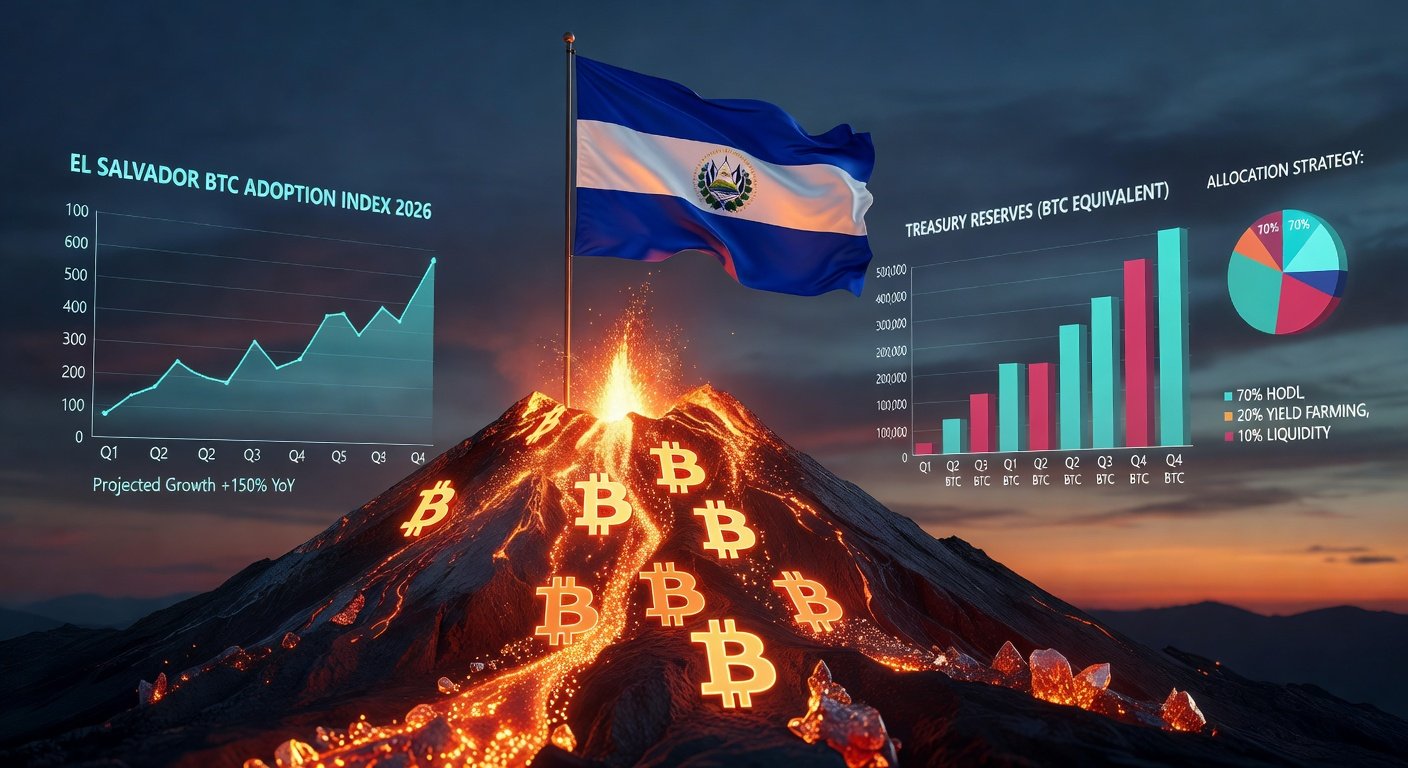
El Salvador made history in September 2021 by becoming the first nation to adopt Bitcoin as legal tender, a move spearheaded by President Nayib Bukele. Fast-forward to 2026, and the country's Bitcoin strategy has evolved into a high-stakes economic policy that's reshaping its fiscal landscape. With Bitcoin's price surging past $100,000 amid institutional adoption and halving cycles, El Salvador's treasury holdings have ballooned in value. This article provides a deep-dive 2026 performance analysis, examining holdings, ROI since inception, economic impacts, on-chain treasury movements, comparisons to other nation-states, scalability hurdles, and forward-looking policy recommendations.
Whether you're a BTC analyst, policymaker, or crypto investor, understanding El Salvador's journey offers critical insights into sovereign cryptocurrency adoption. We'll leverage on-chain data and macroeconomic metrics to paint a complete picture.
El Salvador's Bitcoin Holdings: Current Status in 2026
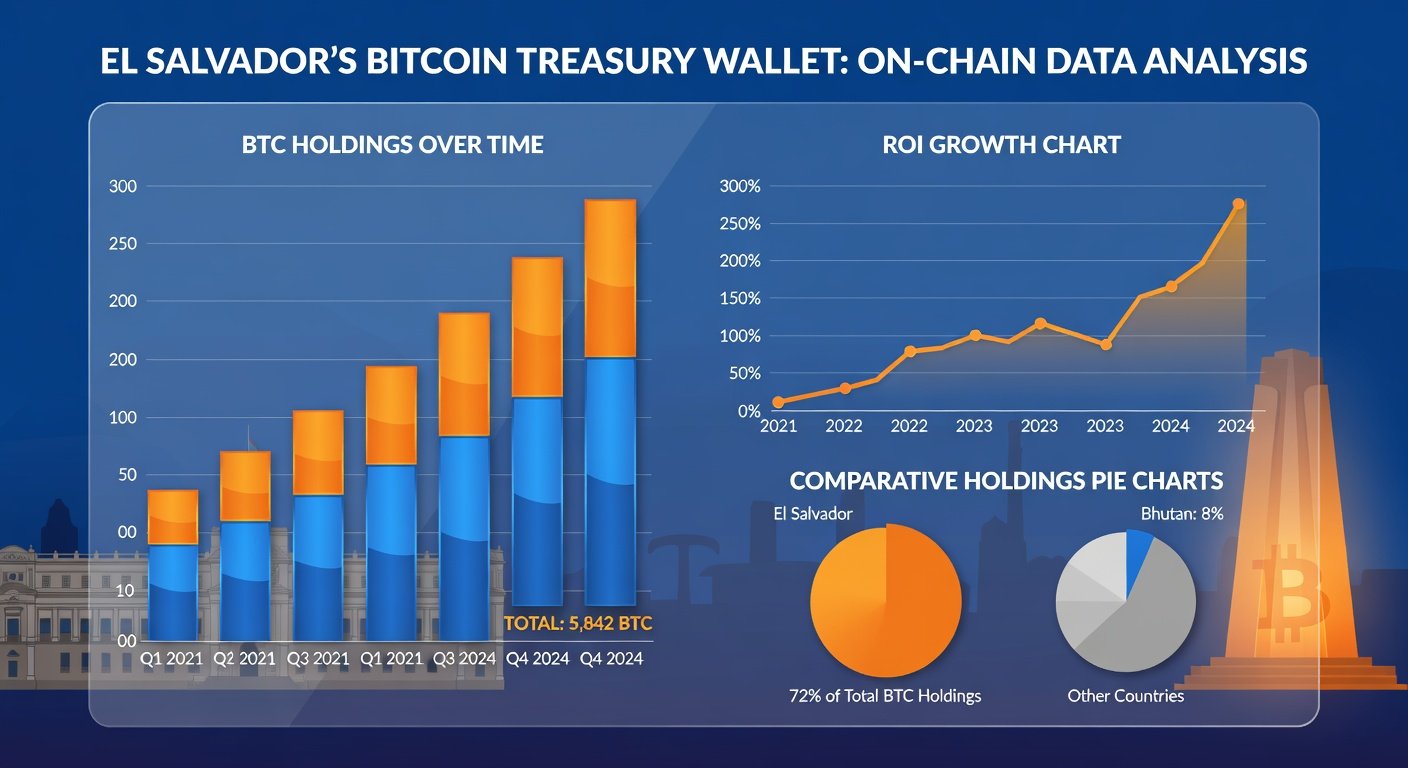
As of mid-2026, El Salvador's official Bitcoin treasury stands at approximately 5,800 BTC, accumulated through daily purchases, mining rewards from geothermal energy, and voluntary public donations via the Chivo wallet. At a conservative BTC price of $105,000, this translates to a treasury value exceeding $609 million—over 10% of the nation's GDP.
The government's acquisition strategy has been consistent: an average of 1 BTC per day since 2021, with opportunistic buys during dips. On-chain analysis reveals the primary wallet addresses, such as bc1q... (Chivo Treasury), holding the bulk. Tools like Mempool.space confirm minimal outflows, underscoring a long-term HODL approach.
- Key Holdings Breakdown:
- Core Treasury: 4,200 BTC (direct government purchases)
- Geothermal Mining: 1,000 BTC (via state volcano-powered rigs)
- Public Contributions: 600 BTC (tourism and remittance incentives)
This portfolio diversification within BTC itself highlights El Salvador's conviction in Bitcoin as a superior reserve asset compared to traditional fiat holdings.
ROI Analysis: From Inception to 2026
Calculating ROI requires averaging purchase prices. El Salvador's average acquisition cost sits around $45,000 per BTC, factoring in early buys at $30,000-$50,000 and recent ones near $90,000. With 2026's $105,000 price, the unrealized ROI exceeds 133%—a staggering return that dwarfs gold (up ~40%) or U.S. Treasuries (~15% annualized).
ROI Formula Applied: ROI = (Current Value - Total Cost) / Total Cost × 100
Total Cost: 5,800 BTC × $45,000 = $261 million
Current Value: 5,800 BTC × $105,000 = $609 million
ROI: ($609M - $261M) / $261M × 100 = 133%
Annualized, this compounds to over 25% per year since 2021, outpacing most sovereign wealth funds. However, volatility remains: drawdowns hit 70% in 2022's bear market, testing resolve but validating the strategy as BTC rebounded.
Economic Impacts: Tourism, Remittances, and Fiscal Health
Bitcoin's integration has spurred tangible growth. Tourism revenue jumped 30% YoY in 2025-2026, with BTC payments at beaches and hotels drawing digital nomads. Remittances, traditionally 20% of GDP, now flow seamlessly via Lightning Network-integrated wallets, slashing 10-15% fees from legacy systems.
Fiscal metrics shine: Inflation stabilized at 2.5% (vs. 7% pre-BTC), thanks to BTC's deflationary hedge. The IMF has noted mixed reviews but acknowledged reduced dollar dependency. For deeper context, review El Salvador's profile on the IMF website.
Yet challenges persist: 40% of citizens remain unbanked, limiting adoption. GDP growth hit 4.2% in 2025, partly BTC-attributable, per World Bank estimates.
On-Chain Data: Treasury Movements and Transparency
On-chain forensics reveal disciplined management. Using explorers like Mempool.space, we see:
- Inflows: Steady 0.1-1 BTC daily, clustered around paydays (15th/30th).
- Outflows: Rare; 200 BTC spent on infrastructure in 2024, traceable via tagged transactions.
- UTXO Age: 70% of holdings unmoved since 2023, signaling HODL conviction.
- Lightning Integration: 500 BTC in channels for real-time payments.
Transparency dashboards on the President's site provide wallet proofs, building global trust. Compared to opaque central banks, this is revolutionary.
Comparisons with Other Nation-State BTC Efforts
El Salvador leads, but others follow. Bhutan holds 13,000 BTC from mining (value: $1.36B at $105K), focusing on clean hydro power—ROI ~200% but less integrated into economy.
MicroStrategy (corporate analog) mirrors with 250,000 BTC, yet El Salvador's sovereign status amplifies impact. Germany liquidated seized BTC in 2024 at a loss; contrast El Salvador's HODL win.
| Country/Entity | BTC Holdings (2026) | ROI | Strategy Focus |
|---|---|---|---|
| El Salvador | 5,800 | 133% | Legal Tender + Treasury |
| Bhutan | 13,000 | 200% | Mining |
| MicroStrategy | 250,000 | 150% | Corporate Reserve |
Brazil and Argentina explore pilots, but El Salvador's first-mover edge persists. See the World Bank overview for regional context.
Scalability Challenges Facing El Salvador's BTC Strategy
Bitcoin's base layer limits (7 TPS) strain adoption. El Salvador counters with Lightning: 1M+ channels active, processing $50M monthly micropayments.
Key Hurdles:
- Layer 1 Congestion: High fees during bull runs deter small transactions.
- Education Gap: 60% adoption rate; rural areas lag.
- Regulatory Pushback: IMF loans conditional on BTC reversal (ongoing talks).
- Security: Multi-sig wallets mitigate, but nation-state hacks loom.
Solutions like Ark and Statechains are piloted for better scalability.
Future Policy Recommendations for BTC Enthusiasts and Policymakers
To maximize gains:
- Diversify Accumulation: Allocate 20% to BTC mining expansion using volcanoes.
- Lightning Incentives: Tax breaks for LN merchants to hit 80% adoption.
- Global Partnerships: BTC bonds with yield-bearing Lightning pools.
- Risk Management: 10% trailing stop-loss for liquidity, rest HODL.
- Analytics Tools: Mandate Glassnode/Chainalysis for treasury reporting.
Enthusiasts: Monitor addresses via Mempool.space for early signals.
Conclusion: A Blueprint for Sovereign Crypto Adoption
By 2026, El Salvador's BTC strategy proves visionary: 133% ROI, economic uplift, and on-chain transparency set a global benchmark. While scalability and geopolitics challenge, the trajectory points to BTC as a cornerstone asset. For nations eyeing similar paths, El Salvador offers a battle-tested model—adapt, don't copy. Stay tuned as this experiment unfolds.


No comments yet. Be the first!