 CryptoChain Blog
Introduction: The Rise of Blockchain in Education Credentials
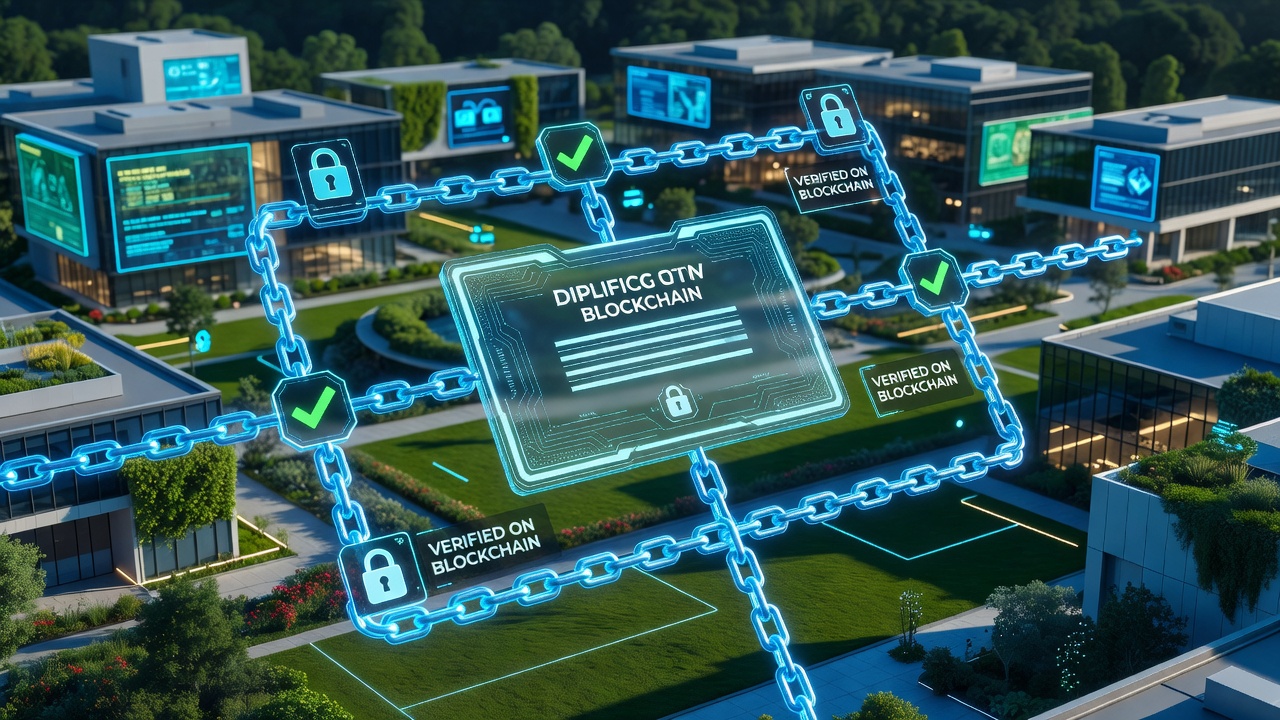
In 2026, blockchain technology is fundamentally transforming how academic achievements are recorded, shared, and verified across the globe. This beginner-friendly guide explains the key trends without relying on technical jargon, focusing instead on real-world use cases that matter to students, universities, and employers. Blockchain creates tamper-proof digital records that eliminate fraud and dramatically speed up verification processes for everyone involved.
Traditional paper diplomas and transcripts have long been vulnerable to loss, forgery, and slow manual verification that can take weeks or even months. Blockchain addresses these longstanding issues by storing credentials on a decentralized ledger that is accessible and verifiable worldwide at any time. Major institutions are already running successful pilots, signaling that widespread adoption is imminent as more organizations recognize the efficiency gains and security advantages.
The shift toward blockchain-based credentials also supports the growing demand for lifelong learning records. Learners today accumulate skills from multiple sources including online courses, workshops, and professional certifications. Blockchain provides a single, secure repository for all these achievements, making it easier to build comprehensive digital portfolios that reflect continuous education throughout a career.
Major University Pilots Driving 2026 Adoption
Several leading universities have launched and expanded blockchain credential programs in recent years. For instance, MIT continues expanding its digital diploma initiatives, allowing graduates to share verifiable records instantly with employers or other institutions. Similar efforts at schools like Stanford and European universities demonstrate how blockchain supports lifelong learning by securely storing micro-credentials and certificates earned from online platforms.
These pilots highlight clear benefits such as reduced administrative burdens for registrars and enhanced global mobility for learners who can present credentials without delay. In 2026, expect more collaborations between universities and blockchain networks to standardize data formats across borders, enabling smoother credit transfers and international recognition of qualifications. Early adopters report higher student satisfaction because graduates gain control over how and when they share their achievements.
Benefits for Lifelong Learning Records
Beyond traditional degrees, blockchain excels at managing lifelong learning records. Professionals can add new certifications from industry training or short courses directly to their blockchain profile. This creates a living document of skills that evolves with career changes, unlike static paper transcripts that quickly become outdated.
Employers gain access to a richer picture of candidate capabilities, including granular details about completed modules and skill assessments. Students benefit from portability, carrying their records seamlessly when switching institutions or applying for advanced programs. The immutable nature of blockchain also builds trust, as any attempt to alter past records becomes immediately detectable.
Employer Verification Processes Made Simple
Employers benefit greatly from blockchain credentials because they no longer need to contact universities directly for verification. Instead, hiring managers can check authenticity via a simple blockchain explorer or integrated verification tool. This reduces hiring timelines from weeks to minutes while minimizing risks associated with fake qualifications that have plagued traditional systems.
Companies in tech, finance, healthcare, and education sectors are integrating these checks into their HR platforms. The process typically involves scanning a QR code or entering a unique credential identifier, after which the system pulls verified data directly from the blockchain. This approach not only accelerates recruitment but also supports compliance with internal policies requiring proof of education for certain roles.
Integration with Existing LMS Platforms
Learning Management Systems such as Canvas, Moodle, and Blackboard are rapidly adding blockchain modules through straightforward API connections. This allows seamless issuance of credentials upon course completion without requiring staff to learn entirely new systems. Integration typically involves mapping existing student data fields to blockchain formats so that records generate automatically once a learner meets all requirements.
Institutions report smoother operations, fewer errors in record-keeping, and better data portability for students who transfer between programs or pursue further education. In 2026, these integrations are becoming more user-friendly, with dashboard views that let administrators monitor issuance activity and resolve any issues quickly.
Step-by-Step Example: Issuing a Digital Diploma
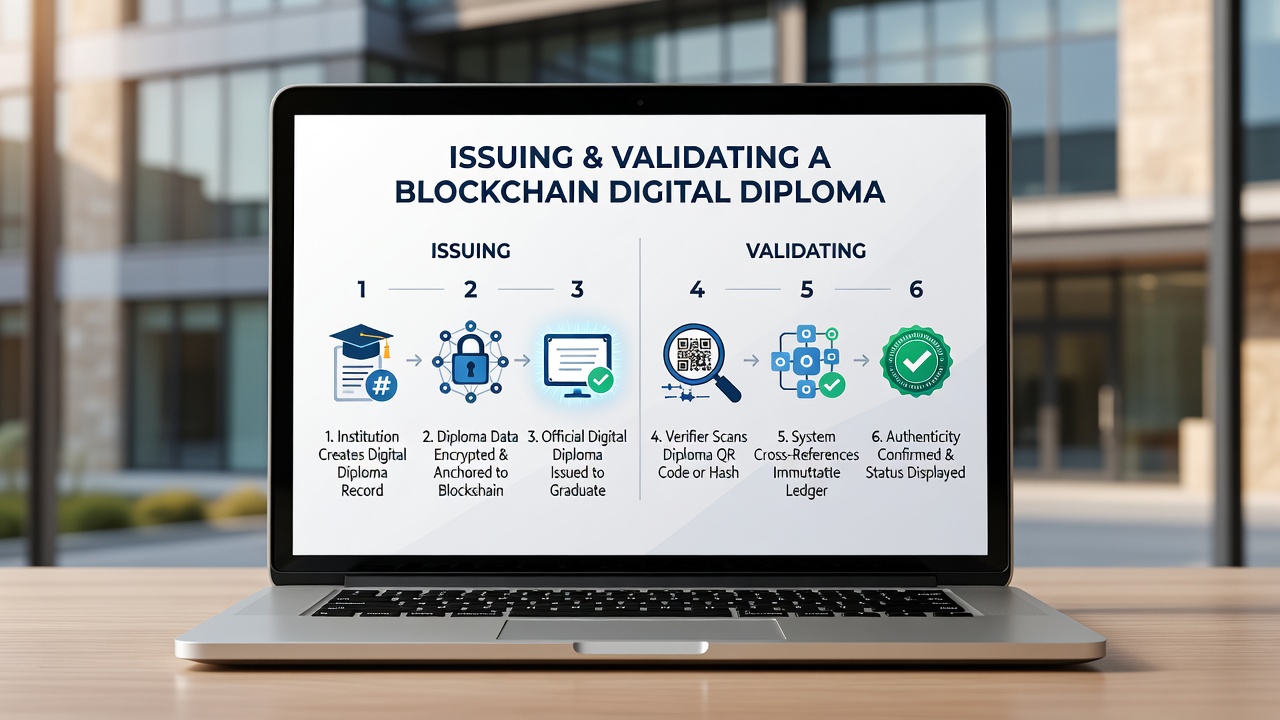
- The university registrar creates the diploma record in their administrative system, entering student details, degree type, graduation date, honors, and any relevant coursework highlights.
- Using a chosen blockchain platform, the institution cryptographically signs the record with its private key and uploads the hashed data to the distributed ledger for permanent storage.
- The graduate receives a unique digital link, QR code, or wallet notification via email or mobile app, granting ownership and control over sharing permissions.
- The credential becomes immutable and instantly shareable with employers, licensing boards, or other schools while maintaining full privacy until the owner chooses to disclose it.
Step-by-Step Example: Validating a Digital Diploma
- An employer receives the graduate's digital link or QR code through an application portal or email attachment.
- They access the blockchain explorer or dedicated verification portal and input the credential ID or scan the code provided.
- The system instantly confirms the record's authenticity, original issuer, issuance date, and any subsequent updates such as additional honors or corrections.
- If everything matches, the employer proceeds with confidence in the candidate's qualifications; any mismatch immediately flags potential discrepancies for further review.
Comparison of Three Leading Platforms
| Platform | Key Features | Best For | Integration Ease |
|---|---|---|---|
| Blockcerts | Open-source architecture, learner-controlled wallets, strong multi-institution support | Universities seeking high customization and cost efficiency | High compatibility with major LMS platforms |
| Credly | Badge-focused design, extensive employer networks, detailed analytics dashboards | Professional certifications and ongoing lifelong learning tracking | Strong API connections and plugin support |
| Learning Machine | Enterprise-grade security protocols, scalable issuance for large volumes | Large institutions handling high numbers of graduates annually | Seamless connections with existing administrative systems |
Challenges and Solutions in 2026
Despite the advantages, institutions face challenges such as initial setup costs, staff training needs, and ensuring compatibility with legacy systems. Solutions include phased rollouts starting with pilot departments, partnerships with experienced vendors, and ongoing staff workshops that build internal expertise. Data privacy concerns are addressed through selective disclosure features that let learners control exactly which details are shared.
Practical Tips for Institutions Considering Adoption
- Begin with a small pilot program limited to one department or certificate type to test workflows and gather feedback before scaling.
- Ensure full compliance with data privacy regulations such as GDPR and FERPA by selecting platforms with built-in consent management tools.
- Train administrative staff thoroughly on verification tools and create student-facing guides that explain how to share and manage their new digital credentials.
- Partner with established platforms for ongoing technical support, regular updates, and guaranteed interoperability with other systems.
- Monitor emerging 2026 industry standards and participate in consortia to future-proof your implementation against rapid technological changes.
- Communicate the benefits clearly to students and alumni through webinars and orientation sessions to encourage widespread adoption.
Frequently Asked Questions
Is blockchain credential verification secure?
Yes, the decentralized and cryptographic nature of blockchain makes unauthorized alterations virtually impossible, providing higher security than traditional paper or centralized digital records.
How long does verification take?
Most verifications complete in under a minute once the link or code is provided, compared to days or weeks required by conventional methods.
Can students control who sees their records?
Absolutely. Learners decide exactly when and with whom to share their credentials using private keys or permission settings within their digital wallets.
Conclusion
Blockchain education credentials deliver secure, efficient, and portable alternatives to outdated traditional methods. By understanding university pilots, verification processes, LMS integrations, platform comparisons, and implementation tips, institutions can make confident decisions. Adopting these technologies now positions schools, students, and employers for long-term success in an increasingly digital and interconnected world.

No comments yet. Be the first!