 CryptoChain Blog
Introduction to Privacy Coins in the 2026 Landscape
Privacy coins represent a specialized segment of the cryptocurrency market focused on enhancing transaction confidentiality through advanced cryptographic techniques. As public blockchains like Bitcoin and Ethereum continue to dominate mainstream discussions, assets such as Monero and Zcash provide robust mechanisms to shield user identities, transaction amounts, and wallet addresses from public scrutiny. In 2026, this niche has gained renewed attention amid growing concerns over data privacy in digital finance. This comprehensive analysis examines the evolving dynamics of privacy-focused cryptocurrencies, including regulatory pressures, technological advancements, and their influence on broader market trends and adoption patterns.
Investors and users seeking diversification beyond transparent tokens often explore these assets for their distinctive value propositions centered on anonymity. However, the sector presents notable complexities stemming from inconsistent global regulations, varying liquidity levels, and the need for ongoing protocol improvements. Understanding these elements is essential for anyone evaluating privacy coins as part of a diversified portfolio strategy in the current year and beyond.
Regulatory Challenges Facing Privacy Coins
Governments and international financial authorities have ramped up oversight of privacy coins due to potential misuse in illicit activities such as money laundering and sanctions evasion. Throughout 2026, multiple jurisdictions have introduced stricter exchange listing standards, resulting in delistings or restricted trading for certain assets. Compliance requirements tied to organizations like the Financial Crimes Enforcement Network have prompted platforms to enforce enhanced know-your-customer procedures, which can limit accessibility for everyday users.
In the United States, evolving guidelines from the Treasury Department emphasize transparency, while the European Union continues to refine its Markets in Crypto-Assets framework to address anonymity features. Asian markets show mixed approaches, with some nations imposing outright bans and others exploring conditional approvals. These regulatory shifts create short-term headwinds for liquidity yet incentivize projects to innovate compliant privacy tools. Market participants must stay informed about jurisdiction-specific rules, as they directly affect cross-border usability and institutional participation.
Technological Upgrades and Innovations
Privacy coins have seen meaningful protocol-level enhancements aimed at boosting scalability, efficiency, and security. Monero has continued refining its bulletproofs system alongside ring signature improvements, which help maintain strong fungibility while reducing transaction sizes. Zcash has progressed its zk-SNARK and zk-STARK implementations, allowing users to conduct shielded transactions with lower computational overhead and improved verification speeds.
Additional developments include integration with layer-2 scaling solutions that enhance throughput without sacrificing core privacy guarantees. These upgrades help privacy coins compete more effectively against transparent public blockchains, where full transaction visibility can expose users to targeted surveillance or data aggregation risks. Developers are also exploring hybrid models that permit optional disclosure for regulatory audits while preserving default anonymity. Such innovations position the sector for broader utility as network effects strengthen over time.
Adoption Metrics and Comparison to Public Blockchains
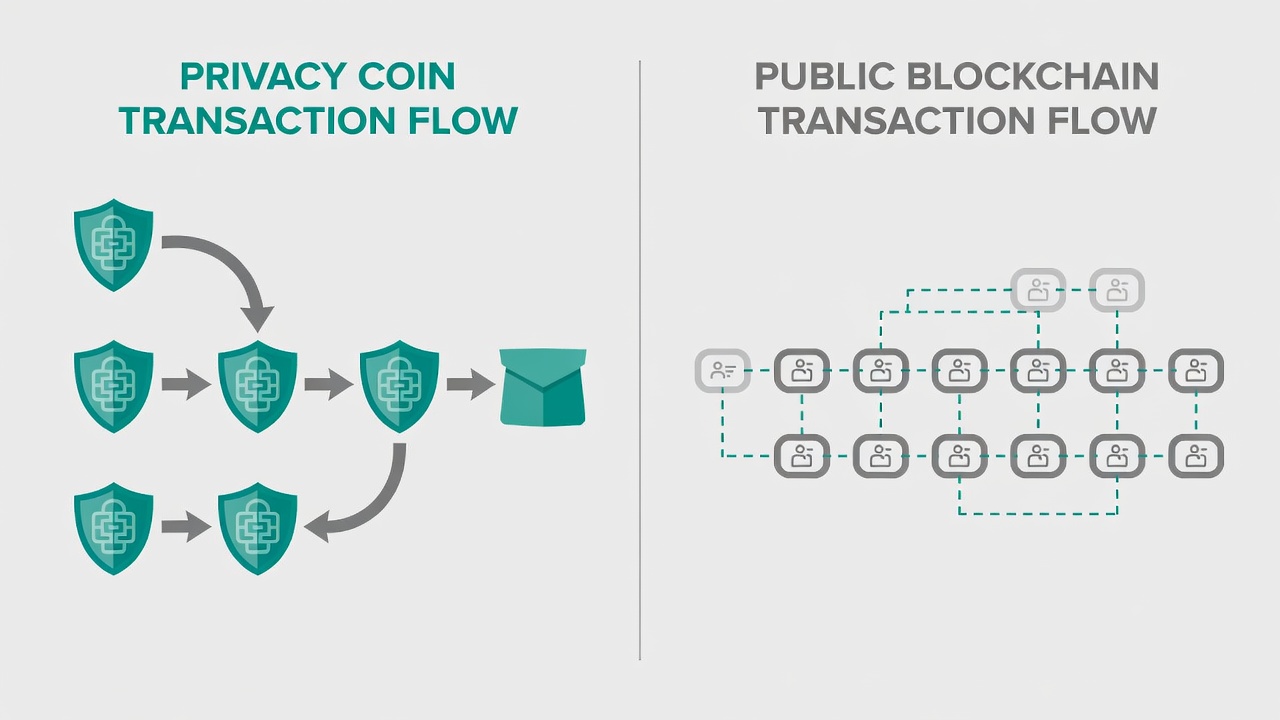
Adoption indicators for privacy coins in 2026 reflect consistent but measured growth, particularly within specialized use segments. Monero sustains notable activity in peer-to-peer value transfers and merchant payments, whereas Zcash attracts interest from entities needing selective transparency features for business applications. Overall network metrics show rising shielded transaction volumes compared to prior years, though absolute figures remain smaller than those observed on major public chains.
When contrasted with transparent blockchains, privacy coins excel in protecting user sovereignty but trail in areas such as developer tooling, decentralized application ecosystems, and institutional inflows. Public networks enjoy wider visibility and easier integration with traditional finance rails. This fundamental trade-off shapes portfolio allocation decisions, with privacy assets appealing most to users prioritizing confidentiality over ecosystem breadth. Real-world data examples from on-chain analytics platforms illustrate how privacy coin daily active addresses fluctuate in response to regulatory news cycles.
DeFi Integrations and Emerging Opportunities
Decentralized finance platforms have started embedding privacy-preserving capabilities, enabling confidential lending, borrowing, and asset swapping. Bridging solutions now allow users to move privacy coins into DeFi environments for yield generation while keeping positions hidden from public ledgers. These integrations expand the functional scope of assets like Monero and Zcash beyond simple transfers.
Examples include privacy-focused liquidity pools and shielded stablecoin wrappers that maintain confidentiality during complex financial operations. The trend points toward hybrid architectures that balance necessary transparency for certain compliance needs with robust default privacy. Growing developer communities are actively building tooling to support these crossovers, potentially unlocking new adoption avenues as DeFi matures further in 2026.
Real-World Use Cases
Privacy coins deliver tangible benefits in diverse scenarios. In regions experiencing currency instability or capital controls, individuals rely on Monero for discreet cross-border remittances that avoid traditional banking surveillance. Merchants accepting Zcash can process payments with reduced exposure to chargeback fraud and customer data leaks. Corporate treasuries increasingly experiment with shielded transactions to safeguard competitive financial strategies from competitors or regulators.
Additional applications appear in charitable giving where donors seek anonymity, and in supply chain finance where parties wish to obscure pricing details. These examples underscore the practical demand for privacy features even as mainstream cryptocurrencies prioritize openness. Case studies from 2025-2026 highlight how small businesses in emerging markets have integrated privacy coins to stabilize operations amid volatile local conditions.
Practical Steps for Evaluating Privacy Coin Investments
- Begin by examining protocol security through third-party audit reports and transparent community governance histories to identify any unresolved vulnerabilities.
- Next, analyze on-chain indicators including shielded transaction counts, total value locked in privacy features, and wallet distribution patterns to gauge authentic usage rather than speculative holding.
- Assess exchange listings and order book depth across multiple platforms to understand liquidity risks during high-volatility periods.
- Review regulatory landscapes in key operating jurisdictions, including pending legislation that could influence future accessibility or tax treatment.
- Finally, compare development roadmaps, team execution track records, and competitive positioning against other privacy solutions to determine long-term viability.
Applying these steps systematically helps investors build a data-driven view before committing capital. Regular monitoring of community forums and official project updates further refines ongoing assessments.
Expert Insights on Risk Factors
Specialists in the cryptocurrency space highlight several key risk categories associated with privacy coins. Market volatility can intensify due to thinner liquidity pools, leading to sharper price movements during broader sector corrections. Legal and compliance risks remain elevated, as sudden policy changes may restrict trading venues or impose new reporting obligations. Technological risks involve potential exploits in complex cryptographic implementations, though rigorous auditing mitigates much of this concern.
Experts advise limiting exposure within overall crypto allocations and maintaining positions across multiple asset types to manage concentration risk. They also recommend staying current with protocol upgrade announcements and global policy developments, as these factors can materially affect both usability and valuation. Diversification strategies and disciplined position sizing form the foundation of prudent approaches recommended by analysts tracking the sector in 2026.
Future Trends and Forecasts
Looking ahead, privacy coins may experience accelerated relevance if privacy-preserving technologies gain wider regulatory acceptance. Continued improvements in scalability and interoperability could drive mainstream integrations, while evolving DeFi tooling expands utility. Forecasts suggest gradual increases in adoption metrics through 2027, contingent on stable policy environments and successful delivery of planned upgrades. Market observers anticipate selective institutional interest in compliant privacy solutions as data protection priorities rise globally.
Conclusion
Privacy coins maintain a distinctive role in the 2026 cryptocurrency ecosystem by prioritizing user confidentiality amid increasing digital surveillance. Through careful navigation of regulatory landscapes and sustained technological progress, projects including Monero and Zcash provide meaningful options for privacy-oriented participants. By following structured evaluation processes and remaining attentive to risk factors, investors can integrate these assets thoughtfully into broader strategies while adapting to an evolving market environment.

No comments yet. Be the first!