 CryptoChain Blog
Ethereum L2 zkEVM Comparisons 2026: Benchmarks & ETH Updates
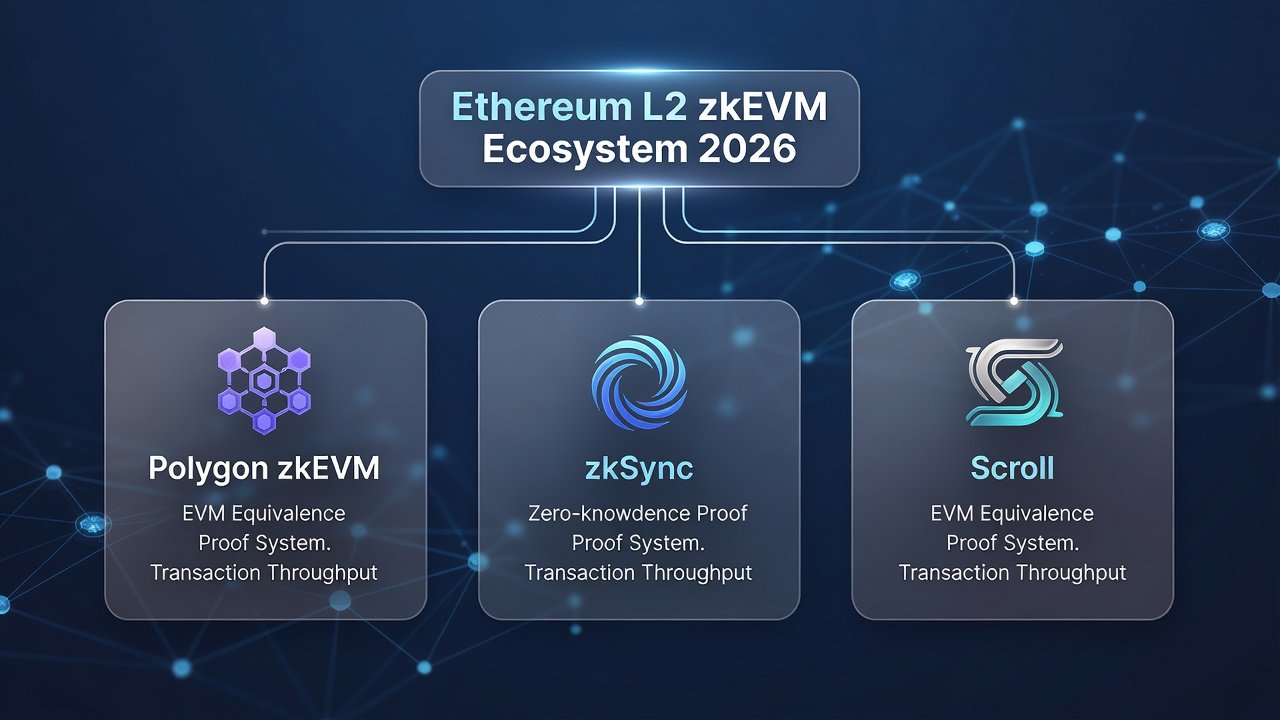
The Ethereum ecosystem continues to evolve rapidly in 2026, with Layer 2 zkEVM solutions playing a central role in scaling decentralized applications. This comprehensive guide examines performance differences across major zkEVM implementations, drawing on data from established analytics platforms to help developers and teams make informed decisions. As Ethereum mainnet throughput remains limited, zkEVMs have become essential for handling the growing demand from DeFi, NFTs, and enterprise applications. Understanding the nuances between Polygon zkEVM, zkSync, and Scroll is critical for selecting the right stack.
Understanding zkEVM Technology in 2026
Zero-knowledge Ethereum Virtual Machines enable scalable, secure execution of smart contracts while maintaining compatibility with existing Ethereum tooling. By 2026, several projects have matured significantly, offering varying trade-offs in speed, cost, and developer experience. Key players include Polygon zkEVM, zkSync, and Scroll, each leveraging zk-proofs to settle transactions on Ethereum mainnet. zkEVMs achieve this by compiling EVM bytecode into circuits that can generate succinct proofs, which are then verified on L1. This approach preserves the security guarantees of Ethereum while dramatically increasing transaction capacity. Teams evaluating these solutions must consider factors such as proof system efficiency, EVM equivalence levels, and ecosystem maturity. For instance, full EVM equivalence reduces the need for code rewrites, whereas optimized variants may sacrifice some compatibility for performance gains.
Side-by-Side Benchmarks: Proof Generation, Gas Costs, and Throughput
Performance metrics provide critical insights for evaluating zkEVM stacks. Data aggregated from L2Beat and Dune Analytics highlights distinctions in proof generation speed, effective gas costs, and DeFi transaction throughput as of late 2026. These metrics are derived from real network activity and help quantify operational advantages.
| Metric | Polygon zkEVM | zkSync | Scroll |
|---|---|---|---|
| Proof Generation Speed | Strong parallelization for complex proofs | Optimized for rapid single-transaction proofs | Balanced approach with recursive proving |
| Gas Costs (relative) | Competitive for high-volume DeFi | Lowest for simple transfers | Moderate with strong EVM equivalence |
| DeFi Throughput (TPS) | High sustained rates in DEX scenarios | Excellent for lending protocols | Reliable for NFT marketplaces |
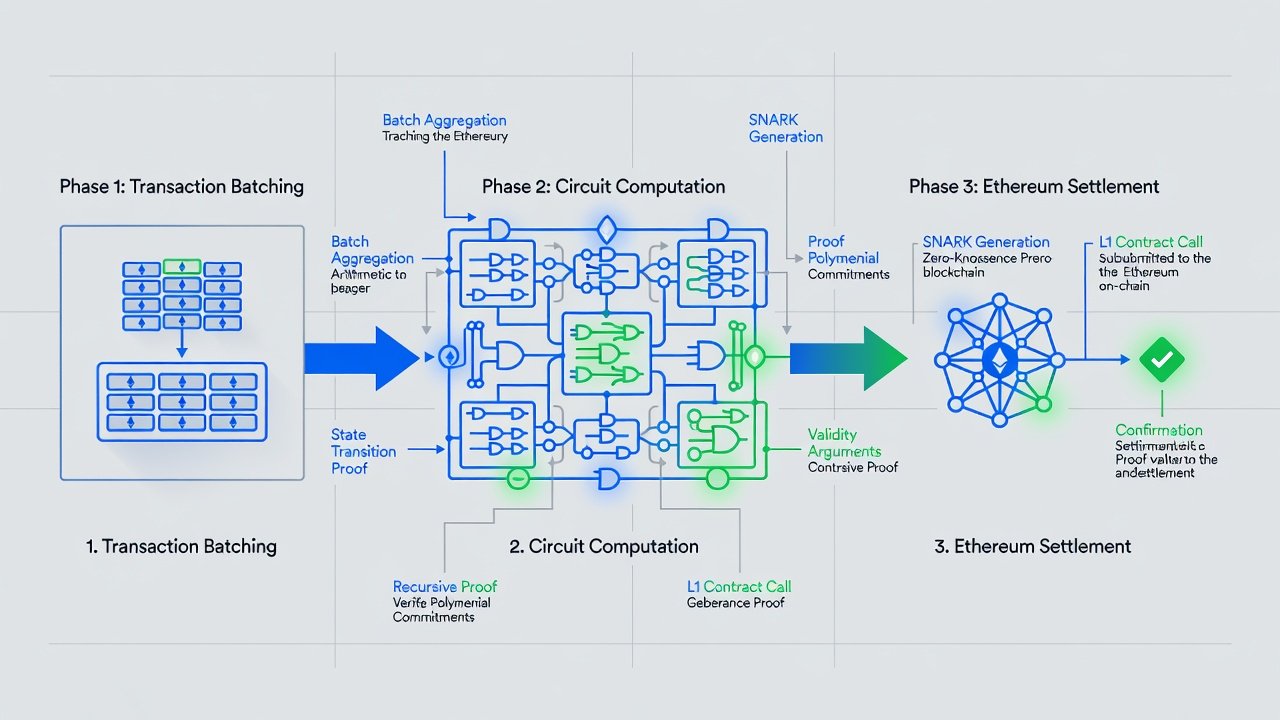
These benchmarks demonstrate that no single solution dominates every category. Teams focused on high-frequency trading may prefer zkSync's speed advantages, while Polygon zkEVM excels in complex DeFi compositions. Scroll offers a middle ground with strong Ethereum equivalence, reducing friction for ported contracts. In practice, a DEX handling thousands of swaps daily might observe Polygon zkEVM maintaining consistent 200+ TPS under load, whereas zkSync shines in low-latency lending liquidations. Proof generation times can vary from under 10 seconds for simple transfers on zkSync to 30-60 seconds for intricate multi-step DeFi interactions on Polygon zkEVM. Gas cost differences become pronounced during periods of Ethereum congestion, where Scroll's equivalence allows more predictable metering.
Developer Tooling Improvements
Tooling has advanced considerably by 2026. All three platforms now support standard Solidity compilers with minimal adjustments. Polygon zkEVM integrates deeply with Hardhat and Foundry, allowing developers to reuse existing test suites with only minor configuration changes. zkSync provides enhanced TypeScript SDKs for frontend interactions, including built-in support for account abstraction and paymasters. Scroll emphasizes seamless Remix plugin support, lowering the barrier for quick prototyping and educational use cases. Additional improvements include unified debugging tools that simulate proof generation locally and automated circuit verifiers that catch compatibility issues before deployment. These enhancements reduce development cycles from weeks to days for teams migrating from L1 or other L2s.
Common Integration Pitfalls to Avoid
- Overlooking differences in precompile support, which can break advanced cryptographic operations such as elliptic curve pairings used in certain privacy protocols.
- Assuming identical gas metering across environments, leading to unexpected cost overruns in production when batch sizes differ.
- Neglecting state trie differences that affect storage proofs during cross-chain messaging and require custom adapter contracts.
- Failing to account for proof verification delays during high network congestion periods, which can impact user experience in time-sensitive applications like perpetual futures trading.
- Underestimating sequencer centralization risks in early mainnet phases, potentially exposing teams to single points of failure.
Practical Migration Steps for Existing dApps
- Audit current contract dependencies against target zkEVM compatibility matrices published by each project, documenting any use of unsupported opcodes.
- Deploy testnet instances using each platform's official bridge contracts and simulate realistic user flows including deposits, swaps, and withdrawals.
- Benchmark critical functions with realistic transaction volumes on Dune Analytics dashboards to identify bottlenecks in proof submission.
- Implement monitoring for proof submission failures before mainnet cutover, setting up alerts for circuit saturation or L1 verification timeouts.
- Gradually route liquidity through canonical bridges while maintaining fallback paths to the original chain for at least 30 days post-migration.
- Conduct security reviews focused on bridge contracts and any custom precompile integrations to mitigate newly introduced attack surfaces.
Security Audit Findings
Recent independent audits reveal that all major zkEVMs have addressed core circuit vulnerabilities identified in prior years. However, teams should review findings related to sequencer centralization risks and edge-case proof malleability. Resources from the Ethereum Foundation continue to guide best practices in this area. For example, audits have highlighted the importance of formal verification for recursive proof systems used in Scroll and the need for robust fraud-proof fallbacks during early zkSync deployments. Ongoing monitoring of these reports helps enterprises maintain compliance and reduce exploit risks.
Upcoming EIP Alignments Expected in 2026
Alignment with emerging Ethereum Improvement Proposals promises further interoperability. Anticipated updates include refinements to blob transaction handling and enhanced account abstraction standards that will benefit all zkEVM implementations equally. These changes are expected to lower settlement costs and improve cross-L2 composability, particularly for applications requiring atomic interactions across multiple chains.
Real-World Adoption Examples
Several prominent DeFi protocols have already completed migrations in 2026. One lending platform reported a 40% reduction in user-perceived latency after moving to zkSync, while a decentralized exchange on Polygon zkEVM achieved higher capital efficiency through improved batching. These cases illustrate how benchmark data translates into tangible business outcomes when paired with careful integration planning.
FAQ: Enterprise Adoption and Cost-Saving Strategies
How do zkEVMs impact enterprise compliance requirements?
zkEVMs maintain Ethereum's transparency while adding optional privacy layers through zero-knowledge proofs, aiding regulatory reporting without exposing sensitive transaction details.
What cost-saving strategies work best for teams evaluating stacks?
Start with testnet load testing to identify the most efficient proof batching strategy. Leverage shared sequencers where available to reduce operational overhead, and monitor Ethereum.org for upcoming protocol optimizations that lower settlement fees across the board.
Which solution best supports multi-chain enterprise deployments?
Polygon zkEVM often leads in cross-chain messaging maturity, though zkSync and Scroll provide robust alternatives depending on specific DeFi or NFT use cases.
What are the main risks during the first 90 days post-migration?
Primary risks include bridge liquidity fragmentation and unexpected proof generation delays under peak load; mitigation involves phased rollouts and redundant monitoring infrastructure.
In conclusion, selecting the optimal zkEVM in 2026 requires balancing raw performance metrics with tooling familiarity and long-term alignment to Ethereum standards. By leveraging available benchmarks and following structured migration processes, teams can achieve scalable, secure deployments that meet both technical and business objectives.
No comments yet. Be the first!