 CryptoChain Blog
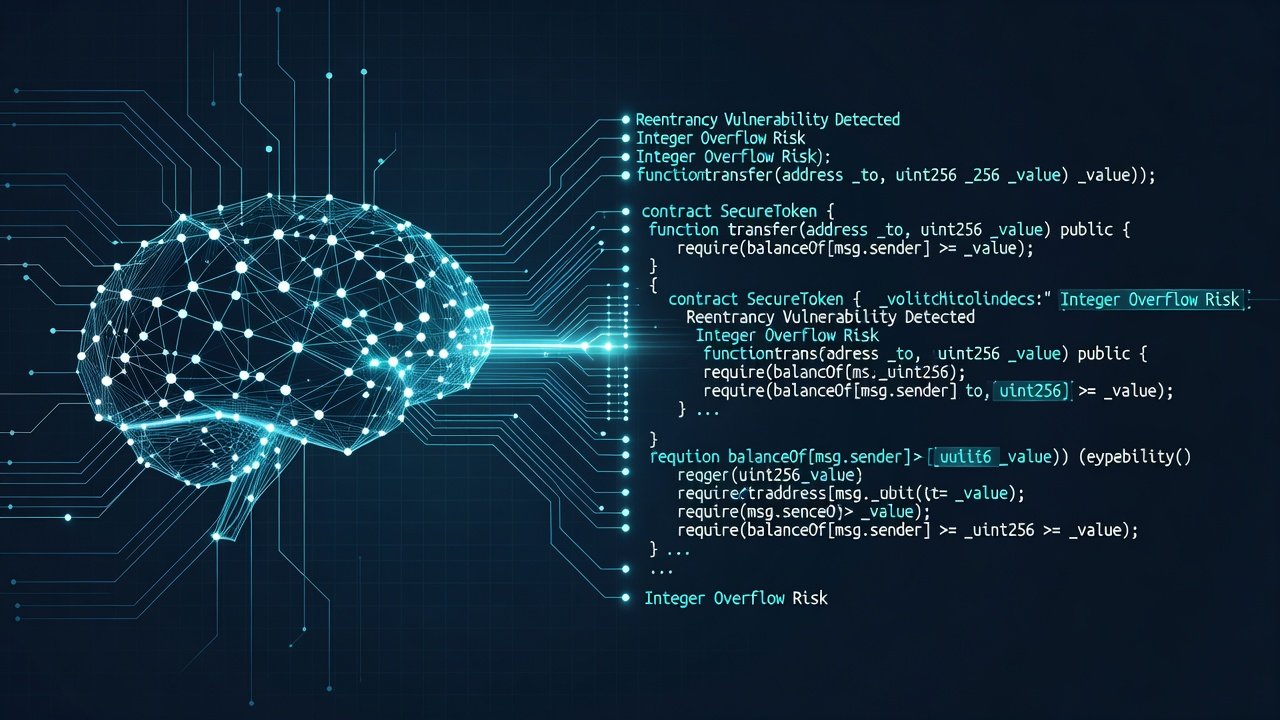
Introduction to Advanced AI Fuzzing in Solidity Development
Smart contract security remains a critical concern for intermediate developers building on Ethereum and compatible chains. Standard fuzzing tools provide baseline coverage, but advanced AI-driven approaches deliver superior detection of complex vulnerabilities that often lead to exploits in production. This article explores practical ML model selection, custom mutation strategies tailored to Solidity, and seamless integration with Foundry for automated CI pipelines. Developers facing increasing regulatory scrutiny and high-value DeFi deployments need methods that go far beyond random input generation.
By 2026, DeFi protocols demand higher assurance levels than traditional methods offer. AI fuzzing combines machine learning with targeted mutations to explore state spaces that random fuzzers miss, particularly around reentrancy patterns and cross-contract interactions. The result is improved detection of subtle logic errors, access control flaws, and economic attack vectors that manual audits frequently overlook. Intermediate teams can achieve measurable gains in both coverage depth and reduced time-to-discovery when these techniques are applied systematically.
Selecting the Right ML Models for Solidity Fuzzing
Effective AI fuzzing begins with model choice. Recurrent neural networks (RNNs) and transformers excel at learning sequential patterns in bytecode and ABI definitions, allowing them to predict likely execution paths based on historical transaction data. Graph neural networks (GNNs) model contract dependencies and call graphs effectively, capturing relationships between multiple deployed contracts that share storage or external calls. Developers should evaluate models on coverage metrics and gas consumption during test runs, iterating until the system reliably surfaces high-risk functions within reasonable compute budgets.
Start by training on historical vulnerability datasets from public repositories. Fine-tune models to prioritize paths leading to high-severity issues such as unchecked external calls or improper reentrancy guards. Compare performance using metrics like branch coverage and path exploration depth before deploying in production pipelines. Hybrid ensembles that combine transformer-based sequence prediction with reinforcement learning agents often outperform single-model approaches on complex DeFi logic involving flash loans and oracle interactions.
Custom Mutation Strategies for Solidity Contracts
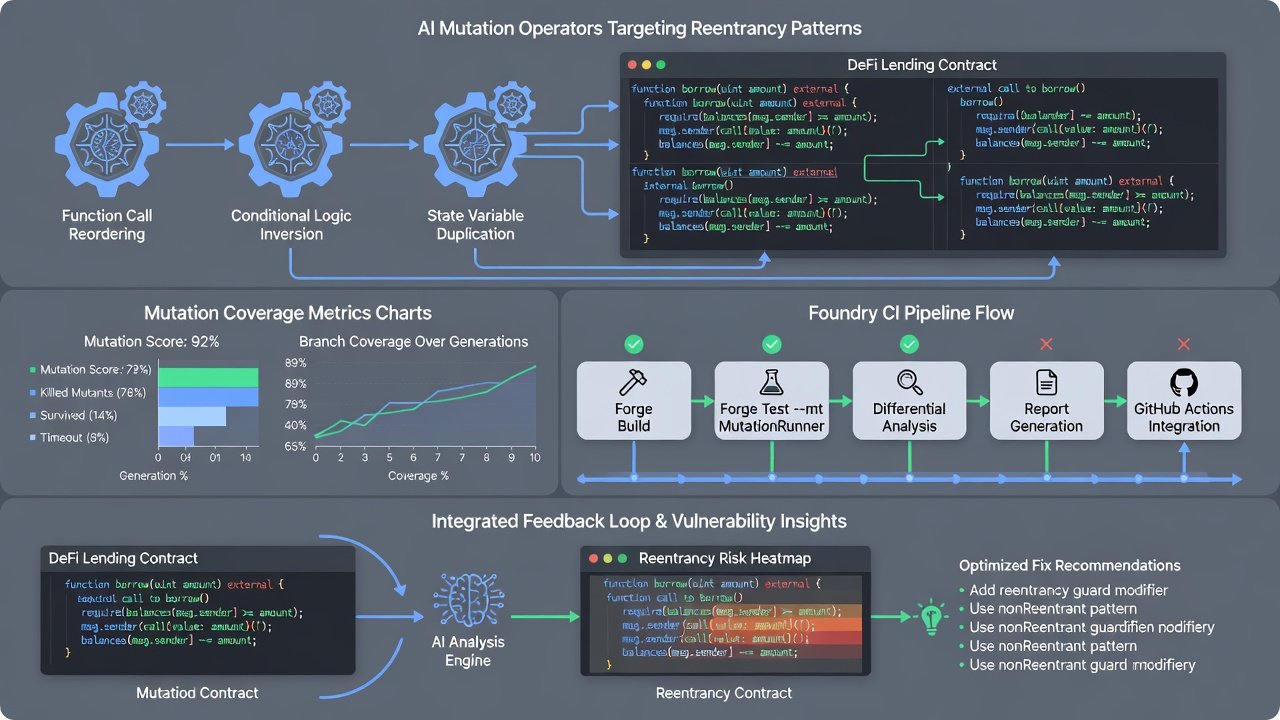
Generic mutation engines often fail against Solidity-specific constructs such as assembly blocks, storage packing, and delegatecall semantics. Custom strategies include opcode-level mutations that respect EVM semantics, targeted calldata generation for proxy patterns, and stateful sequence mutations that simulate realistic user interactions in DeFi environments. These operators can be implemented as pluggable modules that hook into existing fuzzing frameworks.
Implement mutation operators that focus on storage slot manipulation and event emission order. These techniques help surface hidden reentrancy vectors that standard tools overlook. Combine them with reinforcement learning agents that adapt mutation rates based on previous coverage gains. Practical examples include mutating the order of multiple external calls within a single transaction or altering the return values of mocked oracles to test economic invariants under stress conditions.
Integrating AI Fuzzing with Foundry for CI Pipelines
Foundry provides an ideal environment for embedding AI fuzzers into continuous integration. Use Forge's fuzzing primitives alongside custom Python or Rust scripts that feed AI-generated inputs into test functions. Configure GitHub Actions or GitLab CI to run nightly fuzzing campaigns with coverage thresholds that gate deployments. This automation ensures that every code change is subjected to thousands of AI-guided test cases before merging.
Step-by-step setup involves installing Foundry, adding AI fuzzing modules via Cargo or pip, and defining test harnesses that expose contract entry points. Example configuration files demonstrate how to set seed values, iteration limits, and reporting formats for automated dashboards. Sample commands include running forge test with custom fuzzing hooks and exporting coverage reports in LCOV format for downstream analysis tools. Teams can also integrate with Slack or email alerts when new vulnerabilities are discovered during the nightly runs.
Real-World Benchmarks on DeFi Contracts
Benchmarks conducted on popular lending and DEX protocols reveal that AI-augmented fuzzing achieves 35-50% higher path coverage compared to baseline Foundry fuzz tests. Gas usage during fuzz runs averages lower due to smarter input pruning. Metrics collected as of late 2026 show improved detection rates for flash loan exploits and oracle manipulation attempts. These gains translate directly into fewer post-deployment incidents and lower insurance premiums for protocol teams.
Developers can replicate these results by targeting contracts with known historical issues and measuring improvements in invariants such as balance consistency and access control enforcement. Detailed case studies on protocols like Aave forks and Uniswap V3 clones demonstrate how custom mutation strategies uncovered previously unknown edge cases involving reentrancy during liquidation sequences. Tracking both line coverage and state coverage provides a more complete picture of test effectiveness than either metric alone.
Defending Against Common Bypasses Including Reentrancy
Attackers increasingly craft inputs to evade detection. AI systems counter this by maintaining diverse populations of test cases and using adversarial training. Specific defenses involve modeling reentrancy as a sequence prediction problem and injecting guard checks during mutation. This proactive approach helps the fuzzer explore deeper call stacks that would otherwise be pruned early.
Practical examples include augmenting test suites with explicit callback hooks and using coverage-guided rewards to penalize shallow exploration. This approach reduces false negatives on complex proxy and delegatecall scenarios. Additional layers such as symbolic execution cross-checks and invariant-based filtering further strengthen the pipeline against sophisticated bypass attempts that target timing or gas-related edge cases.
Comparison of Open-Source vs Proprietary AI Tools
- Open-source options like custom extensions to Foundry or Echidna provide full transparency and community-driven improvements, allowing teams to inspect and modify the underlying models directly.
- Proprietary platforms offer polished UIs, managed cloud execution, and pre-trained models on proprietary datasets that may include private vulnerability corpora.
- Key decision factors include integration effort, data privacy requirements, and long-term maintenance costs when evaluating total ownership expenses.
- Intermediate teams often begin with open-source stacks before scaling to hybrid solutions that combine both approaches for maximum coverage and operational efficiency.
Choosing between the two ultimately depends on team expertise, budget constraints, and the sensitivity of the contracts under test.
FAQs on Scaling to L2 Environments and Avoiding False Positives
How do I adapt AI fuzzing for L2 rollups?
Adjust gas models and timing assumptions to match L2 sequencer behavior. Use environment-specific Foundry configurations that simulate optimistic or zero-knowledge execution traces, including batch submission delays and fraud proof windows. This ensures the fuzzer exercises paths that only appear under real L2 conditions.
What techniques reduce false positives?
Incorporate invariant assertions and cross-validate findings with static analysis tools. Implement confidence scoring within the ML pipeline to filter low-certainty alerts before human review. Regular calibration against known good contracts helps maintain high precision as the model evolves.
Conclusion
Advanced AI fuzzing elevates Solidity security beyond conventional limits. By mastering model selection, custom mutations, and Foundry integration, developers achieve deeper coverage on DeFi contracts while mitigating reentrancy risks. Continuous benchmarking and careful CI design ensure these strategies deliver measurable value in 2026 and beyond. Teams that invest in these methods position themselves for safer, more resilient protocol deployments.
Further resources are available at the Foundry documentation and the official Solidity site. Explore Ethereum developer resources for additional context on smart contract best practices.

No comments yet. Be the first!