 CryptoChain Blog

Introduction to Secure ERC-721 NFT Development
Non-Fungible Tokens (NFTs) have revolutionized digital ownership on blockchain. The ERC-721 standard powers unique assets like art, collectibles, and virtual real estate. But security is paramount—vulnerabilities like reentrancy attacks have cost millions. This guide walks you through creating a secure ERC-721 smart contract in Solidity, incorporating ownership checks, safe transfers, and reentrancy guards.
We'll use modern Solidity (version 0.8.20+), Hardhat for testing, and deploy to Ethereum testnets like Sepolia. We'll also preview anticipated 2026 Solidity updates for even stronger security. Whether you're a beginner or pro, avoid common pitfalls with our step-by-step code examples.
Prerequisites
- Solidity knowledge: Basics of smart contracts.
- Tools: Node.js (v18+), Yarn/NPM, MetaMask for testnet ETH.
- Hardhat: For local blockchain and testing.
Check the official Solidity documentation for the latest compiler details.
Setting Up Your Development Environment
- Initialize Hardhat project:
Runnpx hardhatin a new folder, select "Create a JavaScript project." Install dependencies:yarn add @openzeppelin/contracts dotenv. - Configure hardhat.config.js:
Add networks for Sepolia testnet:
require("@nomicfoundation/hardhat-toolbox");
require("dotenv").config();

module.exports = {
  solidity: "0.8.24",
  networks: {
    sepolia: {
      url: process.env.SEPOLIA_RPC_URL,
      accounts: [process.env.PRIVATE_KEY]
    }
  }
};
Create a .env file with your Alchemy/Infura RPC URL and private key (never commit it).
Writing the Secure ERC-721 Contract
Start with OpenZeppelin's battle-tested ERC721 base for inheritance. Add custom security layers.
Core Contract Skeleton
// SPDX-License-Identifier: MIT
pragma solidity ^0.8.24;

import "@openzeppelin/contracts/token/ERC721/ERC721.sol";
import "@openzeppelin/contracts/security/ReentrancyGuard.sol";
import "@openzeppelin/contracts/access/Ownable.sol";

contract SecureNFT is ERC721, ReentrancyGuard, Ownable {
    uint256 private _nextTokenId;

    constructor() ERC721("SecureNFT", "SNFT") Ownable(msg.sender) {}

    function mint(address to, uint256 quantity) external onlyOwner nonReentrant {
        for (uint256 i = 0; i < quantity; i++) {
            uint256 tokenId = _nextTokenId;
            _nextTokenId++;
            _safeMint(to, tokenId);
        }
    }
}
Security Features Explained
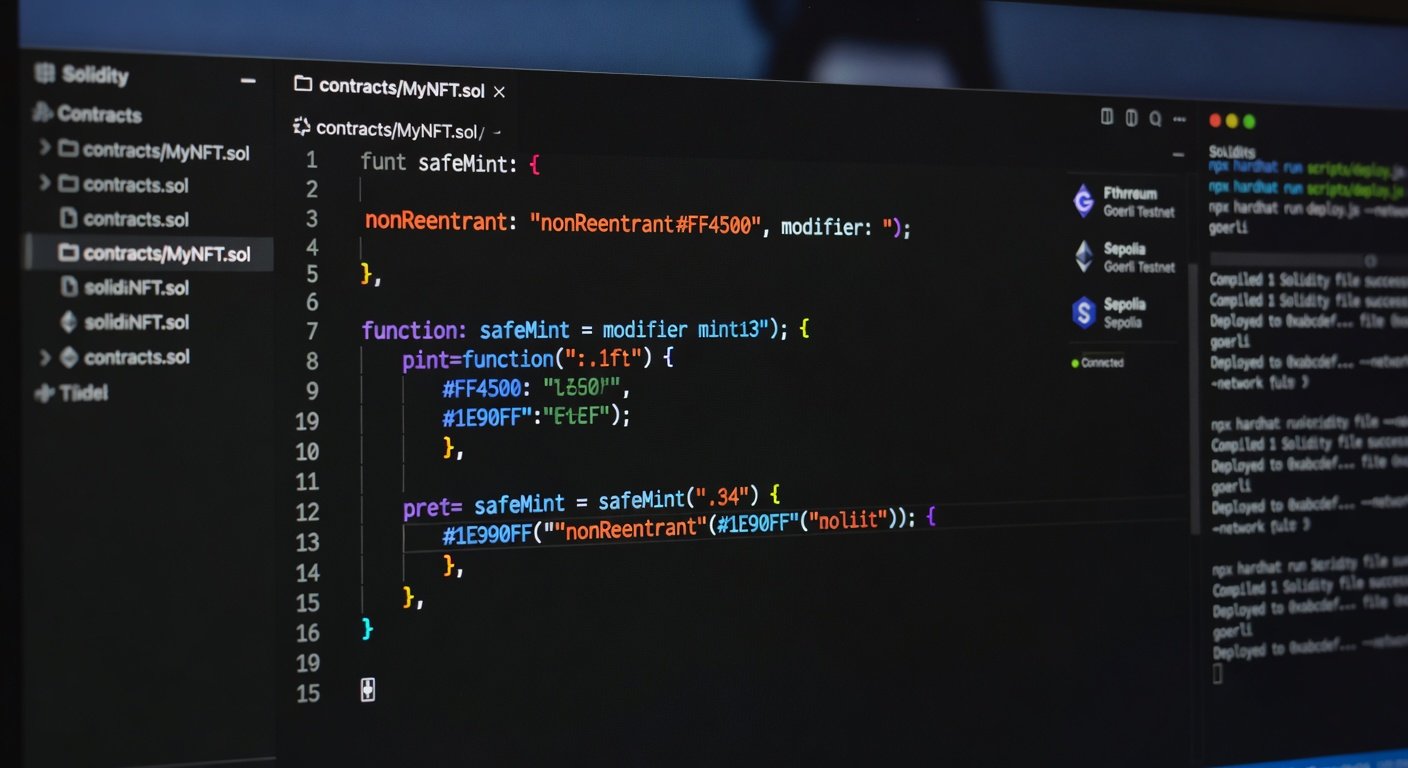
- Ownership Checks: Inherits Ownable—only owner mints. Use
onlyOwnermodifier. - Safe Transfers:
_safeMintand_safeTransfercheck receiver contracts implement ERC721Receiver. - Reentrancy Guard:
nonReentrantprevents recursive calls during state changes, mitigating attacks like The DAO hack.
Reference the EIP-721 standard for full token interface specs.
Advanced Features: Pausable and Royalties
Extend with pausability:
import "@openzeppelin/contracts/security/Pausable.sol";

contract SecureNFT is ERC721, ReentrancyGuard, Ownable, Pausable {
    // ... existing code

    function mint(address to, uint256 quantity) external onlyOwner nonReentrant whenNotPaused {
        // mint logic
    }

    function pause() public onlyOwner {
        _pause();
    }

    function unpause() public onlyOwner {
        _unpause();
    }
}
For royalties (ERC-2981), add a mapping for creators and fees.
Testing with Hardhat
Write comprehensive tests in test/SecureNFT.test.js:
const { expect } = require("chai");
const { ethers } = require("hardhat");

describe("SecureNFT", function () {
  let contract, owner, addr1;

  beforeEach(async function () {
    [owner, addr1] = await ethers.getSigners();
    const SecureNFT = await ethers.getContractFactory("SecureNFT");
    contract = await SecureNFT.deploy();
  });

  it("Should mint NFTs securely", async function () {
    await contract.mint(addr1.address, 1);
    expect(await contract.ownerOf(0)).to.equal(addr1.address);
  });

  it("Should revert on reentrancy", async function () {
    // Simulate reentrancy attack - should fail due to guard
    await expect(contract.connect(addr1).mint(addr1.address, 1)).to.be.reverted;
  });
});
Run npx hardhat test. Coverage: 90%+ ensures security.
Deploying to Ethereum Testnet
- Compile:
npx hardhat compile. - Deploy script (scripts/deploy.js):
async function main() {
  const SecureNFT = await ethers.getContractFactory("SecureNFT");
  const contract = await SecureNFT.deploy();
  await contract.waitForDeployment();
  console.log("Deployed to:", await contract.getAddress());
}

main();
Deploy: npx hardhat run scripts/deploy.js --network sepolia. Verify on Hardhat docs for plugins like Etherscan verification.
2026 Solidity Updates for Enhanced Security
By 2026, Solidity may introduce native reentrancy protection via improved modifiers and formal verification tools. Expect better optimizer for gas efficiency and built-in fuzzing in Remix. Rumored: Custom errors as default for gas savings (already in 0.8.4+). Stay ahead by using Slither or Mythril static analyzers now.
Common Pitfalls to Avoid
- Unchecked Minting: Always increment token IDs atomically.
- Approval Exploits: Use
setApprovalForAlljudiciously; revoke post-use. - Gas Limits: Batch mints for efficiency, but cap quantities.
- Upgradeability: Use proxies cautiously—prefer immutable for NFTs.
- Front-Running: Commit-reveal for sensitive mints.
Audit with tools like Certik before mainnet.
Conclusion
You now have a production-ready, secure ERC-721 contract. Deploy, test rigorously, and iterate. As blockchain evolves, prioritize security to protect your users' assets. Fork this repo, experiment, and share your secure NFTs!


No comments yet. Be the first!