 CryptoChain Blog
Secure RWA Tokenization Contracts in Solidity: 2026 Tutorial
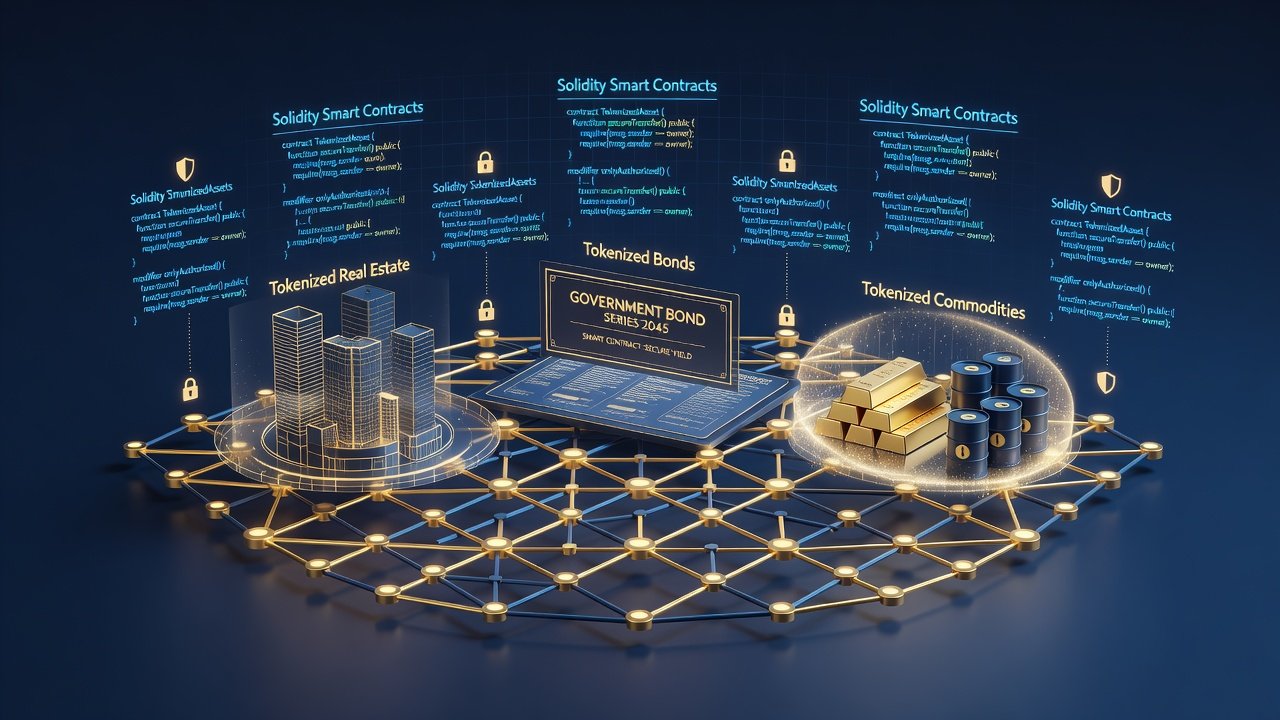
Real-world asset (RWA) tokenization has become a cornerstone of institutional blockchain adoption by 2026. Institutions now tokenize everything from real estate and private equity to carbon credits and government bonds. This comprehensive tutorial walks developers through building production-ready, secure Solidity contracts that combine ERC-1155 for multi-token flexibility with ERC-4626 for standardized vault mechanics. We extend these standards with robust access controls, on-chain compliance logging, reentrancy guards, and Foundry-based testing suites tailored for 2026 regulatory environments including MiCA in Europe and evolving SEC guidance in the United States.
Throughout this guide you will find concrete code examples, step-by-step implementation details, gas optimization techniques, Layer-2 deployment strategies, and a detailed security checklist. The goal is to deliver contracts that are not only functional but also audit-ready and regulator-friendly.
Deep Dive into ERC-1155 and ERC-4626 for RWAs
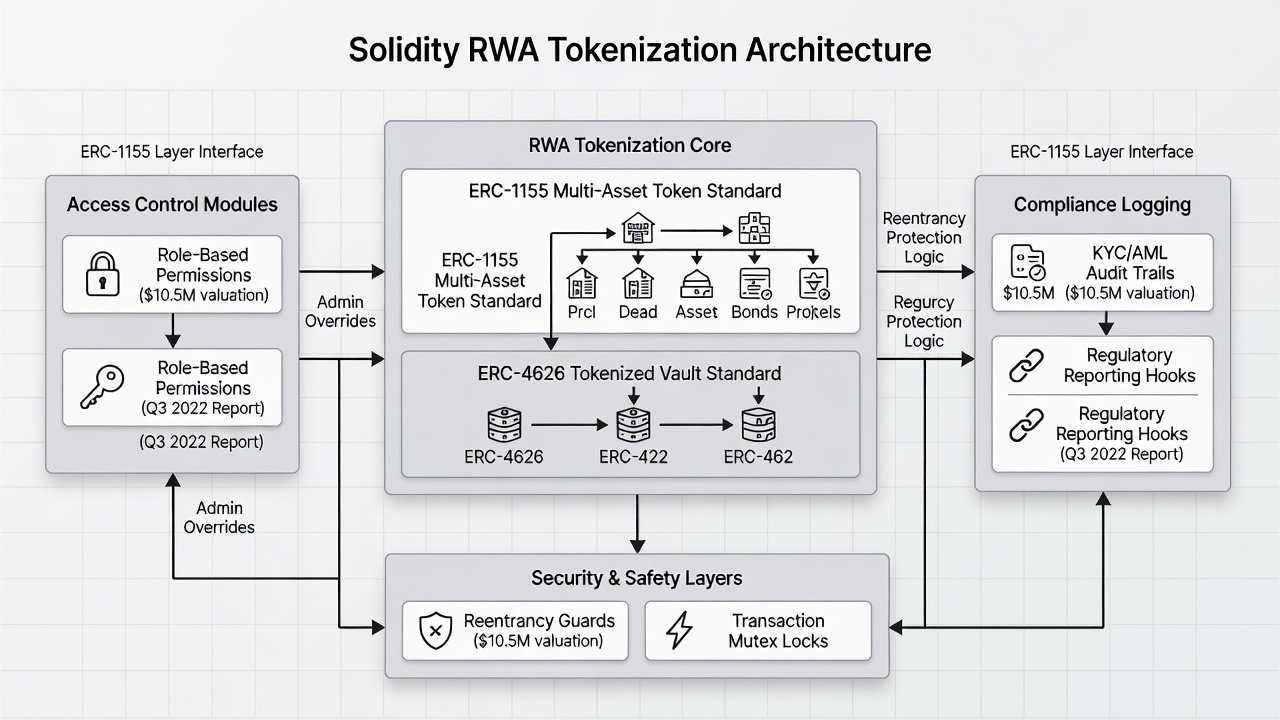
ERC-1155 enables efficient handling of multiple token types within a single contract, which is essential when an RWA platform manages several asset classes simultaneously. ERC-4626 adds a standardized interface for tokenized vaults that track deposits, shares, and yields. Combining them allows developers to represent fractional ownership while providing users with predictable deposit and withdrawal flows. In practice, an ERC-1155 contract can mint unique token IDs for each asset class, while an ERC-4626 vault wraps those tokens to enable yield accrual and redemption logic.
Why These Standards Remain Dominant in 2026
Both standards have undergone extensive audits and are widely supported by wallets, exchanges, and analytics platforms. Their composability reduces integration friction for institutional partners who require clear accounting and redemption paths. Developers should extend these standards rather than create entirely new ones to maintain interoperability.
Project Setup with Foundry
Start by initializing a Foundry project optimized for 2026 Solidity versions. Run the following commands to establish a clean environment with OpenZeppelin dependencies.
forge init rwa-tokenization
cd rwa-tokenization
forge install OpenZeppelin/openzeppelin-contracts
forge install foundry-rs/forge-std
Configure foundry.toml to target Solidity 0.8.26 and enable optimizer settings for gas efficiency. This setup supports fuzz testing and invariant testing critical for financial contracts.
Core Contract Implementation
The main contract inherits from both ERC1155 and ERC4626 while adding custom modules. Below is a skeleton showing the inheritance and constructor setup.
pragma solidity ^0.8.26;
import "@openzeppelin/contracts/token/ERC1155/ERC1155.sol";
import "@openzeppelin/contracts/token/ERC20/extensions/ERC4626.sol";
import "@openzeppelin/contracts/access/AccessControl.sol";
import "@openzeppelin/contracts/security/ReentrancyGuard.sol";

contract RWATokenization is ERC1155, ERC4626, AccessControl, ReentrancyGuard {
    bytes32 public constant ISSUER_ROLE = keccak256("ISSUER_ROLE");
    bytes32 public constant COMPLIANCE_ROLE = keccak256("COMPLIANCE_ROLE");

    constructor(address asset) ERC1155("https://api.example.com/metadata/{id}.json") ERC4626(IERC20(asset)) {
        _grantRole(DEFAULT_ADMIN_ROLE, msg.sender);
    }
}
Adding On-Chain Compliance Logging
Regulatory requirements demand transparent records. Emit structured events for every compliance check and transfer.
event ComplianceCheck(address indexed user, bool passed, uint256 timestamp, bytes32 complianceHash);

function _beforeTokenTransfer(...) internal override {
    // Perform compliance verification
    emit ComplianceCheck(user, passed, block.timestamp, complianceHash);
}
Access Control and Role Management
Use OpenZeppelin AccessControl to separate duties between issuers, compliance officers, and administrators. This prevents single points of failure and supports regulatory segregation of duties. Grant roles during deployment and include functions to revoke them under governance proposals.
Reentrancy Protection and Security Patterns
Every external call must be protected. Apply the nonReentrant modifier to all functions that update state after external interactions. Additionally, implement checks-effects-interactions pattern consistently. Consider using pull-over-push payment patterns for redemptions to further reduce attack surfaces.
Gas Optimization Techniques
Storage packing and assembly-level optimizations remain valuable in 2026. Pack multiple boolean flags into a single uint256 slot. Use immutable variables for addresses set at deployment. Batch operations with ERC-1155 reduce per-transaction overhead significantly. Profile gas usage with Foundry’s gas reporter during development to identify hotspots early.
L2 Deployment Considerations
Deploying on optimistic or zero-knowledge rollups lowers costs for frequent compliance updates. Account for differences in block times and finality when designing oracle update windows. Test bridge interactions thoroughly because asset redemption often crosses L1 and L2 boundaries. Use canonical bridges where possible and maintain fallback mechanisms.
Mitigating Oracle Dependency Risks
Price oracles introduce systemic risk. Implement multi-oracle aggregation with deviation thresholds. Add circuit breakers that pause minting and redemption when price feeds diverge beyond acceptable ranges. Document oracle sources and update procedures in your project documentation for auditors.
Comprehensive 2026 Compliance Checklist
- Role-based permissions with timelocks for privileged actions.
- Immutable event logs for all KYC/AML verifications and transfers.
- Redemption logic that respects custody and settlement windows.
- Upgradeable proxy patterns with transparent governance.
- Regular third-party audits and bug-bounty programs.
- Clear documentation mapping on-chain actions to legal obligations under MiCA and SEC rules.
Testing Strategy with Foundry
Write unit tests, fuzz tests, and invariant tests. Simulate reentrancy attacks using Foundry’s cheat codes. Verify that compliance events fire correctly under every code path. Run coverage reports aiming for above 95 percent branch coverage before considering the contract ready for audit.
Conclusion
Secure RWA tokenization in Solidity requires careful composition of established standards, rigorous access controls, transparent logging, and proactive security measures. By following the patterns and checklists in this tutorial, developers can produce contracts that satisfy both technical and regulatory demands in 2026. Always engage qualified auditors and legal counsel before mainnet deployment.
FAQs on Auditing and Regulatory Strategies
How frequently should RWA contracts receive audits? Major audits before initial deployment, after any significant upgrade, and annually thereafter. Continuous monitoring tools can supplement formal reviews.
What documentation supports regulatory approval? Maintain whitepapers, legal opinions, on-chain transparency reports, and incident response plans. Align these materials with guidance from SEC and EU Council resources.
Which tools integrate best with Foundry for RWA testing? Combine Forge with OpenZeppelin Defender for automated monitoring and Foundry fuzzing for edge-case discovery.


No comments yet. Be the first!