 CryptoChain Blog

Introduction to DeSci in 2026
Decentralized Science, or DeSci, represents a paradigm shift in how research is conducted, funded, and shared. By leveraging blockchain, DAOs, and tokenization, DeSci addresses longstanding issues in traditional academia such as gatekeeping, slow peer review, and limited access to funding. As we enter 2026, Web3 innovations are enabling more open, collaborative, and efficient scientific ecosystems that extend beyond finance and gaming into real-world impact. Researchers and enthusiasts seeking practical adoption strategies will find DeSci particularly compelling for its potential to democratize knowledge creation. This article dives deep into core mechanisms, real case studies, comparisons with legacy systems, and actionable steps for participation, providing forward-looking insights for those interested in Web3 applications in science.
The movement builds on the principles of open access and reproducibility while adding economic incentives through tokens and decentralized governance. Early adopters are already seeing faster collaboration across borders, with projects tackling everything from drug discovery to climate modeling. Understanding these developments is essential for anyone looking to contribute or benefit from the evolving landscape of decentralized research.
Blockchain-Based Peer Review Systems
Traditional peer review often suffers from opacity and delays that can stretch months or even years. Blockchain introduces transparent, immutable records for submissions and reviews, allowing every step to be audited by the community. Smart contracts can automate incentives, rewarding reviewers with tokens for timely, high-quality feedback, which helps attract more participants and reduces the burden on a small group of experts. Platforms built on Ethereum or similar networks ensure that review histories are verifiable, reducing fraud and bias while fostering trust in published findings. This approach also accelerates the dissemination of results, as preprints can be validated on-chain without waiting for journal approval cycles.
In practice, these systems integrate with existing academic tools to create hybrid workflows where on-chain verification complements traditional expertise. For example, timestamping a manuscript on a public ledger provides proof of priority, protecting intellectual contributions in competitive fields like biotechnology.
DAO-Driven Research Funding
Decentralized Autonomous Organizations (DAOs) allow communities to collectively allocate resources to promising projects. Token holders vote on proposals, bypassing traditional grant committees that can favor established institutions and overlook innovative ideas from independent researchers. This model promotes diversity in funded research areas, from rare diseases to climate solutions, and governance tokens align incentives to ensure sustained support for long-term initiatives. Contributors often receive ongoing rewards as projects achieve milestones, creating a self-sustaining ecosystem.
DAO structures also enable rapid response to emerging needs, such as funding urgent studies during health crises. Participants can propose experiments, attach budgets, and receive community backing in a transparent process that builds accountability.
Tokenized Data Ownership
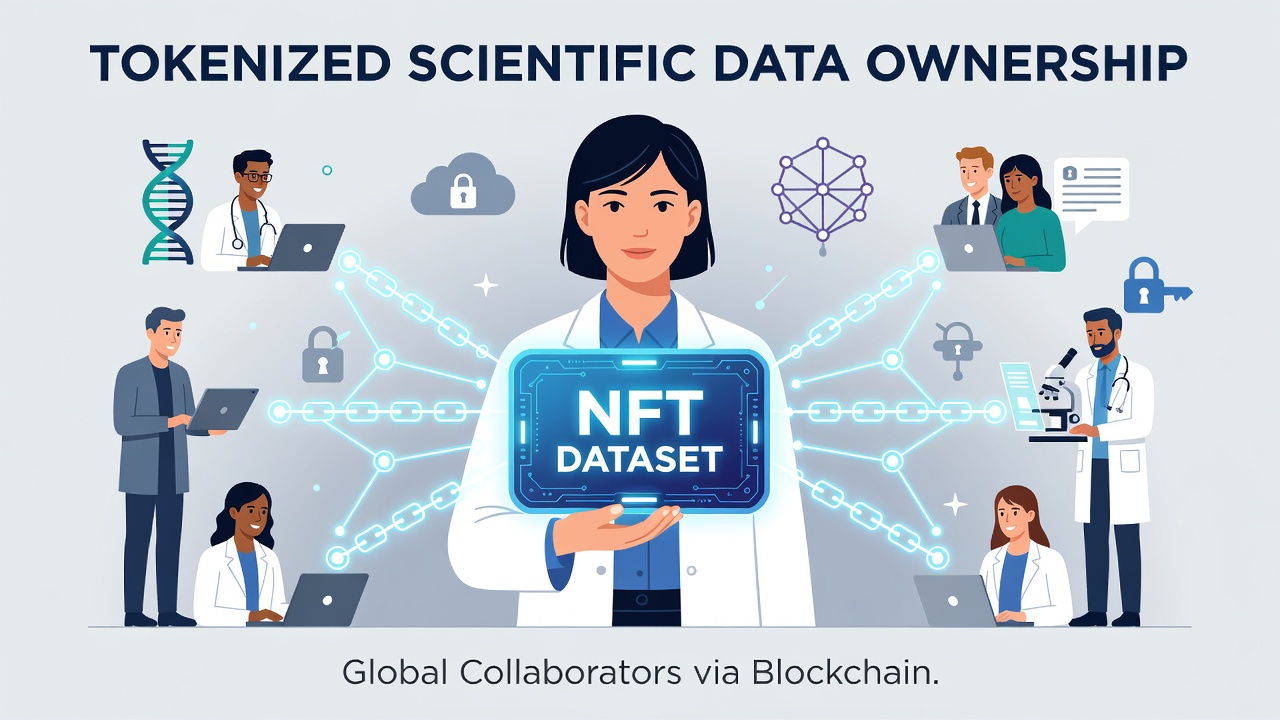
Researchers can tokenize datasets, granting ownership rights via NFTs or fungible tokens. This enables monetization while maintaining control over usage through smart contracts, so contributors receive royalties when data is reused and encourages open sharing without fear of exploitation. Such systems enhance reproducibility and collaboration across borders by making high-quality data more accessible and properly attributed. In fields like genomics, tokenized datasets allow patients or labs to retain rights while permitting broader analysis that accelerates discoveries.
Tokenization further supports provenance tracking, ensuring that any modifications or derivations remain linked to the original source, which strengthens scientific integrity.
Open-Source Innovation Platforms
DeSci platforms host open-source tools for experiment design, data analysis, and publication. These foster global participation, with version control similar to Git but tailored for scientific workflows, allowing anyone to fork, improve, and build upon prior work. Integration with IPFS ensures permanent, censorship-resistant storage of research artifacts, protecting against data loss or institutional restrictions. Developers are creating specialized modules for laboratory notebooks, statistical validation, and even automated experiment replication checks.
These platforms lower barriers for citizen scientists and students, turning research into a more inclusive activity that draws diverse perspectives and accelerates innovation cycles.
Case Studies: VitaDAO and ResearchHub
VitaDAO focuses on longevity research, using DAO governance to fund projects that traditional venture capital might overlook. Members propose and vote on initiatives, with successful outcomes shared via tokenized IP, allowing early supporters to benefit from breakthroughs. The DAO has backed multiple biotech startups and open protocols, demonstrating how community-driven capital can target underfunded areas like aging therapies. ResearchHub provides a blockchain-powered hub for preprints and discussions, rewarding engagement with tokens. It contrasts sharply with paywalled journals by emphasizing community-driven validation and rapid feedback loops. Users upload papers, receive token incentives for constructive comments, and build reputation scores that influence future visibility.
Both projects illustrate measurable progress in shifting power from centralized gatekeepers to distributed networks, with growing user bases and tangible research outputs.
Comparisons to Traditional Academia
Traditional academia relies on centralized publishers and slow funding cycles that often prioritize prestige over impact. DeSci offers faster iteration, global accessibility, and equitable reward distribution, enabling smaller teams and independent researchers to compete. However, it faces challenges like regulatory uncertainty and the need for robust oracle systems to verify real-world data. Adoption is growing as hybrid models emerge, blending on-chain transparency with off-chain expertise from universities. Key differences include reduced publication costs, immediate credit assignment, and broader participation from non-academic contributors. Yet legacy systems still dominate high-impact metrics, so many DeSci projects seek dual recognition to maximize reach.
Step-by-Step Guide to Contributing to DeSci Initiatives
- Research existing DAOs and platforms via official websites such as VitaDAO to identify aligned interests and active proposals.
- Acquire relevant tokens through reputable exchanges and join governance forums, starting with small amounts to learn voting mechanics.
- Review proposals and participate in voting to influence funding decisions, focusing first on areas where your expertise adds value.
- Contribute data or code to open repositories, earning tokens for verified inputs and building a track record of reliable participation.
- Collaborate on projects by joining Discord or forum communities tied to initiatives like ResearchHub at ResearchHub, offering feedback or co-authoring experiments.
- Stay informed through resources from Ethereum Foundation on DeSci tooling and attend virtual workshops to refine skills.
- Document your contributions publicly to establish credibility and attract further opportunities within the ecosystem.
Challenges, Barriers, and Mitigation Strategies
Common barriers include technical knowledge gaps around wallets and smart contracts, though intuitive interfaces are reducing this hurdle. Regulatory clarity varies by region, requiring participants to monitor local guidelines. Scalability concerns on public blockchains can be addressed through layer-2 solutions that lower fees and increase speed. Security risks are mitigated by audited contracts and community oversight. Education initiatives and beginner-friendly onboarding programs are helping newcomers navigate these issues effectively.
Future Predictions for 2026 and Beyond
Analysts anticipate wider integration with AI for automated peer review and expanded token economies that support citizen science projects at scale. DeSci could significantly boost global collaboration on pressing challenges like pandemics and sustainable energy. By 2027, hybrid academic-DeSci models may become standard, with universities adopting on-chain verification for grants and publications. Continued growth depends on user-friendly tools and clear legal frameworks that protect participants while encouraging innovation.
Conclusion
DeSci in 2026 stands poised to redefine scientific progress through Web3 tools. By embracing these innovations with practical steps and awareness of challenges, participants can drive more inclusive, efficient research that benefits society at large and opens new avenues for discovery.

No comments yet. Be the first!