 CryptoChain Blog

Introduction
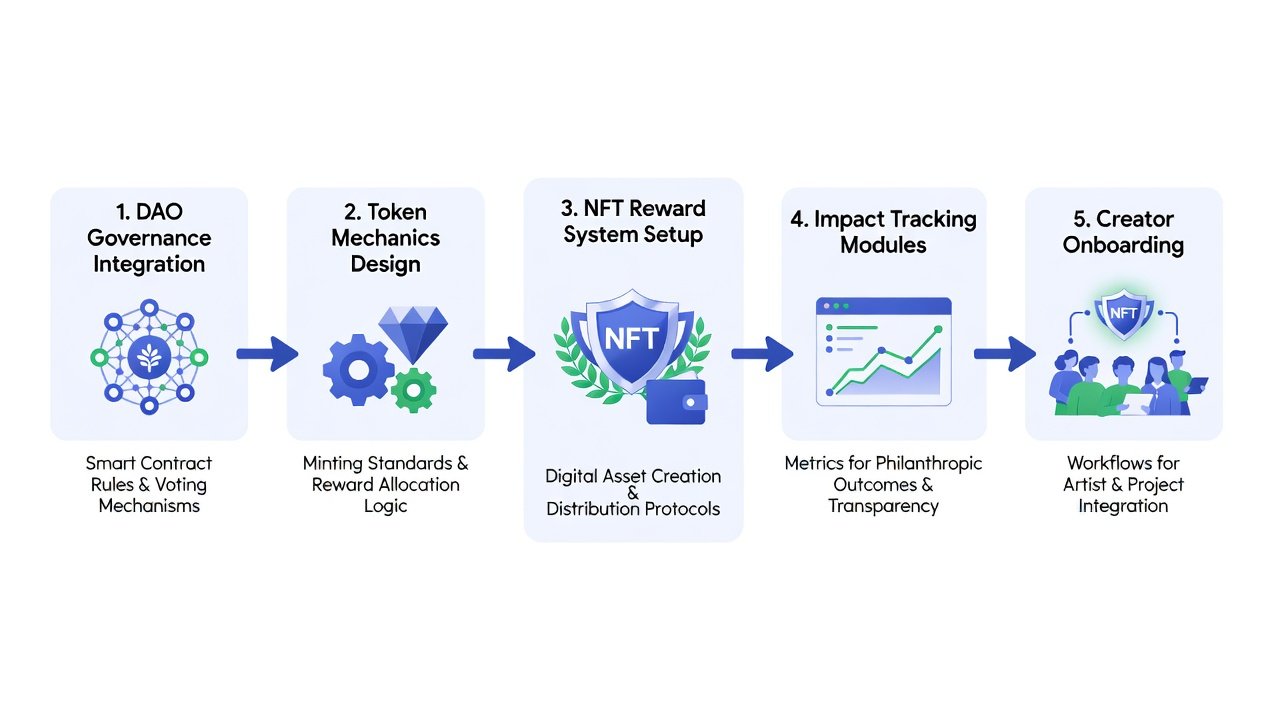
Decentralized autonomous organizations continue to transform philanthropy by enabling transparent, community-driven funding mechanisms that bypass traditional intermediaries. In 2026, NFT reward systems have emerged as a core strategy for recognizing donors, tracking real-world impact, and sustaining long-term engagement in Web3 charity initiatives. These systems combine unique digital assets with verifiable on-chain data to create incentives that feel both personal and measurable. Web3 developers and nonprofit leaders are increasingly turning to this approach to attract diverse participants while maintaining accountability across global networks. This comprehensive guide provides step-by-step instructions for designing and launching NFT-based rewards inside DAO-funded projects, with detailed focus on token mechanics, governance integration, impact tracking, creator onboarding, real-world examples, platform comparisons, and common pitfalls. By the end, readers will have actionable frameworks that deliver decentralized donation strategies with quantifiable outcomes.
Token Mechanics for Sustainable NFT Rewards
Building effective NFT reward systems requires careful attention to token mechanics that promote scarcity, utility, and long-term holding. Developers typically begin by selecting standards such as ERC-721 for one-of-a-kind badges or ERC-1155 for batch-mintable rewards that scale with donation volume. Reward tiers can be structured around donation amounts, frequency, or milestone achievements, with metadata that updates dynamically when impact reports are verified on-chain. Advanced mechanics include bonding curves that adjust NFT value based on community participation and vesting schedules that release additional utility over time. For instance, an initial donation might unlock a base NFT, while sustained contributions trigger evolution of the asset into higher-tier versions with enhanced governance rights. Interoperability across chains is essential, allowing NFTs minted on Polygon to interact with Ethereum-based DAO treasuries. Testing these mechanics in simulation environments helps prevent inflation or immediate resale that could undermine the philanthropic mission. Integration with existing token standards also ensures compatibility with popular wallets and marketplaces.
Governance Integration Strategies
Strong governance integration ties NFT ownership directly to DAO decision-making processes, turning rewards into active participation tools. Smart contracts can automatically grant voting power proportional to NFT holdings or donation history, enabling holders to propose new charitable initiatives or approve fund distributions. Quadratic voting mechanisms are particularly effective here because they amplify the influence of smaller donors while preventing whale dominance. Developers should design upgradeable contracts that allow the DAO to adjust reward parameters as community needs evolve or regulations change. Snapshot voting integrations provide off-chain efficiency while still anchoring results to on-chain NFT verification. Real-world implementations often combine NFT rewards with governance tokens, creating hybrid incentives that reward both generosity and strategic input. This layered approach strengthens community ownership and ensures that philanthropy decisions reflect the values of active participants rather than centralized boards.
Impact Tracking and Transparency Tools
Transparency remains the foundation of trust in decentralized philanthropy, and NFT systems excel when paired with robust impact tracking. On-chain oracles pull verified data from external sources, while IPFS stores detailed project reports that update NFT metadata automatically. Verifiable credentials issued by trusted auditors can attest to outcomes such as number of trees planted, scholarships funded, or medical supplies delivered. These updates make each NFT a living record of contribution, increasing emotional connection for donors. Developers should prioritize open-source tracking modules that any DAO member can audit. Cross-referencing multiple data sources reduces the risk of inaccurate claims and builds credibility with both crypto-native and traditional nonprofit audiences.
Creator Onboarding Processes
Successful onboarding of creators and nonprofits requires intuitive documentation and phased support. Begin with wallet setup tutorials and metadata templates that align with open standards. Provide compliance checklists that incorporate zero-knowledge proofs as privacy-preserving alternatives to traditional KYC. Training sessions should cover claim flows, royalty settings, and how to interpret impact dashboards. A detailed practical checklist includes: defining reward criteria through stakeholder workshops; deploying audited smart contracts on chosen networks; testing oracle connections with sample data; launching community education webinars; and establishing feedback loops for continuous iteration. Clear documentation lowers the barrier for nonprofits unfamiliar with Web3, accelerating adoption across the sector.
Platform Comparisons and Setup Checklists
Choosing the right platform involves weighing transaction costs, scalability, and ecosystem support. OpenSea offers broad discoverability and secondary market liquidity, while custom solutions built on Zora provide greater creator control over minting logic and royalties. Polygon remains popular for low fees during high-volume campaigns, whereas Ethereum mainnet delivers maximum security for high-value rewards. Setup checklists should cover contract audits, gas optimization, metadata hosting, and legal review. Comparing these options side-by-side helps teams select infrastructure that matches their project scale and target audience.
Real-World Examples from DAO Charity Initiatives
Several DAO-funded projects illustrate effective NFT reward implementations. One recurring-donor program issued evolving NFTs that unlocked escalating governance rights, resulting in higher retention rates across multiple funding rounds. Another initiative used impact-verified badges to attract visual artists and storytellers who amplified project visibility on social platforms. A third example combined NFT rewards with quadratic funding rounds, allowing the community to direct resources toward the most supported causes while recognizing early contributors with unique digital assets. These cases demonstrate that starting with pilot programs, measuring engagement metrics such as claim rates and retention, and iterating on reward utility leads to sustainable growth.
Security Considerations and Audits
Security must be prioritized throughout development. Conduct multiple smart contract audits from independent firms and run penetration tests on the full reward flow. Implement role-based access controls so only authorized oracles can update impact data. Multi-signature wallets for treasury management add another layer of protection against single points of failure. Regular security reviews become even more important as participation scales and NFT values increase.
Common Pitfalls to Avoid
- Neglecting accessibility features for non-technical users, which limits participation from traditional nonprofit communities
- Overcomplicating token economics without clear utility, leading to confusion and low engagement
- Ignoring cross-chain compatibility, which fragments the donor experience
- Skipping comprehensive security audits, exposing the system to exploits
- Failing to plan for regulatory changes around digital assets and charitable giving
Measuring Success and Future Outlook
Success metrics should include donation volume, NFT claim and retention rates, governance participation levels, and verified impact milestones. Analytics dashboards that aggregate these data points help DAOs refine their strategies over time. Looking ahead to late 2026, expect tighter integration between NFT rewards and emerging decentralized identity solutions, further enhancing personalization and trust.
Conclusion
Implementing NFT reward systems in DAO philanthropy requires deliberate design across mechanics, governance, tracking, and onboarding. When executed thoughtfully, these systems deliver measurable, decentralized donation strategies that engage communities and drive real impact. By learning from existing examples and avoiding common pitfalls, Web3 developers and nonprofit leaders can build initiatives that thrive in 2026 and beyond.
FAQ
How do NFT rewards handle regulatory compliance?
Projects should implement verifiable credentials and consult jurisdiction-specific guidelines, using tools from established frameworks like those promoted by the Ethereum Foundation.
What scalability concerns arise with growing DAO participation?
Layer-2 solutions and batch minting help manage volume; test thoroughly with simulated high-traffic scenarios before mainnet deployment.
Can these systems integrate with traditional nonprofits?
Yes, through hybrid models that bridge on-chain rewards with off-chain reporting, as seen in partnerships referenced by organizations like Gitcoin.
What security measures are essential for NFT reward contracts?
Independent audits, multi-signature controls, and role-based permissions are critical; reference best practices from Consensys for production deployments.
How can teams measure long-term engagement?
Track retention rates, governance votes cast by NFT holders, and verified impact updates over quarterly periods to guide iterative improvements.

No comments yet. Be the first!