 CryptoChain Blog
Introduction to 2026 Memecoin Breakthroughs
The memecoin landscape transformed dramatically throughout 2026, driven by high-performance layer-1 blockchains such as Solana and Avalanche. These platforms enabled faster transaction speeds, lower barriers to entry, and more scalable community tools compared to earlier generations of networks. This article explores four detailed case studies of breakout memecoins, examining their launch timelines, tokenomics decisions, community-building approaches, liquidity management techniques, and measurable performance outcomes. Readers will also find direct comparisons of chain-specific strengths and actionable guidance for aspiring creators.
Why Solana and AVAX Excel for Memecoins
Solana distinguishes itself through its proof-of-history consensus mechanism that delivers near-instant finality and exceptional throughput. Developers benefit from seamless integration with decentralized exchanges and wallet ecosystems that prioritize user experience. Avalanche, meanwhile, leverages its subnet architecture to offer customizable environments while maintaining robust security inherited from its primary network. Both chains support low-cost operations that allow frequent trading and community interactions without prohibitive expenses. These technical foundations proved essential for memecoins seeking viral growth in 2026. Solana official site and Avalanche official site provide further technical overviews of their respective architectures.
Case Study 1: Solana-Based Viral Sensation
Launch Timeline
This project deployed in early January 2026 with a stealth announcement on social platforms followed by immediate liquidity pool creation. Within 48 hours the token appeared on major Solana aggregators, sparking organic discussions across multiple channels.
Tokenomics Choices
The team allocated 80 percent of supply to the liquidity pool, burned the remaining developer allocation after launch, and implemented a simple 1 percent transaction fee directed toward community rewards. No team tokens were vested, which built immediate trust.
Community Growth Tactics
Daily meme contests, collaborative raids on trending topics, and weekly voice chats with early holders helped sustain momentum. Influencer partnerships focused on micro-creators rather than large accounts to maintain authenticity.
Performance Metrics
The token reached a peak market presence within three weeks, maintained a holder base exceeding 40,000 unique wallets, and demonstrated consistent daily trading volume that supported long-term liquidity.
Case Study 2: Another Solana Success
Launch Timeline
Deployed in March 2026, this memecoin tied its narrative to real-time cultural events. The launch included pre-announced liquidity locks visible on-chain for full transparency.
Tokenomics Choices
Supply distribution favored community airdrops to active participants on decentralized forums, while a small portion funded ongoing buyback programs using a percentage of trading fees.
Community Growth Tactics
Integration with Solana-based NFT marketplaces allowed holders to claim limited-edition digital collectibles, driving repeat engagement and cross-project collaboration.
Performance Metrics
Holder retention stayed above 65 percent after six months, with steady accumulation patterns visible during market dips, indicating strong conviction among participants.
Case Study 3: AVAX L1 Breakout Example
Launch Timeline
Released in February 2026 via a custom subnet optimized for high-frequency interactions. The team coordinated with bridge protocols to enable seamless movement of assets from other networks on day one.
Tokenomics Choices
A 70 percent liquidity allocation paired with a 5 percent allocation to ecosystem grants encouraged developers to build supporting tools and games around the token.
Community Growth Tactics
Targeted campaigns on Avalanche-focused forums and integration with existing DeFi protocols helped attract users already familiar with the chain's strengths.
Performance Metrics
The project achieved rapid subnet adoption, with transaction counts surpassing comparable launches on other networks within the first month of trading.
Case Study 4: Second AVAX Standout
Launch Timeline
Launched in April 2026, this token emphasized phased utility releases tied to community milestones. Liquidity was added gradually across multiple decentralized venues.
Tokenomics Choices
Token unlocks were scheduled in quarterly increments with smart-contract enforcement, while a portion of fees supported NFT reward pools for long-term holders.
Community Growth Tactics
Partnerships with Avalanche gaming projects and regular on-chain treasure hunts kept engagement high beyond the initial hype cycle.
Performance Metrics
Consistent growth in unique active addresses and sustained liquidity depth across multiple pools highlighted the effectiveness of its measured rollout strategy.
Side-by-Side Chain Comparison
Evaluating Solana and Avalanche side by side reveals clear trade-offs that influenced memecoin performance in 2026.
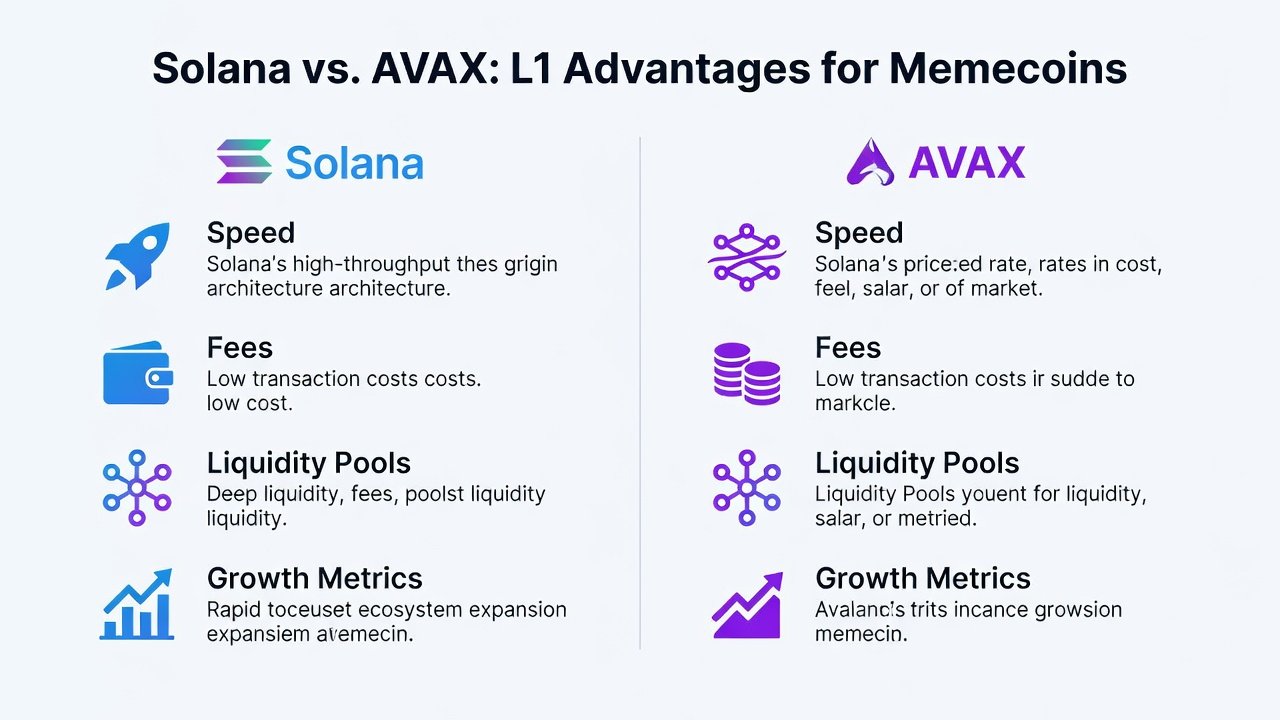
- Transaction Speed: Solana consistently delivered sub-second confirmations ideal for rapid trading during volatility spikes, while Avalanche subnets provided reliable one-to-two-second finality suited for more structured community events.
- Fee Structure: Both networks kept costs negligible, enabling frequent small transactions that supported meme-sharing activities and micro-rewards programs.
- Liquidity Infrastructure: Solana benefited from mature automated market makers with deep order books, whereas Avalanche offered flexible subnet-based liquidity pools that reduced cross-chain friction.
- Developer Ecosystem: Solana's extensive tooling accelerated simple token launches, and Avalanche's subnet customization allowed projects to tailor environments for specialized use cases such as gaming integrations.
Creators should match their project's technical needs to the chain that best supports the intended growth pace and utility roadmap.
Practical Takeaways for Creators
Common Pitfalls to Avoid
Many failed launches suffered from excessive team allocations that eroded trust once disclosed. Another frequent mistake involved neglecting on-chain liquidity locks, which invited skepticism and sell pressure. Projects that over-relied on paid promotions without authentic community input often experienced sharp reversals after initial hype faded. Ignoring security audits also led to exploits that permanently damaged reputations.
Scaling Tips for Long-Term Success
- Establish transparent tokenomics documentation before launch and publish all smart-contract addresses for independent verification.
- Cultivate organic engagement through consistent content creation rather than sporadic campaigns, focusing on platforms where the target audience already gathers.
- Plan liquidity additions in stages to avoid early dumps and maintain depth during both bull and bear phases.
- Develop utility hooks such as NFT rewards or simple games early to convert speculative holders into repeat participants.
- Monitor on-chain metrics weekly and adjust community incentives based on actual holder behavior rather than vanity metrics.
Applying these practices helped the featured case studies maintain relevance well beyond their launch windows.
Conclusion
The 2026 memecoin successes on Solana and Avalanche underscore the importance of aligning technical choices with genuine community needs. Tokenomics transparency, phased liquidity strategies, and sustained engagement tactics proved more decisive than raw hype. Future creators can draw directly from these examples to design launches that balance speed of growth with durability.
FAQ
What risks do memecoin investors face? Primary risks include extreme price volatility, potential for complete loss of capital, and regulatory uncertainty that can affect trading venues without warning.
When is the best time to enter memecoins? Early discovery phases, before widespread attention, generally offer more favorable risk-reward profiles than periods of maximum social media hype.
How important are liquidity locks? Locked liquidity significantly reduces rug-pull risks and signals commitment, often correlating with stronger long-term holder confidence across successful projects.
Should creators focus on one chain or multi-chain deployments? Starting on a single high-performance chain allows focused community building; multi-chain expansion works best after proving product-market fit on the initial network.
No comments yet. Be the first!