 CryptoChain Blog
Introduction to Token Vesting on Solana and Avalanche in 2026
Token vesting remains a cornerstone of sustainable project development in the cryptocurrency space. As altcoin ecosystems mature, investors and founders on Solana (SOL) and Avalanche (AVAX) increasingly rely on structured release mechanisms to align incentives and reduce volatility. This guide explores practical vesting strategies tailored for 2026, focusing on real-world implementation across both L1 chains. Vesting schedules help prevent premature token dumps that can destabilize markets, while enabling projects to demonstrate commitment to long-term growth. In an era of increasing institutional interest, well-designed vesting builds trust and supports ecosystem expansion through staking and decentralized finance applications.
Effective vesting protects long-term value by preventing large dumps while supporting staking rewards and DeFi participation. Projects must balance founder unlocks with community utility to foster growth. Understanding the nuances between Solana's high-throughput environment and Avalanche's subnet architecture is essential for tailoring these strategies effectively.
Linear vs Cliff Vesting Schedules: Core Differences
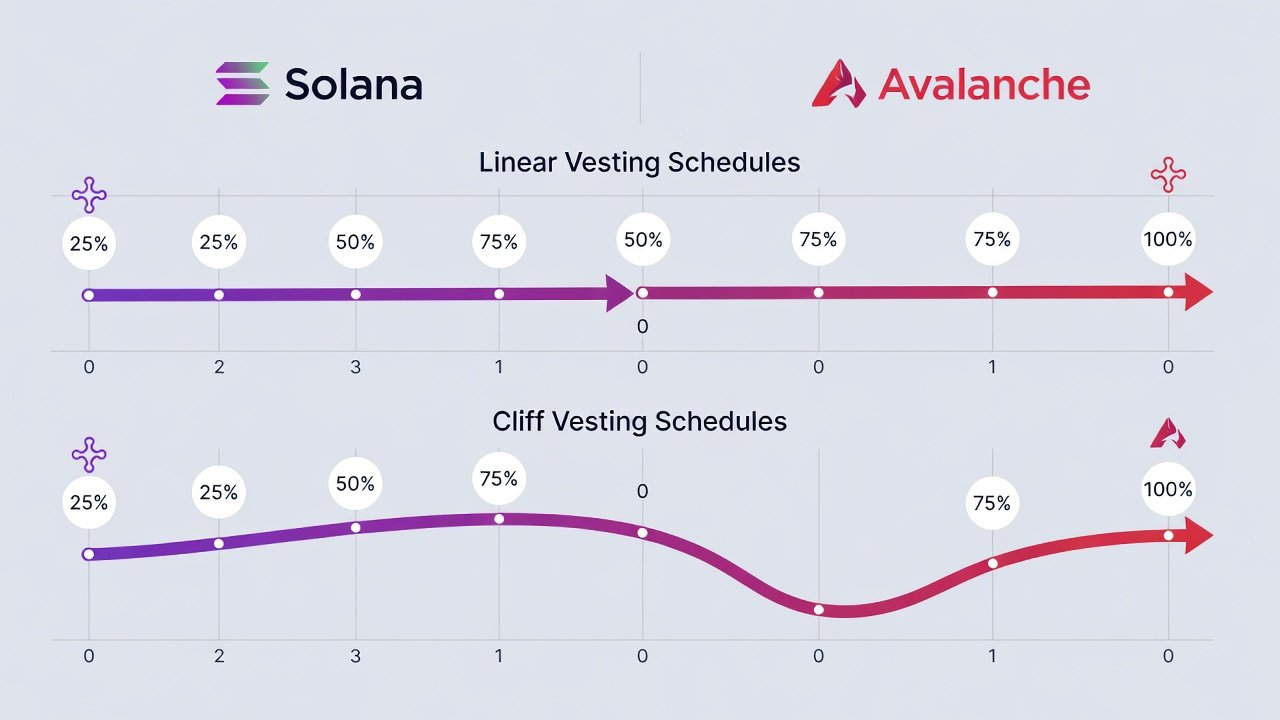
Linear vesting releases tokens gradually over time, typically monthly or quarterly after an initial cliff period. Cliff vesting, by contrast, withholds all tokens until a predetermined date, after which a lump sum unlocks. In 2026, hybrid models combining both have gained traction for altcoin launches on SOL and AVAX. Linear approaches distribute risk evenly, making them suitable for teams focused on steady development milestones. Cliff structures, however, enforce stricter accountability at key project phases.
- Linear schedules promote steady liquidity and reduce sell pressure through predictable release patterns.
- Cliff schedules create milestone-driven accountability but risk sudden market impacts upon release.
- Hybrid approaches often include a 6-month cliff followed by linear distribution over 24-36 months for balanced outcomes.
- Investors benefit from transparency in both models when schedules are published on-chain with verifiable timestamps.
Choosing between these depends on project stage, token utility, and target investor base. Early-stage projects may favor cliffs to retain control, while mature protocols lean toward linear releases for broader adoption.
Smart Contract Implementation Steps for Solana
Developers on Solana use the Anchor framework and SPL token programs for vesting contracts. Begin by defining the vesting schedule in Rust, including parameters for start time, duration, and release intervals. Then deploy via the Solana CLI after thorough testing on devnet. Key steps include initializing a vesting account with the correct authority, setting release parameters through PDA accounts, and integrating with token mint authorities for seamless transfers. Additional considerations involve handling rent exemptions and ensuring compatibility with Solana's parallel transaction processing to avoid bottlenecks during unlock events.
Testing on devnet ensures unlock mechanics function correctly before mainnet deployment. Integration with staking programs allows vested tokens to earn rewards seamlessly, enhancing overall utility. Advanced implementations can incorporate governance modules so token holders vote on schedule adjustments.
Smart Contract Implementation Steps for Avalanche
Avalanche leverages its C-Chain for EVM-compatible smart contracts, often written in Solidity. Use OpenZeppelin libraries for secure vesting contracts that include time-lock and access control features. Deploy through Hardhat or Foundry, then verify on the Avalanche explorer for public transparency. Unlock mechanics typically involve time-based checks within the contract, with options to pause or adjust for governance votes. Cross-chain bridges enable AVAX vesting to interact with DeFi protocols on other networks, expanding composability options.
Further steps include auditing contracts for reentrancy vulnerabilities and integrating with Avalanche's subnet framework for customized release logic. This allows projects to create tailored vesting for specific use cases like gaming or DeFi incentives.
Impacts on Staking Rewards and DeFi Utility
Vested tokens on Solana can often be staked immediately upon partial unlocks, boosting APY through native validators and contributing to network security. On Avalanche, similar mechanics apply via subnets, though DeFi composability differs due to EVM standards and higher flexibility in smart contract interactions. Vesting that restricts transfers until full unlock can limit liquidity provision in DEXes, requiring careful planning to avoid opportunity costs. Projects that enable partial staking of vested portions see higher retention rates and sustained ecosystem activity.
In practice, this integration encourages holders to participate in yield farming or lending protocols while their tokens remain locked, multiplying returns without compromising vesting integrity. Monitoring tools help track reward accruals alongside unlock timelines.
Case Study Examples from Recent L1 Launches
Recent launches demonstrate effective models. One Solana-based project used a 12-month linear vest post-6-month cliff, resulting in sustained price stability and increased validator participation. An Avalanche subnet project combined cliff unlocks with staking incentives, driving TVL growth through community governance and cross-chain DeFi integrations. Another example from a hybrid L1 initiative featured quarterly linear releases tied to development milestones, reducing volatility compared to peers with immediate unlocks. These cases highlight how vesting directly influences investor confidence and long-term token performance across both ecosystems.
Supply Schedule Comparisons Between SOL and AVAX
Solana features a fixed inflation schedule tapering over years, supporting ongoing validator rewards while vesting overlays control circulating supply. Avalanche maintains a capped supply with dynamic emissions adjusted through governance. Vesting overlays these base schedules, influencing circulating supply metrics tracked on-chain and affecting how projects communicate tokenomics to stakeholders. Detailed comparisons reveal that Solana's higher throughput enables faster vesting transaction processing, whereas Avalanche offers more customizable emission curves via subnets.
Common Pitfalls to Avoid
Overly aggressive cliffs often lead to post-unlock dumps that erode market trust. Failing to account for network congestion on Solana or high gas on Avalanche can delay unlocks and frustrate users. Ignoring tax implications or regulatory reporting creates compliance risks that may result in penalties. Other issues include inadequate smart contract audits, lack of emergency pause mechanisms, and poor communication of schedules to the community. Teams should conduct multiple simulations of unlock scenarios and maintain detailed documentation for all stakeholders.
Regulatory Considerations for Token Vesting
Projects must navigate securities laws, with the U.S. Securities and Exchange Commission providing ongoing guidance on token classifications. Both chains emphasize transparent disclosure of vesting terms to avoid enforcement actions. Additional considerations involve international regulations, KYC requirements for large unlocks, and ensuring vesting contracts do not inadvertently create unregistered securities. Consulting legal experts familiar with blockchain-specific frameworks helps mitigate these risks effectively.
Tools for Tracking Vesting on Each Chain
Solana offers explorers like Solscan for real-time unlock monitoring and account history. Avalanche users rely on Snowtrace and custom dashboards built with The Graph protocol. Third-party services aggregate data across chains for investor dashboards, providing alerts for upcoming releases and historical performance analytics. Integrating these tools into project websites enhances transparency and supports informed decision-making by token holders.
Conclusion
Optimizing token vesting on Solana and Avalanche in 2026 requires deliberate design that supports both project longevity and investor returns. By comparing models, implementing secure contracts, and avoiding pitfalls, teams can build resilient ecosystems that thrive in competitive markets.
FAQs on Optimizing Vesting for Sustainable Returns
How does linear vesting affect staking? It allows incremental staking, compounding rewards over time while maintaining alignment with project timelines.
What regulatory steps are essential? Full disclosure of schedules via official channels and compliance with securities guidelines mitigates enforcement risks.
Can vesting integrate with DeFi? Yes, through wrapped tokens or specific contract hooks on both chains that enable yield generation during lock periods.
Which chain offers better tools for tracking? Solana excels in speed and low-cost monitoring, while Avalanche provides robust EVM-based analytics and subnet-specific dashboards.
How to avoid common implementation errors? Conduct thorough audits, test extensively on testnets, and publish clear documentation for all unlock mechanics.

No comments yet. Be the first!