 CryptoChain Blog
Introduction to SOL and AVAX Tokenomics in 2026
As blockchain ecosystems mature into 2026, long-term holders of Solana (SOL) and Avalanche (AVAX) are increasingly focused on sophisticated yield optimization techniques that extend far beyond simple staking. This deep dive examines the underlying tokenomics of both assets, highlighting how inflation schedules, token burns, and supply adjustments shape sustainable returns. Investors must understand these dynamics to build resilient portfolios that maximize utility while mitigating risks inherent in layer-1 networks.
The primary goal for advanced holders is to layer multiple yield sources—such as decentralized lending, liquidity provision, and restaking—while continuously evaluating risk-adjusted performance. By integrating these approaches with careful portfolio allocation, holders can achieve compounded growth even amid market volatility. This article provides practical examples, decision frameworks, and scenario comparisons to guide implementation.
Detailed Tokenomics of Solana (SOL)
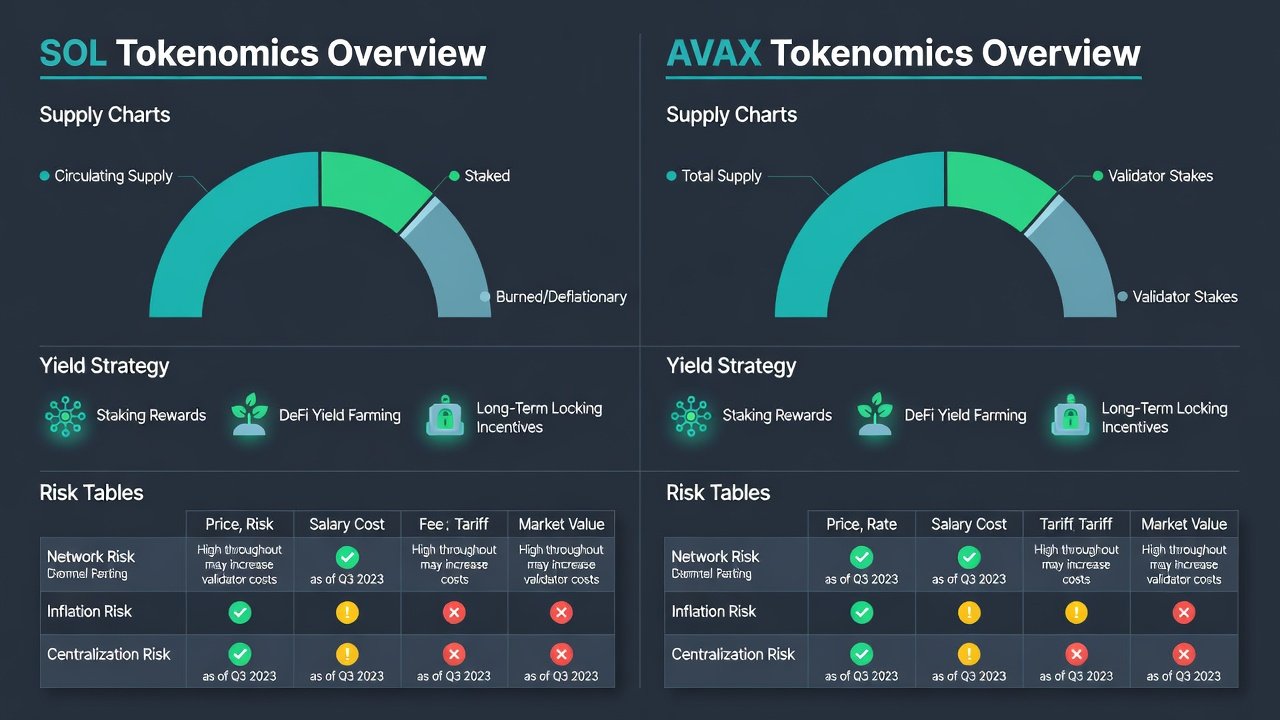
Solana's tokenomics revolve around a disinflationary model where the annual inflation rate decreases over time until reaching a long-term minimum. Transaction fees are partially burned, creating a deflationary pressure that offsets new issuance. This structure rewards holders who actively participate in network security through staking while encouraging ecosystem growth via developer incentives and validator rewards.
Supply dynamics include periodic unlocks from foundation allocations and ecosystem funds, which can temporarily increase circulating supply. Holders need to monitor these events alongside network usage metrics to anticipate impacts on token velocity and value accrual. In practice, high throughput on the Solana blockchain supports numerous DeFi applications that enable additional yield layers without sacrificing liquidity.
Detailed Tokenomics of Avalanche (AVAX)
Avalanche employs a capped total supply with emissions distributed primarily through staking rewards and subnet creation incentives. The network's three-chain architecture allows for customized economic models on individual subnets, offering unique opportunities for yield generation tied to specific use cases such as gaming or enterprise applications.
Burn mechanisms on Avalanche are linked to transaction fees and certain governance activities, helping to balance inflationary rewards. Long-term holders benefit from understanding how subnet adoption influences overall demand for AVAX, as increased activity can lead to higher staking participation and more competitive yields across DeFi protocols built on the platform.
Advanced Yield Strategies: DeFi Lending
DeFi lending platforms allow SOL and AVAX holders to earn interest by supplying assets to overcollateralized pools. This approach provides predictable returns with lower operational complexity compared to liquidity provision. Holders can use borrowed assets to leverage positions or maintain exposure while generating passive income.
Practical examples include depositing SOL into established lending markets to earn variable rates influenced by utilization ratios. On Avalanche, similar opportunities exist with additional incentives from subnet-specific liquidity programs. Risk management involves setting conservative loan-to-value ratios to avoid liquidation during price swings.
Liquidity Provision and Automated Market Makers
Providing liquidity to automated market makers offers potentially higher yields through trading fees and token incentives. However, this strategy exposes participants to impermanent loss, where price divergence between paired assets reduces overall returns. Successful implementation requires selecting stable or correlated pairs and monitoring pool performance regularly.
On Solana, high-speed execution enables frequent rebalancing of liquidity positions with minimal costs. Avalanche's ecosystem supports concentrated liquidity features that allow holders to target specific price ranges for optimized fee capture. Combining liquidity provision with staking rewards on the underlying tokens can further enhance net APY.
Restaking and Layered Security Models
Restaking protocols enable holders to reuse staked assets for additional security services, unlocking extra yield streams. This emerging approach adds complexity but can significantly boost returns for those comfortable with advanced smart contract interactions.
Examples on both chains include restaking SOL or AVAX to support oracle networks or cross-chain bridges. Participants must evaluate slashing conditions and protocol maturity before committing funds. Diversifying across multiple restaking opportunities reduces concentration risk while capturing varied reward structures.
Risk-Adjusted Return Calculations and Scenario Analysis
Effective yield optimization demands quantitative assessment of returns relative to downside risks. Key metrics include volatility-adjusted APY, maximum drawdown potential, and correlation between strategies. Scenario modeling helps visualize outcomes under bullish, bearish, and sideways market conditions.
| Strategy | Base APY Profile | Risk Factors | Adjustment Tactic |
|---|---|---|---|
| DeFi Lending | Steady with utilization swings | Liquidation thresholds, oracle failures | Maintain buffer in collateral ratios |
| Liquidity Provision | Fee-driven plus incentives | Impermanent loss, pool migration | Focus on low-volatility pairs |
| Restaking | Stacked rewards | Slashing events, lock-up periods | Limit allocation per protocol |
| Combined Portfolio | Blended with diversification | Overall correlation risk | Quarterly rebalancing reviews |
By running multiple scenarios, holders can identify allocation mixes that deliver acceptable returns across market cycles while preserving capital during downturns.
Step-by-Step Portfolio Allocation Tactics
Building an optimized portfolio begins with a clear assessment of total holdings, time horizon, and personal risk tolerance. Allocate 40-60% to core staking for foundational security and baseline yields. Dedicate 20-30% to lending platforms for steady interest accrual. Reserve 15-25% for liquidity provision in established pools, and use the remaining portion for selective restaking opportunities.
Monitor performance weekly using on-chain analytics tools and adjust based on changing APY rates or network upgrades. Rebalance quarterly to realign with target weights, especially after major market movements. Document each decision to refine future allocations and avoid emotional responses to short-term fluctuations.
Tools, Resources, and Monitoring Best Practices
Effective management requires reliable dashboards for tracking yields, wallet integrations, and alert systems for liquidation risks or APY changes. Cross-reference data from multiple sources to validate accuracy. Engage with community forums for real-time insights on protocol updates or emerging opportunities.
Regular audits of smart contract interactions and periodic reviews of tax implications complete a robust monitoring framework. This disciplined approach supports sustained optimization over multi-year holding periods.
Common Mistakes to Avoid in Yield Farming
Over-concentration in a single strategy or chain amplifies exposure to localized risks. Ignoring gas fees or transaction costs can erode net returns, particularly on high-frequency tactics. Chasing unsustainable APYs without due diligence on protocol security often leads to principal loss.
Another pitfall involves neglecting inflation effects on real yields. Always calculate net returns after accounting for new token issuance and compare against broader market benchmarks to ensure genuine value creation.
FAQ: Addressing Yield Pitfalls in Volatile L1 Markets
How does token inflation impact net yields?
Inflation dilutes staking rewards over time, making it essential to layer additional strategies like lending or liquidity provision to maintain purchasing power.
What role do burns play in long-term token value?
Burns reduce supply and can create upward pressure on price, indirectly enhancing the real return from yield-generating activities when combined with staking.
Are there specific risks with cross-chain yield strategies?
Bridge vulnerabilities and differing consensus mechanisms introduce additional attack surfaces; limiting exposure and using audited bridges helps mitigate these.
How often should portfolios be rebalanced?
Quarterly reviews strike a balance between responsiveness and minimizing transaction costs, with more frequent checks during periods of extreme volatility.
Can beginners implement these advanced tactics?
Start with conservative allocations to lending and core staking, gradually expanding as familiarity with protocols and risk management grows.
Conclusion
Mastering 2026 SOL and AVAX yield optimization requires integrating deep tokenomics knowledge with diversified strategies and rigorous risk assessment. Through thoughtful allocation across lending, liquidity provision, and restaking, long-term holders can enhance returns while navigating the inherent challenges of L1 markets. Continuous learning and disciplined execution form the foundation for sustained success. Explore official documentation at Solana and Avalanche for the latest network details.

No comments yet. Be the first!