 CryptoChain Blog

Introduction to DeSci on Layer 1 Altcoins
Decentralized science, commonly known as DeSci, represents a transformative shift in how scientific research is funded, conducted, shared, and peer-reviewed. By leveraging blockchain technology, DeSci removes traditional gatekeepers such as centralized institutions and slow bureaucratic processes. In 2026, Solana and Avalanche (AVAX) have emerged as the premier Layer 1 altcoins driving these innovations. Their exceptional throughput, minimal transaction costs, and developer-friendly environments allow for seamless handling of massive datasets, complex smart contracts, and dynamic token economies that directly reward scientific contributions.
Traditional research funding often suffers from lengthy approval cycles, limited transparency, and restricted access to raw data. Blockchain solutions on Solana and AVAX address these pain points by enabling real-time, verifiable collaboration across borders. Researchers can now tokenize intellectual property, crowdfund experiments through decentralized autonomous organizations, and publish findings on immutable ledgers. This approach not only accelerates discovery but also democratizes participation, allowing citizen scientists and independent labs to contribute meaningfully.
Understanding the Role of Solana and AVAX in DeSci
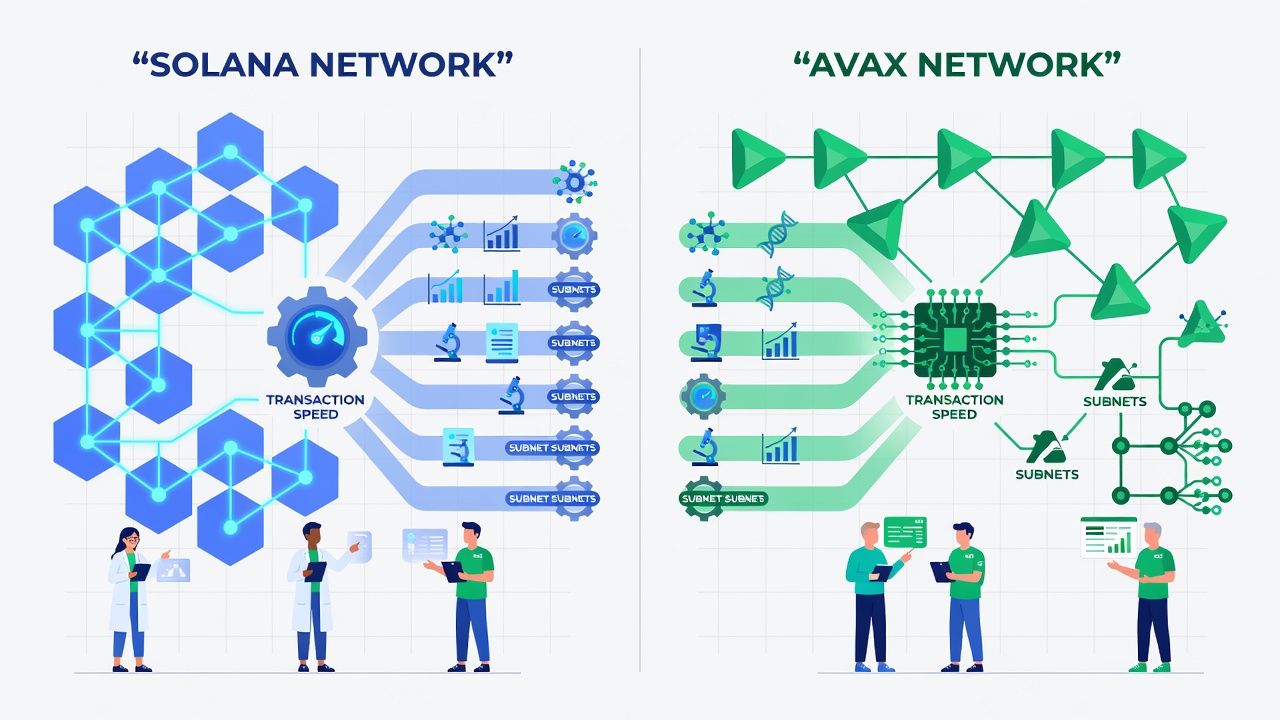
Solana’s architecture emphasizes high-speed parallel processing, making it suitable for applications requiring frequent data uploads from laboratory instruments or field sensors. Avalanche, through its subnet technology, offers customizable, isolated environments ideal for handling sensitive information such as clinical trial results or proprietary genomic sequences. Both chains support robust developer tooling that integrates with existing scientific software stacks, reducing the barrier for adoption among academic teams.
Research Funding Mechanisms Powered by Blockchain
Tokenized grants have become a cornerstone of DeSci funding models. Contributors purchase or stake governance tokens to vote on project proposals, with funds released automatically upon milestone verification through on-chain oracles. On Solana, protocols utilize its low-latency network to enable micro-payments and rapid iteration on funding rounds. Avalanche subnets allow research collectives to create tailored economic models that align with specific grant cycles or multi-year studies.
Real-world examples include VitaDAO’s expansion onto Solana infrastructure in 2026, where longevity-focused projects receive community-backed funding with transparent tracking of every token allocation. Similar initiatives on AVAX focus on climate science and materials research, using subnet isolation to comply with regional data regulations while maintaining interoperability.
Data Sharing, Peer Review, and Publishing Workflows
Immutable timestamps and ownership proofs on blockchain eliminate disputes over data primacy. Scientists upload datasets with cryptographic hashes, enabling others to verify integrity without centralized repositories. Peer review processes move on-chain through reputation-weighted voting systems, where reviewers earn tokens for constructive feedback and replication studies.
These workflows reduce publication delays from months to weeks. Large-scale climate modeling projects now stream continuous sensor data directly to Solana-based ledgers, while medical consortia on AVAX leverage private subnets for HIPAA-compliant sharing.
Token Incentive Models for Scientists and Contributors
Incentive structures combine staking rewards, reputation NFTs, and revenue shares from successful patents or licensed discoveries. Contributors receive tokens for uploading open-access datasets, completing peer reviews, or replicating experiments. Solana’s micro-fee environment supports granular rewards that encourage daily engagement, whereas AVAX subnets permit custom emission schedules tied to project milestones.
These models create sustainable careers in open science. Early participants in VitaDAO integrations, for instance, have seen governance influence grow alongside token appreciation, fostering long-term commitment to research goals.
Scalability Advantages for Handling Large Scientific Datasets
Genomic sequencing, satellite imagery, and real-time IoT feeds generate enormous data volumes. Solana’s parallel runtime processes thousands of transactions per second, supporting live data pipelines without bottlenecks. Avalanche subnets scale horizontally, allowing dedicated research networks to operate independently while bridging back to the primary chain for funding and discovery.
This dual-chain capability ensures both speed for high-frequency logging and flexibility for regulated environments, positioning Solana and AVAX ahead of slower legacy blockchains.
Transaction Speed Comparison Between Solana and AVAX
Solana consistently achieves sub-second finality and theoretical peaks exceeding 65,000 transactions per second, making it optimal for continuous data ingestion from laboratory equipment. Avalanche delivers 1–2 second confirmations with over 4,500 transactions per second per subnet, excelling when projects require isolated governance or compliance-focused modules.
Teams prioritizing raw velocity and frequent micro-transactions often select Solana. Those needing modular privacy controls or custom tokenomics favor AVAX subnets. Both ecosystems continue to iterate on hardware acceleration and consensus refinements throughout 2026, further widening their lead in DeSci applications.
Step-by-Step Guide to Participating in DeSci Projects
- Identify active protocols by exploring Solana and Avalanche block explorers and reviewing project documentation for alignment with your research interests.
- Configure a non-custodial wallet supporting both chains and acquire small amounts of native tokens to cover transaction fees and staking requirements.
- Engage with governance forums, Discord channels, and proposal dashboards to understand current funding priorities and community norms.
- Begin with low-commitment actions such as staking tokens or uploading anonymized datasets to build reputation scores and earn initial rewards.
- Submit research proposals, perform peer reviews, or replicate experiments through on-chain interfaces, then claim token incentives upon successful verification.
- Monitor subnet upgrades and bridge developments to maintain interoperability as your involvement scales across multiple DeSci initiatives.
2026 Trends and Forward-Looking Opportunities
Artificial intelligence integration for automated literature summarization and preliminary peer review is gaining traction. Cross-chain bridges between Solana and AVAX enable fluid data movement between speed-optimized and privacy-optimized environments. Emerging regulatory frameworks in major jurisdictions are expected to clarify token classifications, encouraging greater institutional involvement from universities and pharmaceutical companies.
Hybrid models combining decentralized funding with traditional academic oversight, along with zero-knowledge proofs for confidential studies, represent the next wave of innovation.
Common Barriers for Researchers and Practical Solutions
Technical onboarding challenges are mitigated by improved wallet interfaces and protocol-sponsored tutorials. Regulatory uncertainty around token incentives requires continuous monitoring of updates from bodies such as the World Health Organization. Interoperability gaps are closing through standardized bridge protocols and cross-chain messaging standards promoted by organizations like the World Wide Web Consortium.
Mistakes to Avoid When Entering DeSci
- Overlooking smart contract audit reports before staking significant value.
- Ignoring subnet-specific compliance rules when handling sensitive human-subject data.
- Failing to diversify across multiple protocols instead of concentrating exposure in a single DAO.
- Underestimating the importance of building on-chain reputation before submitting large grant proposals.
FAQ
What exactly is DeSci?
DeSci applies blockchain principles to create transparent, community-governed systems for funding, sharing, and validating scientific research.
Why are Solana and AVAX particularly suited for DeSci?
Their high throughput and low costs enable real-time data handling and frequent incentive distributions that legacy chains cannot match efficiently.
How do token incentives actually work for scientists?
Contributors earn tokens for verifiable actions such as data uploads, peer reviews, and experiment replication, with value tied to project success and governance participation.
What are the main risks involved?
Smart contract vulnerabilities, token price volatility, and evolving regulatory landscapes require careful due diligence and diversified participation.
Can traditional researchers participate without deep blockchain knowledge?
Yes, many protocols now offer guided onboarding, educational resources, and user-friendly dashboards designed specifically for academic users.
Additional authoritative resources are available at Solana and Avalanche.
Conclusion
As 2026 progresses, Solana and AVAX continue to unlock practical pathways for decentralized science. By combining scalable infrastructure with well-designed incentive systems, these Layer 1 altcoins are enabling faster funding cycles, broader data access, and more inclusive participation in research. Researchers who follow structured onboarding steps and stay informed about ecosystem developments will be best positioned to capitalize on the expanding opportunities in this rapidly maturing field.

No comments yet. Be the first!