 CryptoChain Blog
Solana & AVAX Cross-Chain Interoperability Solutions 2026
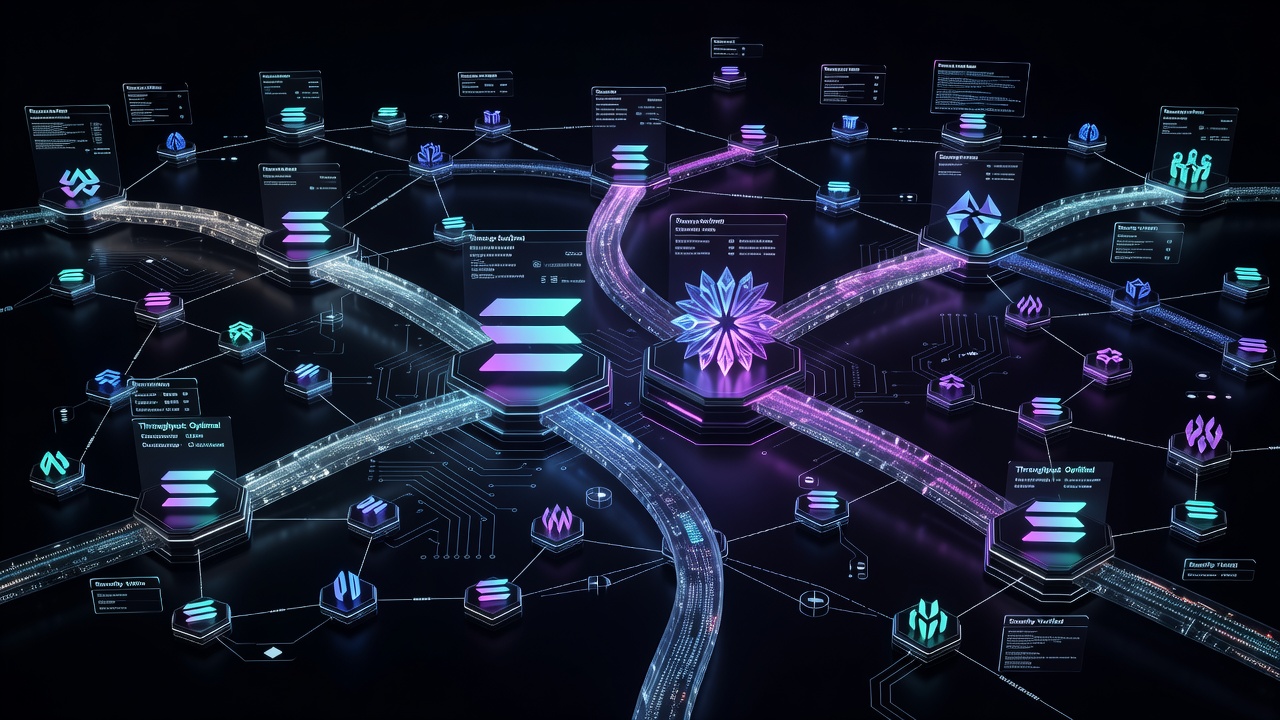
Cross-chain interoperability has become essential for Layer 1 altcoins like Solana and Avalanche (AVAX) as decentralized finance continues expanding. In 2026, projects require seamless movement of assets and data across ecosystems without relying on centralized exchanges. This article examines practical strategies, tools, and integrations that enable efficient connectivity between Solana, AVAX, and other major blockchains. Developers and traders now treat interoperability as a core infrastructure layer rather than an optional feature, unlocking liquidity that was previously siloed within individual networks.
Understanding Cross-Chain Needs for Solana and AVAX
Solana excels in high throughput with theoretical peaks above 65,000 transactions per second, while Avalanche offers strong subnet customization for specialized applications. Users and developers often need to bridge liquidity between these networks and ecosystems such as Ethereum or Cosmos. Interoperability protocols reduce fragmentation and unlock new DeFi opportunities by allowing tokens to flow freely while preserving security guarantees. Without robust bridges, capital remains trapped, leading to higher slippage and limited composability. In practice, traders frequently move stablecoins like USDC between Solana-based perpetual futures platforms and Avalanche lending markets to capture yield differentials that can exceed several percentage points annually.
Leading Cross-Chain Bridges in 2026
Several mature bridge protocols dominate connections involving Solana and AVAX. Wormhole remains a top choice due to its broad support across both networks and robust validator set. Axelar provides generalized messaging that powers complex DeFi composability across more than 50 chains. Additional solutions include LayerZero for omnichain applications and deBridge, which emphasizes lightweight verification and fast finality for high-frequency trading use cases. These bridges use different security models ranging from optimistic verification to multi-party computation and light-client proofs. Projects should evaluate each option based on supported assets, latency, total value locked, and audit history before integration. Wormhole, for example, has processed billions in cumulative volume with a strong track record of uptime since its major 2023 security overhaul.
Protocol Upgrades Enhancing Interoperability
Both Solana and Avalanche released targeted upgrades in early 2026 that improved cross-chain messaging efficiency. Solana’s Firedancer client enhancements reduced congestion during peak bridge activity, allowing sustained throughput even when multiple bridges operate simultaneously. Avalanche’s Cortina upgrade introduced improved subnet-to-subnet communication primitives and better support for external chain messaging. These changes lowered failure rates for wrapped asset transfers and enabled more reliable oracle data sharing across chains. Additional improvements in signature verification and batching reduced gas-equivalent costs on both networks by approximately 30 percent compared with late 2025 levels.
Real-World DeFi Integration Examples
Several established protocols demonstrate successful interoperability. Jupiter on Solana integrated with Avalanche-based yield aggregators to allow users to move USDC liquidity in minutes and automatically deploy it into optimized strategies. Trader Joe expanded its liquidity pools to accept Solana-bridged tokens, creating deeper order books for cross-chain pairs and reducing price impact for large trades. Additional examples include Kamino Finance pulling AVAX liquidity into Solana-based structured products and Benqi enabling collateral from Solana-native assets within its Avalanche lending markets. These integrations highlight how bridges power new trading strategies and lending markets that span multiple Layer 1s, often generating additional fee revenue for the underlying protocols.
Step-by-Step Token Transfer Guide
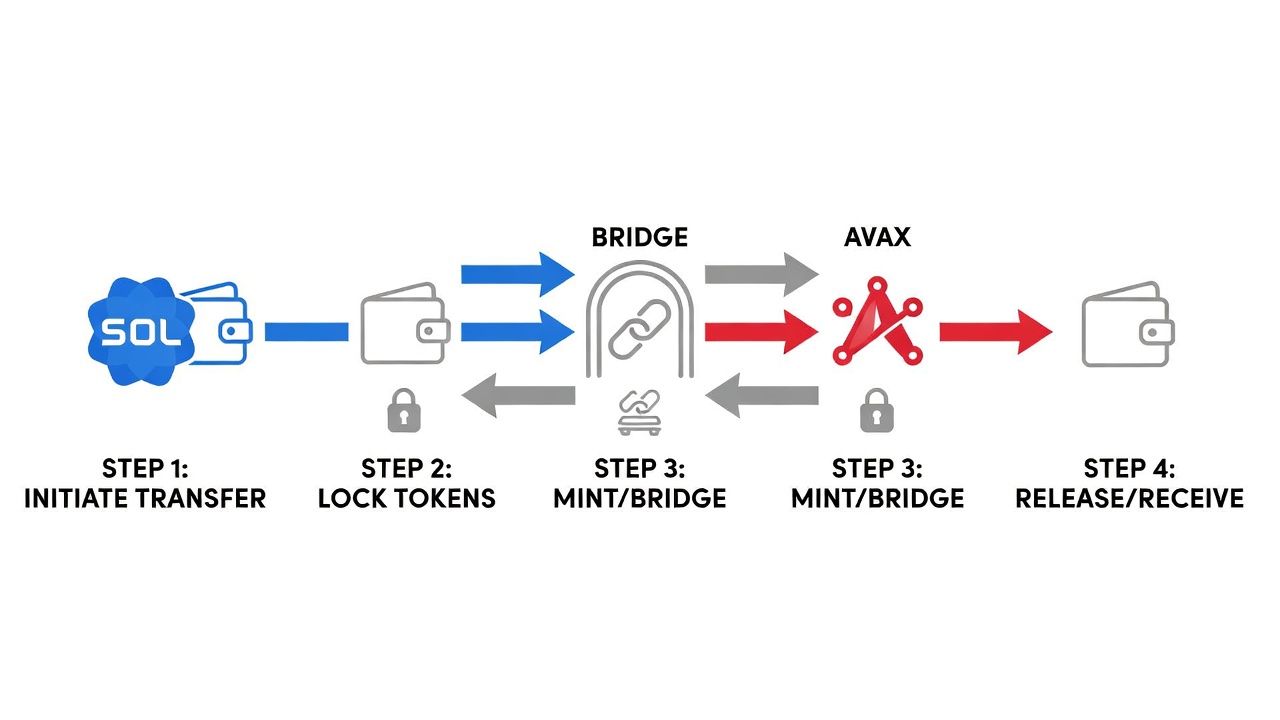
Follow these steps to transfer tokens from Solana to Avalanche using a supported bridge such as Wormhole:
- Connect a compatible wallet such as Phantom or MetaMask to the bridge interface and ensure sufficient native tokens for gas.
- Select Solana as the source chain and Avalanche as the destination, then choose the token and enter the amount.
- Review estimated fees, time, and any slippage warnings before approving the transaction in your wallet.
- Confirm the on-chain transaction and monitor the bridge dashboard until the wrapped asset appears on Avalanche.
- Claim the asset if required by the specific bridge and verify the balance in your destination wallet.
Reverse transfers follow the same flow with chains swapped. Always start with a small test transaction when using a new route or bridge version. Advanced users can also automate recurring transfers through scripts that interact with bridge APIs for institutional-scale operations.
Performance Comparison: Speed and Costs
Current bridge performance varies significantly depending on route and network conditions. Wormhole routes between Solana and AVAX typically finalize in under two minutes with minimal slippage during normal network conditions. Axelar pathways may require slightly longer due to additional consensus rounds but offer stronger guarantees for high-value transfers. Overall, users report lower cumulative costs on direct Solana-AVAX routes compared with routing through Ethereum intermediaries. Key metrics include average finality times of 30–120 seconds for standard transfers, reduced exposure to intermediate chain congestion, and higher reliability scores for multi-signature and light-client based bridges. Real-world testing in May 2026 showed that optimized routes achieved sub-minute transfers more than 95 percent of the time.
Common Mistakes to Avoid
Many users encounter issues by selecting unvetted bridges with low liquidity or insufficient audits. Another frequent error involves ignoring token denomination differences, which can lead to unexpected slippage. Always verify contract addresses directly from official documentation and avoid clicking links from untrusted sources. Finally, failing to maintain adequate native gas tokens on both chains can stall transfers mid-process.
Security Considerations and FAQ
How do bridges protect user funds?
Reputable bridges employ audited smart contracts, validator diversity, and bug bounty programs. Users should verify recent audits and confirm that bridge contracts have not experienced exploits in the past year.
What happens if a transfer fails?
Most bridges include retry mechanisms and timeout refunds. Funds remain secured on the source chain until successful delivery or automatic refund occurs.
Are there risks from smart contract vulnerabilities?
Yes. Always review the specific bridge version used and prefer routes with multiple independent audits and substantial total value locked.
How can users verify bridge legitimacy?
Check official project documentation, recent security audits published on platforms like Certik or Ottersec, and community governance forums before initiating large transfers.
Conclusion
Cross-chain interoperability between Solana and AVAX continues maturing rapidly in 2026. By selecting audited bridges, following clear transfer procedures, and staying informed about protocol upgrades, users and developers can confidently move assets and build composable applications across both ecosystems. Continued improvements in messaging standards promise even faster and safer connectivity ahead, positioning these Layer 1 networks as central hubs within an increasingly interconnected blockchain landscape.


No comments yet. Be the first!