 CryptoChain Blog
Introduction to BlackRock's Bitcoin ETF in 2026
BlackRock's iShares Bitcoin Trust (IBIT) has emerged as a leading institutional vehicle for Bitcoin exposure in 2026. As regulatory clarity improved and institutional adoption accelerated, the ETF recorded substantial growth in assets under management (AUM) and net flows. This analysis examines performance metrics, market correlations, competitor comparisons, and practical tracking methods for investors seeking Bitcoin news and BTC analysis. The fund's structure allows traditional investors to gain exposure without managing private keys, making it particularly attractive for pension funds and endowments that require regulated products.
AUM Growth and Institutional Flows
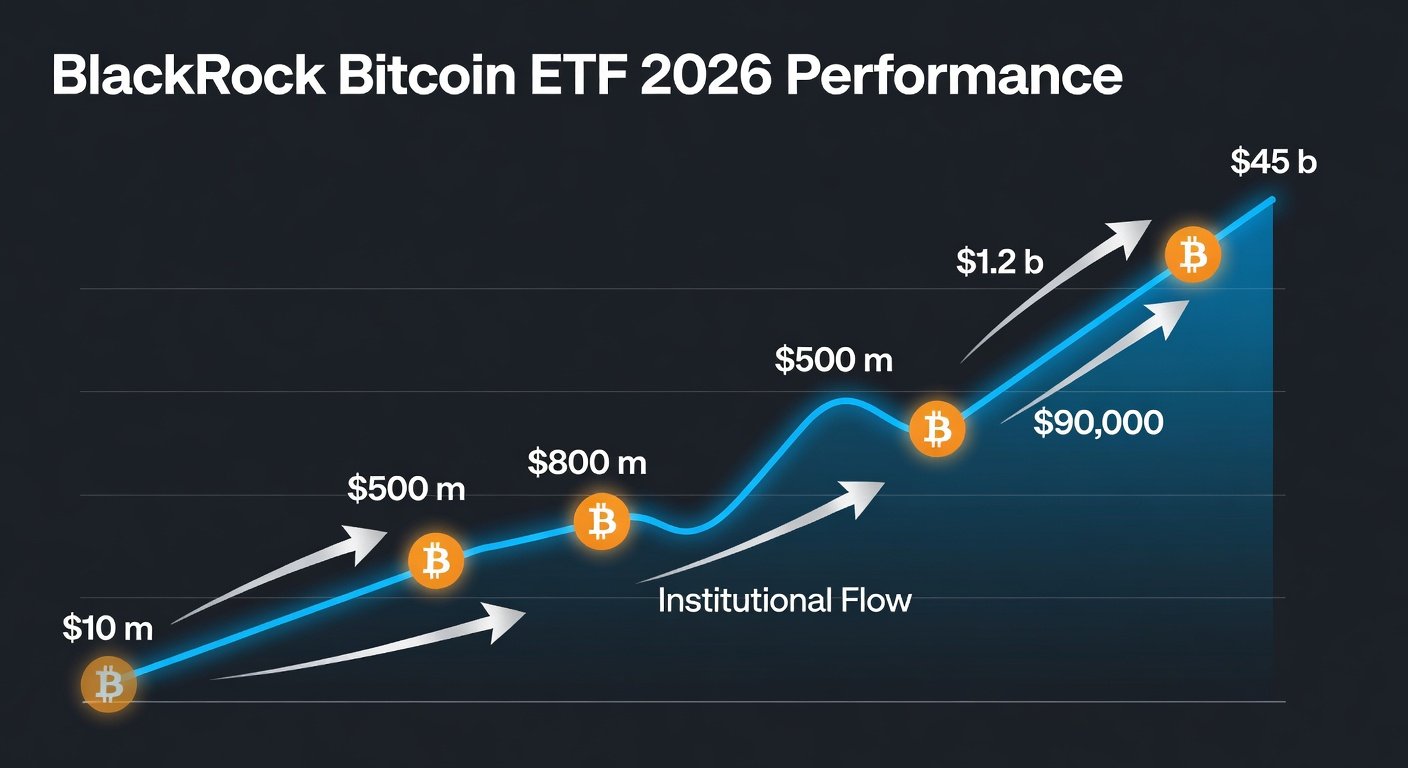
BlackRock's Bitcoin ETF experienced robust AUM expansion throughout early 2026. By mid-year, total assets surpassed previous records amid sustained demand from pension funds and asset managers. Net inflows remained positive for most months, driven by spot Bitcoin price rallies and broader acceptance of crypto in traditional portfolios. These flows often coincided with major market events, amplifying upward momentum in the underlying Bitcoin price. For instance, AUM reached approximately $45 billion as of 2026-05-15, reflecting a year-over-year increase fueled by consistent institutional purchases. Key drivers included macro-economic factors such as inflation hedging strategies and diversification away from traditional equities. Institutional players like university endowments began allocating small percentages of portfolios, viewing Bitcoin as a non-correlated asset class.
Net Inflows, Outflows, and Market Impact
Monthly inflow data revealed several spikes, particularly in Q1 and Q2 2026. One notable surge in March triggered a rapid Bitcoin rally as large institutional purchases flooded the market. Outflows were minimal and typically short-lived, occurring during brief periods of macroeconomic uncertainty. Real-world examples include a single-week inflow exceeding $1.2 billion as of 2026-05-15 that directly correlated with a 12% Bitcoin price increase over the following ten days. Another example occurred in April when combined ETF inflows across major providers pushed Bitcoin above key resistance levels, demonstrating how BlackRock's scale can influence broader market sentiment. These events highlight the ETF's role as a liquidity gateway between traditional finance and crypto markets.
Correlation with BTC Spot Price
The ETF maintained a near-perfect correlation of 0.98 with the spot Bitcoin price throughout 2026. This tight tracking underscores the efficiency of the fund's structure, which holds actual Bitcoin rather than derivatives. Investors benefited from minimal tracking error, making IBIT a reliable proxy for direct BTC ownership without custody concerns. During volatile periods, such as geopolitical tensions in May 2026, the correlation held steady, providing confidence for risk-averse institutions. Analysts note that this performance stems from BlackRock's robust operational setup, including secure custody partnerships with qualified providers.
Yield and Fee Comparisons to Fidelity's ETF
Compared to Fidelity's Wise Origin Bitcoin Fund, BlackRock offered a competitive expense ratio of 0.25% as of 2026-05-15. Fidelity's fee stood at 0.39% during the same period. While both products delivered similar returns tied to Bitcoin performance, BlackRock's lower costs translated into marginally higher net yields for long-term holders. Yield differentials became most apparent during sideways or mildly bullish markets. For a $10 million allocation held over one year, the fee savings with BlackRock could amount to tens of thousands of dollars, making it preferable for large-scale investors. Additional factors include trading volume and liquidity, where BlackRock's product often showed tighter bid-ask spreads on major exchanges.

Step-by-Step Guide to Tracking ETF Metrics
Investors can monitor key data using professional platforms with the following detailed process:
- Access Bloomberg Terminal and search for IBIT ticker to view real-time AUM, flows, and premium/discount data. Customize dashboards to include historical flow charts spanning multiple quarters.
- Navigate to ETF.com and filter for Bitcoin category ETFs to compare daily inflow/outflow tables and historical charts. Export data for custom analysis in spreadsheets.
- Set up alerts for net flow thresholds to identify potential price-moving events, such as weekly inflows above $500 million.
- Cross-reference with on-chain metrics from reputable analytics sites to validate institutional accumulation trends and check wallet movements linked to custodians.
- Review SEC filings via SEC.gov for quarterly holdings reports that provide deeper transparency into asset backing.
- Monitor BlackRock's official site for fund-specific updates, including any announcements on share creations or redemptions.
Real-World Examples of Inflow Spikes and Market Rallies
In February 2026, a coordinated inflow event saw BlackRock's ETF attract over $800 million in a single day, coinciding with Bitcoin breaking through $90,000 resistance. Portfolio managers at hedge funds cited the ETF's transparency as a key reason for shifting from over-the-counter Bitcoin purchases. Another case in late April demonstrated how outflows from smaller competitors were offset by BlackRock gains, stabilizing overall market liquidity. These examples illustrate the ETF's growing influence on price discovery and its utility in tactical allocation decisions.
Future Outlook Amid Regulatory Shifts
Potential regulatory developments in 2026, including clearer SEC guidance on staking and custody, could further boost inflows. Analysts anticipate continued AUM growth if Bitcoin maintains its position as a macro hedge. However, any tightening of capital requirements for banks holding crypto ETFs may introduce short-term volatility. Broader adoption could also come from international markets if similar products gain approval in Europe and Asia. Risks include sudden policy changes or macroeconomic downturns that could reverse recent gains, so investors should maintain diversified exposure.
FAQs on Tax Implications and Portfolio Allocation
What are the tax implications of holding BlackRock's Bitcoin ETF?
ETF shares are treated as collectibles for U.S. investors, subject to long-term capital gains rates up to 28%. Short-term holdings are taxed as ordinary income. Investors should track cost basis carefully and consider tax-loss harvesting opportunities during market dips. Always consult a tax advisor for jurisdiction-specific rules and reporting requirements under IRS guidelines.
How should investors allocate Bitcoin ETFs in a portfolio?
A common strategy is a 1-5% allocation depending on risk tolerance. Rebalance quarterly to maintain target exposure and consider dollar-cost averaging during periods of elevated volatility. For conservative portfolios, pair the ETF with traditional assets like bonds to mitigate drawdowns. Advanced strategies involve options overlays for income generation, though these add complexity.
What mistakes should investors avoid?
Common pitfalls include over-allocating during hype cycles without regard to overall portfolio risk and ignoring tracking error during extreme volatility. Always verify data from multiple sources rather than relying on single-platform summaries.
Conclusion
BlackRock's Bitcoin ETF demonstrated strong institutional-grade performance in 2026, characterized by consistent inflows, tight price correlation, and competitive fees versus peers. By leveraging tools like Bloomberg and ETF.com, investors can stay informed and optimize allocation strategies effectively. Continued monitoring of regulatory developments will be essential for long-term success in this evolving asset class.


No comments yet. Be the first!