 CryptoChain Blog

Introduction to Blockchain-Driven Insurance Automation in 2026
The intersection of cryptocurrency developments and insurance is evolving rapidly in 2026. Blockchain technology is streamlining claims processing and payouts through automated smart contracts, delivering faster settlements and stronger fraud prevention. This article explores the latest trends, offering practical insights for beginners and professionals alike who follow blockchain news. As decentralized finance continues to mature, insurance protocols built on blockchain are addressing long-standing pain points in traditional models, such as delays, high costs, and lack of transparency. Readers searching for 2026 crypto news will find actionable takeaways that bridge the gap between emerging technology and real-world applications.
How Smart Contracts Reduce Fraud in Insurance Claims
Smart contracts execute automatically when predefined conditions are met, eliminating manual intervention that often leads to errors or manipulation. In insurance, this means claims are verified against immutable data on the blockchain, significantly reducing opportunities for fraudulent submissions. By 2026, these mechanisms are becoming standard in forward-thinking protocols. For example, a smart contract can cross-reference multiple data sources in real time to detect inconsistencies that might indicate fraud, such as mismatched timestamps or duplicate claims from the same policyholder. This level of automation not only deters bad actors but also builds trust among legitimate users by ensuring consistent, rule-based outcomes. Industry reports highlight that fraud reduction rates have improved markedly where blockchain has been implemented, with some pilots showing up to 40 percent fewer disputed claims compared to pre-blockchain eras. Beginners can appreciate how this removes the human element prone to bribery or oversight, while pros recognize the cryptographic security that underpins every transaction.
Step-by-Step Claim Flow Example
- Policyholder submits claim via a decentralized app connected to the blockchain network, providing necessary documentation uploaded as encrypted files.
- Smart contract pulls real-time data from oracles, such as weather reports or vehicle telematics, ensuring the information is tamper-proof and sourced from verified providers.
- Conditions are checked against policy terms encoded on-chain, with the contract evaluating multiple variables simultaneously for accuracy.
- If approved, payout is triggered instantly to the user's wallet, often within seconds rather than the days or weeks common in legacy processes.
- All steps are recorded transparently, creating an auditable trail that can be reviewed by regulators or auditors without compromising privacy through selective disclosure features.
This flow contrasts sharply with traditional systems that rely on multiple intermediaries. In practice, a user filing an auto insurance claim after an accident might see the contract verify speed data from the car's onboard system against police reports pulled via oracle integration. If everything aligns, funds transfer directly without waiting for adjuster approval.
Real-World Case Studies from Leading Firms
Several major companies have piloted blockchain insurance solutions. For instance, implementations at large insurers demonstrate reduced processing times from weeks to minutes. 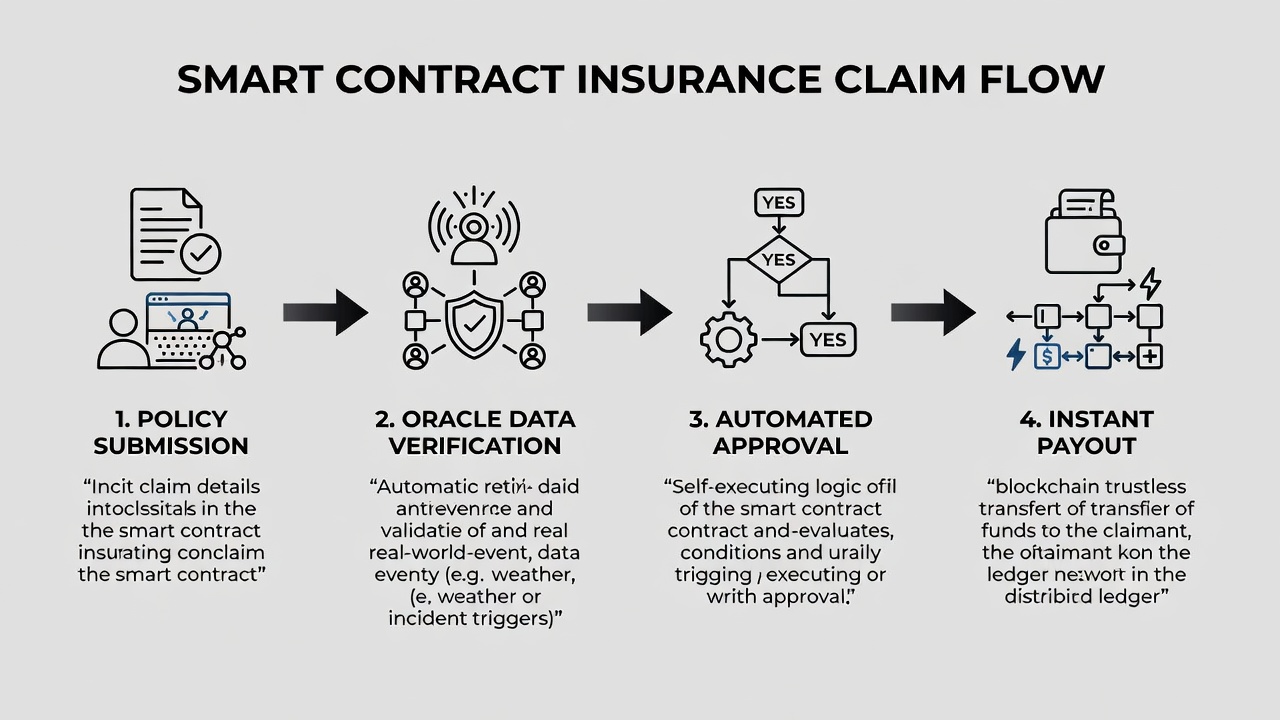
Direct Comparisons to Legacy Insurance Systems
Legacy systems often involve paper-based processes, multiple approvals, and high administrative costs. Blockchain alternatives offer transparency and speed but require new infrastructure. Key differences include reduced human error and enhanced data security through distributed ledgers. In legacy setups, a claim might pass through agents, underwriters, and claims adjusters, each adding time and potential bias. Blockchain streamlines this into a single automated sequence while maintaining compliance logs. However, legacy systems benefit from established regulatory familiarity and broader consumer protection networks. A direct comparison reveals that blockchain excels in high-volume, low-complexity claims like weather-triggered events, whereas complex liability cases may still need hybrid approaches combining on-chain automation with off-chain legal review. For beginners, starting with simple parametric products is recommended before tackling advanced protocols.
Emerging Regulatory Hurdles in 2026
Regulators are addressing the unique aspects of decentralized insurance. Compliance with data privacy laws and consumer protections remains critical. Resources from official U.S. securities oversight provide guidance on evolving standards, while Ethereum documentation supports developers building compliant smart contracts. Additional hurdles include cross-border jurisdiction issues, as blockchain operates globally yet insurance regulations vary by country. In 2026, bodies like the OECD are examining how to classify decentralized autonomous organizations (DAOs) that underwrite policies. Pros should monitor updates from OECD policy resources to stay ahead of compliance requirements. Beginners are advised to choose protocols that incorporate KYC elements and data localization features to mitigate risks.
Practical Steps for Evaluating New Insurance Protocols
- Assess the security audits of the underlying smart contracts by reviewing third-party reports from firms like Certik or Quantstamp.
- Review oracle reliability for external data feeds, ensuring multiple redundant sources are used to prevent single points of failure.
- Examine governance models for community-driven updates, checking if token holders can propose and vote on changes transparently.
- Test claim scenarios in sandbox environments before committing funds, using testnets to simulate real-world events without financial risk.
- Analyze user reviews and on-chain metrics such as claim approval rates and average settlement times to gauge real performance.
- Consider integration with existing wallets and ease of use for non-technical users when selecting a protocol.
These steps help both novices and experts avoid common pitfalls like choosing unvetted projects.
Additional Insights for Beginners and Industry Professionals
For those new to the space, blockchain insurance offers an entry point into decentralized finance without needing deep technical knowledge. Start by exploring user-friendly interfaces that abstract away the complexity of smart contracts. Industry pros can leverage these tools for portfolio diversification, incorporating blockchain-based products alongside traditional coverage. Emerging trends in 2026 include AI-enhanced smart contracts that predict claim likelihood and dynamic pricing models adjusted in real time via on-chain data. This creates opportunities for personalized policies that were previously cost-prohibitive.
Frequently Asked Questions
What makes blockchain insurance more secure than traditional options?
Immutable records and automated execution minimize tampering risks while providing full audit trails.
How do beginners get started with these protocols?
Begin by exploring educational resources on established blockchain platforms and testing small-scale simulations on testnets.
Are there risks involved in automated payouts?
Yes, including smart contract vulnerabilities, which is why thorough audits are essential before participation.
Can blockchain insurance handle complex claims like liability disputes?
Many protocols focus on parametric triggers, but hybrid models are emerging to incorporate arbitration layers for nuanced cases.
What role do oracles play in maintaining accuracy?
Oracles supply external data to smart contracts, and reputable ones use consensus mechanisms across multiple providers for reliability.
Conclusion
Blockchain insurance automation represents a major shift in 2026 crypto news, empowering users with efficient, fraud-resistant solutions. By understanding the mechanics, case studies, and regulatory landscape, both newcomers and experts can make informed decisions in this dynamic space. Continued innovation promises even greater accessibility and security as adoption grows.


No comments yet. Be the first!