 CryptoChain Blog

Introduction to 2026 DeFi Lending Evolutions
Decentralized finance continues to mature rapidly in 2026, with lending protocols undergoing significant shifts that are reshaping how investors access yields and manage risk. These changes focus on enhanced protocol upgrades, sophisticated risk management tools, and deeper integration with traditional finance systems. Investors searching for actionable insights will find practical guidance on evaluating opportunities in this dynamic landscape. The evolution is driven by lessons from previous market cycles, where vulnerabilities in liquidity and oracle reliability led to substantial losses for participants. In response, developers have prioritized resilience and user protection while maintaining the core permissionless nature of DeFi.
The core appeal of DeFi lending remains its ability to offer permissionless borrowing and lending, often with competitive returns compared to centralized alternatives. However, 2026 brings notable advancements that address past vulnerabilities while opening new avenues for adoption. Retail and institutional participants alike are drawn to these platforms for their transparency and composability with other decentralized applications.
Key Protocol Upgrades in Leading Platforms
Major DeFi lending platforms have rolled out upgrades emphasizing scalability and efficiency. For instance, improvements in smart contract architecture allow for more flexible interest rate models that adapt dynamically to market conditions. These upgrades reduce liquidation risks during volatility spikes and improve capital efficiency across pools. Many protocols now incorporate layer-two scaling solutions to lower transaction costs and increase throughput, enabling smaller investors to participate without prohibitive fees.
Another trend involves modular designs that let protocols integrate new asset classes seamlessly. This enables support for a broader range of collateral types, from established cryptocurrencies to tokenized real-world assets. Upgrades also include better governance mechanisms, where token holders can vote on parameter changes through streamlined on-chain proposals. Such features foster community-driven evolution and reduce the risk of centralized control points.
Interest Rate and Liquidity Innovations
Interest rate models have become more sophisticated, incorporating real-time data feeds to balance supply and demand. Liquidity providers benefit from optimized reward distributions that encourage long-term participation rather than short-term speculation. These changes help maintain stable borrowing rates even during periods of high market activity.
Enhanced Risk Management Improvements
Risk management has seen substantial innovation. Protocols now deploy advanced oracle systems and on-chain analytics to monitor positions in real time. Automated circuit breakers can pause operations during extreme events, protecting users from cascading liquidations. Multi-layered verification processes ensure that price feeds remain accurate and resistant to manipulation attempts.
Users benefit from improved transparency through detailed dashboards showing risk parameters. This empowers better decision-making when selecting lending pools or adjusting collateral ratios. Insurance modules and reserve funds provide additional buffers against unexpected shortfalls, giving participants greater confidence in the system's stability.
Integration with Traditional Finance
Bridging DeFi with TradFi accelerates in 2026. Partnerships with regulated institutions facilitate compliant on-ramps, allowing institutional capital to flow into decentralized lending markets. Ethereum remains central to these integrations due to its robust ecosystem and developer tools. Institutional players appreciate the ability to access on-chain yields while meeting regulatory requirements through structured products.
Such connections bring benefits like insured deposits for certain pools and standardized reporting for compliance purposes, making DeFi more accessible to mainstream investors. Securities and Exchange Commission resources provide guidance that many protocols now reference when designing compliant features. This hybrid approach reduces friction for traditional financial entities exploring blockchain-based opportunities.
Comparisons of Top DeFi Lending Platforms
When evaluating options, consider factors such as total value locked, supported assets, and historical performance. Leading platforms differentiate through unique features like variable-rate lending or flash loan capabilities. Platform A emphasizes high-yield opportunities in emerging assets with robust liquidation mechanisms, making it suitable for risk-tolerant users. Platform B focuses on stability and low-risk pools backed by blue-chip collaterals, appealing to conservative strategies. Platform C excels in cross-chain functionality for diversified exposure across multiple networks.
- Review utilization rates and reserve factors before committing funds.
- Compare liquidation thresholds and penalty structures to understand worst-case scenarios.
- Assess governance token utility for long-term alignment with protocol success.
Performance metrics as of mid-2026 highlight varying utilization rates and default histories, guiding investors toward suitable matches for their risk tolerance. Qualitative analysis shows that platforms with strong community oversight tend to recover faster from stress events.
Real-World Adoption Examples and Performance Metrics
Real-world use cases demonstrate growing traction. Corporate treasuries have adopted DeFi lending for short-term liquidity management, while retail users leverage protocols for yield farming strategies. Metrics show increased transaction volumes and higher retention rates among active wallets. In emerging markets, small businesses use these platforms to access capital without traditional banking intermediaries, illustrating financial inclusion benefits.
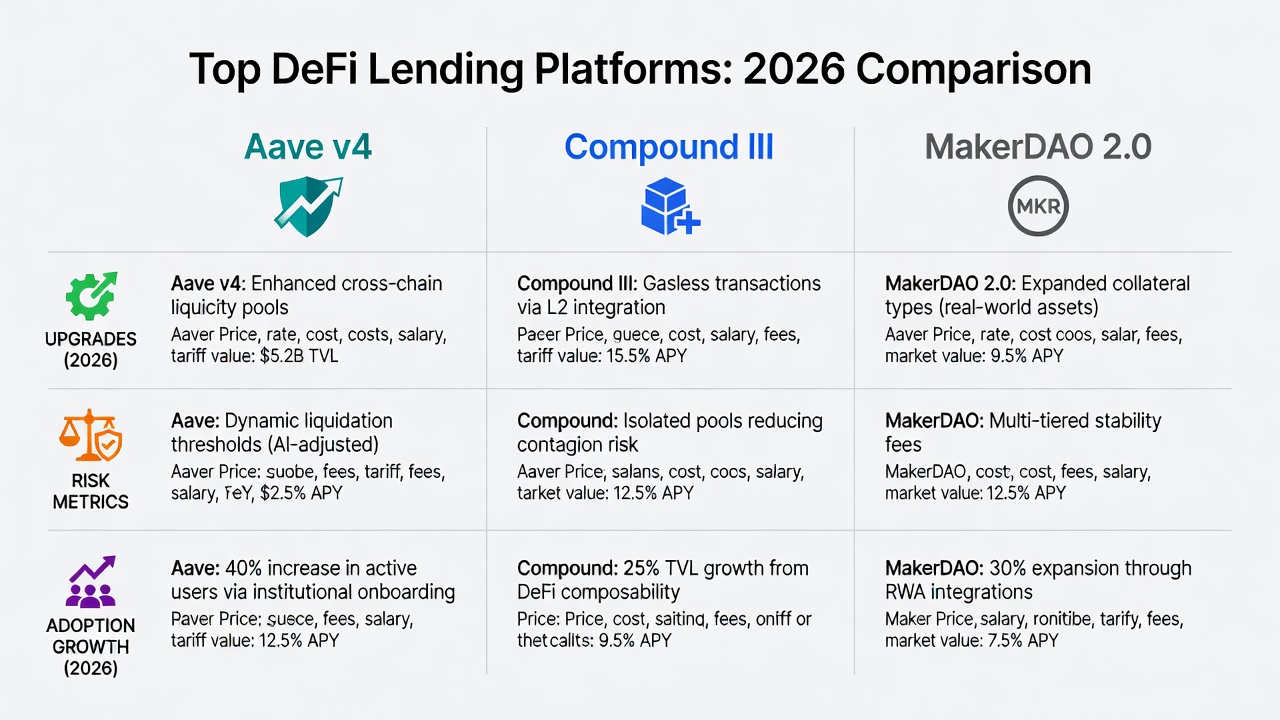
Adoption in regions with limited banking access further underscores DeFi's global potential, with protocols reporting steady growth in unique addresses interacting with lending markets. Educational initiatives by protocol teams have helped onboard new users through simplified interfaces and tutorial resources.
Actionable Insights on Yields and Security
Investors should prioritize security audits and community governance participation when pursuing yields. Diversifying across multiple protocols mitigates single-point failures. Always verify smart contract addresses and monitor for governance proposals that could impact terms. Regular portfolio reviews help adjust positions as market conditions evolve, while staying informed about network upgrades prevents missed opportunities or unexpected risks.
Practical Steps for Evaluating New DeFi Opportunities
Before engaging with any new protocol, follow a structured evaluation process. First, examine the project's documentation and audit history from independent firms. Next, analyze on-chain metrics such as liquidity depth and borrower activity. Then, review the development team's track record and any partnerships that add credibility. Finally, start with minimal exposure to test platform functionality before scaling commitments.
Common Pitfalls and Steps to Evaluate New Opportunities
FAQ section follows with targeted advice.
What are common pitfalls in DeFi lending?
Over-leveraging positions and ignoring smart contract risks top the list. Users often chase high APYs without assessing underlying liquidity or oracle reliability. Another frequent mistake involves neglecting to monitor governance changes that alter fee structures or collateral requirements.
How to evaluate new DeFi opportunities?
Step 1: Review audit reports from reputable firms. Step 2: Analyze on-chain data for TVL trends. Step 3: Assess team transparency and roadmap execution. Step 4: Test with small amounts before scaling. Step 5: Consider integration with existing wallets and tools for seamless operations.
What security practices should investors follow?
Enable hardware wallet support where available and use multi-signature setups for larger holdings. Stay updated on protocol announcements via official channels to avoid phishing attempts.
Conclusion
The 2026 shifts in DeFi lending protocols signal a more resilient and integrated ecosystem. By focusing on upgrades, risk tools, and practical evaluation, investors can navigate this space with greater confidence and informed strategies. Continued innovation promises further maturation, provided participants remain vigilant and adaptive to ongoing developments.


No comments yet. Be the first!