 CryptoChain Blog

Introduction to Decentralized Identity in 2026
The crypto and blockchain landscape in 2026 continues to evolve rapidly, with decentralized identity (DID) emerging as a transformative force. This technology empowers users with greater control over personal data while enabling secure, verifiable interactions across digital ecosystems. As regulatory frameworks mature and enterprise pilots expand, investors and developers must understand these advancements to capitalize on new opportunities. Decentralized identity solutions eliminate reliance on centralized databases that have historically been prone to breaches and misuse. Instead, they leverage cryptographic methods to let individuals manage their own identifiers and share only necessary attributes. This shift aligns perfectly with the broader ethos of blockchain technology, promoting transparency, security, and user sovereignty. Recent protocol launches and real-world implementations highlight how DIDs are reshaping data sovereignty in finance, healthcare, and beyond. This article delves into the key developments, comparisons of standards, privacy considerations, and practical roadmaps that will help stakeholders navigate this evolving space effectively.
Key Protocol Launches Driving Innovation
Throughout early 2026, several major DID protocols reached production readiness. These include enhanced versions of established frameworks that integrate seamlessly with existing blockchain networks such as Ethereum and newer layer-two solutions. Notable launches feature improved scalability features that allow millions of identity transactions per second without compromising decentralization. Developers now have access to upgraded software development kits that support multiple programming languages, lowering the barrier for integration into existing applications. Enterprise interest has surged, with pilots demonstrating reduced friction in identity verification processes. For example, new protocols incorporate advanced zero-knowledge proof mechanisms that enable selective disclosure of information. Investors note the growing ecosystem of supporting tokens and services that provide liquidity and governance options. These launches represent a maturation of the technology stack, moving from experimental phases to robust, enterprise-grade tools ready for widespread deployment across global markets.
Regulatory Tailwinds Accelerating Adoption
Regulatory tailwinds from global bodies have accelerated adoption, providing clearer guidelines for compliance and interoperability. Governments in major economies have introduced frameworks that recognize decentralized identifiers as valid forms of digital proof, reducing legal uncertainties that previously slowed progress. These policies emphasize consumer protection while fostering innovation, creating an environment where businesses can experiment confidently. In addition, international collaborations have produced harmonized standards that facilitate cross-border data flows. Developers benefit from improved tooling that simplifies integration, while investors observe increased institutional participation as regulatory clarity reduces perceived risks. The alignment between policy and technology marks a pivotal moment, positioning decentralized identity as a cornerstone of future digital economies.
DID Standards vs Verifiable Credentials: A Detailed Comparison
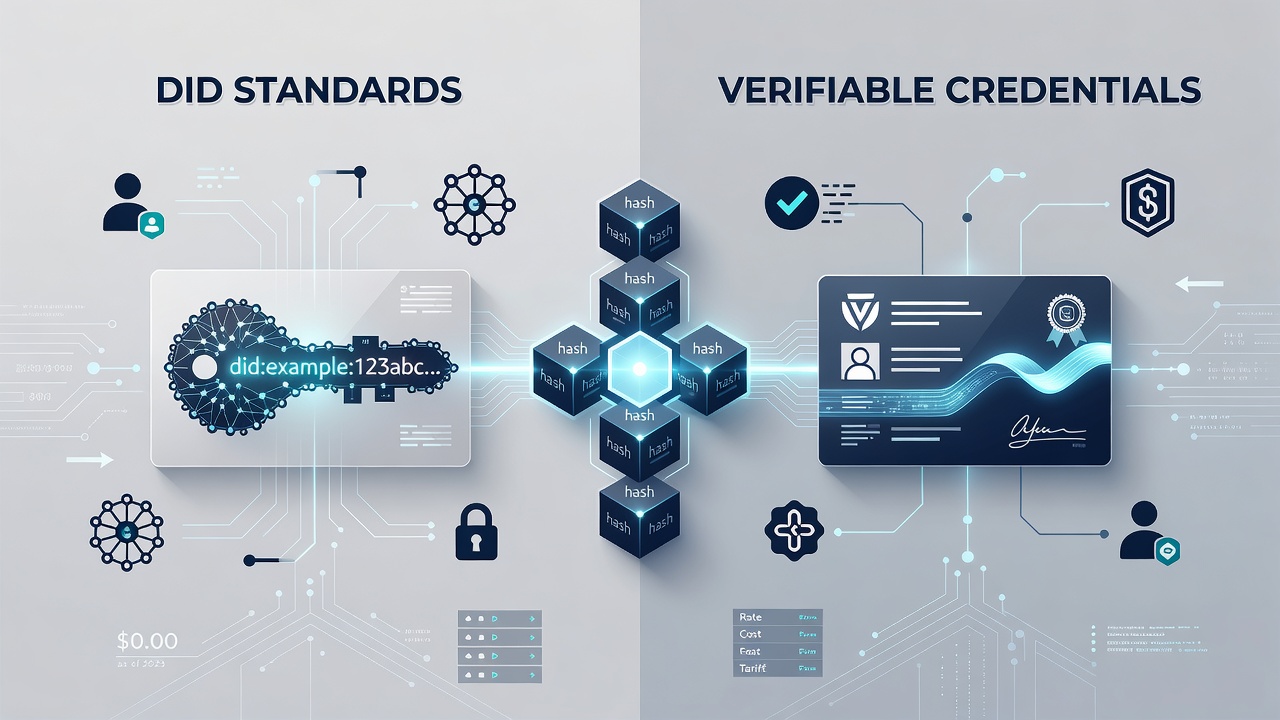
Decentralized identifiers (DIDs) and verifiable credentials (VCs) form the backbone of modern decentralized identity solutions. DIDs serve as unique, user-controlled identifiers that do not rely on centralized authorities, functioning much like digital versions of passport numbers but stored on blockchains or distributed ledgers. In contrast, verifiable credentials provide cryptographically signed attestations of claims, such as qualifications or authorizations, allowing issuers to prove authenticity without revealing underlying data. Key differences emerge across several dimensions. Interoperability sees DIDs excelling in cross-platform resolution, while VCs offer flexible data schemas adaptable to various industries. Security relies on public-key cryptography in both cases, but VCs add layers of revocation mechanisms that instantly invalidate compromised credentials. Use cases differ as well: DIDs suit persistent identity anchors for long-term relationships, whereas VCs fit dynamic attribute verification such as age checks or professional licenses. Practical implementation often combines both technologies for optimal results, with developers selecting based on specific application requirements like transaction volume or privacy levels. Understanding these distinctions helps avoid common integration pitfalls and ensures solutions meet both technical and regulatory demands.
Additional considerations include scalability testing and community governance models that influence long-term viability of chosen standards.
Privacy Implications Explored in Depth
Privacy remains central to DID discussions, with solutions emphasizing zero-knowledge proofs to minimize data exposure during verification. Users can prove attributes like citizenship or creditworthiness without disclosing full personal histories, significantly reducing risks associated with data aggregation by third parties. However, challenges arise around metadata leakage and the need for robust consent management systems. Security benchmarks from 2026 evaluations show robust resistance to common attacks when implemented correctly, including resistance to phishing and man-in-the-middle threats through decentralized key management. Yet risks such as key mismanagement persist, underscoring the importance of user education. Best practices include regular audits and multi-factor recovery options. Authoritative guidance from W3C standards provides foundational recommendations for secure implementations that balance usability and protection.
Security Benchmarks and Emerging Threats
Independent testing in 2026 has established high security benchmarks for leading DID platforms, with many achieving top ratings in penetration testing and formal verification processes. These evaluations cover encryption strength, resistance to quantum computing threats through post-quantum algorithms, and resilience against distributed denial-of-service attacks. Emerging threats include sophisticated social engineering targeting recovery phrases, prompting the development of hardware-backed wallets specifically designed for identity use. Organizations are advised to implement continuous monitoring and incident response plans tailored to decentralized environments.
Adoption Roadmaps for Organizations
Organizations considering DID integration should follow phased roadmaps: initial assessment of current identity infrastructure, followed by pilot testing in low-risk environments, and culminating in full deployment with stakeholder training. Practical steps include mapping existing data flows, selecting compatible protocols, and establishing governance committees to oversee ongoing operations. Developers can leverage open-source libraries to reduce custom development efforts while ensuring compliance with evolving standards. This structured approach minimizes disruption and maximizes return on investment over time.
Cost Analyses and Resource Planning
Qualitative cost considerations involve initial infrastructure setup, ongoing maintenance, and potential licensing for premium features, though exact figures vary by organizational scale and remain dynamic as of mid-2026. Efficiency gains through streamlined processes often offset these investments by reducing manual verification labor and fraud-related losses. Careful planning around scalability ensures costs remain manageable as user bases grow.
Case Studies from Finance and Healthcare
Finance Sector Case Study 1: A leading bank piloted DID-based KYC processes, achieving faster onboarding while enhancing user privacy through selective disclosure features. The implementation integrated with existing compliance systems, resulting in improved customer satisfaction and reduced operational overhead across multiple jurisdictions.
Finance Sector Case Study 2: Cross-border payment platforms integrated VCs for compliance checks, reducing intermediary dependencies and accelerating transaction settlement times. This approach also enabled real-time audit trails that satisfied stringent regulatory reporting requirements without compromising user confidentiality.
Healthcare Sector Case Study: Hospitals adopted decentralized identity for patient records, improving data portability and consent management across providers. Patients gained granular control over who accesses their medical history, fostering trust and encouraging broader participation in digital health initiatives. These examples illustrate tangible benefits in regulated industries where data sensitivity is paramount.
Mistakes to Avoid During Implementation
Common pitfalls include neglecting user experience design, which can lead to low adoption rates, and underestimating the importance of key recovery mechanisms. Another frequent error involves choosing non-interoperable standards that create future migration challenges. Thorough testing in simulated environments and engagement with standards bodies help mitigate these risks effectively.
Frequently Asked Questions
Investors often ask how quickly returns materialize from DID projects, while developers seek clarity on the most future-proof protocols. Answers depend on specific use cases, but early movers in finance and healthcare report measurable improvements within the first year of deployment when strategies are well-executed.
Conclusion and Actionable Insights
Decentralized identity breakthroughs in 2026 signal a shift toward user-centric data control in crypto ecosystems. By examining protocols, standards, and real-world applications in detail, investors and developers can make informed decisions. Continued monitoring of regulatory developments and security advancements will be essential for long-term success. Explore resources from IETF and NIST for deeper technical details that support strategic planning.


No comments yet. Be the first!