 CryptoChain Blog

Introduction to Decentralized Social Media in 2026
The crypto landscape in 2026 continues to evolve rapidly, with decentralized social media platforms gaining significant traction among users seeking greater autonomy over their data and interactions. These blockchain-powered networks offer users greater control over data and content, moving away from centralized giants that have dominated the space for over a decade. This article dives deep into the latest developments, including detailed user growth metrics, emerging projects, token incentive models, and real-world adoption examples from the past year. As blockchain technology matures, platforms built on protocols like Ethereum and Solana are attracting millions of new participants who value transparency and resistance to censorship.
Key User Growth Metrics and Protocol Upgrades
Recent reports highlight substantial increases in active users on platforms like Lens Protocol and Farcaster. By mid-2026, decentralized networks reported over 15 million monthly active users collectively, representing a 250 percent year-over-year increase. Protocol upgrades have focused on scalability and interoperability, enabling seamless cross-chain interactions. For instance, enhancements in zero-knowledge proofs have improved privacy features without compromising performance, allowing users to verify identities while keeping personal information private. Upgrades to layer-2 solutions have reduced transaction fees dramatically, making daily interactions more accessible for mainstream audiences. These technical improvements have directly contributed to higher retention rates as users experience smoother onboarding and content sharing processes.
Emerging Projects and Token Incentives
New projects are integrating token incentives to reward content creators and curators. Users earn native tokens for engagement, fostering vibrant ecosystems where participation directly translates to economic benefits. This model contrasts with traditional advertising-driven platforms by aligning incentives directly with participants rather than corporate interests. Integration examples include reward mechanisms that distribute tokens based on verified interactions, boosting retention rates. Projects such as Friend.tech derivatives and new decentralized Twitter alternatives have introduced staking features where users lock tokens to gain governance rights, influencing platform development. Token incentives also extend to moderators who help maintain community standards, creating self-sustaining networks that grow organically through user contributions.
Developers are experimenting with dynamic reward algorithms that adjust based on content quality signals derived from on-chain activity, ensuring fair distribution and reducing spam.
Regulatory Challenges in Major Markets
Navigating regulations remains a hurdle for these emerging platforms. In the US and EU, authorities are scrutinizing token classifications and data privacy. SEC guidelines continue to shape compliance strategies for these platforms. The European Union's MiCA framework has introduced new reporting requirements for token issuers, prompting projects to implement robust KYC alternatives that preserve decentralization. In Asia, countries like Singapore and Japan have adopted more progressive stances, offering sandboxes for testing decentralized applications. Meanwhile, platforms must balance innovation with legal obligations, often relying on decentralized autonomous organizations (DAOs) to make collective decisions about regulatory responses.
Comparing Decentralized Alternatives to Traditional Platforms
Unlike centralized networks, decentralized options prioritize user sovereignty and data ownership. Real-world examples from 2026 show creators migrating en masse to platforms offering censorship resistance. Adoption in creative industries demonstrates how token rewards drive organic growth. Traditional platforms often face criticism for opaque algorithms and sudden policy changes that affect reach, whereas decentralized alternatives provide immutable records of content distribution. However, challenges remain in moderation, where community-driven approaches can sometimes lead to inconsistent enforcement. Overall, the comparison favors decentralization for users concerned with privacy and monetization, though hybrid models are emerging to bridge the gap.
Practical Steps to Migrate Accounts and Join Networks
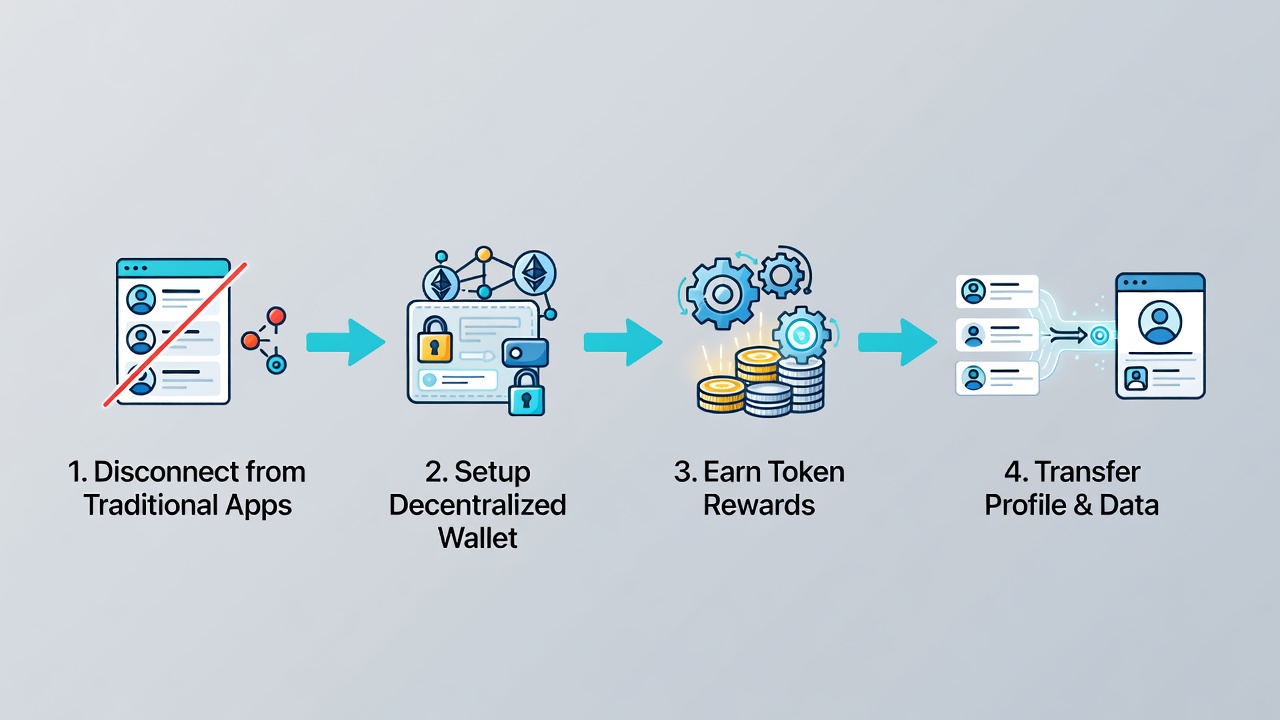
Users can follow these steps to transition smoothly from traditional social media to decentralized alternatives:
- Research platforms matching your interests, such as those built on Ethereum or Solana, by reviewing their whitepapers and community forums.
- Create a crypto wallet using reputable providers and secure your private keys with hardware solutions or encrypted backups.
- Import or recreate profiles using decentralized identifiers (DIDs) that allow portable identities across networks.
- Engage with communities and claim initial token rewards through faucet programs or early adopter bounties.
- Gradually shift content posting to the new network while maintaining backups on decentralized storage like IPFS.
- Participate in governance votes to influence platform evolution and maximize token utility.
Always verify smart contract audits before connecting wallets, and consider starting with testnet interactions to familiarize yourself with the interface. Common mistakes include neglecting seed phrase security or rushing into high-risk token trades without research.
Real-World Adoption Examples from 2026
Artists and journalists have reported higher earnings through decentralized platforms. One case involved a creator earning consistent token rewards after switching, highlighting the economic advantages. In another example, a news collective used a decentralized platform to distribute investigative reports without interference, reaching audiences in regions with strict content controls. Musicians have leveraged token-gated communities to offer exclusive content directly to fans, bypassing traditional streaming services. These stories illustrate how practical migration leads to both financial and creative freedom in 2026.
Mistakes to Avoid When Joining Decentralized Networks
New users often overlook wallet security best practices, leading to lost funds. Another frequent error is ignoring gas fee fluctuations during peak times, which can make transactions costly. Always diversify across multiple platforms rather than committing fully to one ecosystem, and stay updated on protocol changes via official channels.
FAQ: Addressing Common Security Concerns
How secure are private keys on these platforms?
Users control their keys; best practices include hardware wallets and regular backups to prevent loss or theft.
What about data breaches?
Decentralized architectures reduce single points of failure, though smart contract vulnerabilities require ongoing audits by independent firms.
Can accounts be hacked easily?
Phishing remains a risk; enable two-factor authentication via wallet integrations and avoid sharing seed phrases under any circumstances.
Are token rewards taxable?
Consult local tax authorities, as rewards may qualify as income in many jurisdictions and require proper reporting.
How do I recover access if I lose my device?
Use social recovery mechanisms or multi-signature setups offered by many decentralized identity solutions to regain access safely.
Conclusion
Decentralized social media represents a paradigm shift in 2026 crypto news. With continued upgrades and user adoption, these platforms are poised for further expansion. Start exploring today to stay ahead in the evolving digital landscape and take control of your online presence.


No comments yet. Be the first!