 CryptoChain Blog
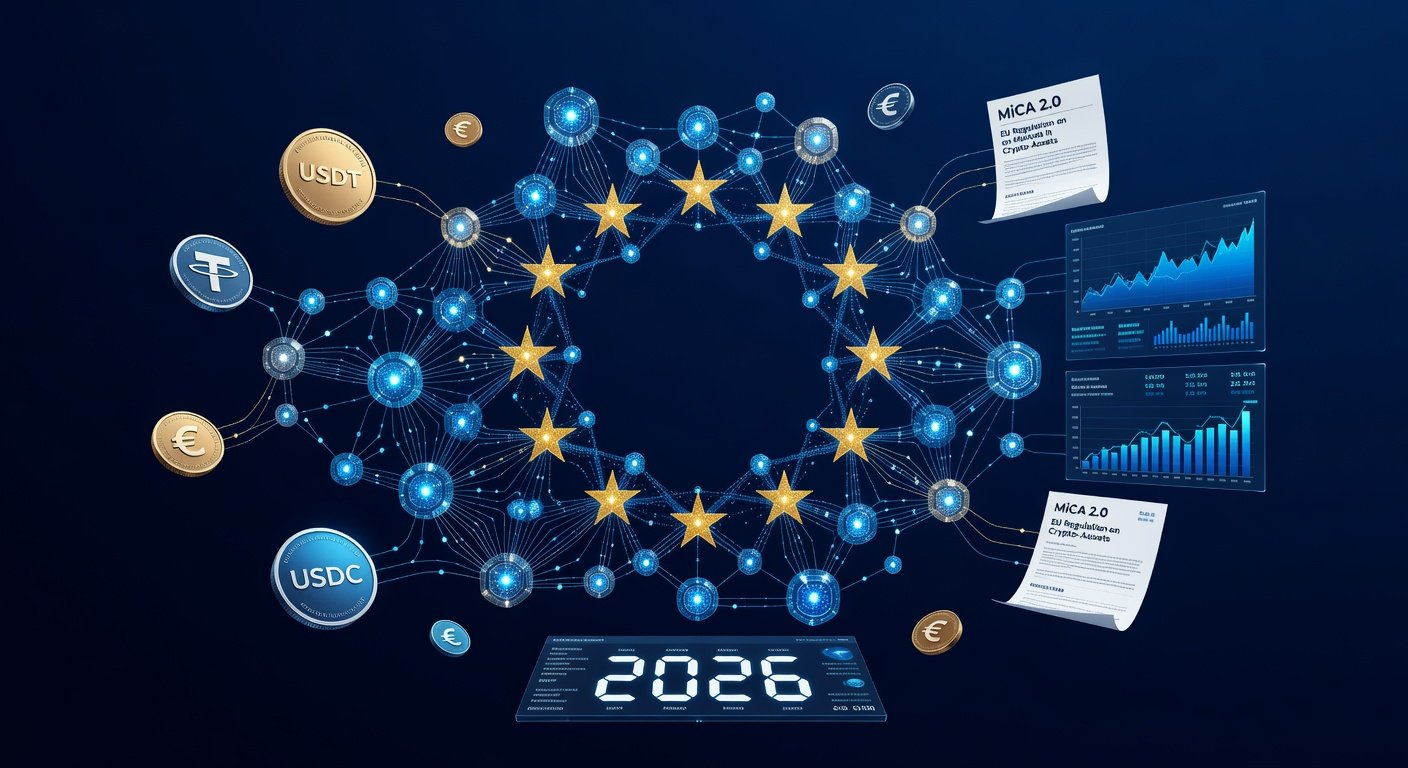
Understanding EU MiCA 2.0: A Game-Changer for Crypto in 2026
The European Union's Markets in Crypto-Assets (MiCA) regulation has been a cornerstone of crypto oversight since its initial phases. But as we approach 2026, MiCA 2.0 promises to reshape the landscape with stricter rules on stablecoins, decentralized finance (DeFi), and token listings. This update isn't just regulatory fine-tuning—it's a bold step toward consumer protection, financial stability, and innovation within boundaries. For traders, exchanges, and developers, understanding these changes is crucial to staying compliant and competitive.
MiCA 1.0, fully applicable from June 2024, focused on licensing crypto-asset service providers (CASPs) and transparency for stablecoins. MiCA 2.0, slated for phased rollout starting early 2026, expands into DeFi protocols, algorithmic stablecoins, and multi-chain token listings. Drawing from ongoing consultations by the European Securities and Markets Authority (ESMA), it addresses gaps exposed by market volatility and scandals like TerraUSD's collapse.
In this comprehensive guide, we'll break down the key provisions, analyze impacts on giants like Binance and Coinbase, outline compliance strategies, and predict market shifts. Whether you're an investor eyeing EU markets or a project founder planning listings, this article equips you with actionable insights.
Key Provisions of MiCA 2.0: What's New in 2026?
MiCA 2.0 builds on the original framework by targeting emerging risks. Here's a deep dive into the core changes:
- Stablecoin Overhaul: E-money tokens (EMTs) and asset-referenced tokens (ARTs) face 1:1 reserve requirements with monthly attestations. Algorithmic stablecoins, previously in a gray area, must now register as 'synthetic EMTs' with stress-testing mandates. Issuers like Tether (USDT) and Circle (USDC) will need EU-specific subsidiaries.
- DeFi Regulations: Permissionless protocols aren't fully exempt anymore. 'DeFi Arrangements' exceeding €500M in total value locked (TVL) require 'DeFi Oversight Entities' for KYC/AML compliance. Smart contract audits become mandatory for front-end interfaces offering trading services.
- Token Listings and White Lists: Exchanges must maintain 'pre-approved' token lists vetted by national competent authorities (NCAs). New listings undergo a 14-day review for utility, security classification, and investor safeguards. Fan tokens and meme coins face heightened scrutiny.
- Cross-Border Enforcement: Enhanced data-sharing via the European Blockchain Supervisory Authority (proposed in MiCA extensions).
These rules stem from the EU's drive for a unified digital euro ecosystem, as outlined in official documents from the EUR-Lex database.
Impacts on Major Exchanges: Binance and Coinbase in the Spotlight
Centralized exchanges (CEXs) operating in the EU will feel the pinch most acutely. Binance, with its dominant EU volume, has already pivoted by launching Binance EU licenses under MiCA 1.0. MiCA 2.0 could force delistings of non-compliant tokens—think high-risk altcoins like certain DeFi yields or unverified stablecoins.
Coinbase, more compliance-focused, positions itself favorably. Its advanced custody solutions align with new reserve rules, potentially gaining market share. A comparison:
| Exchange | MiCA 1.0 Status | MiCA 2.0 Challenges | Projected Adaptation |
|---|---|---|---|
| Binance | Licensed in France, Italy | DeFi integrations, token whitelist | Launch EU-specific DeFi hub |
| Coinbase | MiCA-compliant across EU | Stablecoin issuer expansions | Base chain optimizations |
Smaller exchanges risk shutdowns if they can't afford NCA approvals, consolidating power among top players. 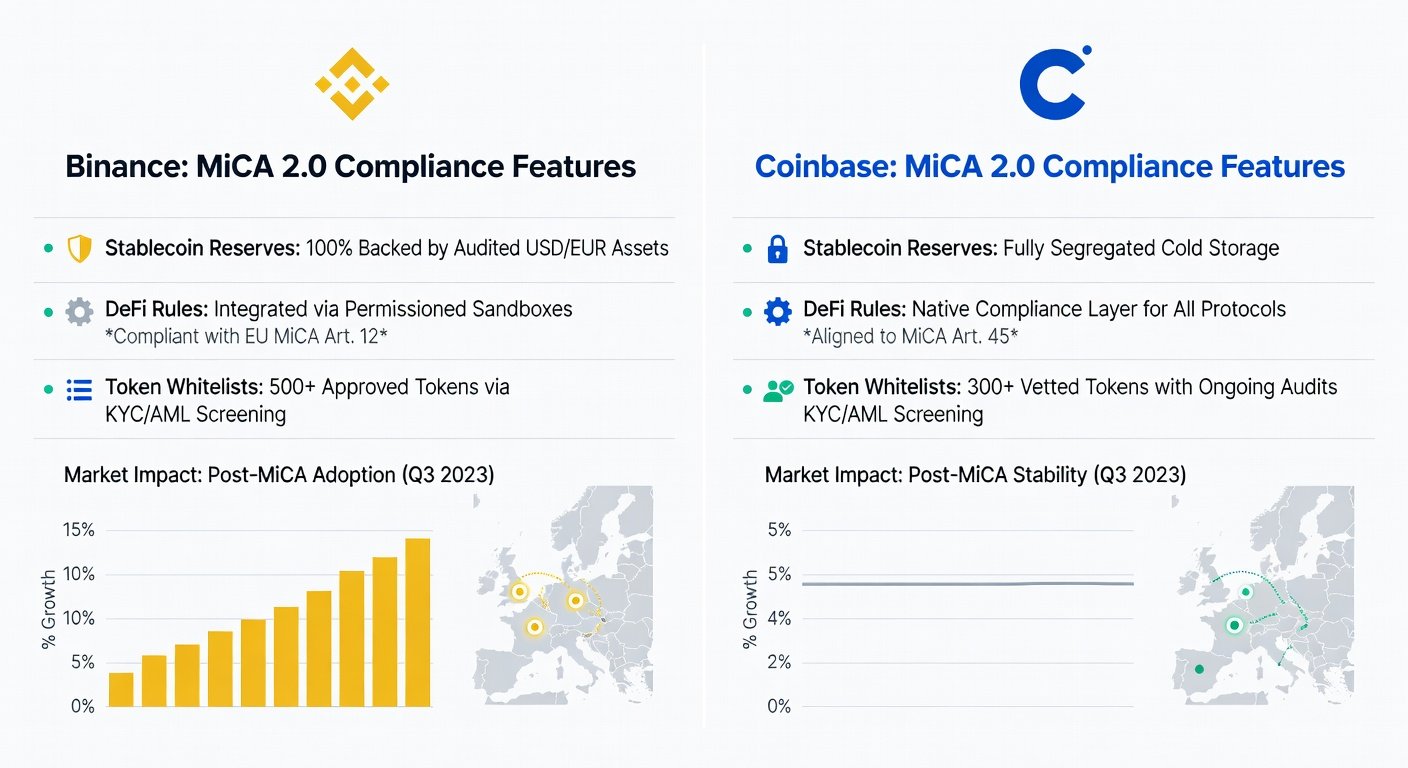
Stablecoins Under the Microscope: Compliance and Innovation
Stablecoins represent 10-15% of EU crypto trading volume. MiCA 2.0 mandates:
- Full collateralization with low-risk assets (e.g., EU gov bonds).
- Redemption rights within 24 hours.
- Ban on yield-bearing stablecoins to prevent shadow banking.
Examples: USDC's Circle has applied for EMT status, while USDT faces hurdles due to offshore reserves. Non-EU issuers might spawn 'MiCA wrappers'—tokenized versions compliant via EU entities.
DeFi's New Reality: From Wild West to Regulated Frontier
DeFi TVL hit $100B+ in 2024; MiCA 2.0 caps unchecked growth. Protocols like Uniswap or Aave must implement 'opt-in KYC' for EU users or geoblock them. Mistakes to avoid:
- Ignoring TVL thresholds—triggers oversight.
- Front-end anonymity—deemed CASP activity.
- Neglecting audits—fines up to 12.5% of turnover.
Innovators can thrive by designing 'MiCA-ready' layers, like permissioned pools on Layer 2s.
Token Listings: A Stricter Gatekeeping Process
The whitelist regime echoes traditional IPOs. Projects must submit whitepapers, legal opinions, and risk disclosures. EU listings could boost credibility globally, attracting institutional capital. Prediction: 30-50% fewer altcoin listings on EU arms of exchanges by mid-2026.
Compliance Strategies: Practical Steps for Survival
Navigating MiCA 2.0 requires proactive planning. Here's a step-by-step guide:
- Assess Exposure: Calculate EU user base and TVL. Use tools like Dune Analytics for on-chain metrics.
- Secure Licensing: Apply via NCAs (e.g., Germany's BaFin). Budget €100K-500K for legal fees.
- Tech Upgrades: Integrate KYC via providers like Sumsub; audit with PeckShield.
- Token Strategy: Classify assets (utility vs. security) per ESMA guidelines.
- Monitor Updates: Track via the European Commission's Digital Finance page.
- Geofencing: Block EU IPs for non-compliant features.
For projects, hybrid models—offshore core with EU-compliant interfaces—offer a bridge.
Global Implications and Market Predictions for 2026
MiCA 2.0 sets a precedent. The U.S. might mirror with clearer SEC rules, while Asia (e.g., Hong Kong) competes with lighter regimes. Expect:
- EU crypto market cap growth to €1T by 2027, driven by trust.
- DeFi migration to non-EU chains like Solana.
- Binance/Coinbase EU volumes up 20-30% post-compliance.
- Stablecoin innovation in 'regulated synths' yielding 2-4% safely.
Risks include innovation flight to Dubai or Singapore, but Europe's 450M consumers make compliance worthwhile.
Conclusion: Embrace MiCA 2.0 for Long-Term Wins
2026 marks crypto's maturation in the EU. MiCA 2.0, while stringent, fosters sustainable growth by weeding out bad actors. Exchanges like Binance and Coinbase are adapting swiftly, and savvy projects will follow. Stay informed, prioritize compliance, and position yourself for the regulated bull run ahead. The future of blockchain innovation lies in balanced regulation—MiCA 2.0 is the blueprint.


No comments yet. Be the first!