 CryptoChain Blog

Introduction
In the fast-evolving landscape of 2026 crypto news, investors and analysts need reliable methods to separate promising blockchain projects from speculative ventures. This guide delivers a structured evaluation framework focused on tokenomics, team transparency, code audit status, and real-world adoption signals. Readers will gain checklists, red-flag examples, and scoring templates to apply immediately. The crypto market moves quickly, with new Layer-1 chains, DeFi protocols, and infrastructure projects launching regularly. Without a repeatable process, it is easy to fall for marketing hype or overlook critical weaknesses that surface only after investment. This article breaks down each evaluation area with concrete steps, real-world style examples, and actionable templates designed for immediate use by both individual investors and professional analysts.
Step 1: Analyzing Tokenomics
Tokenomics form the economic foundation of any blockchain project. Examine token supply, distribution, utility, and vesting schedules in detail. Look for balanced allocations that avoid excessive concentration among founders or early investors. Red flags include unlimited supply without clear deflationary mechanisms or immediate unlocks that could flood the market. For example, a project claiming 40 percent of tokens allocated to the team with no vesting schedule should raise immediate concerns. Sustainable tokenomics typically feature gradual release schedules, clear utility such as governance rights or fee discounts, and mechanisms like token burns tied to actual network usage. Use this expanded checklist: total supply capped or inflationary with transparent justification; utility that drives genuine demand rather than speculation alone; vesting periods of at least 12-24 months for team and advisor tokens with cliffs; allocation breakdowns published in official documentation and updated quarterly; and liquidity provisions that prevent large holders from dominating early trading. Investors should also model different scenarios, such as what happens to token price if 20 percent of the supply unlocks in year one versus gradual release over four years.
Step 2: Evaluating Team Transparency
Transparent teams build long-term trust. Verify identities of core members through LinkedIn profiles, prior project histories, and public interviews. Cross-check for past successes or failures in the crypto space, including any involvement in previous projects that faced regulatory scrutiny. Anonymous teams are not automatically disqualifying but require stronger evidence in other areas such as audited code and early adoption metrics. Practical verification steps include searching for team members on professional networks, reviewing conference appearances, and examining open-source contributions. When a founder previously led a project that raised significant funds and then disappeared, this history should be weighed heavily against the new venture. Look for teams that publish regular updates, participate in community calls, and disclose any conflicts of interest openly.
Step 3: Reviewing Code Audit Status
Independent code audits reduce security risks substantially. Confirm audits from reputable firms and review any disclosed vulnerabilities along with remediation status. Multiple audits from different providers offer additional reassurance. Always read the full audit reports rather than relying on summary claims posted on social media. Pay attention to the scope of the audit, whether it covers only the smart contracts or the entire protocol stack, and whether follow-up audits were conducted after fixes. A project that publishes audit reports with unresolved high-severity issues should be approached with caution. Community discussions on forums often highlight whether fixes were actually implemented or merely promised.
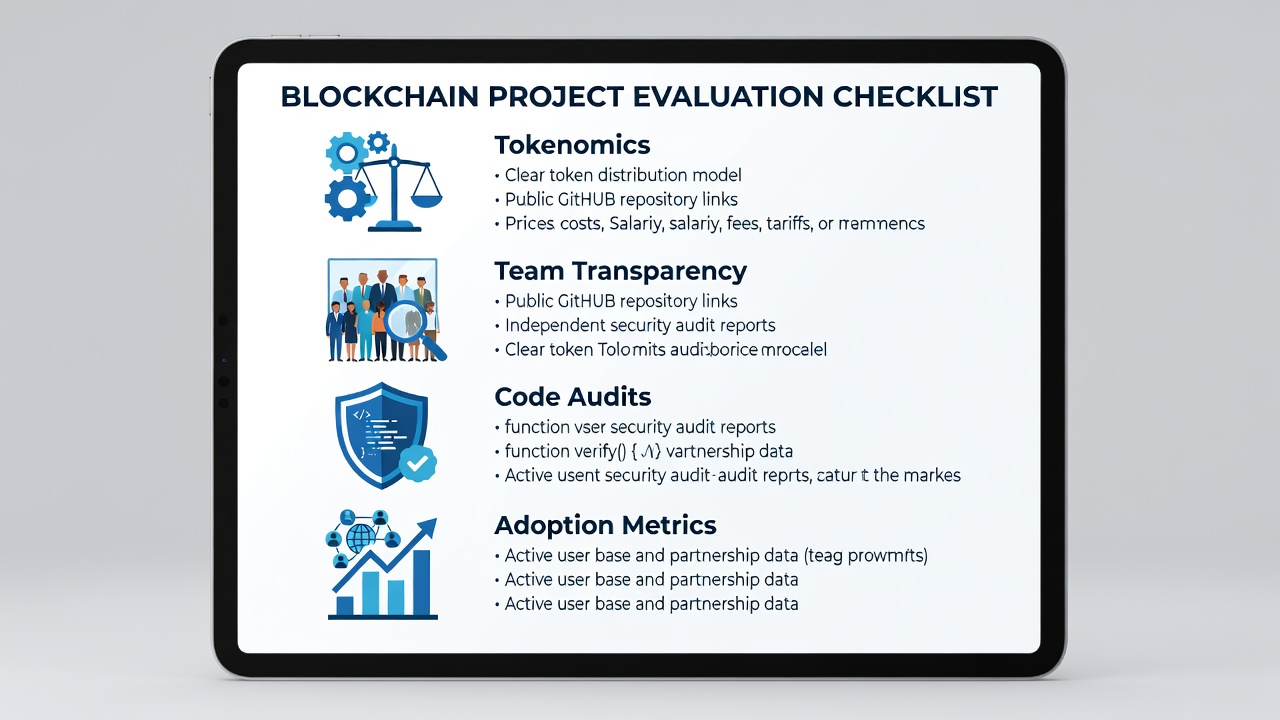
Step 4: Identifying Real-World Adoption Signals
Adoption goes beyond social media hype and influencer endorsements. Track active addresses, transaction volumes, and partnerships with established entities. Monitor developer activity on public repositories and user growth across testnets or mainnets. Sustainable projects demonstrate consistent usage rather than one-time spikes driven by airdrop farming. Real signals include integrations with existing DeFi platforms, enterprise pilot programs, or measurable increases in daily transactions that correlate with organic user growth. For instance, a new payment-focused chain showing steady rises in merchant adoption and repeat transactions provides stronger evidence than a project whose activity drops sharply after initial token distribution events.
On-Chain Metrics to Monitor
Effective evaluation requires ongoing monitoring of on-chain data. Key metrics include daily active addresses and their growth trends over multiple months, transaction count and average value transferred, token velocity and holder distribution patterns, smart contract interaction frequency, and network fees alongside validator participation rates. These indicators together reveal whether a project has genuine usage or merely inflated vanity metrics. Tools such as blockchain explorers allow investors to verify claims directly without relying solely on project dashboards.
Common Whitepaper Pitfalls
Whitepapers often contain overstated claims that do not hold up under scrutiny. Watch for vague technical details, unrealistic timelines, copied content from other projects, or promises without technical feasibility. Compare stated goals against current development progress on public trackers. A common pitfall is the use of impressive-sounding terminology without concrete implementation plans or references to existing research. Investors should create a simple comparison table matching whitepaper milestones against actual GitHub commits and testnet performance data released to date.
Cross-Referencing Claims Against Recent Blockchain Updates
Always verify project claims using primary sources such as CoinDesk, official blockchain explorers, and community governance forums. Compare announcements with on-chain data and third-party research reports from established analytics platforms. Additional reliable references include Ethereum.org for protocol-level developments and Bitcoin.org for foundational Bitcoin-related updates. This cross-referencing process helps identify discrepancies between marketing materials and actual technical progress.
Practical Scoring Template
Assign points across five categories (0-10 each): Tokenomics, Team, Audits, Adoption, and Metrics. Total scores above 40 indicate strong candidates for further research. Scores below 25 warrant caution or avoidance. Revisit scores quarterly as new data emerges. For example, a hypothetical project scoring 8 in Tokenomics, 7 in Team, 9 in Audits, 6 in Adoption, and 8 in Metrics totals 38 and would merit deeper due diligence. Document the reasoning behind each score so the evaluation can be updated consistently over time.
Common Mistakes to Avoid
Many investors skip full report reviews, rely on single data sources, or ignore vesting schedules entirely. Another frequent error is overweighting social media sentiment while underweighting on-chain activity. To avoid these pitfalls, create a standardized evaluation checklist and require at least two independent sources for every major claim before assigning high scores. Setting personal rules, such as never investing in projects with anonymous teams and un-audited contracts simultaneously, adds an extra layer of discipline.
FAQ
How long should a risk assessment take?
A thorough initial review typically requires 4-8 hours spread across several days, allowing time to verify multiple data points and review audit reports in full.
What are the best free data sources?
Public blockchain explorers, project GitHub repositories, and official documentation provide reliable starting points without subscription costs. Aggregators that compile on-chain statistics can speed up the process when used alongside primary sources.
Should anonymous teams be avoided completely?
Not necessarily, but they require stronger supporting evidence in audits, adoption metrics, and transparent token distribution to offset the lack of identifiable leadership.
How often should evaluations be updated?
Quarterly reviews are recommended, with more frequent checks during periods of rapid development or major protocol upgrades.
Conclusion
Applying this framework consistently helps navigate 2026 crypto news with greater confidence. Focus on verifiable evidence rather than marketing narratives to make informed decisions about new blockchain projects. Regular practice with the checklists and scoring system builds intuition for spotting both opportunities and risks early.


No comments yet. Be the first!