 CryptoChain Blog
Introduction to Modular Blockchains in 2026
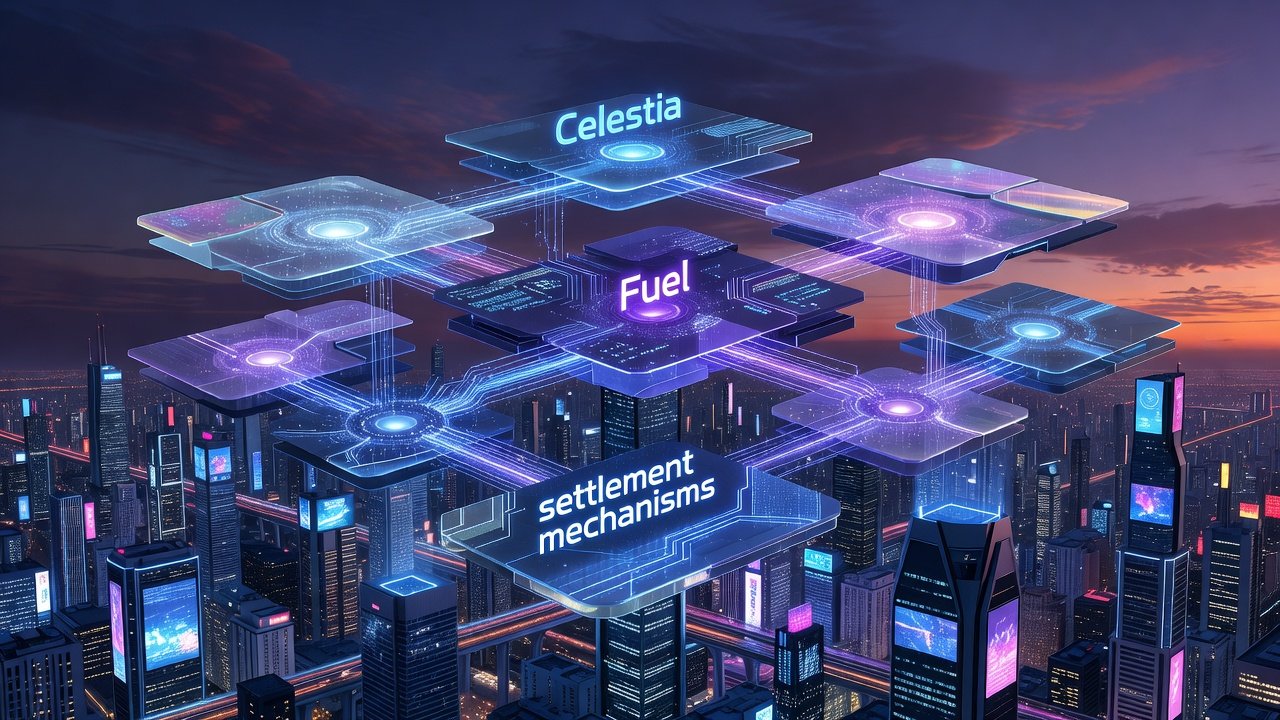
As monolithic blockchains continue to encounter scalability bottlenecks in 2026, modular blockchain architectures have gained significant traction among developers, investors, and enterprises seeking more efficient solutions. Unlike traditional designs where consensus, execution, data availability, and settlement all occur on a single layer, modular systems break these functions into independent, specialized components. This separation enables teams to optimize for specific needs such as higher throughput, reduced costs, and enhanced flexibility while maintaining robust security guarantees. The shift toward modularity reflects broader industry trends driven by increasing demand for decentralized applications in DeFi, gaming, supply chain, and AI-integrated services. This comprehensive comparison explores the leading players including Celestia, Fuel, and emerging modular stacks, offering practical insights backed by deployment examples, performance considerations, and decision frameworks tailored for builders and those monitoring the latest blockchain updates.
Understanding Modular vs Monolithic Architectures
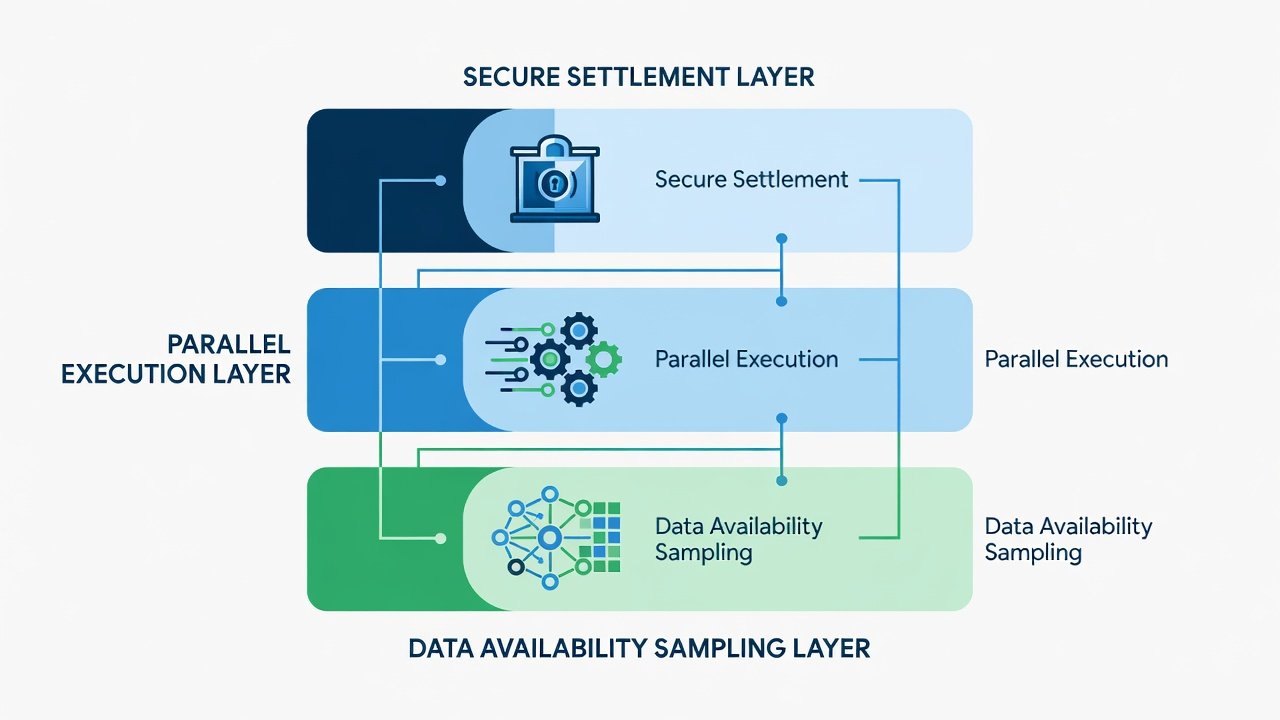
Monolithic blockchains process every transaction and smart contract operation within one unified environment, which often results in network congestion, elevated fees, and slower confirmation times during periods of high activity. In contrast, modular architectures decouple key responsibilities: data availability ensures that transaction data remains accessible for fraud proofs or validity checks, execution environments handle smart contract logic with specialized virtual machines, and settlement layers finalize state transitions on a secure base chain. This modular approach supports parallel innovation, where improvements in one layer do not require changes across the entire stack. Developers benefit from greater customization, such as choosing a data availability provider optimized for light-client verification while pairing it with an execution layer designed for parallel transaction processing. Real-world implications include faster iteration cycles for dApp teams and the potential for lower overall resource consumption, making these systems particularly appealing for high-volume use cases that monolithic chains struggle to accommodate efficiently.
Celestia: Pioneering Data Availability
Celestia has established itself as a foundational data availability layer that utilizes data availability sampling to allow light nodes to confirm data integrity without downloading entire blocks. This design empowers sovereign rollups to inherit security properties directly from the data availability layer rather than depending on a shared settlement chain for every operation. In practice, projects building on Celestia can deploy custom execution environments tailored to their needs while posting data blobs efficiently. Examples of real-world dApp deployments include decentralized prediction markets that achieve high transaction volumes with minimal overhead and NFT platforms that utilize Celestia for cost-effective metadata storage and verification. Performance observations from ongoing network activity demonstrate consistent handling of increased data throughput compared to earlier monolithic alternatives, with developers highlighting improved scalability for applications requiring frequent state updates. For additional technical resources, visit the official Celestia site.
Fuel: Optimized Execution Layer
Fuel stands out for its focus on a purpose-built virtual machine that prioritizes parallel transaction execution, enabling multiple operations to run concurrently without conflicts. This execution-centric design integrates seamlessly with diverse data availability solutions and settlement mechanisms, providing developers with modular flexibility when assembling their preferred stack. Notable dApp implementations on Fuel encompass high-frequency trading protocols that capitalize on reduced latency for order matching and complex NFT marketplaces supporting dynamic minting workflows. Comparative evaluations against other environments often underscore Fuel's advantages in compute-intensive scenarios, where parallelization leads to higher effective throughput and smoother user experiences. Builders appreciate the tooling ecosystem that facilitates rapid prototyping and deployment of applications requiring intensive on-chain logic. Further details are available on the Fuel network homepage.
Emerging Modular Stacks and Settlement Mechanisms
The modular landscape extends beyond established names to include hybrid stacks that incorporate restaking protocols for enhanced settlement security or alternative data availability providers focused on specific throughput profiles. These emerging combinations address integration challenges by bridging specialized layers with proven base chains, allowing projects to balance innovation with reliability. Settlement mechanisms in these setups often leverage optimistic or zero-knowledge proofs to achieve finality while minimizing trust assumptions. Developers exploring these options frequently evaluate compatibility with existing ecosystems, such as those built around Ethereum foundations. For broader context on related blockchain standards, refer to ethereum.org. As adoption grows, these stacks demonstrate how modularity fosters experimentation without compromising core security principles.
Performance Benchmarks and Real-World dApp Examples
Evaluating modular solutions requires examining metrics such as transactions processed per second, data sampling efficiency, finality speed, and resource utilization under varying loads. Celestia-supported rollups have shown strong results in live deployments involving data-heavy applications like decentralized social platforms, where sampling techniques maintain verification speed even as network participation scales. Fuel-based implementations excel in execution benchmarks, supporting thousands of concurrent operations in scenarios such as real-time gaming economies or algorithmic trading interfaces. Concrete examples include a supply-chain tracking dApp leveraging Celestia for immutable event logging with rapid audit capabilities, and a lending protocol on Fuel that processes parallel liquidations without bottlenecks. These cases illustrate how layer specialization translates to tangible improvements in reliability and user adoption. Additional sections on trade-offs help clarify when one architecture outperforms another in specific contexts.
Cost Analyses and Operational Trade-offs
Modular designs generally promote more predictable operational expenses by allowing teams to select cost-efficient providers for each layer rather than accepting bundled fees from monolithic systems. Factors influencing total costs include data posting volumes, execution gas equivalents, and settlement confirmation requirements. In high-activity periods, specialized layers can reduce per-transaction overhead compared to congested single-layer alternatives, though teams must account for cross-layer coordination expenses. Practical guidance involves monitoring usage patterns during testnet phases to forecast mainnet expenditures accurately. Qualitative advantages also emerge in the form of easier upgrades, as improvements to one module rarely necessitate full network migrations.
Decision Criteria for Developers
Selecting the right modular stack involves careful assessment of project requirements across several dimensions. Consider the following expanded criteria when evaluating options:
- Data availability priorities: Applications handling large datasets benefit from sampling-based solutions that minimize node resource demands.
- Execution demands: Parallel-processing environments suit compute-heavy dApps such as DeFi protocols or simulation-based games.
- Settlement and security model: Evaluate whether restaking integrations or direct base-chain anchoring provide the necessary finality assurances for your use case.
- Tooling and ecosystem maturity: Assess availability of SDKs, documentation, and community resources to accelerate development timelines.
- Interoperability needs: Determine compatibility with existing wallets, bridges, and oracles to ensure seamless user onboarding.
- Long-term maintainability: Review upgrade paths and governance structures that support evolving application requirements without major disruptions.
Recommended next steps include building proof-of-concept implementations on testnets, consulting community forums for peer experiences, and simulating load conditions to validate performance expectations before committing to production deployments.
Common Misconceptions: FAQ
Are modular blockchains inherently less secure than monolithic designs?
Security outcomes depend on implementation details and layer interactions rather than the modular approach itself; many configurations achieve comparable or superior guarantees through specialized verification techniques.
Does adopting a modular stack significantly increase complexity for end users?
Well-designed abstractions ensure that user interactions remain straightforward, with complexity primarily managed at the developer level where customization provides clear advantages.
How do modular solutions handle cross-layer communication challenges?
Standardized interfaces and bridging protocols facilitate reliable data and state transfers, with ongoing improvements reducing friction in multi-layer environments.
Will modular architectures fully replace monolithic chains by the end of 2026?
While adoption continues to accelerate, both paradigms are likely to coexist, with choice driven by specific application requirements and risk tolerances.
Conclusion
Modular blockchains offer a compelling pathway to addressing scalability limitations in 2026, delivering specialized performance across data availability, execution, and settlement. By examining the distinctions among Celestia, Fuel, and emerging alternatives through benchmarks, deployment examples, and structured decision criteria, investors and developers can align technology choices with strategic objectives. Ongoing evaluation of ecosystem developments remains essential as these architectures continue to evolve and mature.

No comments yet. Be the first!