 CryptoChain Blog

Introduction to DePIN Nodes in 2026
Decentralized Physical Infrastructure Networks, commonly known as DePIN, have matured into a robust ecosystem where individuals deploy physical hardware to support essential services and earn protocol rewards in return. By 2026, the focus has shifted toward evaluating node profitability across three primary sectors: wireless connectivity, decentralized storage, and distributed energy systems. This detailed breakdown examines how operators can assess returns through qualitative comparisons of hardware demands, reward mechanisms, and external influences. Readers will gain practical insights into selecting the right sector based on location, resources, and risk tolerance. The analysis draws on established projects to illustrate real deployment scenarios while emphasizing sustainable strategies for long-term participation.
Wireless Sector Overview and Benchmarks
Wireless DePIN projects allow participants to extend network coverage for Internet of Things devices, mobile users, and enterprise applications. Nodes in this sector typically consist of compact gateways that transmit signals over licensed or unlicensed spectrum. Profitability hinges on factors such as population density, terrain, and consistent uptime rather than raw computational power. Projects like Helium demonstrate how community-driven networks can scale coverage while distributing rewards proportionally to verified contributions. Operators in urban areas often see higher activity levels due to greater device density, whereas rural deployments may require strategic placement to capture niche use cases like agricultural monitoring.
Practical Deployment Considerations for Wireless Nodes
Successful wireless node operators prioritize antenna height and line-of-sight optimization to maximize signal reach. Maintenance routines include periodic firmware updates and weatherproofing checks to prevent downtime. In regions with strict spectrum regulations, compliance documentation becomes essential before activation. Comparing wireless performance against other sectors reveals its sensitivity to external variables like competing networks and seasonal usage fluctuations.
Storage Sector Performance Analysis
Storage-centric DePIN protocols incentivize the provision of reliable disk capacity and bandwidth for decentralized data management. Participants host files across distributed networks, earning rewards based on retrieval frequency and storage duration commitments. Filecoin exemplifies this model by integrating with enterprise solutions that demand verifiable persistence. Unlike wireless nodes, storage setups benefit from indoor environments with stable cooling and high-speed internet, reducing exposure to physical damage. Yields in this sector tend to correlate strongly with data demand patterns in specific geographic markets.
Optimizing Storage Node Efficiency
Operators enhance returns by selecting hardware with redundant storage arrays and efficient power supplies. Regular integrity checks on stored data help maintain high participation scores within the protocol. Storage nodes also offer flexibility for scaling capacity incrementally, allowing beginners to start small and expand based on observed performance metrics.
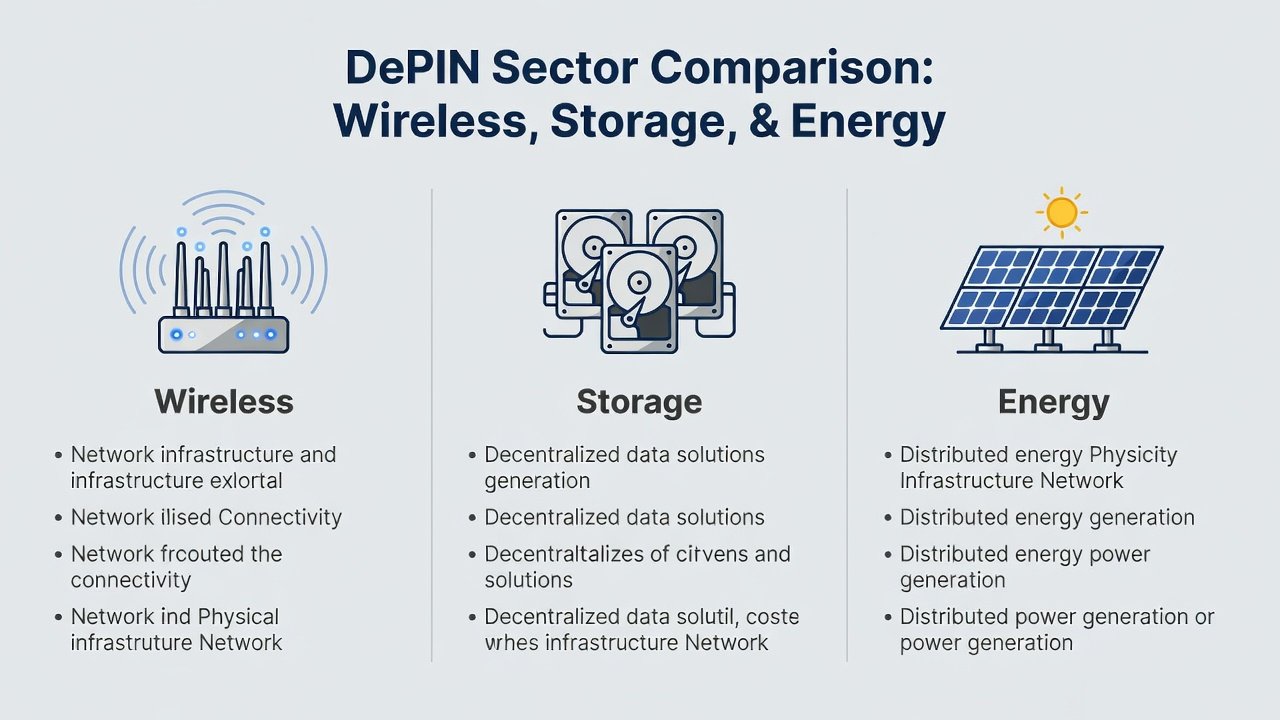
Energy Sector Dynamics and Comparisons
Energy DePIN initiatives focus on balancing local grids through distributed generation, smart metering, and demand-response mechanisms. Participants contribute by installing monitoring equipment or renewable sources that feed real-time data into decentralized marketplaces. This sector often provides more predictable participation patterns because energy needs remain constant across seasons. However, integration with existing utility frameworks can introduce additional coordination requirements compared to purely digital storage or wireless systems.
Key Differentiators Across Sectors
When contrasting the three areas, wireless nodes excel in high-traffic zones but face greater regulatory hurdles. Storage offers scalability with lower physical exposure risks. Energy deployments provide stability yet require alignment with broader infrastructure policies. A diversified approach combining elements from multiple sectors can mitigate concentration risks while smoothing overall returns.
Side-by-Side Protocol Comparison Table
| Sector | Example Protocol | Key Strength | Typical Hardware Needs | Reward Sensitivity | Scalability Potential |
|---|---|---|---|---|---|
| Wireless | Helium | Coverage density | Gateway devices with antennas | High usage correlation | Moderate, location dependent |
| Storage | Filecoin | Data persistence | Servers with ample drives | Retrieval volume | High, capacity expandable |
| Energy | Various grid projects | Grid stability | Meters, batteries, sensors | Regional demand | Variable, policy influenced |
Hardware Investment Considerations
Selecting appropriate hardware involves evaluating durability, energy consumption, and compatibility with protocol specifications. Wireless equipment must withstand environmental factors, while storage systems require robust cooling solutions. Energy nodes demand precise calibration for accurate metering. Across all sectors, prioritizing modular designs facilitates future upgrades without full replacements. Operators benefit from reviewing vendor support networks and warranty terms to minimize long-term disruptions.
Regulatory Landscape in the US and EU
United States participants must navigate Federal Communications Commission guidelines for spectrum use alongside state-specific energy policies. European Union operators contend with data protection standards and renewable energy targets set by regional directives. Both jurisdictions increasingly support decentralized models that enhance infrastructure resilience. Early consultation with local authorities helps streamline approvals and avoids costly retrofits. Staying abreast of evolving frameworks ensures continued compliance as networks mature.
Understanding Reward Formulas Qualitatively
Reward calculations in DePIN protocols generally combine metrics such as contribution volume, network participation time, and peer verification scores. Wireless formulas often weight signal coverage and data relayed. Storage rewards emphasize retrieval success rates and commitment periods. Energy systems factor in generation consistency and grid support value. Operators can model potential outcomes by tracking these variables over time using protocol dashboards, adjusting strategies to emphasize high-impact activities.
Step-by-Step Earnings Evaluation Process
- Map local demand using publicly available network explorers to identify underserved areas.
- Install monitoring tools to log daily contribution metrics for at least one full month.
- Subtract operational overheads such as electricity and connectivity from gross rewards.
- Assess token distribution mechanics including any vesting or staking elements.
- Simulate multi-month scenarios incorporating seasonal variations in usage.
- Compare results against alternative sectors to inform portfolio adjustments.
- Document findings and refine hardware placement based on performance gaps.
Risk Factors to Evaluate
- Hardware failure or obsolescence reducing uptime and cumulative contributions.
- Protocol governance changes that alter reward allocation rules unexpectedly.
- Intense competition from large-scale operators dominating high-value zones.
- Geopolitical developments affecting token liquidity or cross-border operations.
- Technical vulnerabilities in software stacks leading to temporary disqualification.
- Supply chain delays impacting timely hardware replacements.
Beginner-Friendly Setup Checklist
- Conduct thorough research on protocol documentation and community resources.
- Verify site suitability including power reliability and internet bandwidth.
- Acquire hardware meeting minimum specifications from trusted suppliers.
- Complete software installation and initial network onboarding procedures.
- Enable automated alerts for performance anomalies during early operation.
- Engage with official forums for ongoing support and best-practice sharing.
- Establish a routine for firmware updates and physical inspections.
- Track all metrics in a dedicated spreadsheet for trend analysis.
Common Mistakes to Avoid
New operators frequently underestimate the importance of location scouting, leading to suboptimal coverage or retrieval rates. Another pitfall involves neglecting regular maintenance, which compounds into larger downtime issues. Overcommitting capital to a single sector without testing small-scale deployments can amplify exposure to sector-specific downturns. Finally, ignoring regulatory updates risks sudden compliance costs that erode margins.
Actionable Tips for Maximizing Returns
Target placements in areas with proven demand while maintaining flexibility for relocation. Build redundancy into storage configurations to safeguard against drive failures. For energy nodes, align with local incentive programs that reward grid contributions. Diversify across sectors gradually after mastering one. Leverage community insights for optimization techniques and monitor protocol announcements for upcoming enhancements. Consistent documentation of operational data supports informed scaling decisions over time.
Conclusion
Navigating DePIN node opportunities in 2026 demands a balanced view of sector-specific strengths, hardware realities, and regulatory environments. Through methodical evaluation and adherence to proven checklists, participants can position themselves for sustainable involvement across wireless, storage, and energy applications. Continued learning and adaptive strategies remain key to thriving in this dynamic field.

No comments yet. Be the first!