 CryptoChain Blog
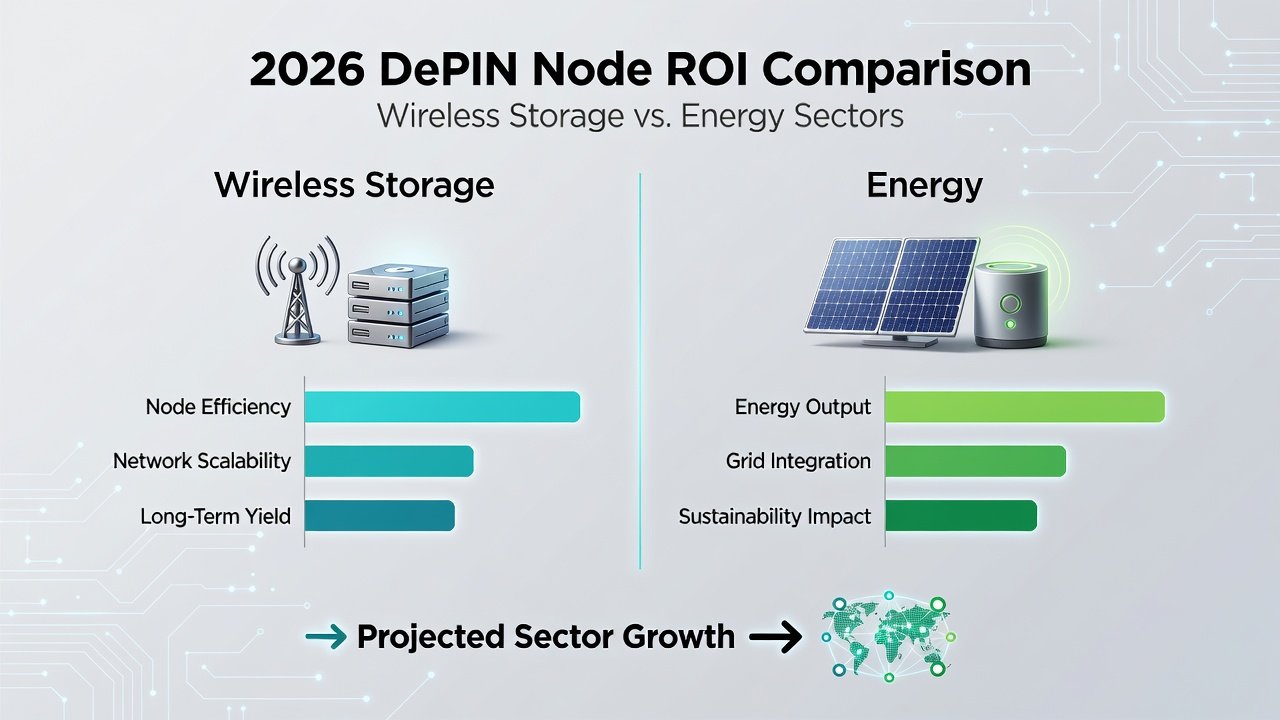
Introduction to DePIN Node Economics in 2026
Decentralized Physical Infrastructure Networks (DePIN) have matured into a core component of the Web3 ecosystem by 2026, allowing participants to monetize physical hardware that supports essential services like wireless connectivity, distributed data storage, and decentralized energy management. These networks operate on blockchain principles where operators deploy and maintain nodes to earn native tokens as compensation for contributing real-world infrastructure. Unlike purely digital crypto projects, DePIN ties value directly to tangible utility, creating opportunities for passive income but also introducing variables such as hardware depreciation, energy consumption, and location-specific demand.
This comprehensive comparison explores projected profitability for wireless, storage, and energy DePIN nodes throughout 2026. It incorporates real protocol examples including Helium for wireless coverage and Render for rendering and storage tasks. Readers will find detailed breakdowns of hardware requirements, reward mechanisms, regulatory landscapes in the US and EU, step-by-step ROI methodologies, and practical tools such as benchmark tables and evaluation checklists. The analysis emphasizes data-driven decision making to help both novice and experienced operators navigate this evolving space.
Wireless DePIN: Connectivity and Coverage Rewards
Wireless DePIN projects prioritize expanding network reach through radio-based hardware that enables IoT communications, 5G offloading, and low-power wide-area networks. Helium stands as a leading example, having pioneered community-deployed hotspots that provide coverage while rewarding operators based on proof-of-coverage challenges and data transfer activity. Other protocols in this space focus on similar models but may target enterprise IoT or mobile backhaul.
Typical hardware includes outdoor antennas, miner units with embedded radios, and mounting equipment. Reward formulas generally integrate multiple factors: the number of unique coverage assertions verified by the network, actual data relayed through the node, and penalties for downtime or invalid proofs. Location plays a critical role, as urban deployments often see higher utilization but face greater competition, while rural sites benefit from less saturation yet lower overall demand.
Operators should monitor network dashboards for real-time metrics and consider firmware updates that align with protocol upgrades. Beginner setups benefit from pre-configured kits that simplify installation, whereas advanced users experiment with multi-antenna configurations to maximize assertion success rates.
Storage DePIN: Decentralized Data Solutions
Storage-centric DePIN protocols allow individuals to contribute disk space or GPU resources for decentralized file hosting and compute tasks. Render serves as a prominent case study by blending storage with GPU rendering workloads, enabling creators to access distributed processing power while node operators earn tokens for reliable uptime and data availability.
Core elements in reward calculations encompass total storage capacity committed, frequency of data retrieval requests, redundancy levels maintained across the network, and performance benchmarks such as read/write speeds. Protocols often implement slashing mechanisms that deduct tokens for failing to meet availability thresholds or for detected data corruption.
Hardware considerations range from basic NAS devices with multiple hard drives to enterprise-grade servers featuring RAID arrays and high-speed networking. Energy efficiency becomes increasingly important as electricity costs accumulate over time. Intermediate operators frequently implement monitoring scripts that alert on capacity thresholds or hardware failures, while advanced setups involve geographic distribution of nodes to hedge against regional outages.
Energy DePIN: Power Generation and Trading
Energy DePIN initiatives facilitate peer-to-peer electricity exchange, renewable generation tracking, and grid balancing through smart devices. Participants install solar inverters, battery systems, or metering hardware that feeds data into blockchain oracles for transparent settlement of energy credits.
Reward structures typically account for kilowatt-hour contributions during peak periods, alignment with grid demand signals, and additional incentives tied to sustainability metrics. These projects intersect heavily with traditional utility regulations, requiring careful attention to interconnection agreements and safety standards.
Setup complexity is higher than in wireless or storage categories due to electrical certifications and potential need for professional installation. Operators benefit from integrating monitoring platforms that track generation patterns and automate reporting to comply with protocol rules.
Comparative ROI Calculation Framework
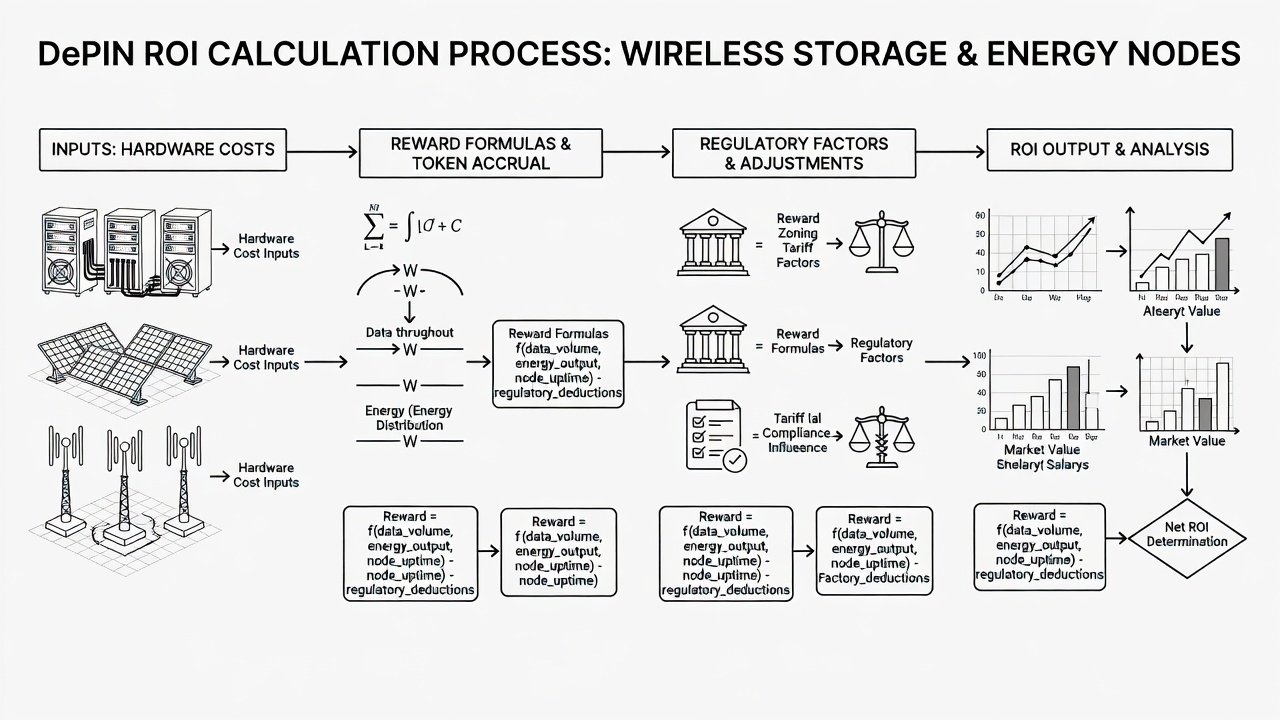
Calculating node profitability requires a systematic approach that accounts for both fixed and variable costs alongside projected token inflows. Begin by compiling all initial capital expenditures including hardware purchases, shipping, installation labor, and any necessary permits. Next, gather historical reward data from protocol explorers or community-maintained spreadsheets to estimate monthly earnings based on comparable node performance.
Subtract recurring operational expenses such as electricity draw, internet connectivity fees, and routine maintenance. Factor in token price fluctuations by running multiple scenarios using conservative, base, and optimistic assumptions. Finally, project cumulative returns over 12 to 36 months while incorporating depreciation schedules for hardware and potential protocol parameter changes.
Benchmark tables prove invaluable here, allowing side-by-side comparison of payback periods, internal rates of return, and sensitivity to key variables across the three DePIN categories. Wireless nodes frequently demonstrate quicker capital recovery due to lower hardware thresholds, whereas energy projects may offer steadier but slower yields tied to physical resource constraints.
US and EU Regulatory Considerations
Regulatory environments significantly influence DePIN viability. In the United States, spectrum usage for wireless nodes falls under Federal Communications Commission oversight, requiring adherence to licensed and unlicensed band rules. Energy projects must navigate state-level public utility commissions and federal interconnection standards. Data storage operators handling personal information should align with emerging state privacy laws.
Across the European Union, the General Data Protection Regulation imposes strict requirements on data handling within storage networks, while the Radio Equipment Directive governs wireless hardware. Energy initiatives face additional scrutiny under renewable energy directives and grid code compliance. Consulting legal experts familiar with both blockchain and sector-specific regulations helps mitigate risks of enforcement actions or forced shutdowns.
Authoritative external resources include FCC spectrum resources, EU digital infrastructure policies, and Helium network documentation for protocol-specific guidance.
Risk Factors and Tokenomics Shifts
Key risks encompass token price volatility that can compress real-world returns, hardware failure rates that increase with age, and shifts in protocol tokenomics such as reduced emission schedules or altered reward weights. Governance proposals voted on by token holders may redirect incentives toward enterprise participants or introduce new staking requirements.
Additional concerns involve network congestion leading to lower per-node rewards, geopolitical factors affecting hardware supply chains, and cybersecurity threats targeting node credentials. Diversification across multiple protocols and regular portfolio rebalancing serve as effective mitigation strategies.
Setup Tips from Beginner to Advanced
- Beginners should prioritize plug-and-play hardware bundles from verified vendors, join official community forums for installation walkthroughs, and start with a single node to build operational familiarity before scaling.
- Intermediate operators benefit from automated monitoring tools that track uptime and reward accrual, experimenting with node placement optimization using coverage mapping software, and participating in testnet phases for upcoming protocol updates.
- Advanced users often develop custom scripts for API integration, explore colocation arrangements to reduce per-site costs, and contribute to governance discussions to influence future reward structures.
Common Mistakes to Avoid
Many new operators underestimate ongoing electricity consumption or overlook firmware update cadences that can render nodes ineligible for rewards. Others fail to diversify geographically, exposing their portfolio to localized regulatory changes or weather-related disruptions. Ignoring community sentiment around upcoming tokenomics revisions frequently leads to suboptimal timing for hardware investments.
Practical Checklist for 2026 DePIN Opportunities
- Confirm hardware compatibility with the latest protocol specifications and review independent benchmark reports.
- Analyze token utility, vesting timelines, and circulating supply metrics from official project resources.
- Map local regulatory requirements including permits, spectrum rules, and data residency obligations.
- Run ROI models under multiple token price and utilization scenarios with clear break-even thresholds.
- Establish maintenance schedules and redundancy plans for critical components.
- Evaluate project governance activity, developer engagement, and historical network growth trends.
- Assess insurance options or warranty coverage for high-value hardware deployments.
- Plan exit strategies including secondary markets for used equipment and token liquidation pathways.
By integrating these expanded considerations, operators can construct more resilient DePIN strategies tailored to 2026 market dynamics and position themselves for sustainable long-term participation.

No comments yet. Be the first!