 CryptoChain Blog

Introduction to Stablecoin Yields in 2026
Stablecoins have emerged as a cornerstone of the digital asset ecosystem, providing investors with opportunities to earn yields while maintaining relative price stability. In 2026, the landscape is shaped by maturing regulations across major jurisdictions, creating both opportunities and hurdles for those seeking returns. This comprehensive guide equips investors with practical knowledge on compliance requirements in the US, EU, and Asia, using real examples from established tokens like USDC and EURT. Readers will find detailed tokenomics comparisons, benchmark data on yield platforms, and a robust risk evaluation framework designed to support informed decision-making in a rapidly evolving market.
Understanding these elements is crucial because non-compliant strategies can lead to frozen assets or legal complications, while well-structured approaches can deliver consistent returns through lending protocols and decentralized finance applications. The focus remains on actionable steps that enhance portfolio resilience without unnecessary exposure to volatility.
US Compliance Updates and USDC Example
The United States continues to refine its regulatory approach to stablecoins through coordinated efforts by the Securities and Exchange Commission and the Commodity Futures Trading Commission. Key developments in 2026 emphasize mandatory reserve attestations, enhanced anti-money laundering protocols, and clearer guidelines on issuer accountability. Investors are encouraged to prioritize tokens that demonstrate full backing with high-quality liquid assets and undergo independent audits on a monthly basis.
USDC, issued by Circle, serves as a leading example of proactive compliance. The token maintains reserves primarily in US dollars and short-term government securities, with regular transparency reports available to the public. This structure allows USDC to integrate seamlessly into compliant yield-generating platforms while reducing regulatory risk for holders. Platforms offering USDC yields often require users to complete identity verification processes aligned with US banking standards, ensuring smoother onboarding and fewer disruptions during redemption periods.
SEC resources provide ongoing updates on enforcement actions and proposed rules that directly impact stablecoin operations. Staying informed through these channels helps investors anticipate shifts that could affect yield accessibility.
EU Regulatory Landscape with EURT Insights
The European Union's Markets in Crypto-Assets regulation reached full implementation in 2026, establishing a harmonized framework for stablecoin issuance and distribution. Issuers must obtain specific authorization, maintain segregated reserves, and ensure prompt redemption at par value. These rules aim to protect retail investors while fostering innovation within supervised environments.
EURT, Tether's euro-pegged stablecoin, illustrates successful adaptation to MiCA requirements. It holds euro-denominated reserves in regulated European financial institutions and publishes attestations that meet the new transparency standards. This compliance enables EURT to access yield opportunities within EU-approved platforms, particularly those focused on euro-based lending markets. Investors in the region benefit from reduced cross-border friction when using EURT for yield strategies compared to non-compliant alternatives.
European Commission updates outline the practical implications of MiCA for both issuers and end users, including transition periods and ongoing supervisory expectations.
Asia Compliance Developments
Asian regulatory bodies have adopted varied yet increasingly sophisticated approaches to stablecoins. Singapore's Monetary Authority of Singapore enforces strict licensing for issuers, requiring maintenance of high-quality liquid assets and regular audits. Japan has implemented guidelines that emphasize consumer protection and interoperability with traditional financial systems. These frameworks create fertile ground for compliant yield products while filtering out higher-risk operators.
Investors targeting Asia-linked yields should verify that platforms hold appropriate licenses from bodies like MAS or Japan's Financial Services Agency. This due diligence minimizes the chance of sudden platform restrictions or asset freezes resulting from regulatory actions. Regional examples demonstrate that licensed issuers often achieve higher integration with local banking partners, leading to faster settlement times and more reliable yield accrual mechanisms.
MAS guidelines offer detailed documentation on stablecoin standards that continue to influence market practices across the region.
Tokenomics Comparisons: USDC vs EURT
Comparing tokenomics reveals important distinctions that influence yield potential. USDC operates with a transparent 1:1 backing model supported by cash equivalents and short-duration Treasuries, facilitating broad participation in global DeFi protocols. Its on-chain metrics show extensive liquidity across multiple blockchains, supporting diverse yield farming and lending strategies.
EURT, by contrast, centers on euro reserves and appeals primarily to investors seeking currency-specific stability within European markets. While both tokens prioritize redeemability, EURT's reserve composition may expose yields to different interest rate environments governed by the European Central Bank. On-chain transparency tools allow investors to track circulation and reserve adequacy in real time for both assets, aiding comparative analysis before committing capital.
Yield Platform Benchmarks
Evaluating yield platforms in 2026 involves examining factors such as asset segregation policies, historical uptime records, and the diversity of supported stablecoins. Leading platforms differentiate themselves through regular third-party security audits and insurance coverage for user funds. Benchmarks typically highlight differences in withdrawal processing speeds and the transparency of underlying yield sources, such as over-collateralized lending or institutional borrowing programs.
Investors benefit from maintaining diversified positions across multiple compliant platforms rather than concentrating exposure. This approach mitigates single-point risks while allowing comparison of performance across varying market conditions.
Step-by-Step Risk Evaluation Framework
A disciplined risk evaluation process helps investors navigate the stablecoin yield space effectively. Begin by confirming the issuer's regulatory licenses and reviewing the most recent reserve audit reports. Next, examine tokenomics documentation to assess backing quality, redemption policies, and historical resilience during market stress events.
Proceed to evaluate the yield platform's security infrastructure, including multi-signature wallet controls and past incident response records. Align jurisdictional compliance with your personal location and tax residency to avoid unexpected legal exposure. Finally, simulate yield outcomes under different regulatory scenarios to understand potential impacts on returns.
- Verify issuer licensing and reserve audits.
- Analyze tokenomics for backing quality and redemption mechanisms.
- Evaluate platform security features and historical incident reports.
- Assess jurisdictional compliance alignment with your location.
- Model yield scenarios under regulatory stress tests.
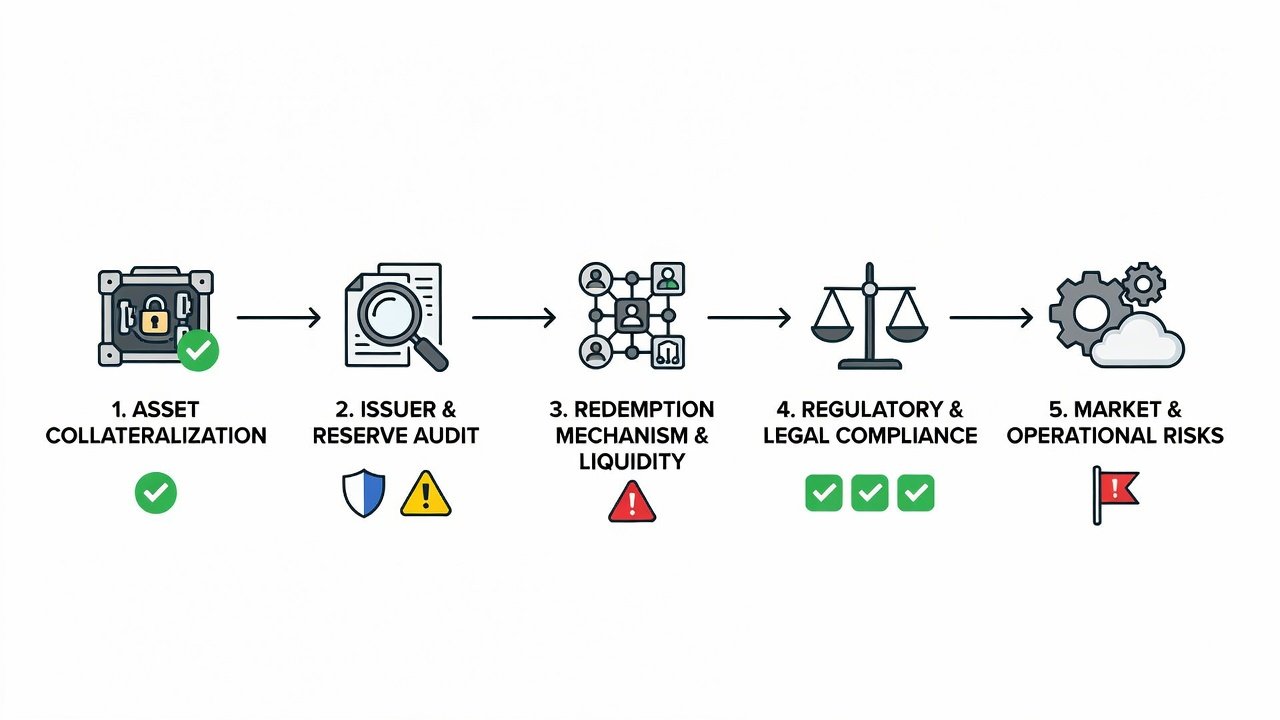
Applying this framework consistently supports more resilient investment choices over time.
Common Mistakes to Avoid
Many investors overlook the importance of ongoing monitoring, assuming initial compliance checks suffice. Another frequent error involves chasing unusually high yields without verifying the underlying mechanisms, which can signal hidden risks. Diversification across both tokens and platforms is often neglected, leading to concentrated exposures that amplify regulatory or operational disruptions.
FAQs on Tax Reporting and Red Flags
How should investors report stablecoin yields for tax purposes?
Local tax authorities such as the IRS generally treat stablecoin yields as interest income, requiring detailed record-keeping of acquisition dates, yield amounts, and disposal events. Consulting a tax professional familiar with digital assets ensures accurate filing and helps avoid penalties. IRS digital asset resources provide foundational guidance on these obligations.
What red flags indicate elevated risk?
- Absence of regular third-party audits
- Unclear reserve composition or offshore-only custody
- Excessive yield promises without transparent mechanisms
- Recent regulatory enforcement actions against the issuer
- Lack of clear redemption processes during high-demand periods
Conclusion
Navigating 2026 stablecoin yields successfully demands a balanced approach that integrates regulatory awareness, thorough token analysis, and structured risk management. By leveraging the compliance examples, tokenomics insights, and evaluation tools presented, investors can pursue yield opportunities with greater confidence and reduced exposure to avoidable pitfalls.

No comments yet. Be the first!