 CryptoChain Blog

The Historic US Bitcoin Strategic Reserve Announcement
In a groundbreaking move set to reshape global finance, the US government announced in January 2026 the establishment of a national Bitcoin strategic reserve. Dubbed the 'Digital Gold Initiative,' this policy positions Bitcoin as a core asset alongside traditional reserves like gold and foreign currencies. Coming from the Treasury Department under new fiscal strategies, the announcement sent shockwaves through cryptocurrency markets and beyond.
This isn't just hype—it's a calculated step toward integrating blockchain technology into sovereign wealth management. With Bitcoin's market cap surpassing $2 trillion by late 2025, the US aims to secure a slice of this digital asset class for national interests.
Key Acquisition Details
The reserve will start with an initial allocation of 250,000 BTC, sourced primarily from existing government holdings. These include over 200,000 BTC seized from criminal activities since 2013, currently valued at around $15 billion at announcement prices.
Future acquisitions target 1 million BTC over five years through:
- Direct market purchases during dips, capped at 5% of daily volume to minimize price impact.
- Additional seizures from illicit operations.
- Potential incentives for miners to sell directly to the government.
The Treasury will manage the reserve via a new 'Strategic Digital Assets Division,' with custody handled by a consortium of qualified custodians audited quarterly. For more on US Treasury operations, visit the official Treasury website.
Policy Rationale Behind the Move
Officials cited several drivers for this pivot:
- Hedging Against Inflation: Bitcoin's fixed 21 million supply mirrors gold's scarcity, offering protection amid fiat currency debasement.
- Geopolitical Strategy: Countering China's digital yuan and Russia's crypto experiments by leading in decentralized finance.
- Innovation Leadership: Accelerating blockchain adoption in payments and remittances.
- Diversification: Reducing reliance on volatile oil or depreciating bonds.
President's economic advisor stated, 'Bitcoin is the 21st-century gold standard.' This aligns with the Federal Reserve's evolving views on digital assets—check their resources at federalreserve.gov.
Initial Market Reactions
Bitcoin surged 25% within hours, hitting $105,000 before settling at $98,500—a new all-time high. Ethereum and major altcoins followed with 15-20% gains, signaling broad crypto optimism.
Traditional markets dipped slightly: gold fell 3%, dollar index weakened 1.2%. Institutional inflows hit record $5 billion that week, with BlackRock and Fidelity announcing BTC-heavy ETFs expansions.
Volatility spiked, but long-term holders celebrated legitimacy. 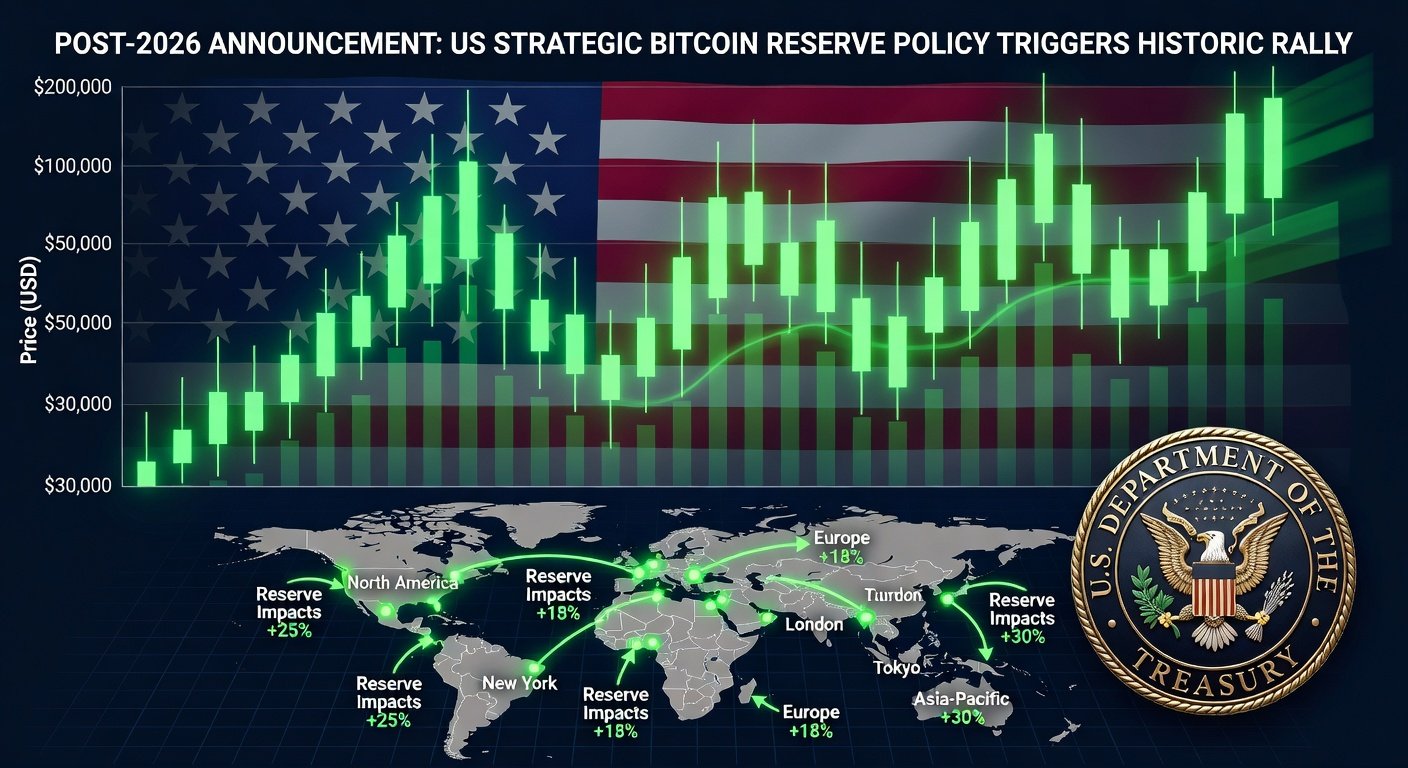
Boosting Blockchain Adoption
This endorsement supercharges blockchain mainstreaming. Governments worldwide now view it as viable infrastructure, spurring:
- Enterprise pilots for supply chain tracking.
- Central bank digital currencies (CBDCs) integrating Bitcoin oracles.
- Corporate treasuries adding BTC, following MicroStrategy's playbook.
Expect a 50% rise in blockchain developer jobs and doubled venture funding in Web3 by 2027.
Influencing Global Crypto Regulations
The US move sets a precedent, pressuring laggards like the EU and India to clarify rules. MiCA in Europe may expand to strategic holdings, while BRICS nations debate counter-reserves.
SEC and CFTC frameworks could harmonize, treating BTC as a commodity outright. For Bitcoin's foundational principles, see the original whitepaper at bitcoin.org.
Bitcoin vs. Traditional Reserves Like Gold
| Aspect | Bitcoin Reserve | Gold Reserve |
| Aspect | Bitcoin | Gold |
|---|---|---|
| Supply | 21M cap | Mineable, ~210K tons total |
| Portability | Digital, instant | Physical, costly |
| Storage Cost | Negligible | High (vaults) |
| Divisibility | 0.00000001 BTC | Limited |
| Yield | Potential staking forks | None |
Bitcoin offers superior liquidity and verifiability via blockchain, outpacing gold's 5,000-year legacy in the digital era.
Expert Insights on Long-Term Effects
Crypto analyst Willy Woo: 'This institutionalizes BTC, targeting $500K by 2030 as reserves grow.'
ARK Invest's Cathie Wood: 'Nation-state adoption flips the script—crypto becomes the reserve asset.'
Economist Nouriel Roubini cautions: 'Volatility risks remain; diversification is key.'
For investors, HODL strategies shine: expect premium pricing from sovereign demand. Newbies should dollar-cost average via regulated exchanges.
What's Next for Crypto Investors?
The reserve cements Bitcoin's role in portfolios. Monitor Q2 2026 acquisition reports for buy signals. This era marks crypto's shift from speculative asset to strategic imperative, promising stability and growth for blockchain enthusiasts worldwide.


No comments yet. Be the first!