 CryptoChain Blog

Introduction to 2026 Crypto Hedging
Volatility continues to define cryptocurrency markets throughout 2026, driven by macroeconomic shifts, regulatory developments, and rapid technological changes in blockchain ecosystems. Traders and long-term investors seeking to safeguard their portfolios must progress beyond elementary tactics and embrace sophisticated approaches involving options contracts, perpetual futures, and stablecoin overlays. This comprehensive guide delivers practical, example-driven instructions that incorporate on-chain metrics for precise entry timing and feature real-world portfolio transformations validated through rigorous stress testing.
Successful hedging prioritizes quantifiable risk reduction over speculative gains. By integrating derivatives instruments with objective data signals, market participants can mitigate severe drawdowns while retaining meaningful participation in upward price movements. The strategies outlined here emphasize implementation details that readers can adapt to their specific risk tolerance and capital allocation.
Understanding Options for Crypto Hedging
Options provide asymmetric protection because they grant the holder the right, but not the obligation, to transact at a set strike price before expiration. In the 2026 landscape, Bitcoin and Ethereum options listed on established platforms deliver targeted downside coverage without forcing liquidation of core holdings. Common structures include protective puts that cap losses during abrupt selloffs and collar strategies that finance put purchases by selling out-of-the-money calls.
Implementation begins with assessing current implied volatility levels to determine whether premiums represent fair value. Next, select expiration dates that align with anticipated event risks such as regulatory announcements or macroeconomic data releases. Calculate hedge ratios using portfolio delta and adjust position sizes accordingly. On-chain metrics including large exchange deposit spikes and shifts in funding rates serve as confirmation signals for when to layer on protection. A practical walkthrough might involve purchasing three-month at-the-money puts on 40 percent of a Bitcoin allocation when daily active addresses on the network begin declining sharply while exchange reserves rise.
Advanced users often combine multiple option legs to create risk-defined spreads that lower net premium outlay while maintaining meaningful coverage. Monitoring Greeks such as gamma and vega helps refine adjustments as market conditions evolve.
Perpetual Futures and Their Role in 2026 Portfolios
Perpetual futures contracts enable continuous directional exposure without the complications of rolling expiring positions. Shorting these instruments against spot holdings effectively lowers net portfolio beta in a flexible manner. In 2026, deep liquidity exists across major pairs, allowing precise sizing of hedge overlays.
Consider a diversified portfolio holding 55 percent Bitcoin, 25 percent Ethereum, and 20 percent selected altcoins. During periods of persistently positive funding rates above historical averages, a manager might initiate a 30 percent notional short in Bitcoin perpetuals and a 15 percent short in Ethereum perpetuals. This overlay reduces downside participation while the cost of carry remains manageable through periodic monitoring of funding payments. Conservative leverage below 2.5x is essential to avoid margin calls during temporary rebounds.
Entry timing improves when combined with on-chain observations such as rising perpetual open interest accompanied by declining spot exchange balances. These confluence points often mark local tops where hedging becomes most cost-effective.
Stablecoin Overlays for Additional Protection
Stablecoin allocations introduce a non-derivative defensive layer that avoids counterparty risks inherent in futures or options. By shifting portions of the portfolio into USD-pegged assets during elevated volatility regimes, investors create immediate liquidity that can be redeployed once conditions stabilize.
Threshold-based rules help systematize decisions. Track a composite volatility indicator blending 30-day realized volatility with sentiment metrics. When readings exceed the 75th percentile of the prior two-year range, incrementally raise stablecoin weightings toward 25-35 percent of total assets. Different stablecoins offer varying risk profiles, with regulated issuers providing stronger transparency and reserve attestations.
Integrating On-Chain Metrics for Entry Timing
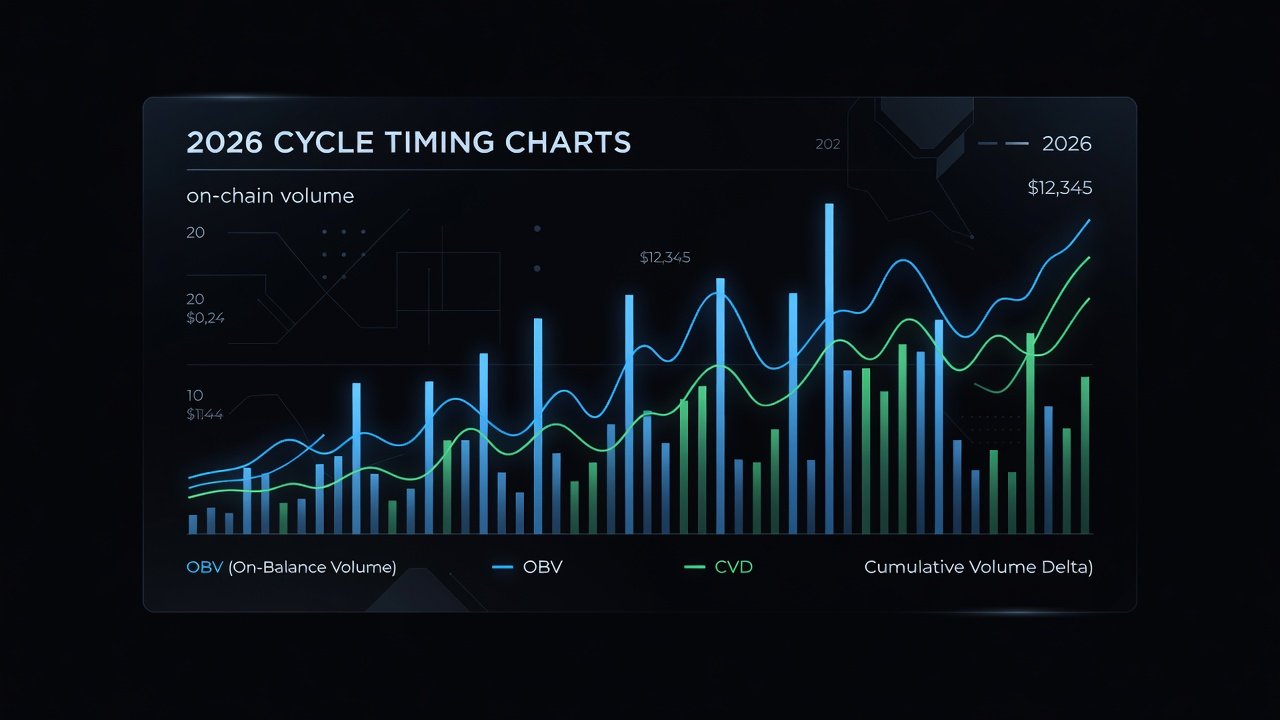
On-chain analytics supply objective, tamper-resistant signals that complement traditional chart patterns. Valuable indicators encompass exchange reserve trajectories, realized price versus spot price divergences, and changes in active wallet cohorts. For hedging purposes, sustained increases in exchange inflows frequently precede distribution phases, prompting earlier initiation of protective positions.
Practitioners should cross-reference multiple sources to filter noise. For instance, pairing rising exchange reserves with falling long-term holder supply percentages strengthens conviction. Dashboards from established analytics providers facilitate real-time tracking and historical comparison. Incorporating these metrics into a rules-based framework reduces emotional decision-making and improves repeatability of hedging outcomes.
Stress Testing Portfolios with Monte Carlo and Historical Scenarios
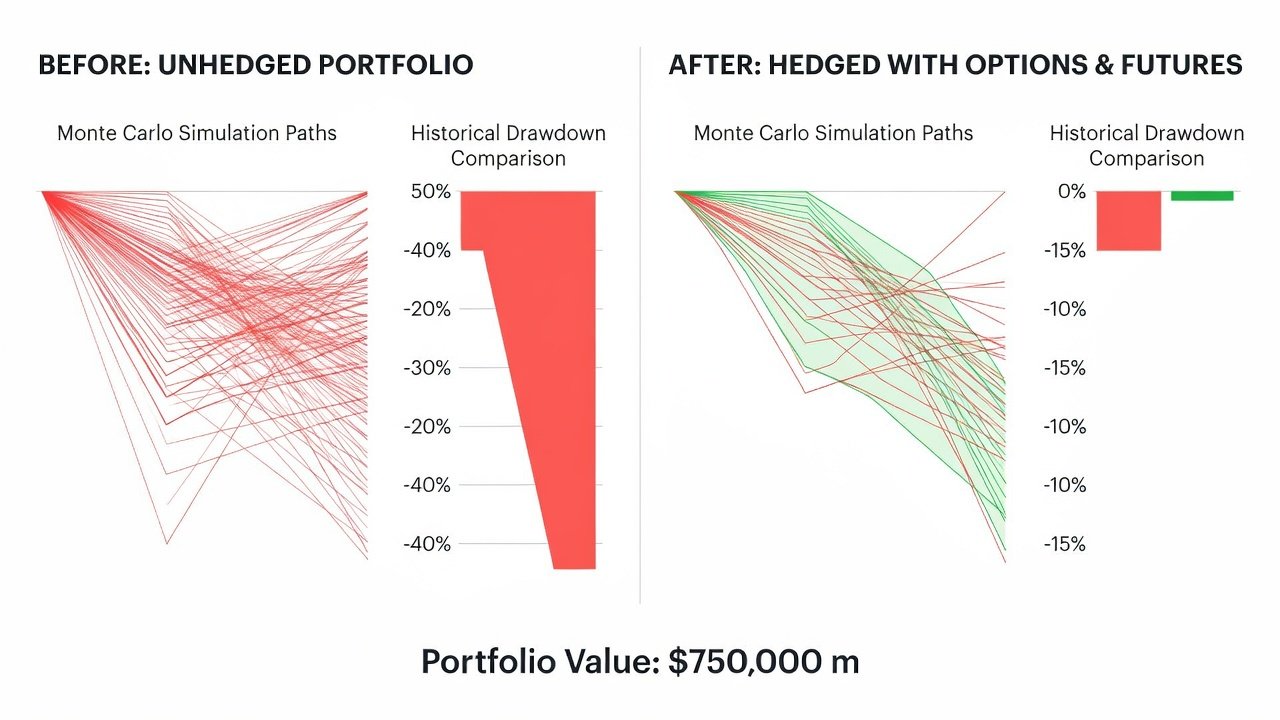
Before-and-after analysis quantifies the tangible benefits of hedging. Monte Carlo simulations generate thousands of forward price paths calibrated to current volatility and correlation assumptions, revealing probability distributions of terminal portfolio values. Supplementing these with historical stress periods such as the 2022 bear market or the 2024 correction events validates robustness across regimes.
An illustrative case starts with a $750,000 multi-asset portfolio. The unhedged configuration experiences a peak-to-trough decline of 48 percent under severe Monte Carlo paths and 52 percent during the 2022 analog scenario. After overlaying protective option collars covering 35 percent of exposure plus a 28 percent perpetual futures short, maximum drawdown compresses to 24 percent in simulations and 27 percent historically, while still capturing 62 percent of upside in recovery trajectories. Repeating these tests quarterly ensures hedges remain calibrated as market dynamics shift.
Comparing Hedging Instruments by Cost, Liquidity, and Regulatory Fit
- Cost: Option premiums fluctuate with implied volatility surfaces; perpetual futures generate ongoing funding expenses or credits; stablecoin holdings incur negligible direct fees but may present opportunity costs depending on prevailing yields.
- Liquidity: Perpetual markets maintain tight spreads and deep books across major assets, whereas options liquidity clusters around front-month expirations and at-the-money strikes.
- Regulatory Fit: Institutional participants should verify platform registration status with oversight bodies such as the CFTC and SEC, while also consulting guidance from the Bank for International Settlements on derivative usage.
Common Mistakes to Avoid
Over-hedging can erode returns excessively during sustained bull phases. Conversely, under-hedging leaves portfolios vulnerable to tail events. Ignoring funding rate dynamics or failing to adjust deltas as spot prices move often leads to unexpected outcomes. Another frequent error involves neglecting to stress test after material portfolio changes or macro regime shifts.
Quarterly Rebalancing Checklist
- Recalculate portfolio beta and confirm hedge ratios match current allocations.
- Refresh volatility inputs using the most recent 30-day realized figures and implied surfaces.
- Evaluate on-chain indicators for potential allocation adjustments.
- Execute updated Monte Carlo runs incorporating latest correlation assumptions.
- Review regulatory developments and platform compliance status.
- Document all modifications with supporting rationale for future reference and audit purposes.
FAQ
How often should I rebalance hedges?
Quarterly reviews provide a solid baseline for most portfolios, supplemented by discretionary adjustments when volatility metrics or on-chain signals breach predefined thresholds.
Are perpetual futures suitable for retail traders?
Retail participants can employ them effectively when maintaining strict leverage limits and position sizing rules, although larger allocations benefit from professional oversight.
What role do stablecoins play during bull markets?
They function primarily as tactical reserves for opportunistic deployment following corrections rather than as permanent large holdings.
How do on-chain metrics improve timing accuracy?
They deliver independent confirmation of sentiment extremes, reducing reliance on lagging price-based indicators alone.
Conclusion
Achieving mastery in 2026 crypto hedging demands the disciplined combination of options structures, perpetual futures overlays, and stablecoin allocations, all validated through comprehensive stress testing. Grounding decisions in on-chain metrics and scenario modeling delivers measurable risk mitigation while preserving growth opportunities. Regular application of the rebalancing checklist keeps strategies aligned with evolving conditions and supports consistent portfolio resilience.

No comments yet. Be the first!