 CryptoChain Blog

Introduction to Institutional Crypto Adoption in 2026
The cryptocurrency landscape in 2026 continues to evolve rapidly as institutional players bring stability, capital, and legitimacy to digital assets. This shift marks a departure from the speculative retail-driven cycles of previous years. Banks, asset managers, and pension funds are now integrating blockchain-based solutions into core operations, driven by both defensive positioning against inflation and offensive strategies to capture new revenue streams. This article explores real-world case studies from leading institutions, examining the forces behind their decisions and the practical implications for market participants seeking to understand or replicate these moves.
Security enhancements and attractive yield opportunities stand out as primary motivators. Institutions are no longer testing the waters with small pilots; many have established dedicated digital asset divisions with clear allocation frameworks and board-level oversight. The maturation of infrastructure has lowered entry barriers while regulatory clarity in key jurisdictions has reduced uncertainty. Readers will gain insights into timelines of major entries, side-by-side comparisons with retail investor behavior, and actionable lessons that can inform personal or organizational strategies.
Key Drivers Behind Institutional Entry
Security Improvements and Custody Solutions
Advanced custody solutions, multi-signature protocols, and regulatory-compliant cold storage have reduced previous barriers significantly. Institutions now benefit from insured vaults, real-time auditing tools, and integration with enterprise risk management systems. These developments provide the operational confidence needed for large-scale commitments that were previously deemed too risky. For example, biometric access controls combined with distributed ledger verification have minimized single points of failure that plagued early crypto storage methods.
Yield Opportunities and Revenue Generation
Staking rewards, lending platforms, and structured products offer competitive returns compared to traditional fixed-income instruments. This draws attention from portfolio managers seeking diversification beyond bonds and equities. Yield generation through decentralized finance protocols, when properly vetted, provides steady income streams while maintaining exposure to potential price appreciation. Institutions often layer these strategies with derivatives to hedge downside risks.
Regulatory Tailwinds and Market Infrastructure
Clearer guidelines from bodies such as the Securities and Exchange Commission and the Bank for International Settlements have paved the way for compliant product launches. Improved settlement rails and interoperability standards further support seamless integration with legacy financial systems.
Case Studies: Banks Leading the Charge
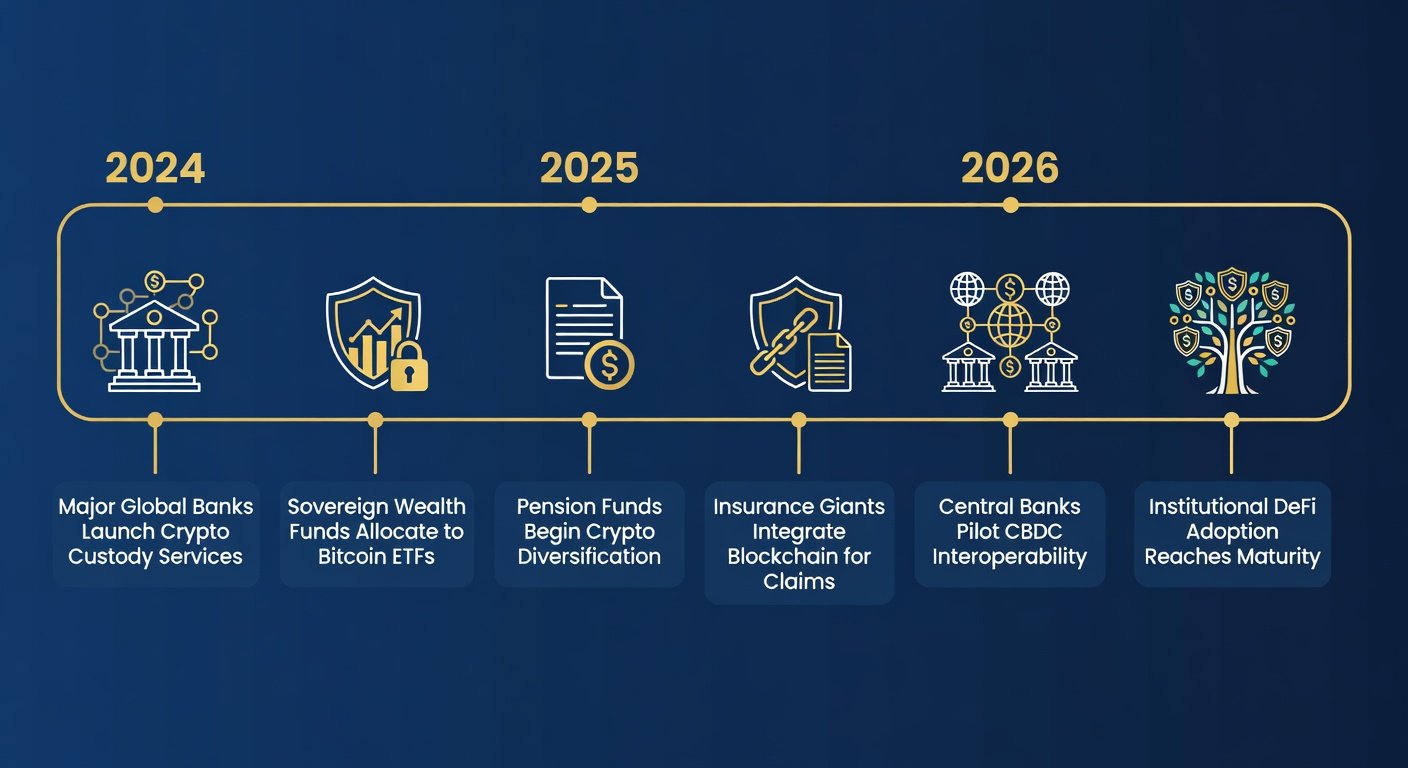
Major global banks have launched crypto custody and trading services tailored for institutional clients. One leading European bank integrated blockchain settlement for cross-border payments, resulting in faster transactions and reduced counterparty risk. This initiative began with a proof-of-concept in 2024 and scaled to full production by mid-2025, handling billions in volume while maintaining full compliance with anti-money laundering requirements.
Another North American institution partnered with established exchanges to offer clients direct exposure to Bitcoin and Ethereum through regulated vehicles. The bank emphasized education programs for relationship managers, ensuring advisors could explain risks and benefits to high-net-worth clients. Outcomes included increased client retention and new fee-based revenue from advisory services around digital assets.
A third example involves an Asian bank that developed an internal tokenization platform for real estate and trade finance assets. This allowed fractional ownership and 24/7 liquidity options previously unavailable in traditional markets.
Case Studies: Funds and Asset Managers
Hedge funds and pension managers have allocated portions of portfolios to digital assets following rigorous due diligence processes. Timelines show initial pilot programs in late 2024 expanding into multi-billion-dollar commitments by early 2026. One prominent macro fund incorporated Bitcoin as a non-correlated asset class, using options strategies to manage volatility while capturing upside during bull phases.
Another asset manager launched a tokenized fund vehicle that provides daily liquidity and transparent on-chain reporting. This structure appealed to family offices and endowments seeking alternatives to illiquid private equity holdings. Performance data demonstrated resilience during market stress periods when compared to pure equity allocations.
Portfolio Allocation Tactics
Effective allocation requires balancing growth potential with preservation of capital. Institutions typically begin with modest percentages and scale based on performance metrics and risk tolerance. Common tactics include starting with 1-5% allocation to Bitcoin and Ethereum for core exposure. Dollar-cost averaging helps mitigate timing risk by spreading purchases across multiple periods rather than lump-sum investments.
Further tactics involve incorporating yield-generating strategies such as staking within secure, insured protocols. Rebalancing occurs quarterly based on volatility metrics and correlation analysis with traditional asset classes. Some funds employ dynamic allocation models that increase exposure during periods of low volatility and reduce it during uncertainty.
- Conduct scenario analysis for various macroeconomic environments including recession, inflation spikes, and regulatory shifts.
- Diversify across multiple chains and asset types to avoid concentration risk.
- Partner with established custodians that offer insurance and regular third-party audits.
- Document all decisions with clear rationale for compliance and internal review purposes.
Risk Mitigation Steps
Risk management forms the backbone of institutional crypto strategies. The first step involves conducting thorough due diligence on custody providers and counterparties, including reviewing their financial stability and track record. Strict cybersecurity audits and insurance coverage protect against theft and operational failures.
Additional steps include establishing clear governance policies and reporting requirements that align with existing fiduciary standards. Monitoring regulatory developments across jurisdictions prevents unexpected compliance costs. Stress testing portfolios against extreme market moves helps prepare for black swan events.
- Implement multi-layered approval processes for any new crypto-related investment.
- Maintain segregated accounts and avoid commingling with traditional assets.
- Regularly update disaster recovery plans to include blockchain-specific scenarios.
- Engage external consultants for independent risk assessments annually.
Comparing Institutional and Retail Approaches
Institutions prioritize compliance, long-term horizons, and institutional-grade infrastructure such as prime brokerage relationships and advanced analytics platforms. Retail investors often focus on short-term trading and accessibility via consumer apps, leading to higher turnover and emotional decision-making. Side-by-side analysis reveals institutions achieve lower volatility through diversification and professional risk management teams.
Retail approaches benefit from speed and lower minimums but lack the sophisticated hedging tools available to larger players. Institutions also enjoy better execution prices due to volume and direct market access.
Timelines of Major Institutional Entries
Key milestones include regulatory approvals in Q1 2025, followed by product launches in Q3 2025 and expanded custody partnerships in Q1 2026. Early movers gained competitive advantages in client acquisition while later entrants benefited from refined best practices and lower technology costs. Tracking these timelines helps forecast future waves of adoption in emerging markets.
Lessons Learned and Mistakes to Avoid
Successful adopters emphasize patience, education, and collaboration with technology partners. Common pitfalls include underestimating operational complexity, such as reconciling on-chain transactions with traditional accounting systems, and overlooking tax implications that vary by jurisdiction. Another frequent mistake is failing to align crypto strategies with overall investment policy statements, leading to governance conflicts during volatile periods.
Practical Takeaways for Investors
Investors at all levels can apply institutional lessons by prioritizing education, starting small, and focusing on security fundamentals. Building relationships with regulated service providers and maintaining disciplined rebalancing schedules increases the probability of positive outcomes over time.
FAQ: Addressing Volatility Concerns and Future Trends
How do institutions handle crypto volatility?
Through hedging instruments, diversified allocations, and long-term holding strategies rather than reactive trading. They also employ value-at-risk models tailored to digital asset characteristics.
What regulatory changes are expected next?
Further harmonization of global standards and expanded guidance on stablecoins and decentralized finance are anticipated, drawing from ongoing work at organizations like the Federal Reserve.
Are there specific mistakes institutions made in early adoption?
Yes, some over-allocated before proper infrastructure was in place, leading to temporary liquidity issues during market downturns. Others neglected staff training, resulting in internal resistance.
What are the projected trends for 2027 and beyond?
Expect deeper integration with traditional finance, growth in tokenized real-world assets, and continued regulatory clarity in major markets. The International Monetary Fund has highlighted potential for improved financial inclusion through these developments.
Conclusion
Institutional adoption is fundamentally altering the crypto ecosystem by introducing scale, professionalism, and resilience. By studying these case examples in depth, investors can apply proven tactics while navigating risks effectively. Continued monitoring of security advances, yield mechanisms, and regulatory shifts will remain essential for staying ahead in this dynamic space. The lessons from 2026 provide a roadmap for sustainable participation in future cycles.


No comments yet. Be the first!