 CryptoChain Blog

Navigating cryptocurrency markets in 2026 requires a disciplined approach to risk management as volatility remains a defining feature. Intermediate investors seeking to protect capital while capturing upside opportunities must combine allocation frameworks, hedging techniques, and continuous monitoring. This guide delivers actionable steps drawn from recent market corrections and proven methodologies that have helped traders survive multiple cycles of boom and bust.
Understanding 2026 Crypto Volatility Drivers
Market swings in 2026 stem from regulatory shifts, macroeconomic data releases, and evolving institutional participation. Understanding these forces helps investors anticipate rather than react to price movements. Historical patterns from 2022 and 2025 corrections show that rapid deleveraging often amplifies downside moves across major assets. Factors such as central bank policy announcements, ETF inflow patterns, and geopolitical tensions continue to create sudden liquidity shocks. Investors who track these drivers through reliable news channels can position themselves ahead of volatility spikes rather than chasing recoveries after the fact.
Portfolio Allocation Models for Volatile Markets
Effective allocation begins with defining risk tolerance and time horizon. A common framework divides holdings into core, satellite, and hedge buckets. The core bucket typically holds 50-70% in established assets such as Bitcoin and Ethereum. Satellite positions of 20-30% target higher-growth altcoins, while the remaining 10-20% serves as a hedge allocation. This structure allows for growth potential without exposing the entire portfolio to single-asset risk.
Step-by-step position sizing starts with calculating overall portfolio value, determining maximum acceptable loss per trade (commonly 1-2%), and scaling position size accordingly. Investors should also consider correlation between assets when determining bucket sizes. For instance, allocating too heavily to multiple correlated altcoins can create hidden concentration risk even when individual positions appear diversified. Regular reviews of allocation drift caused by price movements help maintain the intended risk profile over time.
Hedging with Options and Stablecoins
Options strategies provide asymmetric protection. Protective put purchases or collar structures cap downside while retaining upside potential. Stablecoin reserves act as a liquidity buffer, allowing investors to exit volatile positions without converting to fiat during weekend or holiday gaps. Layering these approaches creates multiple lines of defense that activate at different volatility thresholds.
Implementing a collar involves selling out-of-the-money calls to finance protective puts. This strategy works well when investors expect moderate upside but want insurance against sharp declines. Stablecoin allocations should be held on reputable platforms with strong custody practices and quick withdrawal capabilities. Rebalancing these hedges quarterly maintains effectiveness as volatility regimes shift and option premiums change with market conditions.
Real-Time Monitoring Dashboards and Tool Comparisons
Modern dashboards aggregate price feeds, on-chain metrics, and funding rates into unified views. On-chain tools excel at tracking exchange reserves and whale movements, whereas off-chain platforms deliver faster execution signals and options-chain analytics. Choosing the right combination depends on whether an investor prioritizes transparency or speed of execution.
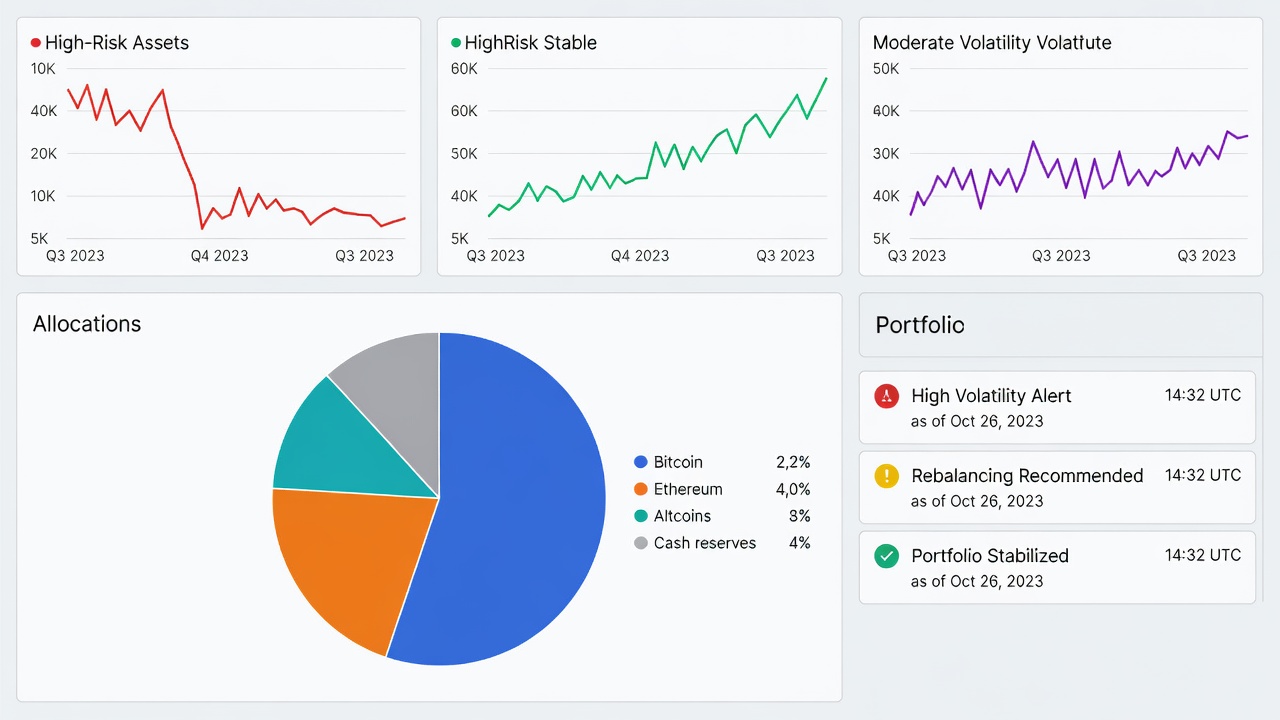
Investors benefit from cross-referencing both categories. Leading platforms integrate API connections to exchanges and blockchain explorers, enabling automated alerts when key thresholds are breached. When comparing tools, consider factors such as data latency, historical depth, and ease of exporting reports for further analysis. Many intermediate traders maintain two dashboards simultaneously to avoid single-point-of-failure risks in their monitoring setup.
Stress-Testing Scenarios Using Historical Data
Stress testing replicates past events such as the May 2021 crash or March 2020 COVID shock. Running these scenarios on current allocations reveals potential drawdowns and required margin buffers. Case studies from the 2025 correction demonstrate that portfolios maintaining meaningful stablecoin reserves recovered faster than fully invested positions. Investors should model both moderate corrections and extreme tail events to understand liquidity needs during forced deleveraging periods.
Practical stress testing involves selecting multiple historical periods, applying percentage drawdowns to each asset class, and calculating resulting portfolio values. This exercise highlights which positions would trigger margin calls or force unwanted sales. Updating stress-test parameters after major market structure changes, such as new derivatives products or regulatory rules, keeps the analysis relevant.
Case Studies from Recent Market Corrections
During the August 2025 correction, traders who employed dynamic position sizing reduced losses by meaningful margins compared with static allocation peers. Another example involves a mid-sized fund that layered stablecoin hedges ahead of regulatory announcements, preserving capital while competitors faced forced liquidations. These cases illustrate the value of proactive risk controls over reactive measures.
Examining both successful and unsuccessful responses reveals common themes. Successful traders maintained predefined exit rules and avoided emotional overrides. Unsuccessful approaches often involved increasing position sizes after initial losses in an attempt to recover quickly, which amplified damage when volatility persisted.
Building a Daily Risk Monitoring Routine
A consistent routine strengthens risk management over time. Begin each trading day by reviewing overnight price action and funding rates. Next, check on-chain metrics for unusual exchange flows. Then assess options implied volatility levels to determine whether hedges need adjustment. End the review by confirming that all position sizes still align with overall risk limits. Documenting observations in a simple journal helps identify patterns that automated alerts might miss.
Common Pitfalls and FAQ
- Over-leveraging remains the leading cause of account wipeouts; keep leverage conservative in volatile conditions.
- Ignoring correlation spikes between assets during stress periods leads to underestimated portfolio risk.
- Failing to update stop-loss levels after significant price moves exposes positions to larger losses.
- Neglecting to test new monitoring tools in a paper-trading environment before live deployment can introduce unexpected errors.
Frequently Asked Questions
How often should I rebalance during high volatility? Review allocations at least monthly and after any move exceeding 15% in portfolio value. More frequent adjustments may be necessary when major macroeconomic events are scheduled.
Are on-chain tools sufficient for risk monitoring? They provide valuable transparency but should be supplemented with off-chain signals for execution timing. Authoritative resources such as SEC.gov and Investopedia offer additional regulatory and educational context.
What is the biggest mistake beginners make? Concentrating too heavily in a single narrative or token without predefined exit rules.
How do I choose between on-chain and off-chain risk tools? Start with on-chain data for transparency and layer off-chain platforms for speed when executing hedges or rebalancing.
Should I adjust risk parameters after every market event? Only make changes after thorough analysis rather than reacting to every headline, which can lead to over-adjustment and higher transaction costs.
Conclusion
Mastering crypto risk management in 2026 demands consistent application of allocation discipline, hedging layers, and vigilant monitoring. By implementing the frameworks outlined above, intermediate investors can navigate volatility with greater confidence and capital preservation. Regular review and adaptation of these strategies will remain essential as market structures continue to evolve.


No comments yet. Be the first!