 CryptoChain Blog

Introduction to DeFi Security Challenges in 2026
The decentralized finance ecosystem continues to evolve rapidly, yet it remains a prime target for sophisticated attacks. In 2026, several high-profile incidents highlighted persistent vulnerabilities in smart contracts, oracles, and protocol designs. This article examines five major exploits from the year, breaking down their root causes and extracting actionable lessons for developers, auditors, and users. DeFi protocols handle billions in locked value across multiple blockchains, making them attractive targets for attackers who exploit even minor coding oversights or design flaws. Understanding these events is essential for anyone building or interacting with DeFi protocols. By studying real-world failures, teams can implement stronger safeguards and reduce the likelihood of similar breaches. The lessons extend beyond immediate fixes to include long-term strategies like improved testing frameworks and community-driven security practices that have proven effective in restoring trust after incidents.
Case Study 1: Reentrancy Attack on Ethereum Lending Protocol
Early in 2026, a prominent Ethereum-based lending platform suffered a reentrancy exploit. Attackers repeatedly withdrew funds before the contract updated its internal balances. The root cause stemmed from an incomplete check on external calls during the withdrawal function, allowing malicious contracts to re-enter the function before state changes were finalized. This classic vulnerability, similar to the 2016 DAO hack, was amplified by complex interactions with multiple liquidity pools. The attack vector exploited classic reentrancy patterns, allowing the hacker to drain liquidity pools over several transactions executed in quick succession. Immediate mitigation involved pausing the protocol and upgrading the contract with proper reentrancy guards using OpenZeppelin's ReentrancyGuard. Post-mortem reports emphasized the importance of following the checks-effects-interactions pattern in Solidity development to prevent such loops.
Case Study 2: Oracle Manipulation on Solana DEX
A decentralized exchange on Solana fell victim to oracle manipulation in mid-2026. The attacker skewed price feeds by executing large trades on a low-liquidity oracle source, enabling undercollateralized loans that drained reserves. Root cause analysis showed reliance on a single price feed without sufficient safeguards against temporary price distortions. This incident underscored the risks of relying on single oracles without robust validation. Mitigation steps included switching to multi-source oracles and implementing circuit breakers for abnormal price deviations. Developers learned to incorporate time-weighted average prices and cross-reference data from independent providers to detect and reject manipulated inputs before they affect borrowing or trading logic.
Case Study 3: Flash Loan Exploit on BSC Yield Aggregator
Flash loan attacks persisted across chains. A yield aggregator on BNB Smart Chain was drained through a complex series of flash loans that manipulated governance tokens. The vulnerability arose from insufficient access controls in the reward distribution logic, where an attacker could trigger repeated reward claims within a single transaction block. Post-incident analysis revealed the need for time-locked governance actions and better simulation testing before deployment. Teams now routinely use tools to simulate flash loan scenarios during audits to identify paths where borrowed capital can distort token economics or voting power.
Case Study 4: Access Control Flaw in Layer-2 Bridge
An emerging Layer-2 solution experienced an access control breach when a misconfigured role allowed unauthorized upgrades. This led to temporary fund freezes until the team regained control through emergency procedures. The flaw originated from overly permissive role assignments during initial deployment that were never revoked after testing phases concluded. The event emphasized rigorous role management and the use of multi-signature wallets for critical operations. Protocols have since adopted granular permission systems and regular permission audits to ensure no single account holds excessive control over upgrade or withdrawal functions.
Case Study 5: Cross-Chain Bridge Vulnerability
A cross-chain bridge connecting Ethereum and a newer L1 chain was exploited via a signature replay attack. Root cause analysis pointed to weak replay protection mechanisms in the bridge contracts, allowing the same signed message to be submitted multiple times across networks. Recovery efforts involved community coordination and eventual partial restitution through insurance funds where available. This case highlighted the unique challenges of cross-chain communication where assumptions valid on one chain may not hold on another.
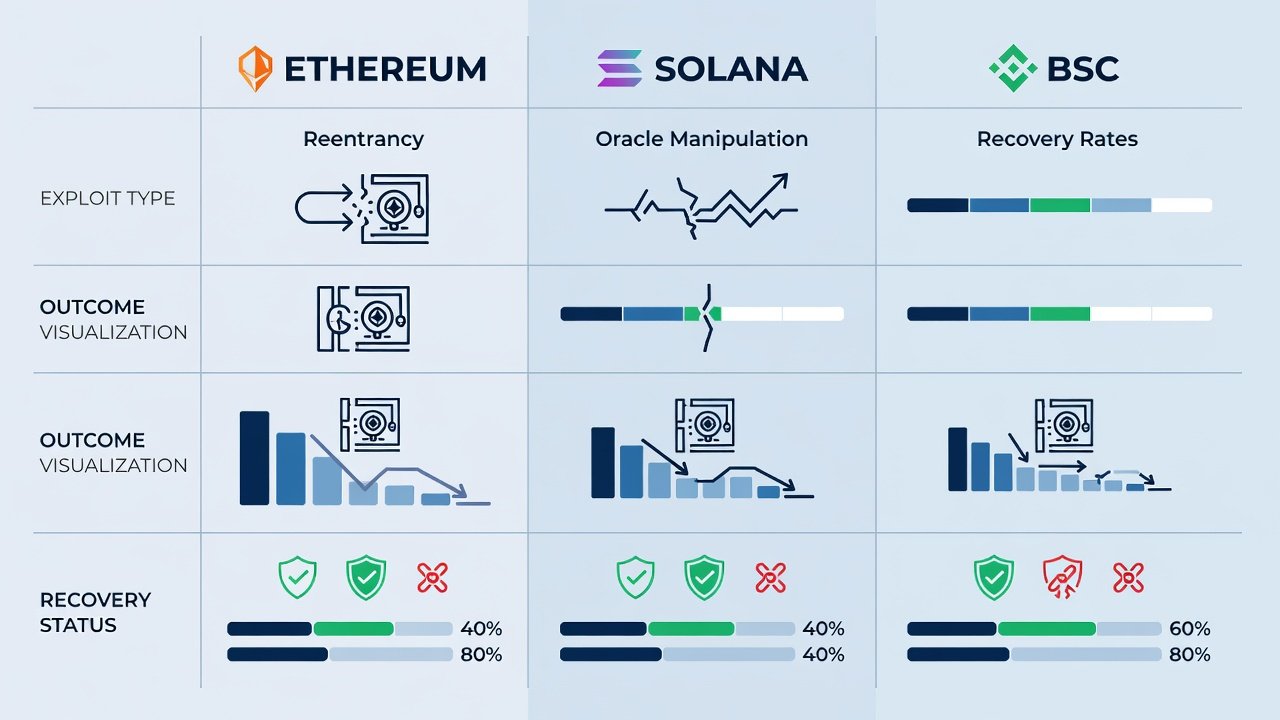
Comparative Analysis of Losses and Recoveries Across Chains
Protocols on Ethereum tended to recover more funds through legal channels and insurance compared to faster-moving chains like Solana. Data from 2026 shows Ethereum incidents averaged higher absolute losses but also faster community-driven responses due to established governance frameworks. BSC and Layer-2 solutions faced challenges with cross-chain coordination, leading to prolonged downtime in some cases. Recovery rates varied significantly based on whether protocols had active bug bounties and insurance coverage in place prior to the event. Ethereum-based projects often benefited from larger security researcher communities that aided in tracing stolen assets quickly.
Practical Audit Checklist for DeFi Protocols
- Conduct formal verification on all critical functions using tools like Certora or Mythril to mathematically prove correctness.
- Implement reentrancy protection and access controls with libraries such as OpenZeppelin to enforce proper state transitions.
- Use multiple independent oracles with deviation checks and fallback mechanisms to prevent single-point price manipulation.
- Perform comprehensive fuzz testing and formal audits before mainnet launch, including scenario-based testing for flash loans and governance attacks.
- Establish bug bounty programs with clear scopes and tiered rewards to incentivize responsible disclosure of vulnerabilities.
- Review all external contract interactions and ensure no assumptions about third-party behavior are hardcoded without validation.
Recommended Monitoring Tools and Wallet Hardening
Teams should integrate real-time monitoring via platforms that alert on unusual transaction patterns, such as large withdrawals or sudden liquidity changes. Popular solutions include on-chain analytics dashboards that track contract interactions across blocks. For wallet security, users must enable hardware wallets, use multi-signature setups for large holdings, and avoid approving unlimited token allowances. Additional steps include regularly revoking approvals through dedicated tools and maintaining separate wallets for high-risk DeFi interactions versus long-term holdings. Monitoring should extend to social channels where exploit announcements often appear first, allowing rapid response before widespread damage occurs.
FAQ: Spotting Red Flags in Real Time
How can I identify a potential exploit early? Watch for sudden spikes in transaction volume, unusual price movements without news, and protocol pauses initiated without explanation. Monitoring dashboards that flag anomalous contract calls can provide early warnings.
What are common warning signs in smart contract code? Look for external calls without proper guards, reliance on single data sources, and overly complex logic in reward mechanisms that could be gamed through repeated interactions.
Are there behavioral patterns that indicate an ongoing attack? Rapid successive calls from the same address or contracts interacting in unexpected sequences often signal reentrancy or flash loan attempts in progress.
Step-by-Step Post-Exploit Response Plan
- Immediately pause all user-facing functions if possible through emergency admin controls.
- Notify the community and security researchers through official channels while avoiding panic-inducing language.
- Engage forensic experts to trace fund movements across chains and identify potential mixing services used by attackers.
- Coordinate with exchanges for potential blacklisting of stolen assets where feasible under local regulations.
- Implement fixes after thorough testing and conduct a thorough post-mortem before resuming operations to document all changes.
- Communicate transparently with users about recovery timelines and any compensation mechanisms such as token airdrops or insurance claims.
Conclusion
The 2026 DeFi exploits serve as critical reminders that security must remain a continuous priority. By applying the lessons from these incidents through better audits, monitoring, and user practices, the ecosystem can build more resilient protocols. Developers are encouraged to reference established resources such as Ethereum Foundation documentation, OpenZeppelin security guidelines, and Chainlink oracle best practices for ongoing education and implementation support.

No comments yet. Be the first!