 CryptoChain Blog
Introduction to DeFi Smart Money Tracking in 2026
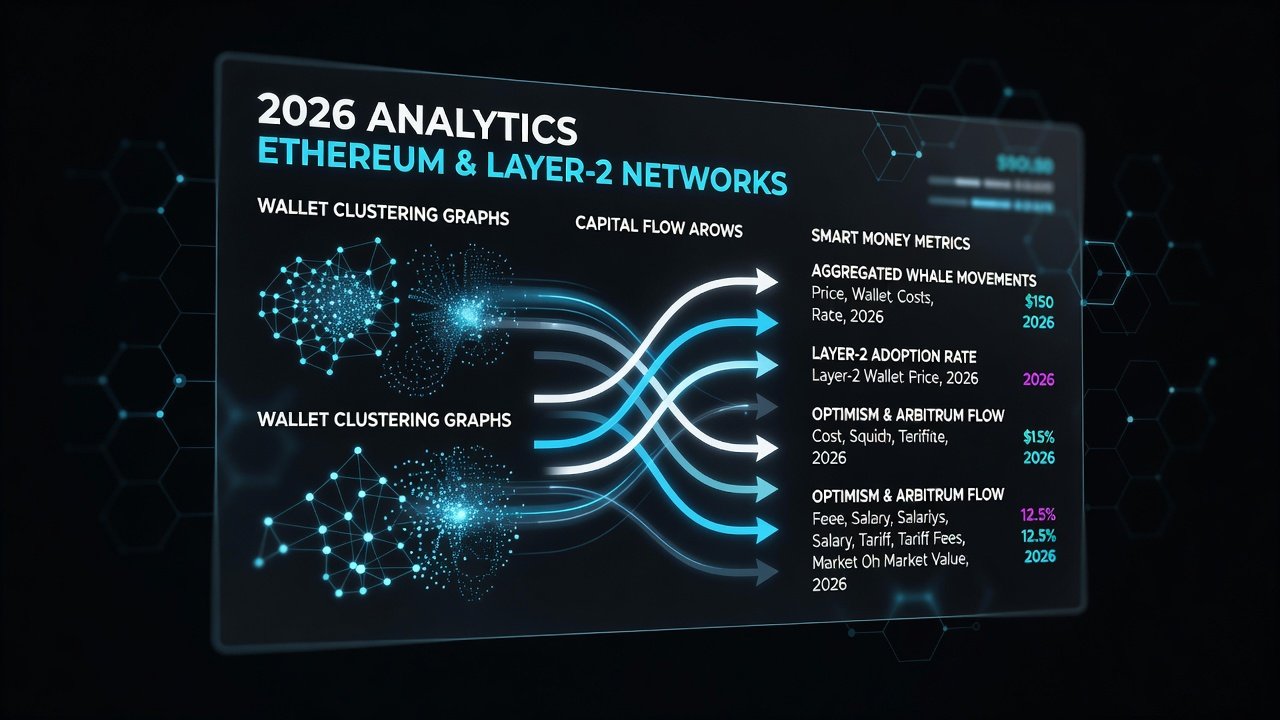
DeFi traders increasingly rely on on-chain intelligence to identify profitable opportunities and manage risk effectively. Smart money tracking involves monitoring wallets controlled by sophisticated investors, hedge funds, protocols, or market makers that consistently generate alpha through timely deposits, withdrawals, and liquidity provision. In 2026, techniques like wallet clustering and flow analysis have become essential for building data-driven strategies that go beyond basic price charts. This comprehensive guide covers practical methods to cluster wallets, visualize capital movements, set automated alerts, and validate signals using leading platforms such as Dune Analytics and Arkham Intelligence. Readers will also find real-world protocol examples, risk management frameworks, and comparisons of free versus paid tools.
Understanding Wallet Clustering Techniques
Wallet clustering groups addresses that likely belong to the same entity based on transaction patterns, shared inputs, timing correlations, and behavioral signals. Sophisticated entities often spread holdings across dozens or hundreds of addresses to maintain privacy or operational efficiency. Common clustering approaches include analyzing co-spends where multiple inputs fund a single output, label propagation from known entities, and graph-based community detection algorithms. Traders begin by labeling seed wallets from public sources such as protocol treasuries, known venture capital addresses, or exchange hot wallets, then expand clusters through repeated interactions and common counterparties. Effective clustering requires combining on-chain heuristics with off-chain context like social media announcements or governance participation records.
Step-by-Step Cluster Mapping with Dune Analytics
Begin by connecting to Dune Analytics and querying Ethereum or Layer-2 data tables. Create a query that joins transaction tables on common addresses, similar gas usage patterns, or repeated interactions with the same smart contracts. Next, apply filters for high-value transfers above typical retail thresholds and time-bound windows to reduce noise. Export results into a spreadsheet or visualization tool and identify recurring counterparties or synchronized movements. Repeat the process across multiple chains using bridge transaction data to build multi-chain clusters. Advanced users can fork community queries and add custom parameters for specific protocols or time ranges, enabling reproducible cluster discovery.
Advanced Flow Analysis in Arkham
Arkham Intelligence provides entity-level labeling and interactive visual graphs that simplify complex flow analysis. Import a seed wallet address, then explore incoming and outgoing flows with color-coded arrows representing different transaction types. Use the platform’s built-in clustering algorithms to surface related addresses automatically based on behavioral similarity. Set up real-time alerts for large movements from clustered wallets to spot potential market-moving activity early. Traders can also layer in historical context by viewing multi-month flow trends and identifying seasonal patterns around token unlocks or protocol upgrades.
Real Protocol Examples: Aave and Uniswap
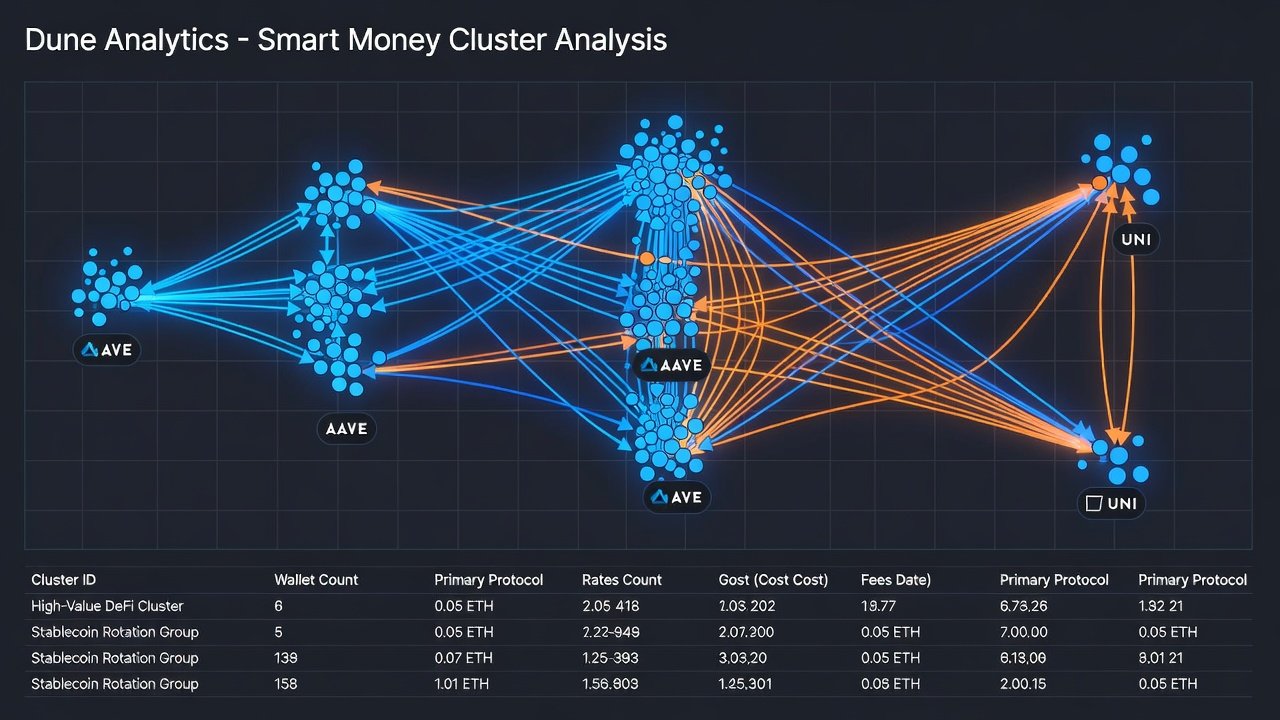
On Aave, smart money clusters often deposit into high-yield pools ahead of incentive programs or governance votes that influence interest rate models. Track wallets that repeatedly supply to specific markets and borrow against collateral in coordinated patterns that suggest leveraged positioning. Cross-reference these flows with Aave’s official documentation and forum discussions to anticipate liquidity shifts. For Uniswap, monitor liquidity provision clusters that concentrate in new token pairs shortly after announcements or liquidity mining campaigns. These flows frequently precede price discovery phases and can be validated by cross-referencing with governance proposals on the respective protocol sites at Aave and Uniswap. Additional examples include tracking clusters interacting with Curve or Balancer pools during stablecoin depeg events, where coordinated withdrawals signal potential contagion risks across the ecosystem.
Risk Considerations When Following Capital Flows
Following smart money carries several important risks that must be addressed before allocating capital. Clusters may include entities using mixers or privacy tools that obscure true intent and create misleading signals. False positives arise when large transfers represent internal rebalancing, tax-loss harvesting, or operational treasury movements rather than directional bets. Always validate clusters across multiple chains and extended time periods before acting on any flow. Combine flow data with fundamental metrics such as total value locked trends, protocol revenue, and on-chain activity ratios to avoid chasing noise. Another key risk involves front-running or copy-trading delays that erode alpha, especially during high-volatility periods when transaction fees spike and execution timing becomes critical.
Free Versus Paid Tracking Tools Comparison
- Free options like basic Dune queries and public Arkham dashboards offer solid starting points for cluster discovery, simple flow charts, and manual research without subscription costs.
- Paid tiers provide API access, advanced alert customization, higher historical export limits, priority support, and enhanced multi-chain coverage that accelerates institutional-grade analysis.
- Traders should evaluate needs around data freshness, automation requirements, and team collaboration before upgrading, as free tiers suffice for many individual manual research workflows while paid plans excel in production environments.
- Hybrid approaches often work best, using free tools for initial exploration and paid features only when scaling alerts or integrating data into custom trading bots.
Setting Up Alerts and Building Dashboards
Configure webhook alerts in Arkham for cluster movements exceeding defined thresholds, such as transfers above a certain USD value or interactions with specific contracts. In Dune, schedule queries that refresh daily and export CSV files for further processing in visualization tools like Tableau or Google Data Studio. Sample dashboards typically display cluster size, average transaction value, dominant protocols interacted with over the past 30 days, and performance attribution metrics. Exportable queries allow users to share standardized cluster detection logic with team members or the broader community, fostering collaborative intelligence.
Building Data-Driven Strategies from Cluster Insights
Once clusters are mapped and flows visualized, integrate findings into broader trading frameworks. Use cluster conviction scores based on historical accuracy, position sizing rules tied to flow magnitude, and stop-loss mechanisms triggered by opposing cluster movements. Regularly backtest strategies against historical cluster data to refine parameters and reduce overfitting. This approach transforms raw on-chain signals into repeatable processes that improve decision quality over multiple market cycles.
FAQ
How do mixers create false signals in smart money tracking?
Mixers break transaction links, causing legitimate clusters to appear fragmented or disconnected. Validate by checking consistent behavior across non-mixed addresses and confirming labels through multiple independent sources over extended periods.
What is the best way to validate clusters across chains?
Use bridge transaction data and consistent labeling from platforms that support multi-chain entity resolution. Cross-reference timing of deposits and withdrawals along with shared smart contract interactions to confirm the same controlling entity.
Can retail traders replicate institutional flow analysis?
Yes, by combining free analytics platforms with disciplined query building, alert configuration, and ongoing validation. Focus on high-conviction clusters rather than attempting to track every movement in real time.
What common pitfalls should new users avoid when starting cluster analysis?
Avoid over-reliance on single-chain data, ignoring low-value but high-frequency transactions, and failing to update labels when entities change behavior or rebrand their wallet usage patterns.
How often should clusters be re-evaluated?
Re-evaluate clusters at least monthly or after major protocol upgrades and market events, as wallet ownership and strategies evolve quickly in the DeFi space.
Conclusion
Mastering wallet clustering and flow analysis equips DeFi traders with actionable intelligence for 2026 markets. By combining Dune Analytics and Arkham workflows with careful risk management and regular validation, users can develop robust, data-driven strategies that improve decision quality and risk-adjusted returns over time.

No comments yet. Be the first!