 CryptoChain Blog

Introduction to Advanced NFT Collateral in 2026
The NFT-Fi sector has matured significantly by 2026, enabling users to extract higher yields from digital assets without selling them outright. Building on established protocols, advanced strategies now focus on sophisticated mechanics like fractionalization, cross-protocol leverage, and automated safeguards to boost returns while carefully managing downside risks. This comprehensive guide delivers executable steps for experienced users seeking sustainable alpha beyond basic peer-to-peer lending. Throughout 2026, protocols have integrated better oracle feeds and governance features that reward proactive collateral management.
Key platforms such as NFTfi and BendDAO have expanded their offerings, allowing for dynamic collateral management across multiple chains. Users can now combine tactics for compounded yields, but success requires deep understanding of oracle dependencies, market volatility, and gas optimization. Real-world adoption shows collectors turning single high-value NFTs into diversified income streams through careful structuring.
Fractional Ownership Mechanics for Enhanced Liquidity
Fractional ownership breaks high-value NFTs into tradable ERC-20 tokens, unlocking liquidity without full divestment. Platforms tokenize assets into shares, enabling partial sales or use as collateral across broader DeFi ecosystems. This mechanic supports yield generation through staking fractions, providing liquidity to pools, or lending them separately on secondary markets. The process preserves governance rights for majority holders while allowing smaller participants to gain exposure.
Step-by-step setup begins with selecting a compatible NFT on a supported marketplace. Next, initiate fractionalization via a protocol like Fractional.art by defining share supply, pricing per share, and governance parameters. After minting, distribute or collateralize shares in lending pools for immediate returns. Real wallet example: A collector holding a CryptoPunk can fractionalize into 1000 tokens, retain 600 for ongoing control, lend 300 on NFTfi for interest, and stake the remaining 100 in a yield aggregator. Benefits include reduced concentration risk and the ability to rebalance positions quickly during market shifts.
Additional considerations involve tax implications and smart contract audit status before committing large positions. Users should verify that fractional contracts include clear redemption mechanics to avoid disputes over underlying asset ownership.
Cross-Protocol Leverage Loops on NFTfi and BendDAO
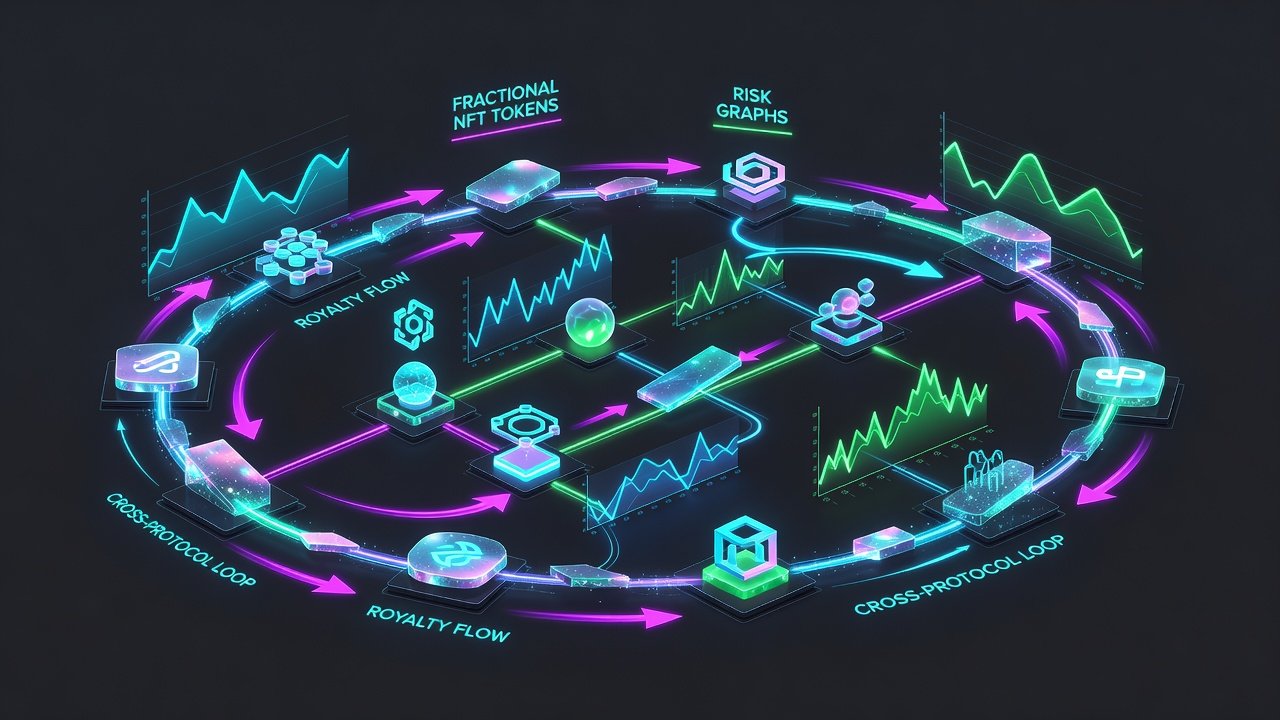
Leverage loops amplify returns by borrowing against NFTs on one platform and redeploying assets on another. On NFTfi, peer-to-peer loans offer flexible terms tailored to borrower needs, while BendDAO provides instant liquidity via its lending pools with automated interest rate adjustments. These loops work best when loan durations and interest rates align across protocols.
Practical flow starts by depositing an NFT as collateral on NFTfi to borrow ETH at a negotiated rate. Transfer the borrowed assets to BendDAO for secondary lending or staking to generate additional yield. Repeat the cycle selectively, always monitoring overall loan-to-value ratios to stay below 60 percent for safety margins. Risk-adjusted calculations factor in potential slippage, gas costs, and protocol fees to determine net profitability.
Comparisons reveal that NFTfi excels in customized loan durations and negotiation flexibility, whereas BendDAO offers automated refinancing options and lower entry barriers for smaller positions. Users often achieve higher net yields from looped strategies when gas fees remain moderate and market conditions stable. Diversifying across both platforms reduces single-point failure risks.
Royalty-Backed Yield Stacking Strategies
Royalty-backed stacking layers creator fees with collateral yields to create multiple income streams. By holding NFTs with ongoing royalties, users earn passive income alongside loan interest or staking rewards. Implementation involves choosing blue-chip collections with established 5 to 10 percent royalty structures, collateralizing the asset on BendDAO for base yield, then redirecting royalty streams into yield aggregators for further compounding. Automated tools handle distribution and reinvestment, minimizing manual intervention and operational overhead.
Automated Liquidation Protection Mechanisms
Protection against liquidations remains critical in volatile markets. Modern protocols integrate oracle alerts, dynamic collateral top-ups, and insurance options. Key tactics include monitoring real-time floor prices via integrated dashboards, setting automated triggers to add collateral when LTV exceeds predefined thresholds, and using insurance wrappers from third-party DeFi tools for extra coverage during extreme events.
- Monitor real-time floor prices via integrated dashboards connected to multiple oracles.
- Set automated triggers to add collateral or repay portions of loans when LTV exceeds safety thresholds.
- Use insurance wrappers from third-party DeFi tools for extra coverage during extreme volatility spikes.
- Regularly review and adjust parameters based on historical volatility data for each collection.
Common pitfalls include ignoring oracle delays during flash events, which can lead to unexpected liquidations. Always diversify across at least three protocols and maintain a buffer of liquid assets for quick top-ups.
Real Wallet Examples and Risk Calculations
Consider a sample wallet starting with a Bored Ape NFT. The owner fractionalizes 40 percent of the asset, initiates a leverage loop on NFTfi to BendDAO for an estimated 25 percent APY uplift, and stacks royalties into an aggregator. Returns are calculated as total yield from loans plus royalties minus fees, slippage, and any impermanent loss components. Continuous tracking helps refine positions over time.
Platform Comparison and Decision Framework
When evaluating options, consider factors such as supported collections, maximum loan durations, interest rate models, and liquidation thresholds. NFTfi suits users preferring direct negotiations, while BendDAO appeals to those seeking speed and automation. Testing small positions on both reveals which interface and fee structure best matches individual risk tolerance and portfolio size.
FAQ
How does impermanent loss affect NFT collateral?
Impermanent loss arises primarily when providing liquidity with NFT fractions in volatile pairs. Mitigate exposure by using stablecoin pairs or single-sided staking options available in 2026 protocols, and monitor pool performance metrics regularly.
What oracle risks should users watch?
Centralized oracles can lag during flash crashes, triggering premature liquidations. Prefer decentralized alternatives and set conservative LTVs. DeFiLlama offers transparent protocol metrics for ongoing monitoring and comparison.
Are there regulatory considerations for these strategies?
Users should review local securities laws around fractional tokens and collateralized lending. Documentation from Ethereum Foundation resources helps clarify smart contract implications across jurisdictions.
Conclusion
Advanced NFT collateral strategies in 2026 reward meticulous execution, ongoing monitoring, and risk awareness. By mastering fractional mechanics, leverage loops, royalty stacking, and protection tools, users can sustainably grow yields from their collections. Always begin with small test positions, maintain detailed records, and stay updated on protocol upgrades to adapt tactics as markets evolve.
No comments yet. Be the first!