 CryptoChain Blog
Ethereum L2 Dev Tools Evolution 2026: ETH Updates Guide
The Ethereum ecosystem in 2026 has reached new heights of scalability thanks to widespread Layer 2 adoption. Developers now face an expanded toolkit designed specifically for L2 environments, moving far beyond basic Solidity compilation. This guide provides a beginner-to-intermediate roadmap for adopting the latest SDKs, testing frameworks, and deployment pipelines while addressing real search intent around practical implementation. Readers will find concrete code examples, side-by-side comparisons, performance data, and answers to frequent migration questions.
Understanding the 2026 L2 Landscape
Ethereum's mainnet continues to serve as the settlement layer while Layer 2 rollups handle the bulk of transaction volume. Optimistic rollups and zero-knowledge rollups have matured, each requiring tooling that accounts for their unique finality rules and data availability mechanisms. In 2026, the emphasis lies on frictionless developer experience across networks such as Optimism, Arbitrum, Base, and emerging zk-rollup platforms. Tooling updates focus on native support for cross-chain messaging, improved gas metering, and automated bridge interactions that reduce manual configuration errors.
These advancements align with broader ecosystem goals outlined at ethereum.org, where scalability roadmaps highlight the need for developer-centric infrastructure. Understanding this context helps teams choose tools that will remain compatible as protocols evolve.
Key Advancements in SDKs and Testing Frameworks
Modern SDKs now include built-in L2 abstractions that handle differences between optimistic and zk environments automatically. Popular choices include updated versions of the Optimism SDK and Arbitrum SDK, which integrate directly with Hardhat and Foundry. Testing frameworks have also progressed, with support for parallel test execution, deterministic time manipulation, and built-in fork testing against live L2 states.
Foundry's 2026 release adds native cheatcodes for L2-specific operations such as L1-to-L2 message simulation. Hardhat has introduced plugins that automatically detect the target network and adjust gas estimation accordingly. These features reduce the time developers spend on boilerplate configuration and allow focus on contract logic instead.
Comparing Emerging IDE Plugins versus Traditional Options
Choosing the right development environment directly impacts productivity. Traditional options like Remix IDE still serve educational and rapid-prototyping needs, yet they lack deep L2 debugging capabilities. Emerging IDE plugins for VS Code and JetBrains IDEs offer superior integration.
- Remix IDE: Excellent for beginners learning Solidity basics and quick contract verification, but limited gas profiling on L2 networks.
- VS Code Ethereum plugins: Provide inline gas cost estimates, L2 network switching, and Solidity language server enhancements that surface errors specific to rollup execution environments.
- JetBrains integrations: Deliver advanced refactoring, visual call graphs, and support for multi-file contract workspaces that scale well for larger codebases targeting multiple L2s.
Many teams adopt a hybrid workflow: use Remix for initial exploration and switch to VS Code plugins for production-grade development and continuous integration pipelines.
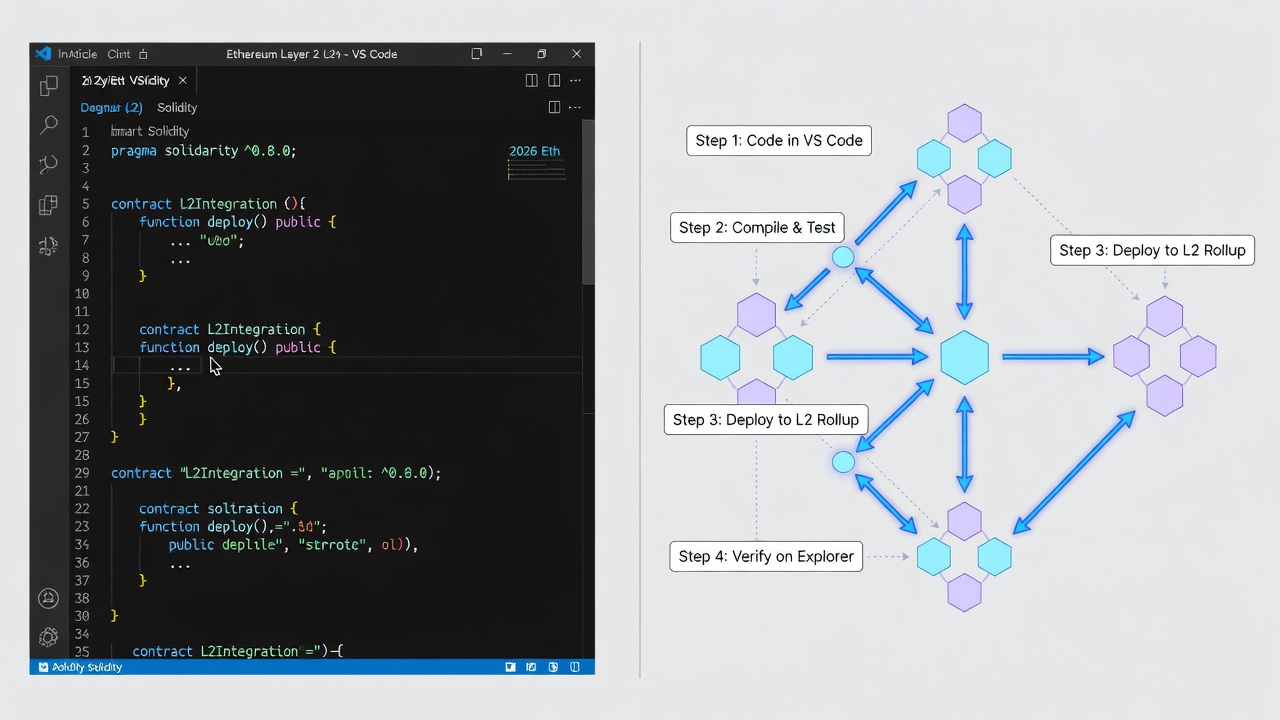
Step-by-Step Integration with Popular L2 Networks
Integrating new tooling with networks such as Optimism or Arbitrum requires careful configuration but follows repeatable patterns. Below is a practical workflow that works across major L2s in 2026.
- Initialize a project with Hardhat or Foundry and install the latest L2-specific plugins via npm or cargo.
- Update hardhat.config.js or foundry.toml to include network definitions with the correct RPC endpoints and chain IDs for your chosen L2.
- Implement deployment scripts that leverage SDK helpers for bridge deposits and message passing.
- Run local fork tests against a recent L2 block to validate behavior before mainnet deployment.
Here is an expanded deployment script example targeting Optimism:
const { ethers } = require("hardhat");
async function main() {
  const [deployer] = await ethers.getSigners();
  console.log("Deploying with account:", deployer.address);
  const MyContract = await ethers.getContractFactory("MyContract");
  const contract = await MyContract.deploy();
  await contract.deployed();
  console.log("Contract deployed to:", contract.address);
  // Optional: verify on block explorer
}
After deployment, developers can use the SDK to initiate an L1-to-L2 deposit or send cross-domain messages. Similar patterns apply to Arbitrum with only minor configuration changes.
Performance Benchmarks and Workflow Optimization
Real-world benchmarks from 2026 demonstrate that updated testing frameworks can reduce test suite runtime by enabling parallel execution and smarter caching. Teams using the newest Foundry release report faster iteration cycles when running fork tests against L2 networks. Deployment pipelines that incorporate automated verification and gas reporting tools consistently produce more reliable releases.
Optimization tips include configuring CI runners with adequate memory, caching node modules across builds, and using deterministic test seeds to avoid flakiness. These practices compound over time, allowing small teams to maintain velocity as project complexity grows.
Addressing Migration Challenges: FAQ
Q: How do I migrate an existing L1 project to L2 tooling? Begin by forking the target L2 state locally, then gradually replace L1-specific assumptions in your tests with L2 equivalents such as adjusted block times and gas costs.
Q: What are the most common pitfalls when adopting new SDKs? Developers often overlook bridge contract addresses or fail to account for the seven-day challenge period on optimistic rollups. Always test withdrawal flows end-to-end on testnets.
Q: Which testing framework offers the best L2 support? Both Hardhat and Foundry have strong ecosystems; the choice often depends on whether your team prefers JavaScript or Rust-based tooling.
Q: How can I monitor contract performance after deployment? Integrate on-chain analytics dashboards and set up alerts for unexpected gas spikes or failed transactions.
Best Practices and Mistakes to Avoid
Successful teams document their toolchain choices and maintain separate configuration files for each L2 they target. They also invest time in learning the nuances of each network's messaging protocol rather than treating all L2s identically. Common mistakes include skipping testnet validation, hardcoding L1 addresses, and neglecting to update dependencies after major SDK releases. Following the official documentation at Optimism documentation and Arbitrum resources helps avoid these issues.
Conclusion
The evolution of Ethereum L2 developer tooling in 2026 empowers teams to build faster and more confidently. By mastering the latest SDKs, comparing IDE options thoughtfully, and following structured integration steps, developers can optimize their workflows and deliver scalable applications. Continue exploring updates through authoritative sources such as ethereum.org to stay aligned with the rapidly changing ecosystem.

No comments yet. Be the first!