 CryptoChain Blog
Introduction to Ethereum Layer 2 and RWA Tokenization in 2026
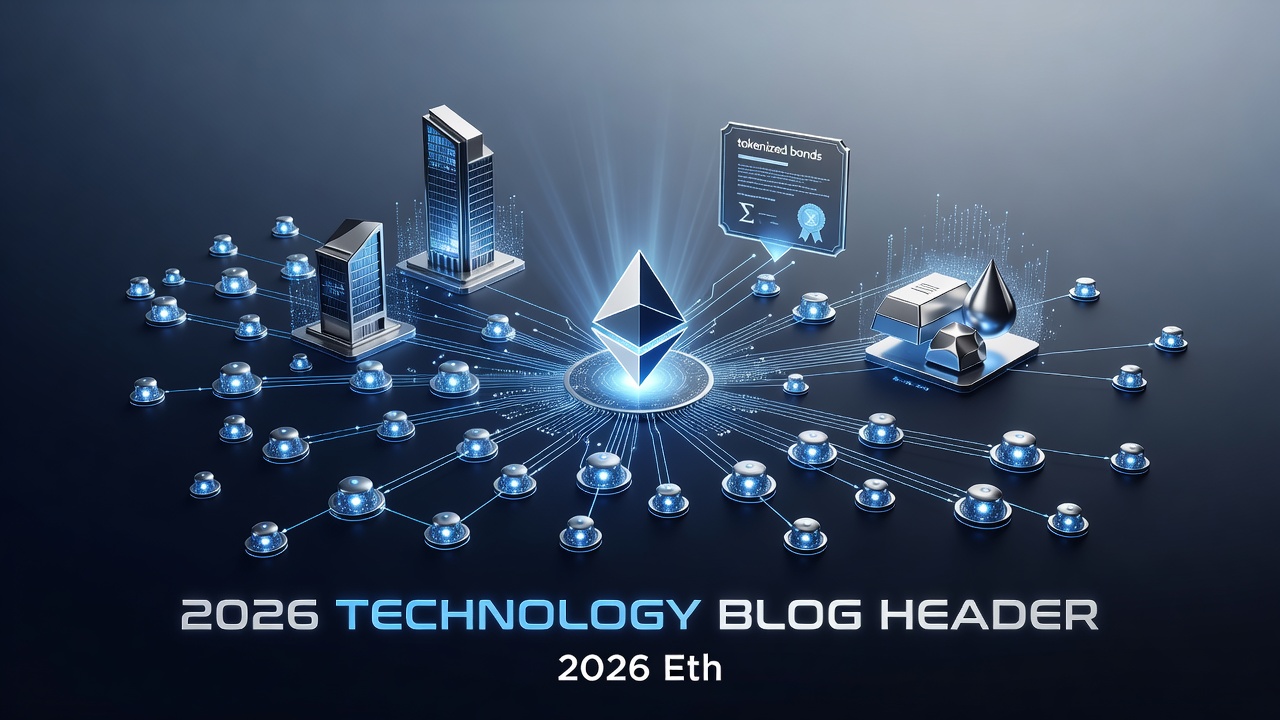
As Ethereum continues to evolve in 2026, Layer 2 solutions have become central to scaling blockchain capabilities for real-world asset (RWA) tokenization. Institutions and developers are increasingly leveraging these networks to bring traditional assets like real estate, bonds, commodities, invoices, and private equity onto Ethereum with greater efficiency and lower costs than mainnet alone allows. This shift directly addresses search intent around practical adoption strategies by providing actionable steps, detailed performance data, regulatory navigation guidance, and real-world benchmarks that help organizations move from pilot projects to full-scale implementations.
The growth stems from Ethereum's core strengths in security, decentralization, and network effects, which are extended through optimistic and zero-knowledge rollups. These L2s process transactions off-chain while settling periodically on mainnet, enabling higher throughput for tokenized assets that require frequent transfers, compliance checks, and liquidity events. In 2026, fresh Ethereum news highlights how L2 adoption is accelerating RWA markets, with total value locked in tokenized assets surpassing previous years due to improved infrastructure and clearer regulatory pathways.
Regulatory Considerations for RWA on Ethereum L2s
Regulatory frameworks remain a primary concern for institutions entering RWA tokenization. In 2026, compliance with securities laws is essential, particularly when tokenizing assets that qualify as investment contracts under existing definitions. Developers must integrate know-your-customer (KYC) and anti-money laundering (AML) protocols directly into smart contracts on L2 platforms to ensure ongoing adherence without sacrificing scalability.
Key considerations include aligning with evolving global standards. Projects often reference guidelines from bodies like the U.S. Securities and Exchange Commission to ensure tokenized offerings meet disclosure and investor protection requirements. Additionally, jurisdictions such as the EU emphasize MiCA regulations, requiring clear custody arrangements for underlying assets and transparent reporting mechanisms. Institutions should consult legal experts early to structure token issuance that avoids reclassification risks and incorporates jurisdiction-specific rules around cross-border transfers. Practical steps include embedding programmable compliance logic that automatically enforces transfer restrictions based on investor accreditation status.
Technical Integration Steps for Developers and Institutions
Integrating RWA tokenization on Ethereum L2s involves several practical phases that ensure both technical robustness and regulatory alignment. First, select an L2 compatible with your asset class, ensuring support for ERC-20, ERC-1400, or ERC-3643 standards that embed compliance logic such as whitelisting and transfer restrictions. Next, bridge assets from mainnet using official bridges while implementing oracle feeds for real-time valuation and off-chain asset verification.
- Assess L2 security models, data availability guarantees, and sequencer decentralization status.
- Develop or audit smart contracts with embedded regulatory hooks and upgradeability features.
- Test extensively on testnets for transaction finality, gas optimization, and edge-case compliance scenarios.
- Deploy with comprehensive monitoring tools for on-chain activity, off-chain asset verification, and incident response protocols.
- Establish governance frameworks for token holders, including voting mechanisms and dispute resolution processes.
- Conduct third-party audits focusing on both code security and regulatory mapping.
These steps help mitigate common pitfalls like bridge vulnerabilities, oracle manipulation, or inconsistent finality across L2 environments. Institutions often begin with sandbox environments before migrating production workloads.
Performance Benchmarks Versus Ethereum Mainnet
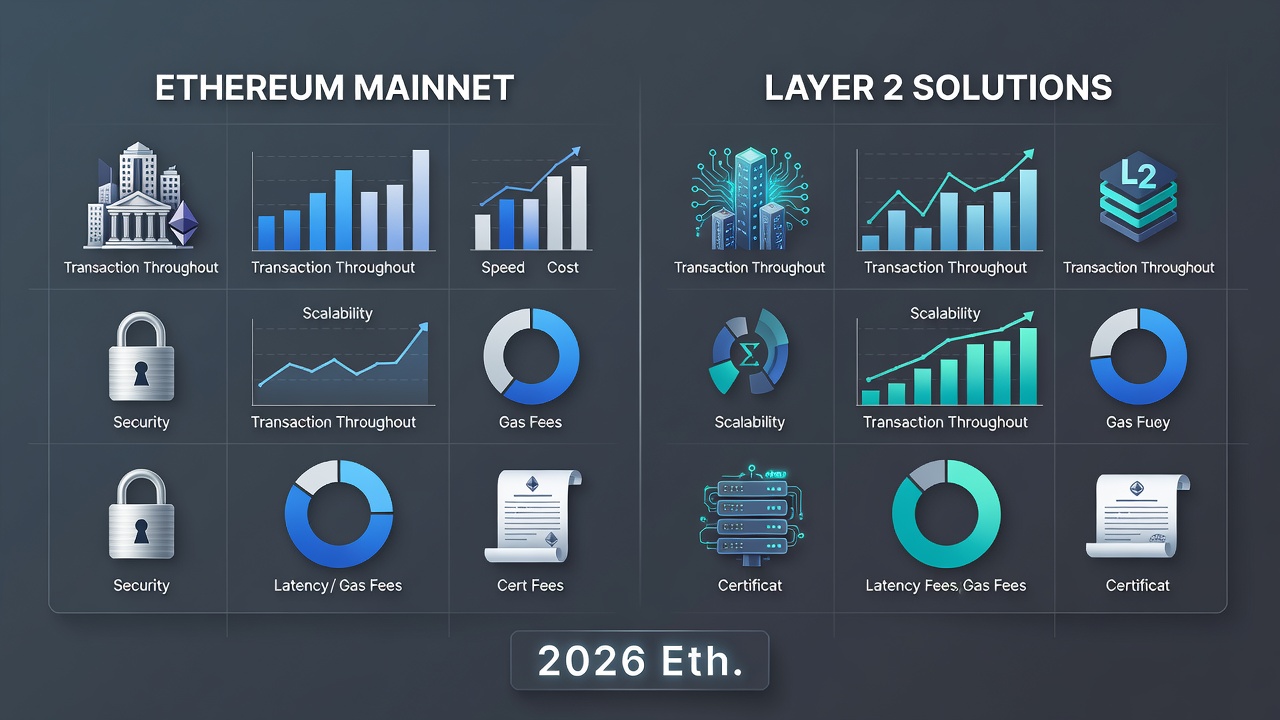
Layer 2 platforms deliver substantial improvements over mainnet for RWA use cases. Transaction throughput on leading L2s often exceeds 1,000 TPS compared to mainnet's 15-30 TPS, with fees reduced dramatically to enable micro-transactions and high-frequency settlements. Settlement finality remains anchored to Ethereum's security, typically achieved within minutes rather than the variable delays seen on congested mainnet periods.
Benchmarks show L2s excel in high-frequency trading of tokenized bonds or fractional real estate, where mainnet congestion previously limited scalability. Latency reductions enable near-instant settlements, critical for institutional workflows involving margin calls or dividend distributions. Comparative analyses in 2026 demonstrate that L2 environments reduce operational overhead while preserving the same cryptographic assurances as mainnet.
Real-World Examples from Current Projects
Several initiatives illustrate successful L2 adoption for RWAs. BlackRock's tokenized funds have explored L2 environments for liquidity management and fractional ownership models. Centrifuge has tokenized invoices and real estate on networks like Arbitrum, demonstrating how supply chain assets achieve on-chain transparency and automated payments. Ondo Finance has integrated with multiple L2s to offer yield-bearing tokenized treasuries, attracting institutional capital through compliant structures that combine traditional finance yields with blockchain efficiency.
Additional examples include Maple Finance expanding credit markets on L2s and various real estate platforms using zk-rollups for privacy-preserving ownership records. These projects highlight the transition from proof-of-concept to production deployments, where L2s handle volume spikes without compromising Ethereum's trust model or introducing new centralization risks.
Side-by-Side Comparisons of L2 Platforms
Choosing the right L2 requires evaluating trade-offs across security, cost, developer tooling, and ecosystem maturity. Here is an expanded comparison of prominent options:
- Arbitrum: Strong ecosystem for DeFi integrations, optimistic rollup model with mature tooling for RWA compliance features, and high liquidity pools that facilitate secondary markets for tokenized assets.
- Optimism: Focus on developer experience and public goods funding, suitable for governance-heavy tokenized assets with strong community support for open-source compliance modules.
- zkSync: Zero-knowledge proofs provide enhanced privacy for sensitive financial data, with growing support for institutional bridges and rapid proof generation that improves user experience.
- Base: Coinbase-backed, user-friendly onboarding that appeals to traditional finance entrants exploring tokenization, featuring seamless fiat on-ramps and enterprise-grade support.
Institutions often start with Arbitrum or Optimism for their battle-tested security and liquidity depth before expanding to zk-based solutions for specific privacy needs.
Challenges and Solutions in L2 RWA Adoption
Despite the advantages, challenges such as cross-L2 interoperability, oracle reliability, and evolving custody standards persist. Solutions include adopting standardized bridge protocols and multi-oracle redundancy systems. Developers should prioritize platforms with active research into shared sequencing to reduce fragmentation risks across the Ethereum ecosystem.
Future Outlook and Practical Adoption Strategies
Looking ahead, Ethereum L2 advancements in 2026 and beyond will likely introduce further improvements in account abstraction and native compliance primitives. Institutions are advised to begin with pilot programs on a single L2, measure performance against internal KPIs, and gradually expand based on data. Partnering with established projects and participating in Ethereum community forums accelerates learning and reduces implementation risks.
FAQ Section
What are the main benefits of using L2s for RWA tokenization?
L2s provide scalability, reduced fees, and maintained Ethereum security, enabling practical tokenization of illiquid assets at scale while supporting complex compliance requirements.
How do regulatory requirements differ across L2 platforms?
Requirements are largely consistent since assets ultimately settle on Ethereum mainnet, but platform-specific tools for KYC integration, privacy features, and governance vary and should be evaluated case by case.
Can developers migrate existing mainnet RWAs to L2s easily?
Yes, via canonical bridges and contract upgrades, though thorough testing for data consistency, compliance continuity, and user experience is required before full migration.
What performance metrics matter most when evaluating L2s for institutional RWAs?
Key metrics include transactions per second, average fee per transaction, time to finality, and ecosystem liquidity depth, all measured against specific asset class requirements.
Conclusion
Ethereum Layer 2 solutions are transforming real-world asset tokenization in 2026 by combining scalability with institutional-grade security. By following structured integration approaches, monitoring regulatory developments, learning from leading projects, and addressing challenges proactively, institutions and developers can capitalize on this evolution. Continued innovation on L2s promises even broader adoption and more sophisticated financial products in the years ahead, positioning Ethereum as the foundational layer for the tokenized economy.
No comments yet. Be the first!