 CryptoChain Blog
Introduction to MEV on Ethereum Layer 2 Networks
As Ethereum continues its scaling journey through rollups in 2026, Maximal Extractable Value (MEV) dynamics have transformed dramatically compared to earlier years. Layer 2 solutions, encompassing both optimistic and zero-knowledge rollups, introduce innovative sequencer policies that diverge from the established builder-searcher auction model on mainnet. This comprehensive guide explores how these evolutions influence ETH holders, developers, and power users aiming to either capture or mitigate MEV with precision and foresight. Beyond basic scaling discussions, we delve into the technical nuances, real-world implementations, and actionable strategies that define the current landscape.
Understanding Rollup Sequencer Policies in 2026
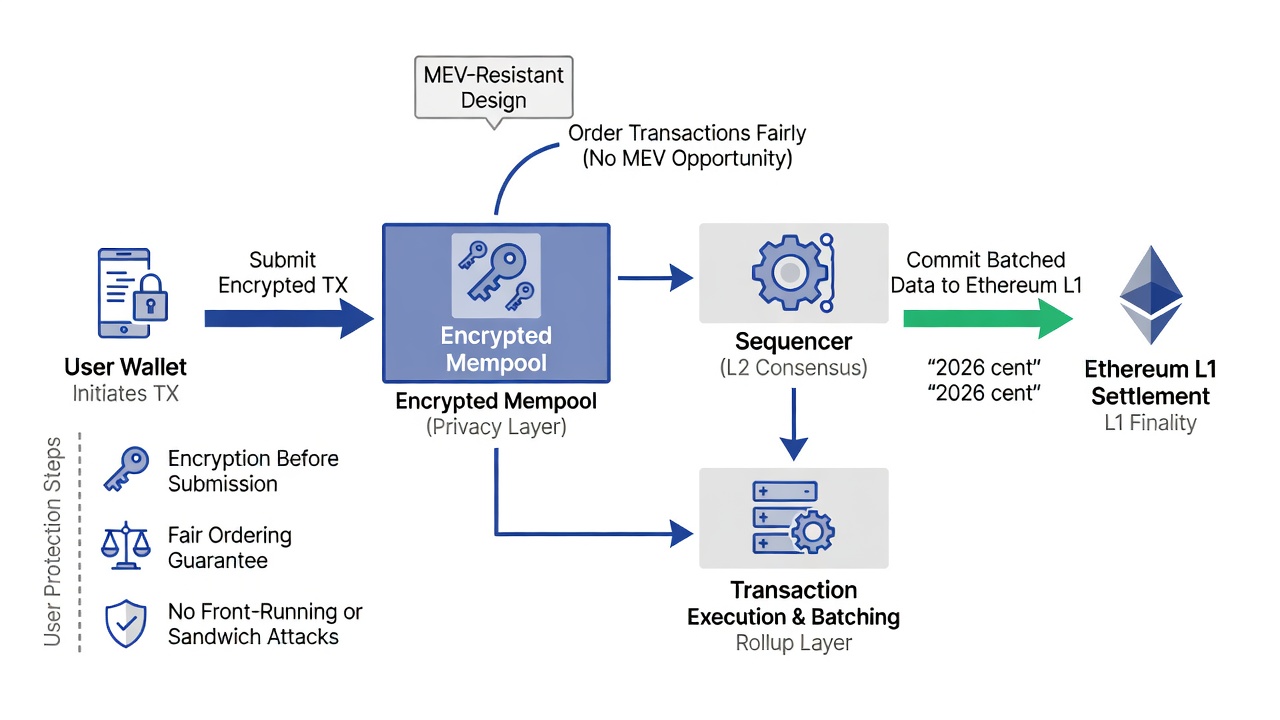
Rollups have fundamentally redesigned transaction ordering mechanisms through a combination of centralized and increasingly decentralized sequencers. By mid-2026, leading Layer 2 networks deploy fair ordering protocols alongside encrypted mempools to curb harmful forms of MEV such as sandwich attacks and frontrunning. Sequencers on prominent platforms now enforce delayed transaction visibility, which significantly limits opportunities for malicious extraction that were prevalent on Ethereum mainnet. These policies prioritize user protection while maintaining network efficiency, creating a more balanced environment for all participants.
Advanced Sequencer Implementations
Modern sequencers incorporate threshold encryption and verifiable delay functions to obscure pending transactions until execution is imminent. This approach reduces the attack surface for searchers attempting to reorder or insert trades. For example, networks have adopted randomized batching techniques that shuffle transaction order within blocks, making predictive MEV extraction far more challenging.
Key Differences from Ethereum Mainnet
Ethereum mainnet operates under Proposer-Builder Separation (PBS), where builders compete in auctions to propose blocks rich with MEV opportunities. In contrast, L2s centralize sequencing in early stages but are transitioning toward decentralized models that distribute control among multiple operators. This evolution affects economic incentives for ETH stakers, who benefit indirectly from reduced congestion and more stable fee markets. Ethereum.org provides foundational resources on these architectural shifts for deeper technical reading.
Searcher-Builder Dynamics on L2s
Searchers operating on Layer 2 networks experience lower latency thanks to faster block times and reduced gas competition. Builders often integrate directly with sequencers, forming hybrid models where MEV opportunities are resolved through off-chain auctions or priority fee mechanisms. Case studies reveal that searchers have adapted by specializing in cross-rollup arbitrage and complex liquidation strategies that span multiple L2 ecosystems. These dynamics create new profit vectors but also introduce risks related to sequencer centralization and potential collusion.
Developers monitoring these interactions frequently rely on real-time analytics dashboards to spot emerging patterns and optimize their own transaction bundles accordingly.
Real-World Case Studies from Leading L2s
Optimism's Bedrock upgrade introduced robust MEV-resistant features through its fault-proof system and decentralized sequencer roadmap. The Base network implemented priority fee redistribution mechanisms that return a portion of extracted value directly to end users. Meanwhile, zkSync Era leverages validity proofs to enforce strict fair sequencing, resulting in measurable reductions in extractable value. Arbitrum has explored similar enhancements via its Nitro technology, focusing on time-sensitive liquidation protections. L2Beat offers ongoing data comparisons across these networks. These implementations demonstrate how L2-specific policies safeguard retail participants while still permitting sophisticated actors to deploy advanced automation tools for legitimate MEV capture.
MEV-Resistant Transaction Flows: Step-by-Step Examples
Power users and developers can implement the following practical measures to protect against adverse MEV:
- Route transactions during periods of low network volatility to minimize frontrunning exposure.
- Leverage private RPC endpoints that support encrypted mempools on compatible L2 platforms.
- Design smart contracts with commit-reveal schemes for high-value operations such as large token swaps or liquidity provisions.
- Continuously monitor sequencer transparency dashboards for real-time visibility into ordering rules.
- Utilize batching strategies combined with time-locked reveals to obscure intent until execution.
A concrete example on an optimistic rollup involves submitting a swap transaction through an encrypted channel, followed by a delayed reveal that prevents immediate sandwiching by competing searchers.
Economic Impacts on ETH Holders
Effective MEV mitigation across L2s contributes to more predictable gas costs and enhanced DeFi protocol stability. Long-term ETH holders benefit through improved yield opportunities and reduced slippage in decentralized exchanges. Advanced participants can further engage with MEV by delegating to specialized searchers or participating in protocol-level revenue sharing programs. These economic shifts underscore the importance of staying informed about sequencer policy updates and their downstream effects on staking rewards and overall network health.
Mistakes to Avoid When Navigating L2 MEV
Common pitfalls include over-reliance on mainnet tools without adapting to L2 sequencer quirks, neglecting to test transaction flows in staging environments, and ignoring cross-rollup interactions that can create unexpected arbitrage windows. Developers should also avoid hardcoding assumptions about ordering fairness, as policies continue to evolve rapidly in 2026.
Practical Checklist for Developers and Power Users
- Conduct thorough audits of smart contracts using formal verification methods tailored to L2 environments.
- Integrate L2-native MEV protection SDKs and libraries into existing codebases.
- Run extensive simulations of transaction bundles within testnet settings before live deployment.
- Track official governance forums and sequencer update announcements for timely policy changes.
- Diversify activity across several L2 networks to hedge against isolated MEV risks or sequencer failures.
- Establish monitoring alerts for unusual mempool activity that may signal emerging extraction attempts.
- Review historical case studies from networks like Optimism and Arbitrum to inform strategy refinements.
Applying this checklist consistently helps users translate theoretical knowledge into reliable, production-ready practices.
Conclusion
Ethereum L2 MEV strategies in 2026 center on user-centric innovations while presenting fresh avenues for value capture. By mastering sequencer policies, searcher-builder interactions, and the outlined mitigation techniques, technically adept users can operate confidently in this maturing ecosystem. Continued engagement with resources such as Arbitrum.io ensures ongoing alignment with the latest developments.
FAQ
What is the primary difference between mainnet and L2 MEV?
L2 environments rely on sequencer-driven ordering instead of PBS, enabling quicker execution but introducing distinct centralization considerations that require tailored strategies.
How can users mitigate sandwich attacks on rollups?
Adopt private submission channels, encrypted mempools, and commit-reveal patterns as demonstrated in the step-by-step transaction flow examples.
Are there specific tools recommended for L2 MEV monitoring?
Analytics platforms integrated with sequencer dashboards and L2-specific explorers provide the most actionable insights for tracking and responding to MEV opportunities.
What future developments should developers watch for in 2026?
Watch for wider adoption of decentralized sequencers and standardized MEV redistribution frameworks that could further reshape economic incentives across the L2 landscape.
No comments yet. Be the first!