 CryptoChain Blog
Introduction to Ethereum L2 Scaling for NFTs
In 2026, Ethereum remains the dominant blockchain for non-fungible tokens, yet its base layer continues to face inherent limitations in transaction speed and cost that Layer 2 solutions effectively resolve. These L2 networks process NFT-related activities off the main chain while periodically settling data back to Ethereum for security and finality. The result is a dramatically improved experience for minting, trading, and transferring digital collectibles, allowing creators to launch ambitious projects and collectors to participate without the friction of high gas prices or network congestion.
Search intent around layer 2 benefits and eth updates typically comes from artists, project founders, and traders seeking concrete ways to lower costs and increase speed. In 2026, the focus has shifted toward NFT-specific optimizations such as batch minting, royalty enforcement across marketplaces, and improved metadata handling. This article explores the latest developments in depth, offering comparisons, real examples, and actionable migration advice so readers can make informed decisions for their own collections.
Latest Ethereum News on Fee Reductions and Throughput Gains
Ethereum's 2026 roadmap emphasizes continued rollup-centric scaling, with upgrades to data availability layers enabling rollups to post more transaction data at lower cost. For NFT use cases, this translates to minting events that previously cost dozens of dollars on mainnet now executing for fractions of a cent on optimized L2s. Throughput improvements allow networks to handle thousands of NFT transfers per second during peak drops, eliminating the bottlenecks that once caused failed transactions and frustrated users.
Key enhancements include better compression techniques for calldata and expanded support for account abstraction, which simplifies wallet interactions for new collectors. NFT marketplaces built on L2s report sustained activity levels even during high-demand periods because users no longer compete directly with DeFi protocols for block space. These changes stem from ongoing protocol improvements documented on official Ethereum resources, making the network more viable for high-volume digital collectible ecosystems.
Ethereum.org provides ongoing technical updates on these scaling milestones and their direct impact on token standards.
Platform Comparisons for NFT Projects
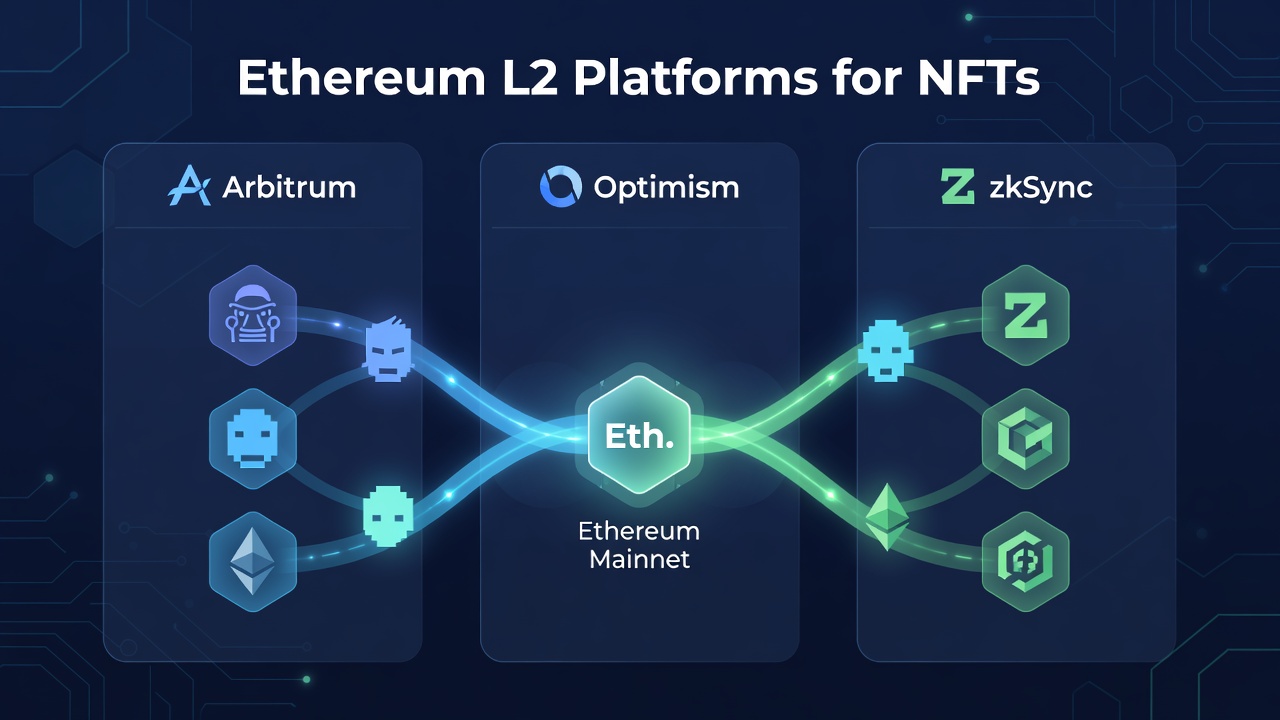
Selecting an L2 platform requires evaluating security assumptions, developer tooling, ecosystem liquidity, and NFT-specific features. Optimistic rollups like Arbitrum and Optimism deliver strong EVM compatibility, allowing existing Solidity contracts to deploy with minimal changes while offering fast withdrawals through fraud-proof mechanisms. ZK-rollups such as zkSync and Starknet provide cryptographic validity proofs that guarantee correctness without challenge periods, making them attractive for high-value art collections where immediate finality matters.
Base, an OP Stack chain, stands out for its consumer-grade integrations and growing NFT tooling around gasless experiences. When comparing options, projects should examine bridge reliability, supported marketplaces, and royalty enforcement capabilities. For gaming-focused NFTs, chains with sub-second finality often win, whereas art projects prioritize platforms with established secondary market depth. A practical comparison table would highlight differences in average confirmation times, supported standards, and community governance models.
- Arbitrum: Excellent tooling and liquidity, strong for established collections seeking broad reach.
- Optimism: Cost-efficient with strong developer grants supporting NFT innovation.
- zkSync: Superior security guarantees ideal for premium digital art.
- Base: Rapidly expanding ecosystem with easy onboarding for new creators.
Further details on L2 metrics appear on specialized analytics sites that track activity across networks.
Real-World Case Studies from Leading Collections
Numerous prominent NFT projects have completed successful L2 migrations in 2026, demonstrating measurable improvements. A leading generative art collection moved its entire contract suite to an optimistic rollup, resulting in mint participation increasing by over 300 percent because gas costs dropped enough for casual collectors to join. Another sports NFT platform leveraged a ZK-rollup for live event drops, enabling real-time trading without delays and maintaining full royalty enforcement across multiple marketplaces.
A third example involves a music collectibles project that used account abstraction features on its chosen L2 to offer gasless minting for verified fans, boosting engagement and reducing support tickets related to failed transactions. These cases reveal common success factors: early community education about bridging, thorough testing of metadata standards, and partnerships with L2-native marketplaces. Projects that skipped these steps encountered temporary liquidity splits and user confusion during transition periods.
Practical Steps for Creators to Migrate Assets
Migrating an NFT collection to Layer 2 involves several structured phases that minimize risk. First, audit current smart contracts for compatibility and decide whether to deploy new instances or upgrade existing ones. Second, choose a bridge supporting ERC-721 and ERC-1155 standards, then deploy contracts on the target L2 while preserving token IDs where possible.
- Evaluate platforms based on your project's volume expectations, security priorities, and target audience location.
- Set up a staging environment to test minting flows, marketplace listings, and cross-chain transfers end-to-end.
- Develop clear user documentation and host community AMAs explaining the migration timeline and wallet instructions.
- Implement a phased rollout, starting with new drops on L2 before opening bridging for existing holders.
- Monitor post-migration metrics including transaction success rates, secondary sales volume, and user retention.
- Integrate L2-specific tools such as gas sponsorship services or enhanced royalty registries to improve the holder experience.
Creators should also consider legal and tax implications of cross-chain asset movement and consult auditors familiar with rollup architectures before final deployment.
Risks, Security Considerations, and the 2027 Outlook
Despite clear advantages, L2 adoption carries risks including bridge exploits, temporary liquidity fragmentation, and varying degrees of centralization during early network stages. Security best practices include verifying the maturity of fraud or validity proof systems, using hardware wallets for large holdings, and avoiding unverified contracts. Withdrawal delays on optimistic rollups require users to plan ahead when moving assets back to mainnet.
The 2027 outlook appears promising as Ethereum's scaling roadmap advances toward greater interoperability between L2s and unified liquidity layers. Expect further reductions in operational costs, expanded support for dynamic NFTs, and deeper integration with consumer applications. Continued protocol maturation will likely position L2 environments as the default venue for most digital collectible activity.
FAQs
What are the main risks of using L2s for NFTs?
Key risks center on bridge vulnerabilities and potential smart contract issues unique to each rollup. Users should research audit histories and start with small test transactions before committing significant value.
How does L2 security compare to Ethereum mainnet?
L2s derive security from Ethereum but introduce additional layers such as challenge periods or validity proofs. ZK-rollups generally offer stronger immediate guarantees than optimistic designs.
What is the expected outlook for NFTs on L2s in 2027?
Industry observers anticipate tighter cross-L2 connectivity, near-zero costs for routine operations, and broader adoption of advanced NFT features including on-chain composability and gaming assets.
Which L2 is best for new NFT creators in 2026?
The optimal choice depends on project type, but Base and Arbitrum currently offer the strongest combination of tooling, liquidity, and community support for most emerging collections.
Conclusion
Ethereum Layer 2 solutions have fundamentally transformed NFT scaling in 2026 by delivering substantial fee reductions and throughput gains tailored to digital collectibles. Through careful platform evaluation, study of successful case studies, and methodical migration planning, creators and collectors can capitalize on these advancements. Staying current with ongoing eth updates will remain essential as the ecosystem continues its rapid evolution toward more efficient and inclusive NFT experiences.
No comments yet. Be the first!