 CryptoChain Blog
Introduction to Ethereum Layer 2 Security in 2026
As Ethereum scales through its Layer 2 ecosystem in 2026, millions of users are moving assets to solutions that offer faster transactions and lower costs. However, this growth brings heightened security challenges. Layer 2 networks like optimistic and zero-knowledge rollups process the majority of Ethereum activity, yet they introduce unique attack vectors that differ from the base layer. This comprehensive guide targets beginner to intermediate users who want practical methods to protect their holdings amid ongoing Ethereum updates and network expansions. We examine real-world risks with 2026 context, provide step-by-step hardening techniques, and deliver decision-useful comparisons so readers can select safer platforms for DeFi, NFTs, and everyday transfers.
Security on L2s is not automatic. Even with Ethereum's robust settlement guarantees, bridges and sequencers can become single points of failure. By the end of this article, you will have a complete framework including checklists and monitoring habits that reduce exposure significantly.
Key Security Risks in Ethereum L2 Networks
Bridge exploits continue to dominate headlines in 2026. Cross-chain bridges move value between Ethereum mainnet and L2s or between different L2s, but their smart contracts often hold large liquidity pools that attract attackers. A single vulnerability in signature verification or upgrade mechanisms can drain millions. Sequencer vulnerabilities are equally concerning in optimistic rollups, where a centralized or partially decentralized sequencer controls transaction ordering. Malicious ordering can enable sandwich attacks or censor specific users.
Real-world examples from the first half of 2026 include a bridge incident on a mid-tier L2 where an outdated multisig allowed unauthorized withdrawals, and a sequencer downtime event on another network that delayed finality for over four hours. These cases demonstrate that even audited protocols can suffer if operational security lapses occur. Users should review incident reports published on ethereum.org and independent analytics sites. Understanding the difference between validity-proof systems and fraud-proof systems helps prioritize which risks apply to each network you use.
Wallet Hardening Steps for L2 Protection
Begin with hardware wallet integration for any holdings above a modest threshold. Devices such as Ledger or Trezor keep private keys offline and require physical confirmation for approvals. Next, enable multi-signature wallets on L2-compatible interfaces so that transactions need multiple approvals. Rotate addresses regularly and never reuse them across different protocols. Always verify the exact contract address on a trusted block explorer before signing approvals, and revoke unnecessary token permissions using dedicated tools every 30 days.
Additional steps include installing browser extensions only from official stores, using separate wallets for testing versus production, and storing seed phrases on metal backups in fireproof locations. Avoid mobile wallet apps that lack open-source code or have poor update histories. These measures create layered defense that limits damage even if one component is compromised.
Transaction Verification Techniques
Never approve a transaction without simulating it first. Use built-in simulation features in advanced wallets or third-party tools to preview exact token movements and gas costs. Manually confirm recipient addresses by comparing the first and last four characters, then cross-reference the full string. Set custom slippage tolerances below 1 percent for stable pairs and review all decoded function calls in the transaction preview screen.
When interacting with new protocols, start with a tiny test transaction worth a few dollars to validate behavior. Watch for unexpected approvals to unknown contracts and immediately revoke them if spotted. These habits prevent the majority of common user-error losses reported on L2s.
Monitoring Tools for Layer 2 Networks
Real-time visibility is essential. Platforms such as l2beat.com provide security ratings, risk classifications, and TVL breakdowns for every major L2. Set up address monitoring through services that alert on incoming or outgoing transactions above a chosen threshold. Combine on-chain analytics with social channels that publish sequencer status updates and governance proposals. Review weekly security dashboards and subscribe to official protocol newsletters so you receive early warnings about planned upgrades or discovered issues.
Comparing Security Features Across Leading L2s
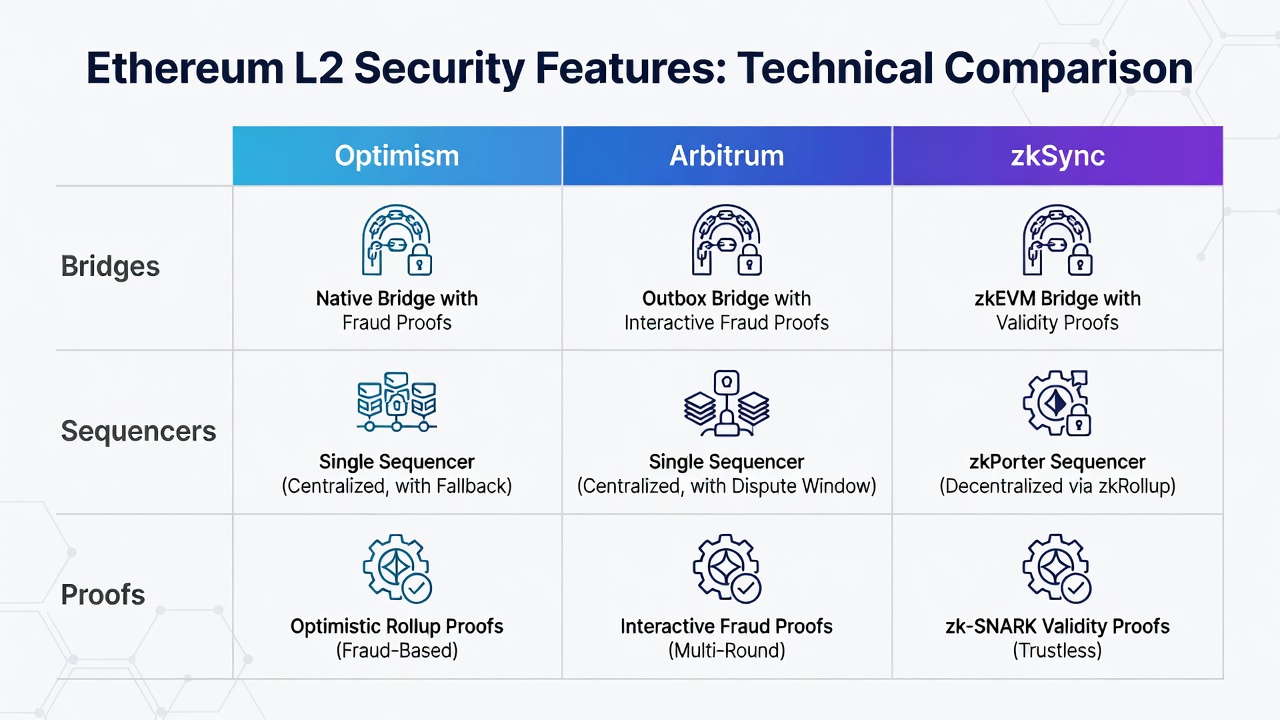
Optimism uses a fraud-proof system with a single-round challenge period and is advancing toward a fully decentralized sequencer through its governance process. Arbitrum offers multi-round fraud proofs and has implemented additional censorship-resistance measures after 2025 incidents. zkSync and other ZK-rollups provide immediate finality through validity proofs, eliminating the need for challenge windows but introducing different prover centralization risks during early stages. Base, built on Optimism's stack, inherits similar security assumptions while benefiting from Coinbase's operational infrastructure. Compare these models against your threat model: users prioritizing speed may accept optimistic finality, while those seeking strongest guarantees prefer ZK systems once they mature.
Checklist for Safe DeFi Interactions
- Confirm the protocol has undergone at least two independent audits within the last 12 months and review the audit reports for unresolved findings.
- Begin every new DeFi relationship with a test transaction of minimal value to observe actual behavior before committing larger amounts.
- Monitor governance forums for proposals that could alter withdrawal delays, upgrade keys, or fee structures.
- Schedule regular permission revocations using dedicated dashboards to remove stale approvals.
- Understand each L2's withdrawal period and keep emergency funds on mainnet if immediate access is critical.
- Track total value locked trends and security scores on analytics sites before depositing into liquidity pools.
Common Mistakes to Avoid
Many users fall victim to approving unlimited token spend allowances or clicking links from unverified social media accounts. Another frequent error is ignoring sequencer decentralization roadmaps and assuming all L2s offer identical security. Storing large balances on newly launched L2s without waiting for battle-testing also increases risk. Finally, failing to maintain separate hot and cold wallets leaves users exposed during routine interactions.
Conclusion
Ethereum L2 adoption will only accelerate through 2026 and beyond. By adopting wallet hardening, rigorous verification, continuous monitoring, and informed platform selection, users can participate safely in the expanding ecosystem. The practices outlined here form a practical defense that evolves alongside the network.
FAQ
What are the most common L2 bridge risks?
Bridge exploits typically arise from smart contract bugs, compromised multisignature controls, or flawed upgrade mechanisms that allow unauthorized fund movements.
How do I verify sequencer decentralization status?
Review each protocol's official documentation, governance forum posts, and independent analyses on sites like L2Beat for current operator sets and decentralization timelines.
Are zk-rollups inherently safer than optimistic rollups?
ZK-rollups provide cryptographic validity proofs that remove reliance on challenge periods, while optimistic rollups depend on economic incentives and dispute resolution; both models require careful evaluation of their specific implementations.
Should I keep all assets on L2 or maintain some on mainnet?
Keep only the amount needed for active use on L2s and retain emergency reserves on Ethereum mainnet to avoid withdrawal delays during urgent situations.

No comments yet. Be the first!