 CryptoChain Blog
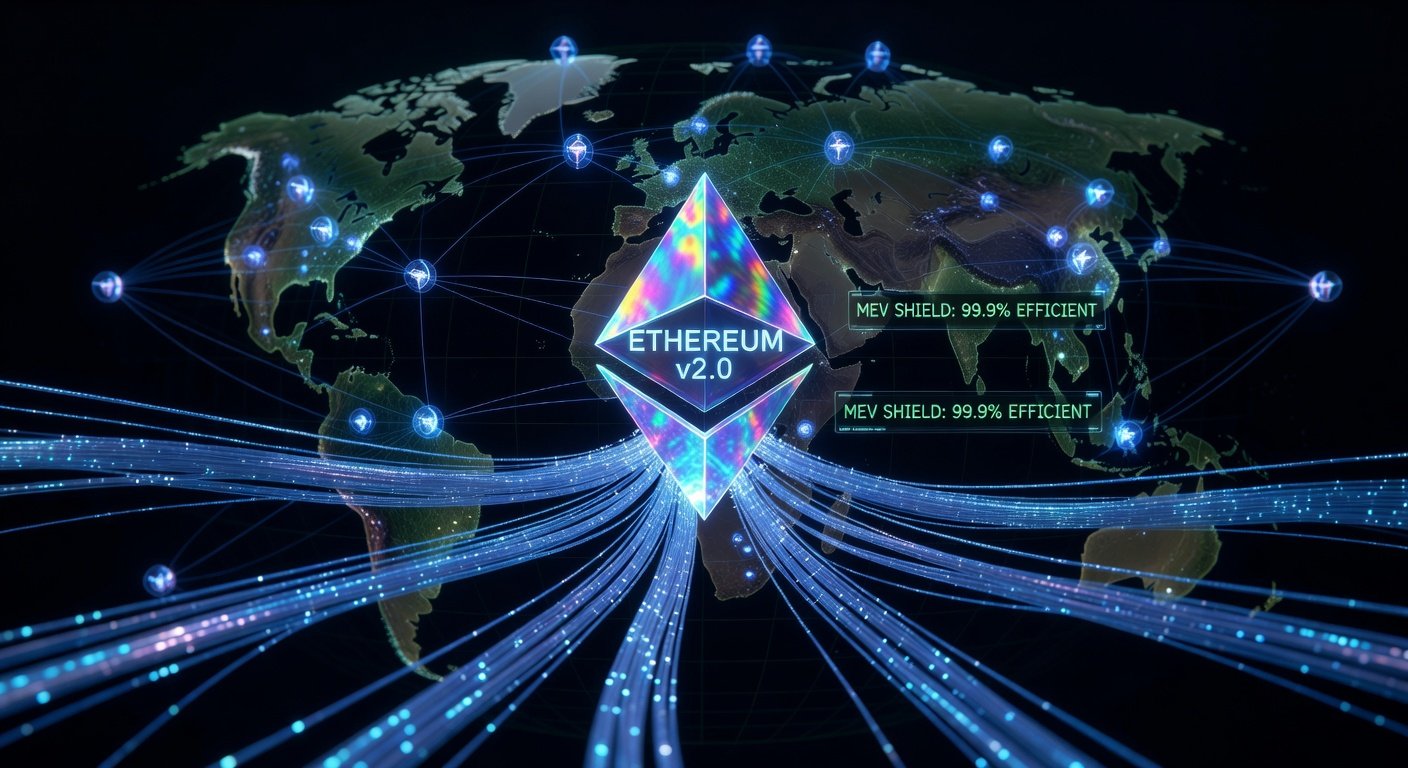
What is Ethereum L2 Sequencer Decentralization?
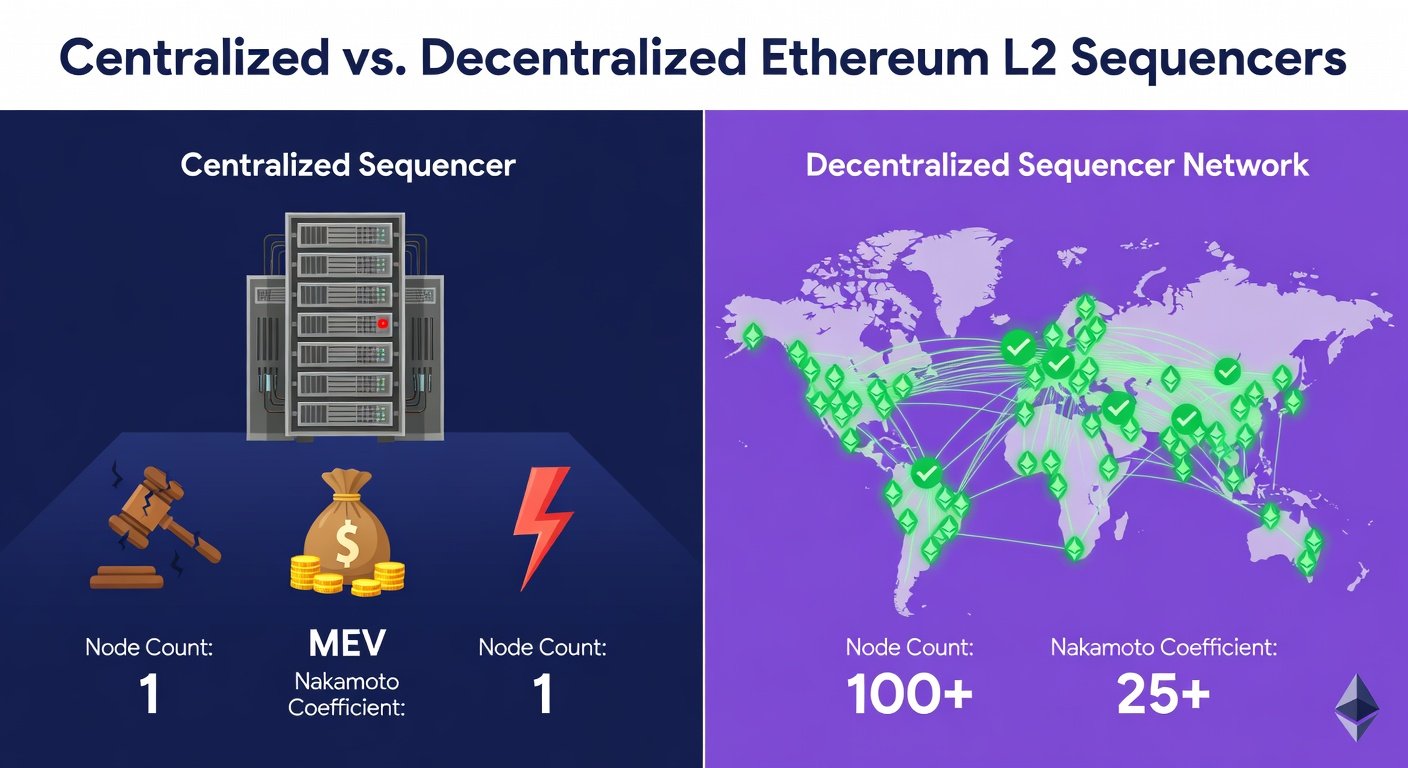
Ethereum's Layer 2 (L2) networks have revolutionized scalability, but a critical bottleneck remains: centralized sequencers. In traditional L2 setups like rollups, a single sequencer orders transactions, batches them, and submits to Ethereum's Layer 1 (L1). This centralization introduces risks such as censorship, single points of failure, and malicious maximum extractable value (MEV) extraction.
Enter sequencer decentralization in 2026—a pivotal shift where multiple nodes collaboratively sequence transactions. This distributed model ensures no single entity controls the ordering process, aligning L2s closer to Ethereum's ethos of permissionlessness. By mid-2026, major protocols are rolling out production-ready decentralized sequencers, marking the end of the 'centralized era' that dominated since Optimism and Arbitrum's early days.
This advancement isn't just theoretical. It directly combats censorship by dispersing control, reduces MEV risks through fair ordering mechanisms, and boosts overall network resilience against downtime or attacks. For developers and enthusiasts tracking eth updates and layer 2 advancements, understanding this evolution is essential.
Why Decentralized Sequencers Matter in 2026
Centralized sequencers have served L2s well for speed and simplicity, but vulnerabilities are glaring. A sequencer can censor transactions, prioritize its own for profit (MEV), or go offline, halting the chain. Post-2025 pilots proved these risks: several L2s faced outages lasting hours, eroding user trust.
Decentralization flips the script:
- Anti-Censorship: Transactions can't be blocked by one operator; they're routed through a network of nodes.
- MEV Mitigation: Shared sequencers use proposer-builder separation or auctions to democratize value extraction.
- Resilience: Geographic and operator diversity prevents regional blackouts or targeted attacks.
Learn more about Ethereum's L2 ecosystem on the official Ethereum Layer 2 page.
Leading Protocols Driving the Shift
2026 sees frontrunners like Espresso Systems, Taiko, and Astria leading the charge.
Espresso Systems: Their shared sequencer network uses a decentralized proof system for hotshot consensus, enabling multiple L2s to share sequencing infrastructure. By Q2 2026, Espresso's testnet handled over 10,000 TPS across chains, proving scalability.
Taiko: A based rollup with zk-proofs, Taiko's decentralization via its 'decentralized sequencer set' (DSS) rotates nodes dynamically. It integrates with Ethereum's L1 for finality, reducing reliance on single points.
Astria: Focused on modular infrastructure, Astria provides plug-and-play decentralized sequencers for custom rollups. Their agent-based model allows operators to stake and earn, incentivizing uptime.
These protocols build on 2025 pilots, where Espresso's litepaper and Taiko's devnet showcased viability. Track L2 metrics at L2Beat, a trusted analytics site.
Metrics for Measuring Sequencer Decentralization
To gauge true decentralization, focus on quantifiable metrics:
- Node Count: Aim for 100+ active sequencers. Taiko hit 150 in early 2026.
- Geographic Distribution: Nodes across 20+ countries minimize regional risks. Use tools like NodeWatch for mapping.
- Nakamoto Coefficient: Measures minimum nodes needed to control 51% sequencing. Higher is better—target 10+.
- Stake Distribution: No single entity >33% of total stake prevents collusion.
- Uptime SLA: 99.99% across the network, verified via on-chain proofs.
These KPIs evolved from 2025 benchmarks, where pilots scored low (e.g., 5-10 nodes), to 2026 standards exceeding Ethereum L1 validators.
Evolution from 2025 Pilots to 2026 Mainstream
2025 was the testing ground: Optimism's OP Stack experimented with permissionless sequencers, while zkSync's hyperchains piloted shared models. Challenges like latency spikes (up to 2s) and collusion risks were ironed out via BFT consensus tweaks.
By 2026, full mainnet launches abound. Espresso's Network went live in March, serving Optimism Superchain. Taiko's mainnet upgrade in April decentralized 80% of sequencing. This maturation stems from Ethereum's Dencun upgrade, which slashed L2 costs via blobs, making decentralized ops economically viable.
Optimistic vs. ZK Sequencer Models: A Comparison
Decentralization varies by rollup type.
| Aspect | Optimistic Rollups (e.g., Taiko) | ZK Rollups (e.g., Astria integrations) |
|---|---|---|
| Sequencing Latency | Low (sub-second batching) | Higher (proof gen adds 100-500ms) |
| MEV Handling | Auctions + PBS | Threshold encryption |
| Decentralization Ease | Simpler (no proofs needed) | Complex (sync proofs across nodes) |
| Finality | 7-day challenge window | Instant via zk-proofs |
Optimistic models win on speed for DeFi; ZK excels in trustless settlement. Hybrids like Espresso bridge both.
Step-by-Step Guide: Running Your Own Sequencer Node
Participate in decentralization! Here's how to run a node for Taiko (adapt for others):
- Prerequisites: Ubuntu 22.04+, 16GB RAM, 1TB SSD, stable internet (>100Mbps).
- Install Dependencies:
sudo apt update && sudo apt install git docker-compose. - Clone Repo:
git clone https://github.com/taikoxyz/taiko-protocol && cd taiko-protocol. - Configure Node: Edit
sequencer.tomlwith your private key, L1 RPC (e.g., Infura), and stake amount. - Stake ETH: Bridge tokens to Taiko L2 and stake via the protocol dashboard.
- Launch:
docker-compose up -d. Monitor logs withdocker logs sequencer. - Verify: Check dashboard for active status. Earn rewards from tx fees.
Expect 24/7 operation; use monitoring tools like Prometheus. Incentives include fee shares—up to 20% APY in active networks.
Real-World Case Study: Espresso's 2026 Launch
In March 2026, Espresso launched its shared sequencer for the Optimism Superchain (Base, OP Mainnet). Pre-launch, sequencing was siloed; post-decentralization, node count jumped to 200+, Nakamoto score hit 12.
Results: 99.999% uptime, MEV refunds to users via auctions, and censorship resistance proven when a rogue node was slashed automatically. TPS surged 3x without added latency. This case underscores the resilience gains, inspiring forks like Astria's for custom L2s.
FAQs on Sequencer Decentralization
Q: Do I need to stake to run a node?
A: Most protocols require staking for slashing protection, but light nodes may not.
Q: How does it impact L2 fees?
A: Minimal—decentralized models add <5% overhead, offset by efficiency.
Q: Is it ready for production DeFi?
A: Yes, with Taiko and Espresso handling billions in TVL by Q2 2026.
Q: What's next after sequencers?
A: Full prover decentralization and cross-L2 interoperability.
Conclusion: The Future of Resilient L2s
Ethereum L2 sequencer decentralization in 2026 isn't hype—it's a necessary evolution fortifying scalability against centralization pitfalls. From Espresso's shared networks to Taiko's based rollups, these advancements empower developers to build censorship-resistant apps. Dive in: run a node, track metrics, and stay ahead of ethereum news. The decentralized era is here.
No comments yet. Be the first!