 CryptoChain Blog
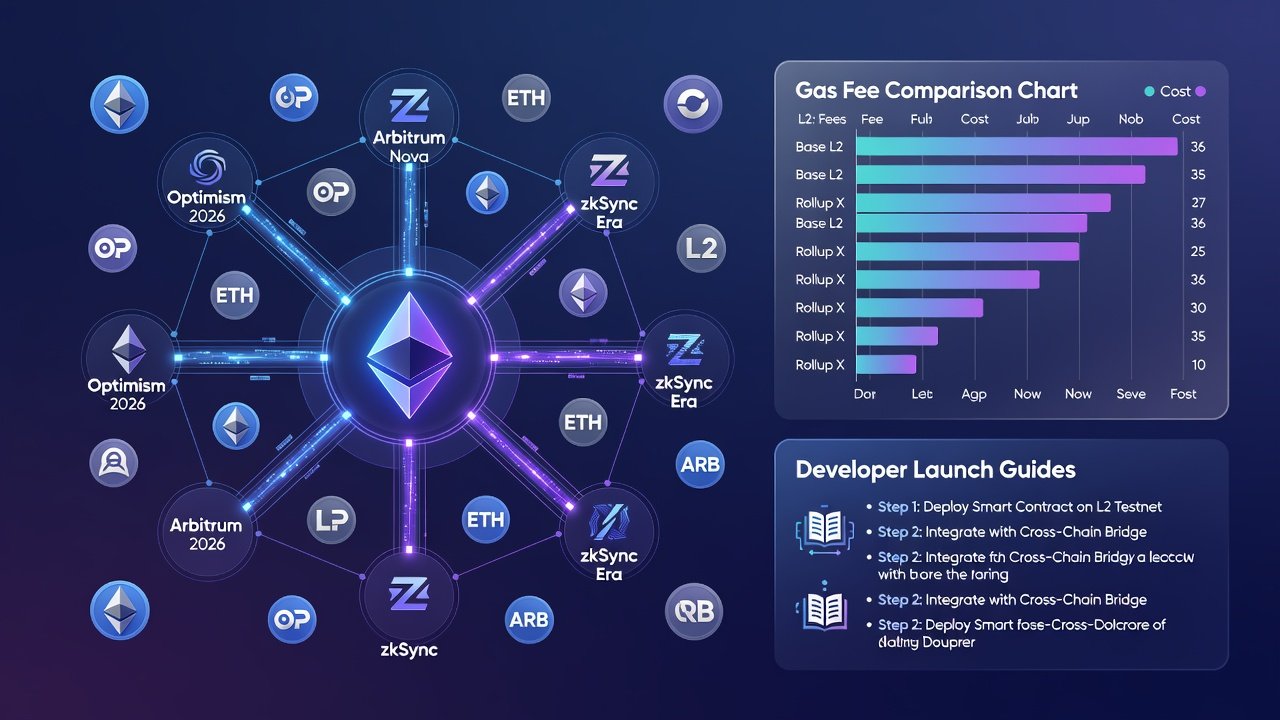
Introduction to Ethereum L2 Token Standards in 2026
As Ethereum continues its evolution into a highly scalable ecosystem, layer-2 solutions have become the primary battleground for innovation in 2026. Token standards are evolving rapidly to meet the demands of decentralized finance, gaming, and enterprise applications. ERC-7824 stands out as a forward-looking standard that introduces native support for cross-layer operations, modular fee handling, and streamlined bridging. This guide delivers concrete implementation strategies, real-world benchmarks, and decision frameworks that developers can apply immediately rather than abstract theory.
Understanding ERC-7824 and Its Core Features
ERC-7824 extends the ERC-20 and ERC-721 foundations by embedding bridge metadata and paymaster hooks directly into the token contract. This design eliminates the need for separate wrapper contracts when moving assets between L2s. Key additions include standardized event emissions for cross-chain proofs, optional calldata compression flags, and support for account abstraction via ERC-4337 compatibility. These features reduce deployment overhead and improve auditability across networks. In practice, teams adopting ERC-7824 report fewer integration bugs during multi-L2 rollouts because the interface remains consistent regardless of the underlying rollup technology.
Bridging Mechanics for ERC-7824 Tokens
Bridging begins with a lock-and-mint flow on canonical bridges operated by each L2. When transferring an ERC-7824 token from Ethereum to an L2, the contract emits a structured event containing the destination chain ID, recipient address, and amount. The L2 bridge listens for this event via its messaging layer and mints the corresponding token. Reverse bridging burns the L2 representation and releases the locked asset on mainnet. ERC-7824 improves this process by allowing tokens to carry their own bridge configuration, removing the requirement for external registry updates. Projects that have followed the patterns documented on Ethereum.org have achieved finality times under two minutes on optimistic rollups when using this standard.
Fee Abstraction Techniques in Practice
Fee abstraction enables protocols to subsidize gas or accept payment in the token itself instead of ETH. ERC-7824 implements this through integrated paymaster interfaces that validate sponsorship signatures before execution. Developers deploy a paymaster contract that checks user eligibility, then the token contract routes the transaction through this paymaster. In DeFi lending protocols, this allows borrowers to repay loans without holding native gas tokens. Security considerations include rate limiting on sponsored transactions and strict nonce management to prevent replay attacks. Testing should cover edge cases such as insufficient sponsor balance and signature expiration windows.
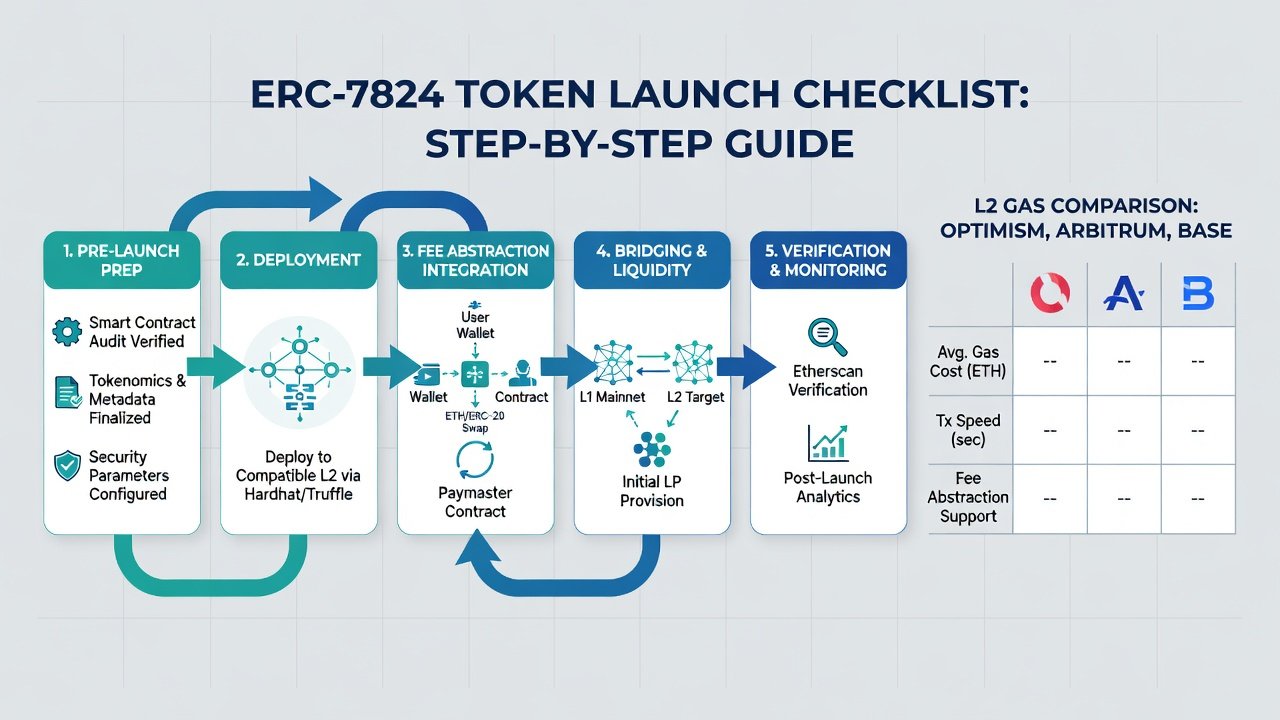
Side-by-Side Gas Cost Comparisons Across Major L2s
Gas consumption for ERC-7824 operations differs markedly across optimistic and zero-knowledge rollups. On Optimism and Arbitrum, simple transfers typically consume 30-40% less calldata than legacy ERC-20 calls because ERC-7824 supports batched event emission. zk-rollups such as zkSync and Polygon zkEVM incur higher proving costs but benefit from state compression that lowers per-transaction overhead during peak congestion. Base, built on the OP Stack, shows similar gas profiles to Optimism while maintaining lower sequencer fees in many periods. Developers are advised to run identical transaction sequences on each network’s public testnet for at least one week to capture realistic variance. Public dashboards on L2Beat provide ongoing activity metrics that help contextualize these measurements.
Step-by-Step Launch Checklist
- Conduct a comprehensive security audit focusing on bridge hooks and paymaster logic using firms experienced with L2 standards.
- Deploy the verified ERC-7824 contract on Ethereum mainnet and register it with each L2’s canonical bridge contract.
- Configure destination chain parameters inside the token contract, including gas limits and messaging timeouts.
- Implement and stress-test fee abstraction modules with simulated high-volume scenarios.
- Execute parallel gas benchmarks on Optimism, Arbitrum, Base, and zkSync testnets using identical transaction sets.
- Set up on-chain monitoring with alerts for bridge latency, paymaster balance, and unusual event volumes.
- Publish developer documentation and example integration code for wallets and DeFi front-ends.
- Run a controlled mainnet launch with gradual liquidity migration to identify any remaining edge cases.
Real Project Examples and Case Studies
Multiple protocols have already shipped ERC-7824 tokens in 2026. A decentralized perpetuals exchange integrated the standard to enable gasless position adjustments, resulting in a measurable increase in retail trading volume. A cross-chain yield aggregator used the embedded bridge metadata to reduce average bridging time from twelve minutes to under four minutes across four L2s. These implementations demonstrate that the standard’s design choices translate directly into production gains when paired with thorough testing.
Optimization Tips for DeFi Use Cases
- Maintain backward compatibility by exposing both ERC-20 and ERC-7824 interfaces so existing tools continue to function.
- Apply calldata compression flags during batch operations to further reduce costs on calldata-heavy networks.
- Monitor sequencer fee markets daily and route bridging traffic to the currently cheapest viable L2.
- Combine ERC-7824 with ERC-4337 account abstraction for seamless onboarding flows that hide all gas requirements from end users.
- Cache bridge proofs locally when possible to accelerate repeated transfers between the same pair of chains.
Common Integration Hurdles and Solutions
Teams frequently encounter bridge compatibility mismatches when an L2’s messaging layer changes. The solution is to abstract the bridge interface behind a thin adapter contract that can be upgraded without touching the token logic. Another recurring issue is paymaster fund depletion during unexpected traffic spikes; automated top-up scripts triggered by balance thresholds prevent service interruptions. Following the detailed guides available at Optimism documentation and equivalent resources for other L2s significantly reduces these risks.
Conclusion
ERC-7824 provides a practical foundation for launching tokens on multiple Ethereum L2s in 2026. By applying the bridging mechanics, fee abstraction patterns, gas comparison methodology, and launch checklist outlined above, development teams can deliver lower-cost, faster, and more user-friendly DeFi experiences while maintaining security and interoperability.
FAQ
How does ERC-7824 differ from standard ERC-20 implementations on L2s?
It introduces native bridge metadata, paymaster hooks, and standardized cross-chain events that eliminate custom wrapper contracts and simplify multi-L2 deployments.
Which L2 currently shows the lowest average gas for ERC-7824 transfers?
Benchmarks vary by workload, but optimistic rollups such as Optimism and Base frequently post the lowest costs for transfer-heavy DeFi operations as of late 2026.
Is a formal audit mandatory before enabling bridging?
Yes. Audits are essential because bridge and paymaster components control asset movement and sponsorship logic across chains.
Can ERC-7824 tokens be used with existing wallets without updates?
Most wallets recognize the ERC-20 interface, so basic transfers work immediately; advanced features like fee abstraction require wallet support for the new hooks.
No comments yet. Be the first!