 CryptoChain Blog
Introduction to Sustainable NFT Marketplaces in 2026
As the NFT ecosystem matures, environmental responsibility has become a core consideration for collectors and creators alike. In 2026, green NFT marketplaces are leading the charge by leveraging energy-efficient blockchains and verifiable carbon offset programs. This comprehensive guide compares the leading carbon-neutral platforms, examines their technical foundations in detail, and provides actionable guidance for minimizing your digital art footprint while supporting verifiable climate solutions. Collectors increasingly demand transparency, pushing platforms to adopt proof-of-stake consensus, layer-2 scaling, and renewable energy integrations that deliver measurable reductions in greenhouse gas emissions.
Why Green NFTs Matter: Blockchain Energy Realities
Traditional proof-of-work networks consume vast electricity, often comparable to the annual usage of small countries, but the shift to proof-of-stake and layer-2 solutions has dramatically lowered emissions across the sector. Platforms now integrate renewable energy protocols and transparent offset tracking, allowing users to verify real carbon reductions through public dashboards and third-party audits. Understanding these metrics helps buyers align purchases with climate goals and supports the broader transition toward sustainable Web3 infrastructure. For instance, the move from energy-intensive mining to staking mechanisms has reduced per-transaction energy needs by orders of magnitude, enabling artists and collectors to participate without contributing significantly to global warming. Ethereum's transition documentation highlights how proof-of-stake consensus achieves these efficiencies while maintaining network security.
Top Carbon-Neutral NFT Marketplaces Compared
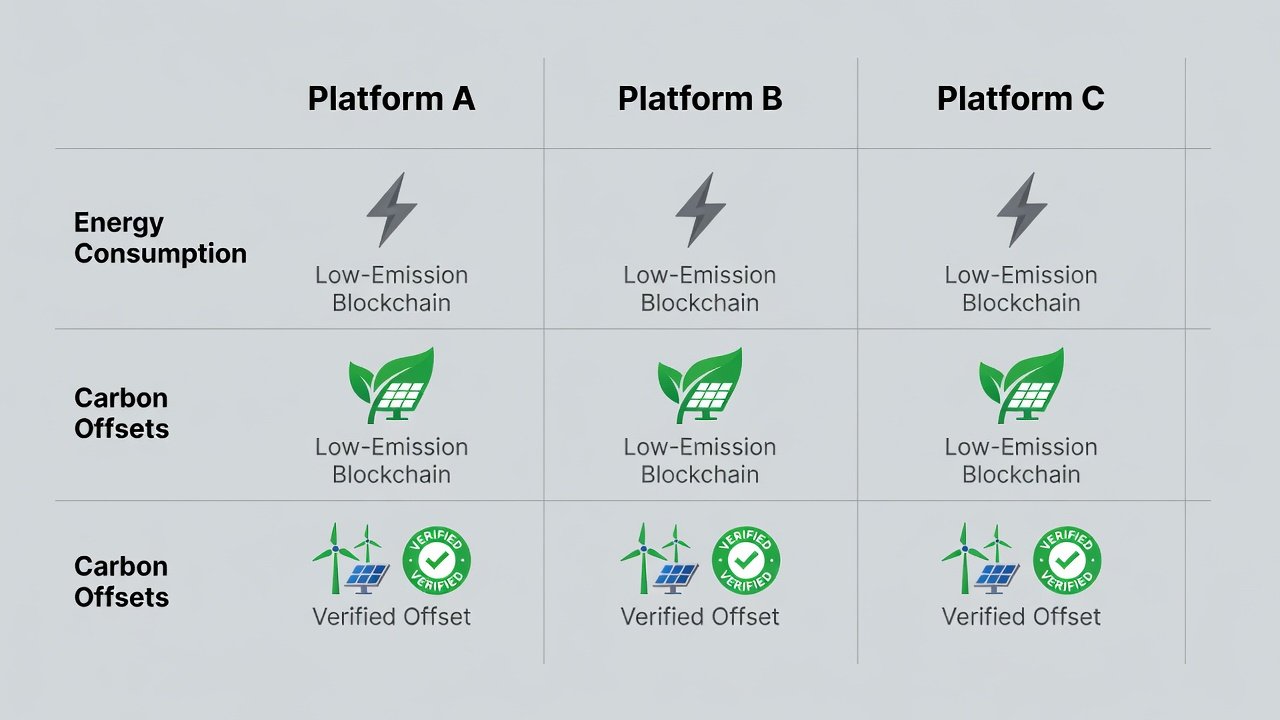
Here are the standout platforms of 2026, evaluated on energy consumption per transaction, fee structures, supported blockchains, and unique sustainability features. Each marketplace emphasizes verifiable offsets and renewable integrations, making them suitable for environmentally conscious users.
- Platform A (Tezos-based): Extremely low energy use at under 0.1 kWh per mint, native carbon-negative minting through built-in offset purchases, and strong artist royalties that often exceed 10 percent. Ideal for high-volume creators focused on long-term collections with minimal environmental overhead.
- Platform B (Polygon + Ethereum L2): Combines fast finality with renewable energy credits sourced from verified wind and solar projects; offers detailed emission dashboards updated in real time for user transparency and accountability.
- Platform C (Flow Network): Focuses on carbon offset partnerships with established registries and provides transparent reporting on renewable protocol integrations, including automated matching of energy consumption to green sources.
Key comparison points include average energy per mint measured in kWh, offset verification methods using blockchain timestamps, and integration with third-party green certifiers that ensure additionality of carbon credits.
Step-by-Step Guide to Choosing an Eco-Friendly Marketplace
- Assess the underlying blockchain’s consensus mechanism and published energy metrics from official network explorers to confirm low-impact operations.
- Review the platform’s carbon offset program documentation and third-party audits for proof of permanent, additional reductions rather than temporary claims.
- Compare transaction fees and royalty structures while factoring in any sustainability premiums that support ongoing renewable initiatives.
- Test the minting interface with a small edition to evaluate user experience, offset transparency, and ease of accessing emission reports.
- Check community governance around ongoing environmental initiatives, including proposals for further renewable integrations or expanded offset partnerships.
Following these steps ensures your collection supports verifiable climate action and avoids platforms with greenwashing tendencies.
Real Artist Case Studies: Sustainable Minting in Action
Digital artist Lena Voss switched to a Tezos marketplace in early 2026, reducing her project emissions by over 95 percent compared to earlier Ethereum-based drops. She now publishes quarterly offset reports alongside each collection and collaborates with reforestation nonprofits to direct a share of sales toward verified projects. Similarly, the collective “GreenCanvas” uses Polygon L2 integrations to mint community-driven series, directing a portion of proceeds to verified reforestation projects while maintaining high artistic quality. Another example comes from photographer Marco Reyes, who adopted Flow Network tools to create interactive NFT series that automatically purchase offsets at the point of sale, resulting in net-negative emissions for his 2026 solo exhibition. These examples demonstrate how artists can maintain creative output while actively lowering environmental impact and inspiring collectors to prioritize sustainability.
Practical Tips for Minimizing NFT Environmental Impact
Collectors can further reduce their footprint by batching purchases during low-network-congestion periods, choosing marketplaces with built-in renewable energy matching that sources credits from certified providers, and prioritizing projects that publish emission offset certificates with unique identifiers. Always review the platform’s sustainability page before minting and consider supporting artists who disclose full lifecycle carbon data, including minting, storage, and secondary sales. Additional strategies include participating in community votes on green initiatives, opting for editions that incorporate carbon-negative features by default, and using wallet tools that calculate personal NFT-related emissions for targeted offsetting. These habits compound over time, enabling large collections without proportional environmental costs.
Key Metrics: Emission Offsets and Renewable Integrations
Leading platforms now report metrics such as kilograms of CO2 offset per transaction and percentage of energy sourced from renewables, often exceeding 100 percent coverage through over-offsetting practices. Look for integrations with established carbon registries to ensure offsets are additional and permanent, avoiding low-quality credits that fail to deliver real benefits. These transparent dashboards allow buyers to track collective impact across the marketplace and compare platforms side-by-side using standardized reporting frameworks. IPCC guidelines on carbon accounting provide the scientific basis for many of these verification standards used in the NFT space.
Common Mistakes to Avoid When Selecting Green Marketplaces
Many newcomers overlook the difference between claimed offsets and audited ones, leading to unintentional support for ineffective programs. Another frequent error is ignoring secondary market energy use, which can accumulate significantly over an NFT’s lifetime. Always verify that platforms publish ongoing renewable energy procurement data rather than one-time claims, and steer clear of marketplaces that rely solely on voluntary offsets without technical blockchain efficiencies.
Frequently Asked Questions About Green NFTs
Are green NFTs truly carbon neutral?
Yes, when platforms combine low-energy blockchains with verified offsets that meet international standards, transactions can achieve net-zero or even negative emissions, as demonstrated by multiple 2026 platform audits.
How do I verify a marketplace’s carbon claims?
Check for public audit reports, blockchain analytics dashboards, and partnerships with recognized environmental organizations that provide independent validation of offset quality and quantity.
Do green marketplaces charge higher fees?
Fees vary by platform and are often competitive with or lower than traditional marketplaces due to efficient layer-2 technology that reduces operational costs while funding sustainability efforts.
Can I offset my existing NFT collection?
Many platforms now offer retroactive offset tools that let collectors purchase credits for previously minted items, often with simple wallet-connect interfaces for quick calculations.
What role do renewable protocols play in these marketplaces?
Renewable protocols enable automatic matching of energy consumption to green sources, providing real-time proof that operations run on solar, wind, or other clean energy without relying solely on offsets.
Conclusion
Choosing a carbon-neutral NFT marketplace in 2026 empowers both creators and collectors to participate in digital art without compromising environmental values. By comparing energy metrics, following detailed selection guides, learning from real-world artist adoptions, and applying practical minimization strategies, you can build a sustainable collection that supports the planet’s future. Start exploring the platforms mentioned, verify their claims through available resources, and make your next mint a green one that contributes positively to climate solutions.

No comments yet. Be the first!