 CryptoChain Blog
Introduction to 2026 NFT Brand Collaborations
The NFT landscape continues evolving rapidly in 2026, with brands leveraging blockchain for innovative partnerships that drive measurable marketplace growth. This comprehensive guide explores co-creation revenue sharing models, top fashion and entertainment case studies, platform comparisons for NFT drops, step-by-step launch frameworks, risk mitigation tactics, ROI calculations, common mistakes to avoid, and legal FAQs. Whether you are a creator, brand manager, or NFT marketplace operator, these actionable strategies tie directly into nft marketplace optimization and the latest nft updates to help you capitalize on emerging trends. Brands that successfully navigate these collaborations often see increased engagement, diversified revenue, and stronger community loyalty across digital ecosystems.
Revenue Models in NFT Brand Collaborations
Modern revenue models emphasize co-creation, where brands and creators share proceeds from NFT drops through structured agreements. Primary structures include percentage splits on primary sales often ranging from 40-60 percent to each party, ongoing royalties from secondary trading typically set at 5-10 percent, and tiered access models that unlock exclusive content for holders. These approaches foster sustainable growth by aligning incentives between partners and encouraging long-term community engagement. Additional layers such as milestone-based bonuses and utility tokens further enhance value distribution, allowing marketplaces to track performance through on-chain analytics. By implementing transparent smart contracts, collaborators reduce disputes and build trust, which is essential for scaling operations in competitive nft marketplace environments. For example, a revenue share model might allocate 50 percent to the brand for IP licensing, 30 percent to the artist for creative input, and 20 percent to the marketplace for hosting and promotion, creating balanced outcomes that encourage repeat collaborations.
Top Fashion and Entertainment Partnerships
Leading fashion houses have partnered with digital artists for exclusive drops that blend physical merchandise with digital twins. For instance, a major luxury brand might release limited-edition virtual apparel tied to real-world events, generating buzz across social platforms. Entertainment giants explore metaverse integrations where film studios collaborate on character-based NFT collections, complete with interactive experiences. Real-world examples demonstrate how these collaborations boost visibility and generate recurring income streams for all parties involved. One notable case involved a sportswear company teaming with a popular music artist to create animated sneakers that evolve based on holder interactions, resulting in significant secondary market activity. Another entertainment partnership featured a streaming service offering collectible scenes from hit shows, driving user acquisition back to the core platform. A third example saw a cosmetics brand co-create AR filters as NFTs with influencers, leading to viral campaigns that expanded reach into new demographics. These successes highlight the importance of aligning brand narratives with blockchain capabilities to maximize reach and revenue while adapting to nft updates in consumer behavior.
Platform Comparisons for NFT Drops
Choosing the right platform is critical for success. 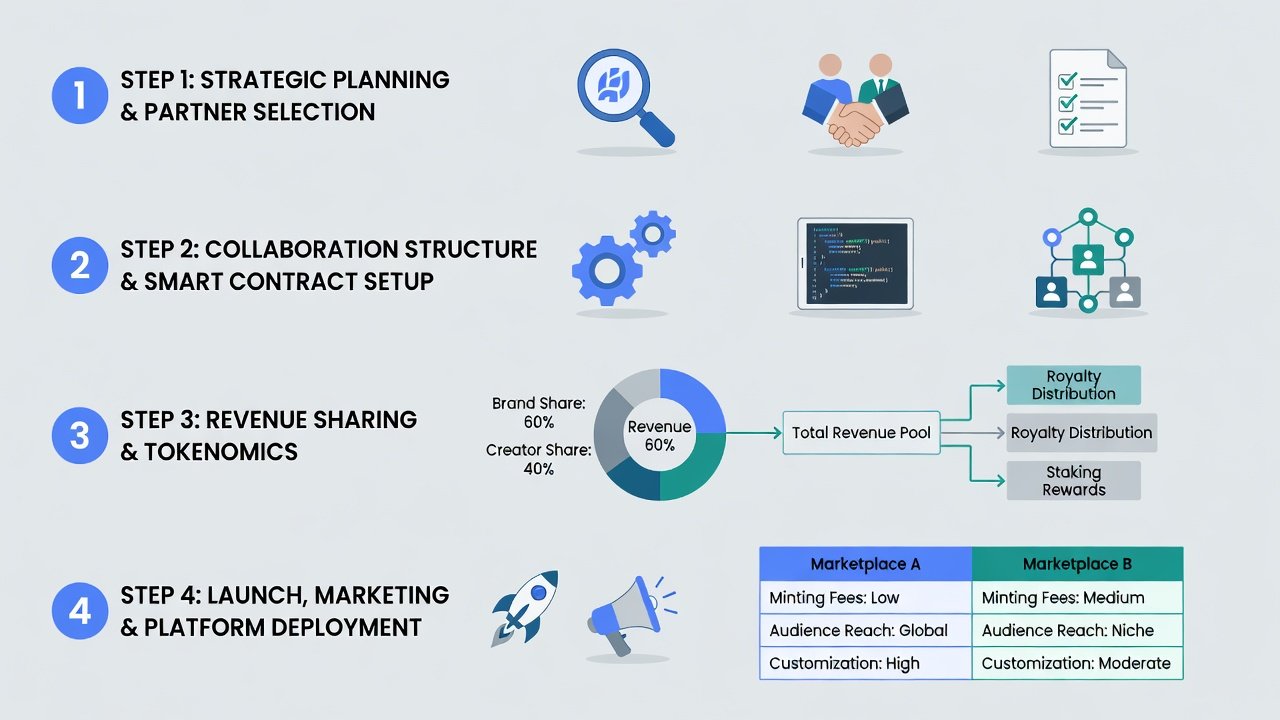
Step-by-Step Framework for Launching Collaborations
Follow this actionable sequence for reliable results. First, define partnership goals and IP terms through joint workshops that clarify ownership and usage rights. Second, select compatible platforms based on technical requirements and target demographics. Third, design co-created assets with input from both creative teams and blockchain developers to ensure compatibility. Fourth, implement smart contract revenue splits using audited templates that automate distributions. Fifth, execute marketing campaigns across multiple channels including social media, email lists, and influencer partnerships. Sixth, monitor post-drop performance metrics such as sales velocity and engagement rates to inform future iterations. This structured approach minimizes oversights and maximizes the potential for sustained marketplace traction.
Risk Mitigation Tactics
Protect against volatility with diversified portfolios that spread investments across multiple collections and asset types. Conduct thorough legal vetting of all partners and contracts to avoid IP conflicts or regulatory issues. Implement phased rollouts that test small batches before full-scale launches, allowing teams to gather feedback and adjust strategies. Address common pitfalls like IP disputes through clear contracts and community governance models that involve token holders in decision-making. Additionally, maintain reserves for unexpected market shifts and establish clear communication protocols to handle public relations challenges. These tactics help creators and marketplaces navigate uncertainties while maintaining focus on long-term nft marketplace development.
ROI Calculations and Marketplace Growth
Successful collaborations track metrics such as sales volume, holder retention rates, and cross-promotional reach through detailed dashboards. Qualitative strategies focus on long-term brand equity rather than short-term spikes, measuring success via community growth and repeat engagement. For example, calculating return involves comparing initial development costs against cumulative primary and secondary revenues over a six-month period. Marketplaces benefit by integrating analytics tools that provide real-time insights, enabling data-driven refinements. By prioritizing measurable outcomes, participants can demonstrate value to stakeholders and attract further investment in nft updates and collaborative ventures.
Common Mistakes to Avoid
Many collaborations fail due to unclear IP ownership, leading to legal battles that erode trust. Overhyping drops without delivering utility results in holder dissatisfaction and declining secondary sales. Ignoring platform scalability can cause technical failures during high-traffic launches. To avoid these, always prototype smart contracts, conduct audience testing, and maintain transparent communication with communities throughout the process.
FAQ on Legal Considerations
- What IP rights apply to co-created NFTs? Consult resources like WIPO intellectual property resources for global standards on ownership and licensing.
- How do royalties function across jurisdictions? Review local regulations to ensure compliance with varying enforcement mechanisms.
- What tax implications arise from NFT revenue sharing? Engage legal experts early to structure agreements that minimize exposure.
- Are there consumer protection requirements for NFT marketing? Reference guidance from FTC consumer protection pages to avoid misleading claims.
- How can smart contracts be audited for fairness? Utilize established frameworks from Ethereum foundation documentation for best practices in contract security.
- What licensing models work best for entertainment tie-ins? Explore hybrid agreements that combine exclusive and non-exclusive rights.
Conclusion
By adopting these strategies, participants in the nft marketplace space can harness 2026 trends for sustained success. Focus on transparent models, robust partnerships, and continuous measurement to maximize impact while staying ahead of evolving nft updates.

No comments yet. Be the first!