 CryptoChain Blog
Introduction to NFT Storage in 2026
As NFT marketplaces continue to expand rapidly, collectors face increasing pressure to secure their digital assets effectively. In 2026, storage solutions have evolved with notable security upgrades such as enhanced IPFS protocols and hybrid cloud integrations. This article provides an in-depth comparison of leading methods, helping collectors make informed decisions amid heightened marketplace activity. The growth in NFT trading volumes has made robust storage not just a preference but a necessity for protecting high-value digital collectibles from loss or unauthorized access.
Collectors today must navigate a landscape where centralized and decentralized options coexist, each offering unique advantages. Understanding these differences is essential for safeguarding assets long-term, especially as marketplaces integrate more advanced tools for metadata management and file permanence.
Understanding Core NFT Storage Technologies
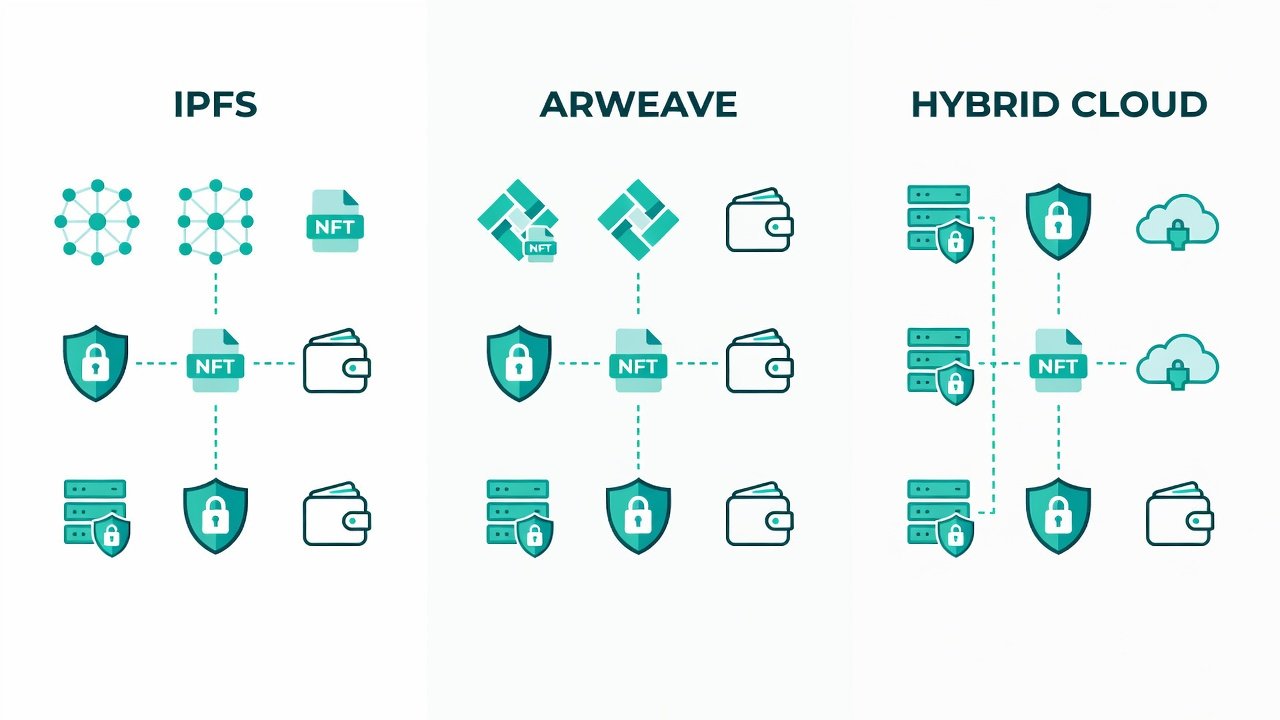
NFTs rely on decentralized and centralized systems to preserve metadata and media files. IPFS remains a cornerstone, offering content-addressed storage that links files to unique hashes. Recent enhancements include improved pinning services and redundancy layers for better resilience against node failures. Hybrid options combine on-chain references with off-chain cloud backups for added flexibility. These technologies ensure that artwork, videos, and other media associated with NFTs remain accessible even if original hosting platforms experience downtime.
Arweave provides another layer through its permanent storage model, using a one-time payment structure that guarantees files remain available indefinitely. This contrasts with traditional cloud services that require ongoing subscriptions. Decentralized identifiers and encryption protocols have also advanced, allowing collectors to maintain control without relying on single entities.
Side-by-Side Platform Reviews
Comparing storage providers reveals distinct strengths. IPFS-based solutions excel in decentralization, while Arweave offers permanent storage through its blockweave technology. Centralized cloud providers provide user-friendly interfaces but introduce single points of failure. Hybrid models from emerging tools merge these approaches for optimal protection. For instance, platforms integrated with OpenSea now support direct IPFS pinning alongside optional cloud mirrors, giving users choice based on their risk tolerance.
Real-world examples from top sources highlight successful implementations, such as collections migrated to enhanced IPFS networks for improved uptime during peak trading periods. Decentralized options like Filecoin integrations have gained traction for large-scale collections, offering economic incentives for storage providers to maintain data availability.
Risk Evaluations for Collectors
Security risks vary by method. Decentralized systems like IPFS reduce censorship threats but require active pinning to prevent data loss. Centralized options face potential breaches, whereas hybrids mitigate both. Collectors should evaluate factors including node distribution, encryption standards, and recovery protocols. Additional risks include smart contract vulnerabilities that could expose metadata links and regulatory changes affecting cloud providers in certain jurisdictions.
Common pitfalls include relying solely on marketplace-hosted storage without backups, which can lead to inaccessible assets if platforms change policies. Evaluating insurance options for digital assets and conducting regular audits of storage health are recommended practices to minimize exposure.
Integration Steps with Popular Wallets
Connecting storage solutions to wallets such as MetaMask or Ledger involves straightforward processes. First, generate IPFS hashes for assets. Next, update NFT metadata via smart contract interactions. Finally, verify uploads through explorer tools. Step-by-step guides ensure seamless setup without technical expertise. Advanced users can leverage command-line interfaces for bulk migrations, while beginners benefit from no-code dashboard tools provided by many marketplaces.
Detailed steps often include exporting private keys securely, testing transactions on testnets before mainnet deployment, and configuring multi-factor authentication on associated accounts. These measures help prevent common errors during the transition to more secure storage setups.
Beginner-Friendly Checklist for Setup
Beginner-friendly checklist:
- Verify wallet compatibility with chosen storage provider
- Generate and pin content hashes securely
- Test recovery procedures on a small scale
- Enable multi-signature options where available
- Document all access keys offline
- Monitor storage health through dashboard alerts
- Schedule periodic reviews of pinning status
Practical Examples from NFT News Sources
Recent reports from industry leaders demonstrate real applications. For instance, major collections have adopted hybrid storage to maintain accessibility during network congestion. IPFS official documentation details the latest protocol upgrades. Similarly, Ethereum resources provide guidance on integrating storage with blockchain standards. Arweave resources showcase permanent archiving use cases that have protected several prominent NFT projects from data degradation.
These examples underscore how proactive storage choices have helped collectors recover assets during marketplace outages and network forks in previous years.
Mistakes to Avoid When Choosing Storage
Many new collectors overlook the importance of redundancy, assuming a single provider suffices. Another frequent error is neglecting to update metadata after initial minting, leaving assets vulnerable to link rot. Avoiding over-reliance on free tiers of storage services is also critical, as they often lack the support needed for high-value items. Learning from community case studies can prevent repeating these issues.
Future Trends in NFT Storage
Looking ahead, expect further convergence of AI-driven monitoring tools with storage networks, enabling automatic failover when nodes go offline. Quantum-resistant encryption is also emerging as a focus area for long-term asset protection. These developments will likely make hybrid solutions even more appealing for serious collectors.
FAQs on Accessibility and Recovery
How accessible are decentralized NFT files long-term?
Decentralized solutions ensure high accessibility through distributed networks, though users must maintain pins or subscriptions for guaranteed availability. Regular checks using explorer tools help confirm file integrity over time.
What recovery options exist if a storage node fails?
Hybrid and Arweave-based methods offer built-in redundancy, allowing recovery via alternative nodes or permanent archives without data loss. Wallet recovery phrases combined with backup hashes provide an additional safety net.
Can beginners manage these integrations independently?
Yes, with wallet tools and checklists, most collectors can handle setup, though consulting community forums aids complex migrations. Starting with small test collections builds confidence before scaling up.
Are there costs associated with different storage methods?
Costs vary qualitatively by provider, with decentralized options often involving token fees and centralized ones relying on subscription models. Collectors should review current terms directly on provider sites for the most accurate details.
Conclusion
Choosing the right NFT storage solution in 2026 requires weighing decentralization benefits against practical usability. By following the outlined comparisons, risk assessments, and integration steps, collectors can safeguard assets effectively. Stay updated on protocol changes to maintain long-term security and continue exploring emerging tools as the ecosystem matures.

No comments yet. Be the first!