 CryptoChain Blog
Introduction to 2026 NFT Interoperability
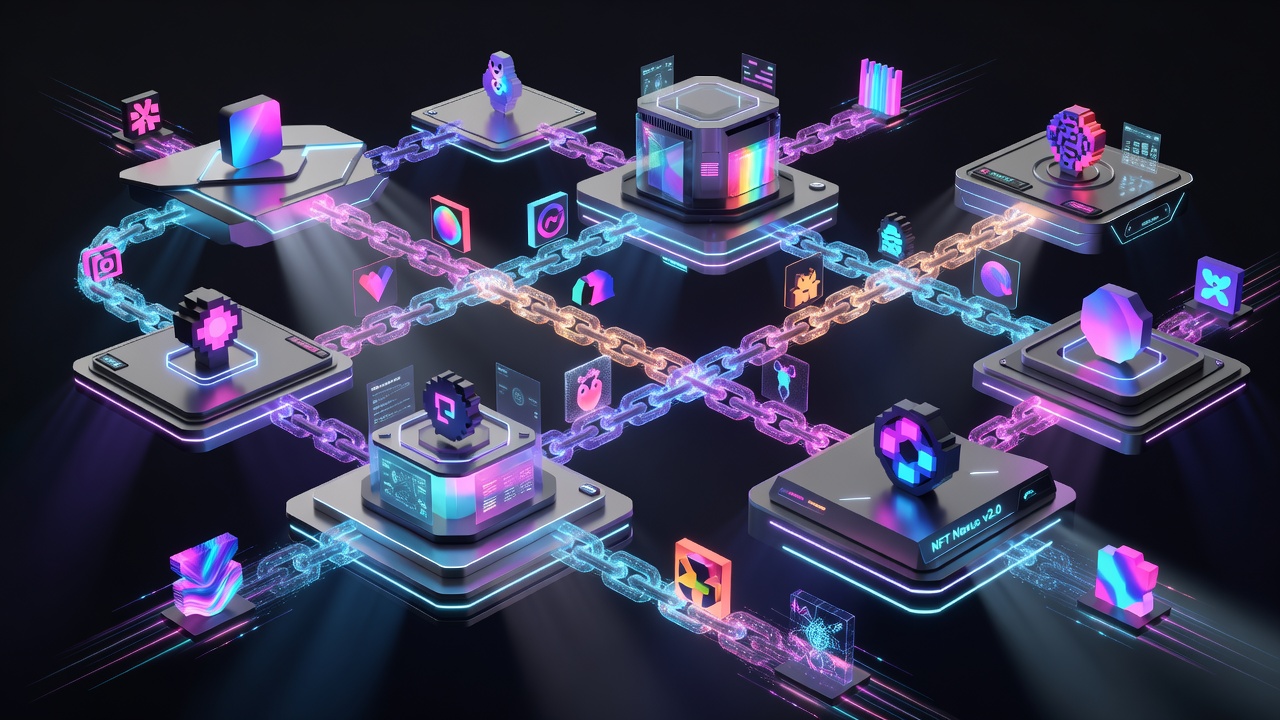
In 2026, the NFT ecosystem is undergoing a profound transformation driven by new interoperability standards. These advancements allow digital assets to move fluidly between platforms, unlocking greater utility for creators, collectors, and traders alike. This shift addresses long-standing issues of market fragmentation, where NFTs were once locked into single ecosystems, limiting their value and accessibility. The core idea behind these standards is to create a unified framework that supports cross-platform transfers without compromising security or ownership verification. As a result, users can now maximize NFT utility by leveraging assets in multiple environments, from gaming to digital art galleries and decentralized finance applications. Interoperability not only enhances liquidity but also fosters innovation by enabling new use cases such as fractional ownership across chains and collaborative virtual worlds.
The demand for these capabilities stems from growing user expectations for flexibility. Collectors want to move their prized digital art from one marketplace to a gaming metaverse without complex bridging processes. Developers benefit from standardized tools that reduce the time spent on custom integrations. Overall, 2026 marks a maturation point where technical maturity meets market needs, creating a more cohesive NFT landscape.
Technical Shifts Driving Cross-Platform Liquidity
Recent protocol developments have introduced enhanced metadata schemas and smart contract templates that facilitate seamless interactions. These changes build on foundational blockchain principles, enabling assets to retain their provenance while adapting to different marketplace rules. Key technical improvements include standardized transfer protocols that minimize gas fees during migrations and support for dynamic royalty structures across chains. One major driver is the evolution of cross-chain communication layers, which reduce the friction associated with bridging assets. This has led to increased liquidity pools where NFTs can be traded or utilized without the need for full ownership transfers in every instance. Additional shifts involve the adoption of zero-knowledge proofs for verifying ownership without revealing sensitive details, further streamlining cross-platform movements. These technical foundations ensure that interoperability is not just theoretical but practically achievable at scale.
Protocol Comparisons: Key Standards in 2026
Several protocols stand out in the current landscape. For instance, updated ERC extensions emphasize modular design, allowing developers to plug in compatibility features easily. In comparison, emerging layer-2 solutions focus on scalability while maintaining interoperability with base layers. ERC-721A variants offer improved batch operations for efficient multi-marketplace listings. Cross-protocol bridges prioritize atomic swaps to prevent partial failures during transfers. Metadata standards now include embedded licensing terms that travel with the asset. When comparing these, ERC-based approaches excel in Ethereum-centric environments due to their maturity and widespread tooling support, whereas layer-2 options provide lower costs for high-volume transfers. Another contender involves Cosmos SDK modules tailored for NFTs, which emphasize sovereign chain interoperability. Users should evaluate based on their primary blockchain allegiance, expected transaction volume, and need for custom royalty logic. This comparison helps in selecting protocols that align with specific project goals and audience reach.
- ERC-721A variants offer improved batch operations for efficient multi-marketplace listings.
- Cross-protocol bridges prioritize atomic swaps to prevent partial failures during transfers.
- Metadata standards now include embedded licensing terms that travel with the asset.
- Layer-2 solutions reduce latency for real-time trading across platforms.
- Cosmos-based modules enable seamless integration with non-EVM chains.
Real-World Adoption Examples from Major Platforms
Major marketplaces have begun integrating these standards with notable success. Platforms like OpenSea and others are adopting frameworks that allow users to list NFTs simultaneously across multiple sites. Ethereum Foundation resources provide foundational documentation on these evolving standards. Adoption in gaming ecosystems demonstrates how interoperable NFTs can power in-game economies that span different titles, such as transferring a virtual sword from one blockchain game to another for continued use. Another example comes from digital collectibles projects that have seen trading volumes rise due to reduced barriers. These cases illustrate practical benefits, such as faster liquidation options and expanded audience reach. In the art sector, platforms are experimenting with shared provenance tracking, allowing artists to receive royalties regardless of where secondary sales occur. Enterprise use cases include supply chain NFTs that move between verification systems without data loss. Such examples underscore the tangible impact of interoperability on daily operations and long-term value retention.
Step-by-Step Walkthrough of Implementing Interoperable Assets
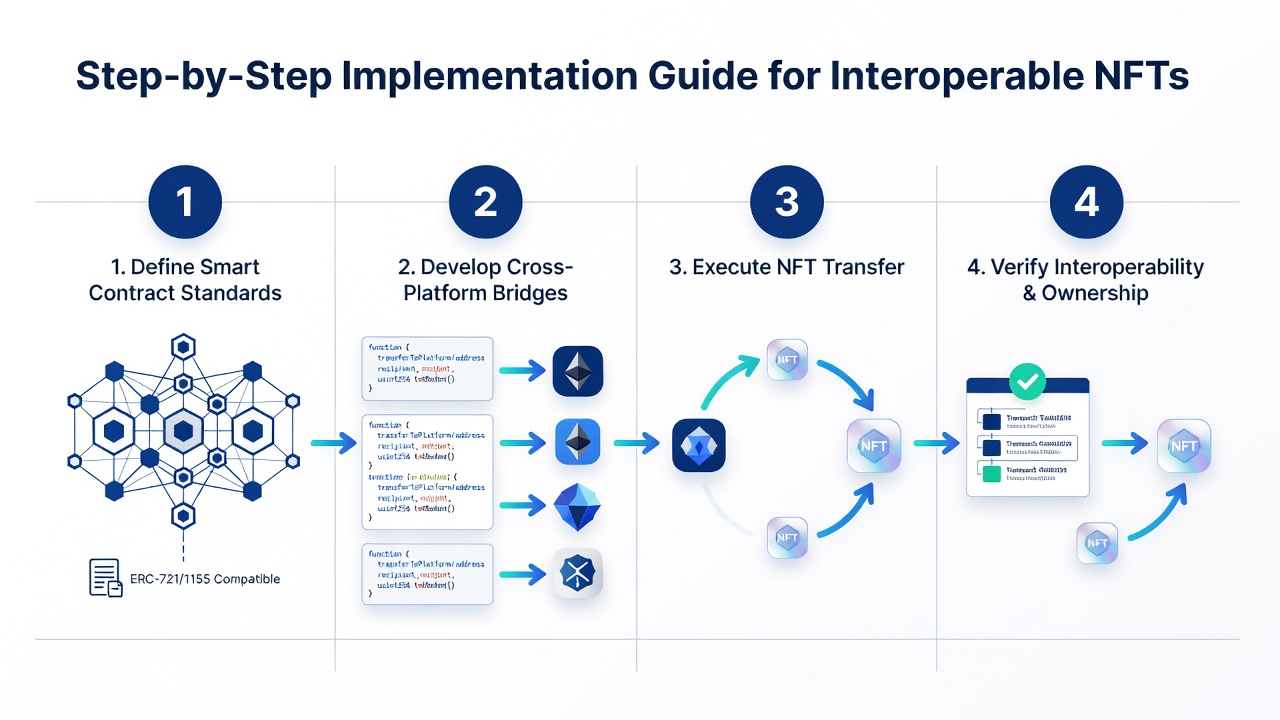
Implementing interoperable NFTs requires careful planning. Follow these steps for a successful rollout: First, assess your current asset metadata and identify compatibility gaps with target standards by auditing existing token contracts and reviewing marketplace API requirements. Second, update smart contracts using modular templates that support cross-platform functions, incorporating libraries for standardized events and royalty hooks. Third, test transfers on testnets to verify liquidity and royalty flows, simulating multi-hop migrations and checking for edge cases like partial ownership. Fourth, deploy to mainnet and register with multiple marketplaces via API integrations, ensuring proper indexing and discovery mechanisms are in place. Fifth, monitor performance and iterate based on user feedback, using on-chain analytics to track transfer success rates and engagement metrics. This process ensures assets gain maximum utility while minimizing risks associated with fragmentation. Additional considerations include security audits at each stage and community education on new transfer flows.
Practical Strategies to Maximize NFT Utility
To capitalize on these changes, focus on diversification: spread holdings across compatible platforms to hedge against single-market volatility. Engage with communities building on interoperable protocols for collaborative opportunities such as joint exhibitions or cross-game tournaments. Regularly audit your portfolio for compatibility updates to stay ahead of evolving standards. Another strategy involves leveraging fractionalization tools that allow shared ownership across marketplaces, increasing accessibility for new collectors. Creators should embed flexible licensing within metadata to enable derivative works on different platforms. Traders can utilize liquidity aggregation services that scan multiple venues for optimal pricing. By combining these approaches, users create resilient portfolios that thrive in an interconnected ecosystem.
Potential Challenges and Solutions
Despite the progress, challenges persist including varying regulatory interpretations across jurisdictions and occasional smart contract vulnerabilities during bridges. Solutions include partnering with audited protocol teams and using insurance wrappers for high-value transfers. Education on best practices also mitigates user errors in migration processes.
Future Outlook
Future outlook points to deeper integration with AI-driven valuation tools and enhanced privacy features, further reducing fragmentation. Web3 Foundation initiatives continue to guide these developments toward more inclusive standards. Expect greater emphasis on environmental sustainability in transfer protocols as well.
FAQs on Compatibility Challenges and Future Outlook
What are the main compatibility challenges?
Challenges include varying gas fee structures and differing royalty enforcement mechanisms. Solutions involve using standardized bridges that handle these variations automatically while providing fallback options for legacy assets.
How will standards evolve beyond 2026?
Standards are likely to incorporate more advanced features like dynamic asset states and cross-chain governance voting. W3C standards discussions highlight ongoing work on web-native NFT handling that could further unify experiences.
Are there risks in early adoption?
Early adopters may face temporary liquidity dips on newer protocols, but diversified strategies and community support help manage these risks effectively over time.
Conclusion
The 2026 NFT updates centered on interoperable standards represent a pivotal moment for the industry. By embracing these changes, participants can enjoy enhanced liquidity and broader utility. Staying informed through authoritative sources like MDN Web Docs on web standards will be essential for long-term success in this dynamic space.
No comments yet. Be the first!