 CryptoChain Blog
2026 NFT Updates: Loyalty Rewards Compared on Leading Marketplaces
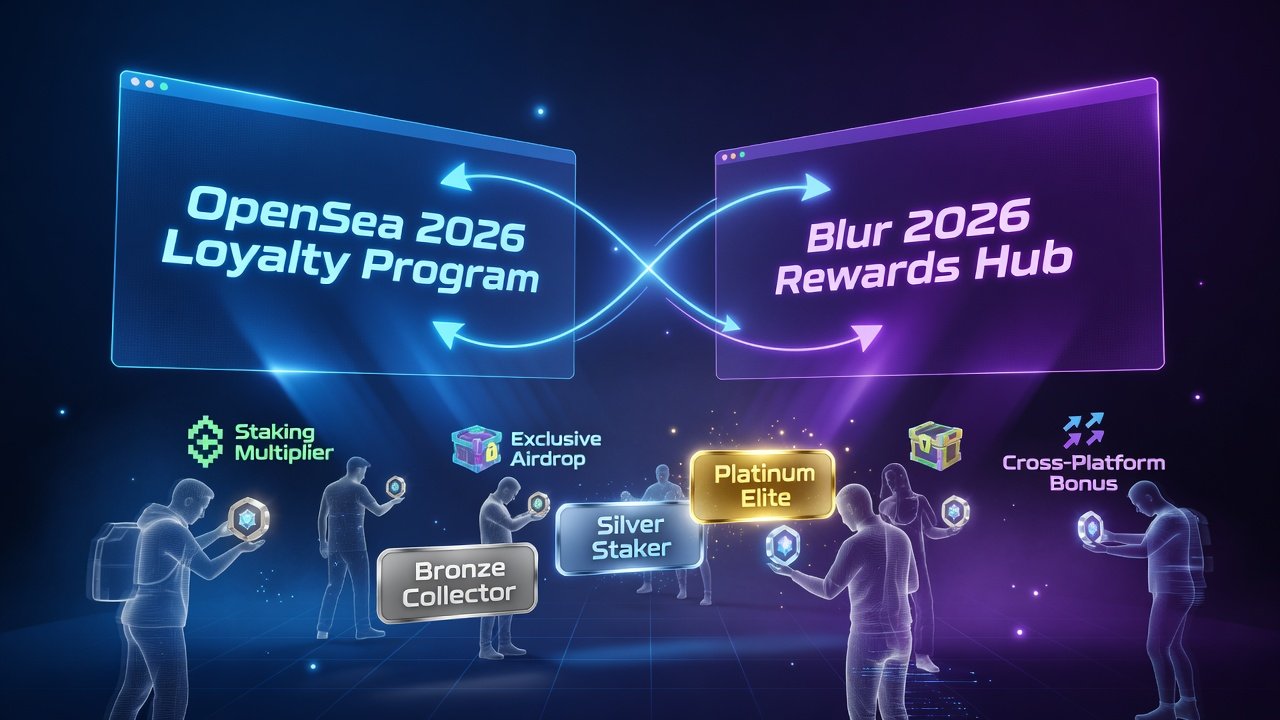
As NFT ecosystems mature in 2026, loyalty programs have become central to collector retention and engagement across major marketplaces. These initiatives go far beyond basic ownership by incorporating staking incentives, tiered perks, and cross-platform rewards that generate tangible value for participants. Marketplaces now compete to offer programs that integrate seamlessly with evolving blockchain infrastructure, helping collectors earn passive income while platforms secure long-term user loyalty and liquidity. This comprehensive guide examines the leading loyalty frameworks on OpenSea, Blur, and emerging platforms, delivering detailed onboarding steps, real-world yield examples, risk assessments, retention strategies, and selection criteria aligned with specific user objectives.
Understanding NFT Loyalty Programs in 2026
Loyalty initiatives in the current year center on staking mechanisms where collectors lock NFTs or associated tokens to accumulate points, unlock boosted yields, or gain exclusive access to drops and events. These programs align closely with broader Ethereum ecosystem advancements, including enhanced layer-2 solutions that lower gas fees for frequent reward interactions. Participants often combine loyalty features with external protocols to maximize returns, creating diversified income streams. The shift toward utility-focused rewards reflects industry maturation, where simple trading volume no longer suffices for sustained engagement.
OpenSea Loyalty Program Deep Dive
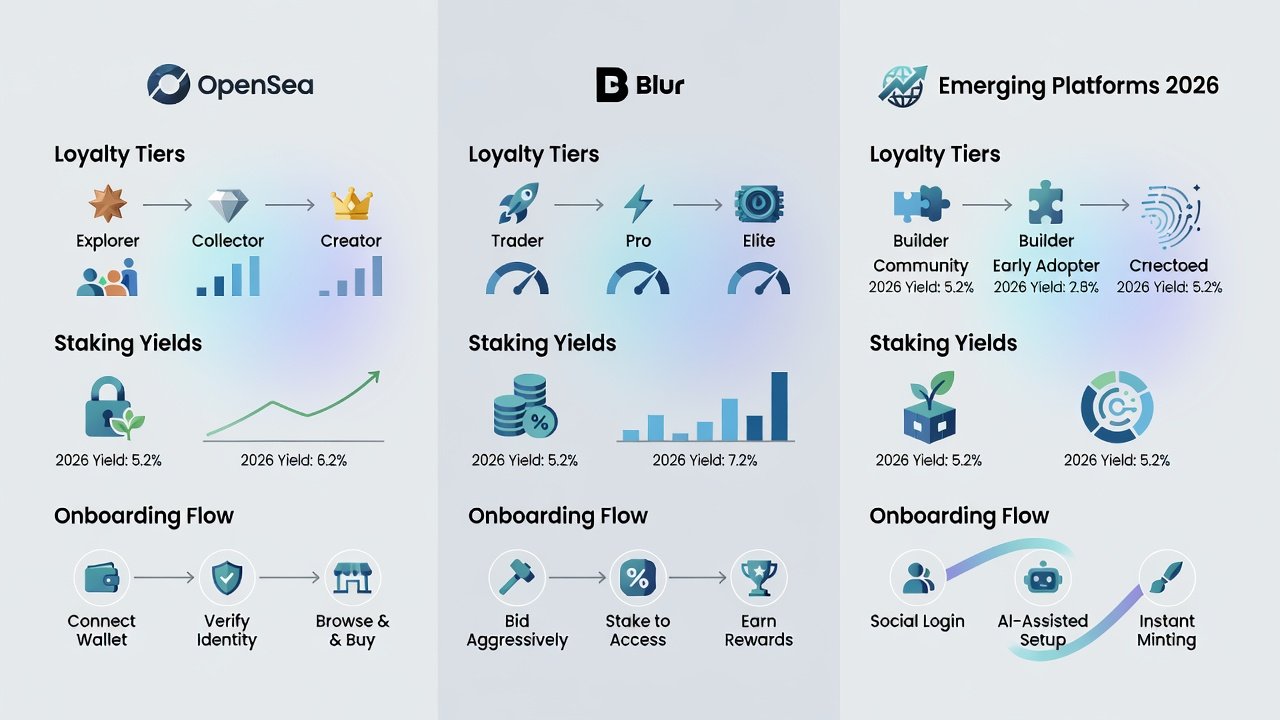
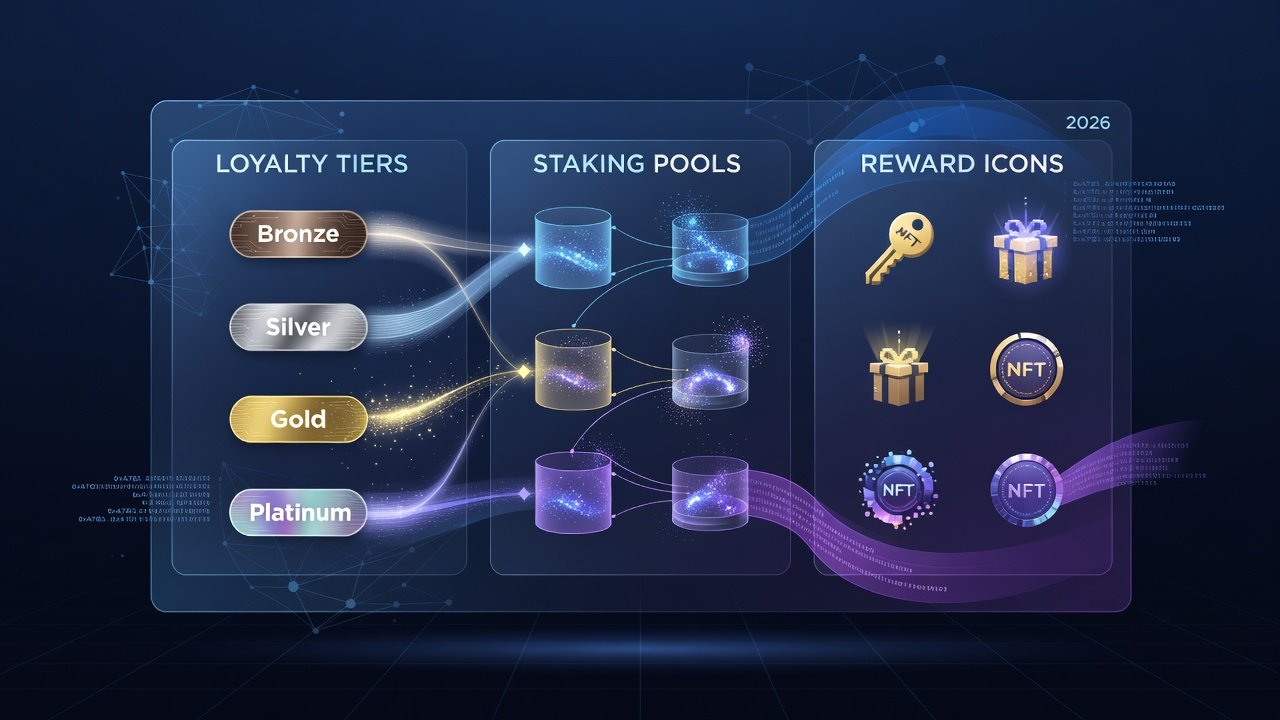
OpenSea’s 2026 loyalty framework relies on tiered membership driven by trading volume, holding duration, and community participation. Collectors advance through Bronze, Silver, Gold, and Platinum levels, each unlocking progressively better benefits such as reduced transaction fees, priority customer support, early access to exclusive collections, and enhanced analytics dashboards. Staking occurs by locking eligible NFTs within the platform’s secure vault, generating points that convert into fee credits or partner ecosystem airdrops.
Detailed onboarding steps for OpenSea:
- Visit the official platform and connect a compatible wallet such as MetaMask or WalletConnect.
- Access the dedicated Rewards section from the user profile menu.
- Review the list of stakeable NFTs and select assets matching current campaign criteria.
- Confirm the staking transaction, choosing a lock period that balances flexibility with reward multipliers.
- Track accumulated points and tier progress through real-time dashboards available on both web and mobile interfaces.
Practical examples demonstrate that consistent stakers at higher tiers achieve meaningful fee savings and priority listings, particularly when participating in seasonal reward events tied to major NFT launches.
Blur’s Staking and Perk Structure
Blur targets professional and high-volume traders with staking incentives centered on its native token alongside NFT collateral. Users who stake BLUR tokens gain access to zero-fee trading periods, advanced order-book tools, and performance-based reward multipliers. Cross-platform compatibility allows points earned on Blur to transfer to partner ecosystems, extending utility beyond a single marketplace. Onboarding requires wallet connection followed by a streamlined verification process for larger accounts.
Real yield scenarios show traders who maintain active staking positions benefiting from compounded advantages during volatile market periods, especially when layering Blur rewards with external liquidity pools.
Emerging Platforms and Cross-Platform Rewards
Platforms such as Tensor and Sudoswap have pioneered hybrid loyalty models that reward activity across multiple chains and marketplaces. Staking on one venue can trigger bonus multipliers on another through interoperable oracles and shared point systems. This approach supports the wider industry movement toward seamless asset mobility and reflects ongoing developments in NFT standards that facilitate better cross-platform functionality.
Expanded Comparison of Key Features
- Staking Incentives: OpenSea provides flexible lock durations with moderate multipliers suitable for long-term holders; Blur delivers higher percentage yields for shorter, high-velocity commitments; emerging platforms prioritize portability and multi-chain compatibility for users managing diverse portfolios.
- Tiered Perks: OpenSea emphasizes cumulative trading history and holding periods; Blur rewards trading speed and volume spikes; newer platforms incorporate governance participation and community contributions as tier advancement paths.
- Cross-Platform Rewards: Legacy platforms offer limited bridging options while emerging marketplaces lead with standardized APIs that enable point transfers, though users must account for minor processing delays and network fees.
Case Studies of Collector Strategies
Consider a mid-tier collector who stakes a diversified NFT set on OpenSea while maintaining a smaller Blur position for trading efficiency. This hybrid approach yields balanced returns through fee reductions on one platform and liquidity advantages on the other. Another example involves an emerging-platform user who bridges rewards across chains to participate in governance votes, influencing future program rules and securing additional airdrop eligibility.
Risk Considerations and Mitigation Tactics
Primary risks include smart contract vulnerabilities, potential impermanent loss when staking involves liquid tokens, and volatility in reward token valuations. Platform-specific risks such as policy changes or temporary reward pauses also warrant attention. Mitigation involves diversifying stakes across at least two marketplaces, conducting regular wallet permission audits, and maintaining emergency liquidity outside staked positions. Retention tactics include setting automated alerts for claim windows, participating in community forums to stay informed of updates, and gradually scaling positions only after verifying program stability over multiple cycles.
Practical Selection Criteria Based on User Goals
Beginners focused on simplicity and broad asset support should prioritize OpenSea’s streamlined interface and educational resources. High-frequency traders seeking competitive yields and analytics tools benefit most from Blur’s specialized features. Collectors planning long-term portfolio growth across ecosystems find emerging platforms advantageous due to their emphasis on interoperability. Decision-making should incorporate personal risk tolerance, preferred asset categories, and desired level of active management versus passive holding.
Integration with 2026 NFT News Trends
Recent regulatory developments and improvements in royalty enforcement mechanisms have accelerated loyalty program adoption industry-wide. Platforms now embed reward features directly into minting and secondary sale workflows, responding to news cycles around institutional adoption and infrastructure upgrades. These integrations help collectors stay aligned with macro trends while earning incremental benefits from everyday activity.
Mistakes to Avoid When Engaging with Loyalty Programs
Common pitfalls include over-committing assets to single platforms without diversification, ignoring lock-up periods during market shifts, and neglecting to review updated terms after major platform announcements. Users should also avoid chasing maximal yields without understanding associated smart contract risks or failing to claim rewards within specified timeframes, which can result in forfeited earnings.
Future Outlook for NFT Loyalty Features
Looking ahead, loyalty programs are expected to incorporate more AI-driven personalization and deeper ties to decentralized identity solutions. Cross-platform standardization will likely increase, allowing collectors greater freedom to optimize rewards without platform lock-in. Staying informed through official documentation and community channels remains essential for adapting strategies effectively.
FAQs on Maximizing Passive Income
How do I choose between OpenSea and Blur for staking?
Assess your typical trading volume and asset focus. OpenSea offers broader accessibility for varied collections, whereas Blur provides superior tools for active market participants.
What are the main risks of NFT loyalty staking?
Key concerns involve contract security, locked capital opportunity costs, and reward token price fluctuations. Diversification and periodic reviews help manage these factors.
Can cross-platform rewards be combined effectively?
Many programs now support bridging mechanisms, though users should factor in transfer costs and timing when planning combined strategies.
How often should I review my loyalty strategy?
Conduct thorough evaluations quarterly or immediately following significant platform updates to maintain optimal performance and risk alignment.
Are there tax implications for earned loyalty rewards?
Tax treatment varies by jurisdiction and typically requires reporting reward values at the time of receipt or conversion; consult local guidelines for compliance.
What onboarding tools help track multiple programs?
Portfolio trackers and platform-native dashboards allow consolidated monitoring of points, tiers, and claim schedules across marketplaces.

No comments yet. Be the first!