 CryptoChain Blog
Introduction to 2026 NFT Marketplace Flipping
The NFT landscape has evolved dramatically by 2026, with major platforms introducing dynamic fee structures and integrated AI analytics tools. Experienced traders now leverage these updates to maximize profits through strategic flipping. This guide covers actionable tactics tailored to post-enhancement search intent, focusing on real-world application.
Spotting Undervalued NFT Drops
Identifying undervalued assets requires monitoring on-chain signals and AI-driven insights. Use advanced dashboards to filter collections with low floor prices relative to holder activity and social sentiment. For example, track emerging drops on platforms like OpenSea where volume spikes indicate potential flips.
A hypothetical walkthrough: Scan for a new generative art project with 500 mints at 0.05 ETH. Cross-reference holder distribution—if whales hold under 10%, the drop may be undervalued. Flip within 48 hours post-mint once secondary listings surge.
Timing Listings with Liquidity Surges
Platform updates often trigger liquidity events. Monitor for fee reductions or AI feature rollouts that boost trading volume. List assets 2-4 hours before these surges to capture peak bids. 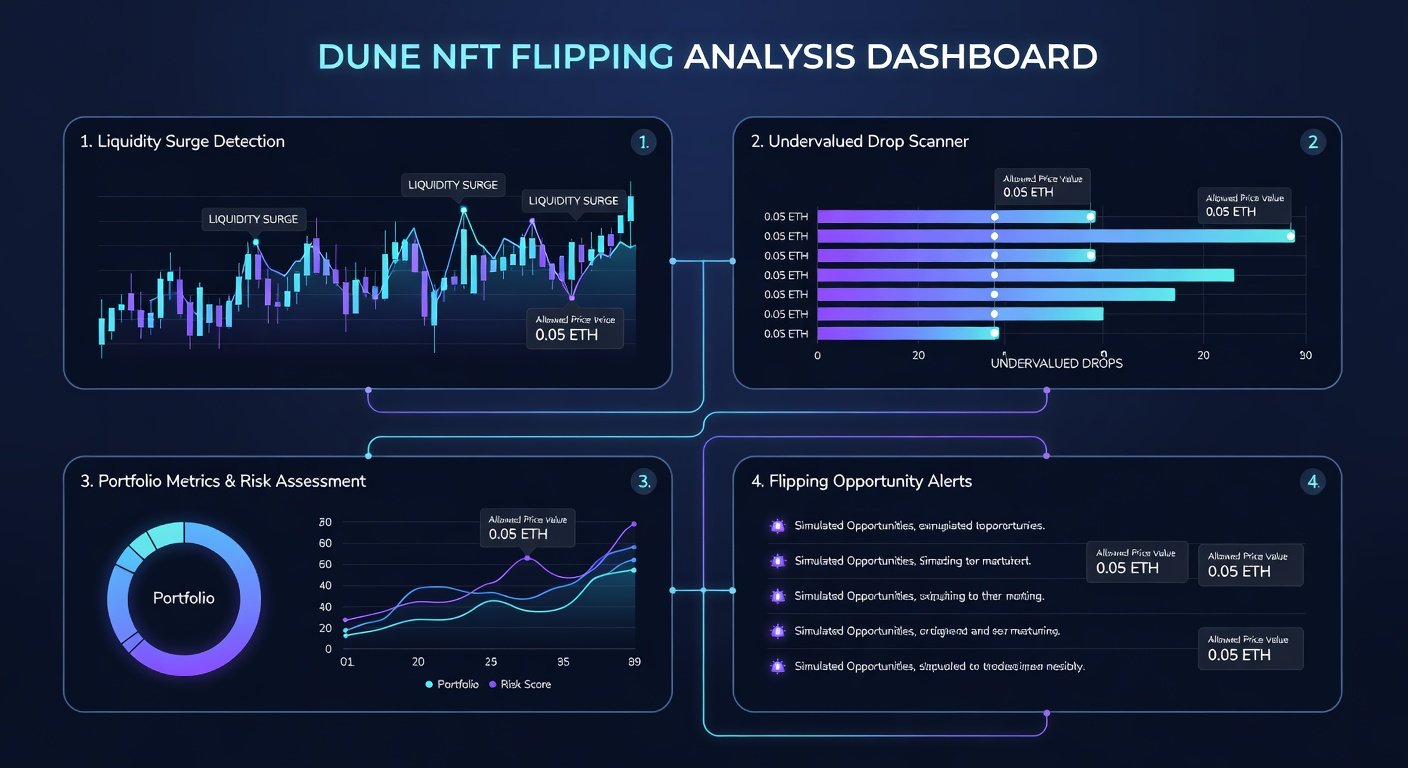
Step-by-step example: 1) Set alerts for update announcements. 2) Analyze historical volume data. 3) List at 1.5x acquisition cost during predicted surges. This approach has helped traders achieve consistent 30-50% margins in recent cycles.
Portfolio Diversification Techniques
Spread holdings across blue-chip NFTs, emerging utility tokens, and fractionalized assets. Allocate 40% to established collections, 35% to mid-tier flips, and 25% to experimental drops. Rebalance quarterly using AI recommendations to avoid overexposure.
- Track correlation metrics between assets.
- Use stablecoin reserves for quick pivots during volatility.
- Incorporate cross-chain opportunities for broader exposure.
Risk Mitigation Strategies
Always employ stop-loss mechanisms and diversify wallet security. Avoid over-leveraging by limiting position sizes to 5% of total portfolio. Stay updated on regulatory shifts via authoritative sources like Ethereum.org.
Recommended Tools: Dune Dashboards and More
Leverage new Dune Analytics dashboards for real-time NFT metrics. Integrate with AI platforms for predictive pricing. Additional tools include on-chain explorers and portfolio trackers from Dune Analytics.
FAQ on Tax Implications for 2026 Trades
Q: How are NFT flips taxed in 2026?
A: Short-term gains are typically treated as ordinary income. Consult local guidelines and track all transactions meticulously.
Q: What records should traders maintain?
A: Keep acquisition costs, sale prices, and timestamps. Use automated reporting tools where available.
Conclusion
By applying these 2026-specific strategies, traders can navigate dynamic marketplaces effectively. Focus on data-driven decisions to sustain long-term profitability in the evolving NFT ecosystem.
No comments yet. Be the first!