 CryptoChain Blog

Introduction to NFT Lending Yield Optimization in 2026
The NFT lending landscape has matured significantly by 2026, offering sophisticated yield optimization opportunities for holders and lenders alike. As digital assets gain broader adoption across global markets, strategies that balance returns with risk management have become essential for both individual collectors and institutional participants. This comprehensive guide explores advanced techniques to maximize yields while navigating evolving market conditions, regulatory shifts, and technological innovations. Yield optimization in NFT lending involves more than simply selecting the highest advertised rates; it requires a holistic understanding of liquidity dynamics, asset valuation trends, and platform-specific mechanics. By 2026, the sector has integrated deeper analytics tools and cross-chain capabilities, enabling lenders to pursue diversified strategies that were previously unavailable. Whether you are new to NFT collateralized loans or an experienced participant seeking to refine your approach, the following sections provide concrete frameworks and actionable insights designed to improve decision-making and long-term portfolio performance.
P2P Versus Protocol NFT Lending Models: 2026 Benchmarks
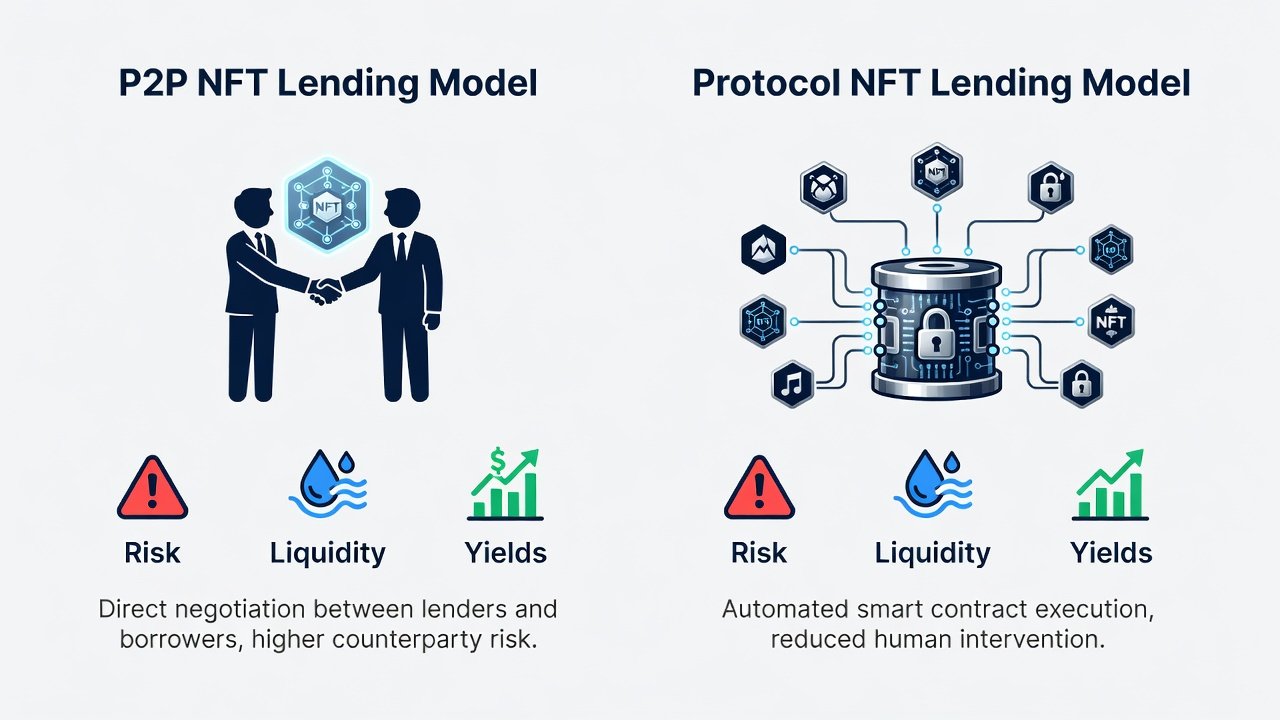
Peer-to-peer (P2P) lending allows direct negotiations between NFT owners and lenders, often through marketplaces that facilitate auctions or fixed offers with customizable terms. Protocol-based models, in contrast, rely on smart contracts and liquidity pools for automated, scalable lending that reduces the need for constant oversight. In 2026 benchmarks from major platforms, protocol models have shown greater consistency in liquidity during volatile periods, while P2P options can deliver higher negotiated rates for premium assets such as established blue-chip collections. Key differences include settlement speed, customization levels, and exposure to intermediary risks. P2P provides flexibility but requires more active management and due diligence on counterparties. Protocols offer passive yields with built-in liquidation mechanisms that protect lenders through over-collateralization rules. Data from leading NFT ecosystems indicates protocol dominance in trading volume for high-demand collections, particularly when market sentiment shifts rapidly. Lenders often combine both approaches, using protocols for steady baseline returns and P2P channels for opportunistic higher-yield deals on unique assets. Understanding these trade-offs allows participants to allocate capital more efficiently across different risk profiles and time horizons.
Comprehensive Risk Frameworks for NFT Lenders
Effective yield optimization starts with robust risk assessment that accounts for multiple layers of potential loss. Primary risks include asset volatility driven by broader crypto market movements, smart contract vulnerabilities exposed during audits or exploits, and counterparty defaults in P2P arrangements. A layered framework involves evaluating floor prices, historical performance metrics, and on-chain indicators such as wallet concentration before committing capital to any loan. Additional considerations include platform solvency, insurance coverage availability, and macroeconomic factors that may influence NFT demand. Practical implementation includes maintaining diversified collateral across genres and rarity tiers, setting strict position sizing limits to avoid overexposure, and conducting periodic portfolio reviews. Stress testing against simulated downturns helps maintain sustainable yields over extended periods. By integrating both quantitative data and qualitative judgment, lenders can construct resilient strategies that withstand unexpected events while still capturing attractive returns.
Step-by-Step Yield Optimization Tactics
Follow these practical steps to enhance returns in a structured manner. First, assess your NFT portfolio for lendable assets that demonstrate consistent demand and stable floor values across multiple marketplaces. Second, compare current lending rates across platforms using real-time dashboards that aggregate data from various protocols and P2P venues. Third, diversify across multiple protocols and chains to reduce single-point risks associated with any individual smart contract or liquidity pool. Fourth, rebalance positions on a quarterly basis or in response to significant market events, always documenting the rationale for adjustments. Fifth, incorporate hedging instruments where available to protect against adverse price movements in underlying collections. These tactics emphasize data-driven decisions over speculation and encourage ongoing education about emerging tools such as automated yield aggregators. Regular performance tracking against benchmarks helps refine the approach over successive lending cycles.
Platform Onboarding Guides for Major Marketplaces
Getting started requires careful wallet setup, security verification, and familiarity with each platform's interface. Begin by connecting a secure non-custodial wallet that supports the relevant blockchain networks, then review and approve necessary token permissions while keeping private keys offline. Most platforms provide guided tutorials that cover collateral deposits, loan origination workflows, and repayment processes. Focus on user-friendly interfaces that support multiple chains for broader opportunity access. Advanced users may explore integrations with portfolio trackers to monitor yields in real time. Always start with small test transactions to verify transaction flows before scaling up exposure. Understanding fee structures and withdrawal timelines at the onboarding stage prevents surprises later in the lending process.
Real Case Studies Demonstrating ROI Examples
Consider a case where an investor lent a high-demand NFT collection via a protocol model, achieving steady yields through automated compounding features that reinvested interest earnings. The approach benefited from consistent liquidity and minimal manual intervention, resulting in compounded growth over a six-month period. Another example involves P2P negotiations on rare, low-supply assets, yielding premium rates but requiring careful timing to avoid illiquidity during secondary market slowdowns. A third scenario highlights a hybrid strategy that combined protocol lending for core holdings with selective P2P deals on emerging collections, balancing stability with upside potential. These scenarios highlight the importance of matching strategy to asset type and market phase while maintaining disciplined risk controls. Reviewing such examples provides practical templates that readers can adapt to their own portfolios.
Actionable Tips for Hedging Risks in NFT Lending
Hedging begins with portfolio diversification across asset classes and extends to using stablecoin pairings or available derivative products. Set automated alerts for floor price movements and maintain reserve liquidity outside lending positions for quick responses. Avoid over-leveraging by keeping loan-to-value ratios conservative. Prioritize platforms with transparent governance and regular third-party audits. Additional measures include spreading loans across different durations to manage rollover risk and staying informed about regulatory developments that could affect platform operations. These practices collectively reduce downside exposure while preserving upside yield opportunities.
FAQ: Fees, Compliance, and Common Questions
What fees should lenders expect?
Typical structures include origination fees and interest spreads that vary by platform and loan duration. Always review current terms as they fluctuate with market activity and platform incentives.
How does compliance work in 2026 NFT lending?
Adhere to evolving regulations by using compliant platforms and maintaining detailed transaction records. Consult resources from official regulatory bodies and Federal Reserve guidance for the latest expectations.
Are there tax implications?
Yes, yields are generally considered taxable events; track all transactions meticulously using available on-chain analytics tools.
Which platforms offer the best liquidity?
Liquidity varies by collection and changes over time; cross-reference multiple sources before committing large positions.
Further reading on blockchain fundamentals is available at Ethereum Foundation resources.
No comments yet. Be the first!