 CryptoChain Blog
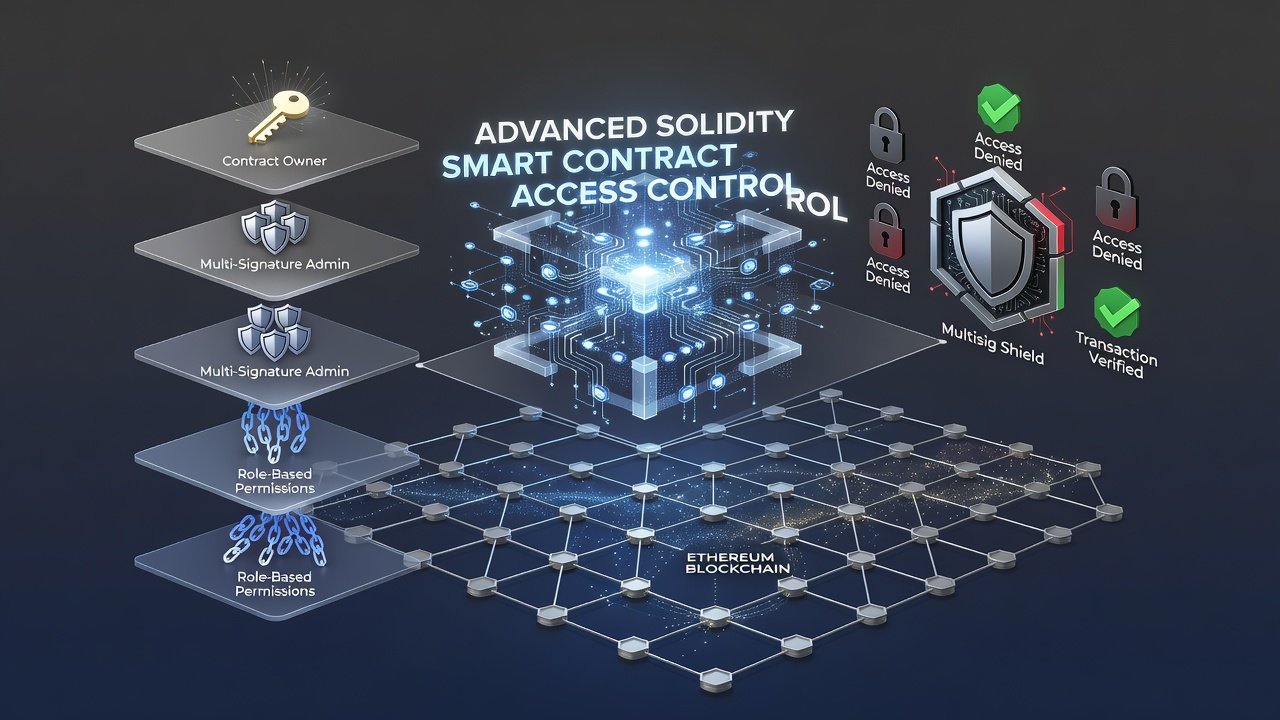
Introduction to Advanced Access Control in Solidity
Smart contract security remains a top priority in 2026 as decentralized applications handle increasing value across DeFi and enterprise environments. The basic Ownable pattern from OpenZeppelin provides a simple owner-based control mechanism, but modern contracts demand more nuanced, scalable, and resilient approaches. This article examines custom access control patterns that extend beyond Ownable, focusing on flexibility, security, and efficiency. Developers building production-grade systems must consider not only who can execute functions but also how permissions evolve over time, how multiple parties share authority, and how to respond instantly to emerging threats without compromising the entire protocol.
Throughout 2026, the Ethereum ecosystem and its Layer-2 scaling solutions continue to mature, bringing new requirements for permission management. Contracts that once relied on a single owner now incorporate role hierarchies, multi-signature thresholds, timelocks, and emergency circuit breakers. These patterns reduce single points of failure while maintaining auditability and gas efficiency. This guide provides concrete code examples, testing strategies using Foundry, vulnerability prevention techniques, and deployment considerations tailored for both L1 and L2 environments.
Why Move Beyond Basic Ownable?
Ownable works well for simple contracts but creates bottlenecks in complex systems. A single owner key becomes a centralization risk and limits granular permissions. When the owner key is lost or compromised, the entire contract can become unusable or vulnerable. Custom patterns address these limitations by introducing role-based systems, time-locked operations, and integrated multisig wallets. They also improve gas efficiency through optimized storage layouts and access checks that avoid unnecessary state reads.
Teams should evaluate their threat model before choosing a pattern. For instance, a simple token contract may still use Ownable, while a lending protocol or DAO treasury requires multiple roles with different privilege levels. The decision also depends on governance structures and the need for rapid emergency interventions during exploits or market events.
Implementing Role Hierarchies
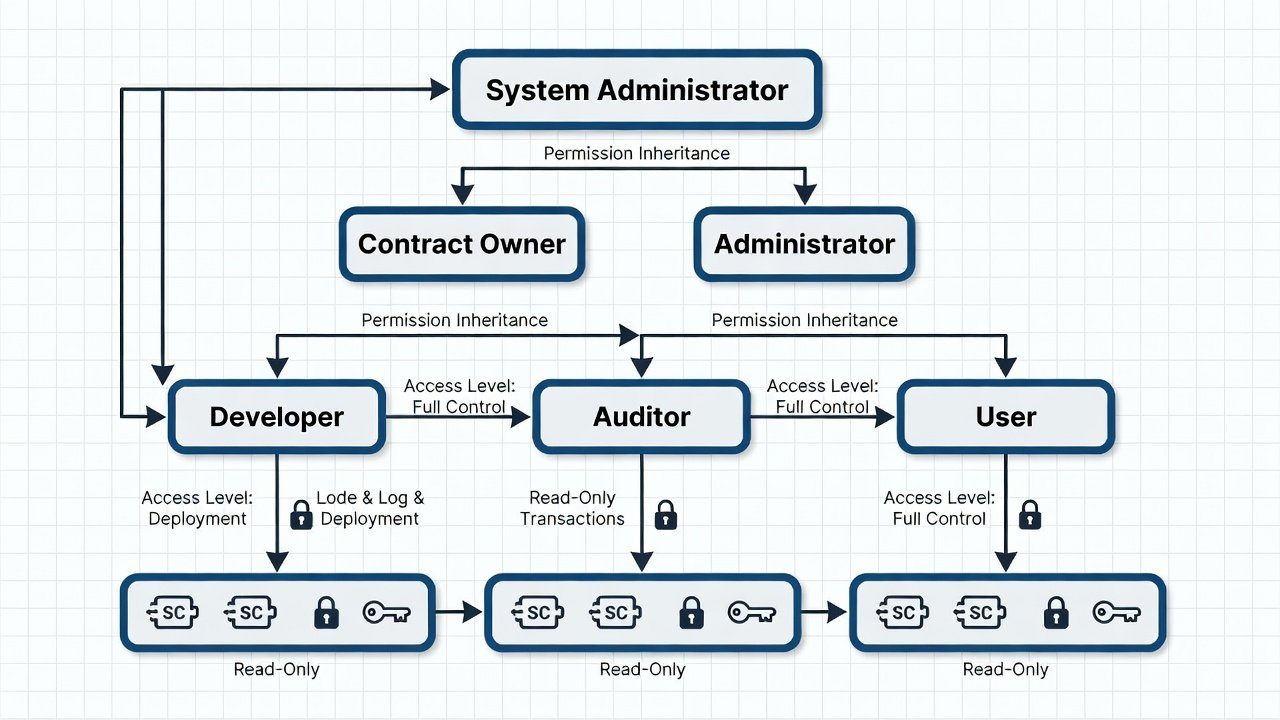
Role hierarchies allow fine-grained control where senior roles inherit permissions from junior ones. Using libraries like AccessControl from OpenZeppelin, developers can define roles such as ADMIN, OPERATOR, and VIEWER with clear inheritance. This approach mirrors organizational structures in traditional enterprises and DeFi protocols alike.
contract RoleHierarchy is AccessControl {
    bytes32 public constant ADMIN_ROLE = keccak256("ADMIN");
    bytes32 public constant OPERATOR_ROLE = keccak256("OPERATOR");
    bytes32 public constant PAUSER_ROLE = keccak256("PAUSER");

    constructor() {
        _grantRole(DEFAULT_ADMIN_ROLE, msg.sender);
        _setRoleAdmin(OPERATOR_ROLE, ADMIN_ROLE);
        _setRoleAdmin(PAUSER_ROLE, ADMIN_ROLE);
    }

    function grantOperator(address account) external onlyRole(ADMIN_ROLE) {
        _grantRole(OPERATOR_ROLE, account);
    }
}
This structure enables cascading permissions while preventing unauthorized escalation. Hierarchical setups are particularly useful in treasury management contracts where an admin can delegate day-to-day operations to operators without relinquishing ultimate control. Developers should also implement role revocation functions and emit events for every role change to support off-chain monitoring tools.
Multi-Signature Integrations
Integrating multi-signature wallets adds an extra layer of security for critical functions. Contracts can reference Gnosis Safe or custom multisig logic to require multiple approvals before executing sensitive operations such as fund withdrawals or parameter changes. A common pattern involves storing the multisig address as an immutable variable and checking msg.sender against it in restricted functions.
For more advanced setups, developers can implement on-chain proposal and execution flows where multiple signers must confirm transactions through a dedicated multisig contract interface. This reduces reliance on a single private key and aligns with institutional security policies common in enterprise blockchain deployments.
Emergency Controls and Pausable Patterns
Emergency controls allow rapid response to detected threats. Combining pausable functionality with role-restricted circuit breakers enables quick halts without permanent contract destruction. These patterns often include time delays for recovery actions, giving governance participants time to react. A well-designed emergency system should separate the pausing role from the unpausing role to prevent unilateral abuse.
Consider adding a timelock modifier on unpause functions so that even the emergency team cannot immediately resume operations after a pause. This delay provides transparency and allows community review of the incident before normal operations resume.
Gas Optimization Tips
- Use immutable variables for role constants where possible to avoid repeated storage reads.
- Batch role grants in a single transaction to minimize storage write costs.
- Implement short-circuit logic in access modifiers so that cheaper checks run first.
- Leverage custom errors instead of require statements for revert data savings, especially on L2 networks where calldata costs matter.
- Store roles in packed structs when multiple boolean flags are needed for the same address.
Foundry Testing Workflows
Foundry provides robust tools for testing access control logic. Developers should write fuzz tests that attempt unauthorized calls and verify role revocations. Example test cases include role escalation attempts, multi-sig threshold failures, and edge cases around role renouncing. Comprehensive coverage ensures contracts behave correctly under unexpected conditions.
A typical Foundry test file would deploy the contract, grant and revoke roles, and assert that only authorized accounts can call protected functions. Using cheatcodes such as vm.prank and vm.expectRevert allows precise simulation of different caller contexts without deploying additional test contracts.
Preventing Common Vulnerabilities
Common issues include role confusion, missing initialization, and reentrancy during role changes. Always initialize roles in constructors, use onlyRole modifiers consistently, and follow checks-effects-interactions patterns. Another frequent mistake is allowing roles to be granted to the zero address, which can silently break access logic. Regular audits combined with formal verification tools reduce exploit risks significantly.
Developers should also guard against front-running role grant transactions and implement events that monitoring services can reliably index. These measures help detect anomalies early in production environments.
Comparing to Standard RBAC
Standard Role-Based Access Control (RBAC) offers simplicity but lacks hierarchy depth. Custom implementations add inheritance and dynamic role assignment, providing better scalability for large organizations. Trade-offs include slightly higher deployment costs versus improved operational flexibility. When comparing the two, teams should measure gas usage for common operations and evaluate how easily new roles can be added post-deployment.
Real-World DeFi and Enterprise Use Cases
In DeFi protocols, custom access control governs liquidity pool management, oracle updates, and liquidation parameters. For example, a lending protocol might allow operators to adjust interest rate models while requiring admin approval for adding new collateral types. This separation prevents a single compromised key from draining funds or altering core economics.
Enterprise blockchain solutions use these patterns for supply chain permissions, compliance reporting, and multi-party approval workflows. In both sectors, the result is reduced attack surfaces and clearer governance flows that satisfy regulatory expectations and internal audit requirements.
L2 Deployment Considerations
Layer 2 networks introduce unique challenges such as sequencer dependencies and cross-layer messaging. Access control contracts must account for delayed finality and potential message censorship when roles are managed across L1 and L2. Testing on networks like Arbitrum and Optimism helps validate behavior before mainnet deployment, especially when using cross-chain bridges for role synchronization.
Developers should also consider the cost of storage operations on L2 and optimize role storage layouts accordingly. Some L2s offer cheaper calldata, making certain access patterns more economical than on Ethereum mainnet.
EIP Compatibility and Audit Readiness
Aligning with Ethereum Improvement Proposals such as EIP-173 ensures standardized ownership interfaces. Documentation should include role matrices, threat models, and upgrade paths. Audit readiness also requires comprehensive NatSpec comments and verified source code on block explorers.
Further guidance is available from OpenZeppelin documentation and the Foundry book. Following these steps produces contracts that are both secure and maintainable in production environments.
Practical Implementation Steps
- Define all required roles and their relationships during the design phase.
- Implement the contract using AccessControl or a custom variant with thorough unit tests.
- Integrate multisig and timelock components for high-privilege actions.
- Run Foundry fuzz and invariant tests covering unauthorized access scenarios.
- Prepare detailed documentation and role permission tables for auditors.
- Deploy to testnet L2 environments and simulate emergency procedures.
Conclusion
Custom access control patterns deliver the flexibility and security demanded by 2026 smart contract applications. By implementing role hierarchies, multi-signature safeguards, and optimized emergency controls while maintaining rigorous testing and audit practices, developers can build resilient decentralized systems ready for real-world scale.


No comments yet. Be the first!