 CryptoChain Blog

Introduction to the Diamond Standard in 2026
The Diamond Standard, defined in EIP-2535, remains the leading approach for building highly modular and upgradeable smart contracts on Ethereum. As of late 2026, developers continue to rely on diamonds for complex DeFi protocols and enterprise applications that demand fine-grained upgrades without the limitations of simpler proxy patterns. This architecture enables contracts to grow indefinitely in functionality while maintaining a single persistent address, which is critical for user-facing applications that cannot afford address changes during upgrades.
This article explores production-ready security practices for Diamond proxies, including storage collision avoidance, facet lifecycle controls, and selector clash prevention. We include real code samples, Foundry test patterns, gas optimization techniques, and access control integration. The goal is to provide actionable guidance that helps teams deploy secure diamonds under current Ethereum standards and tooling.
Understanding Diamond Architecture Basics
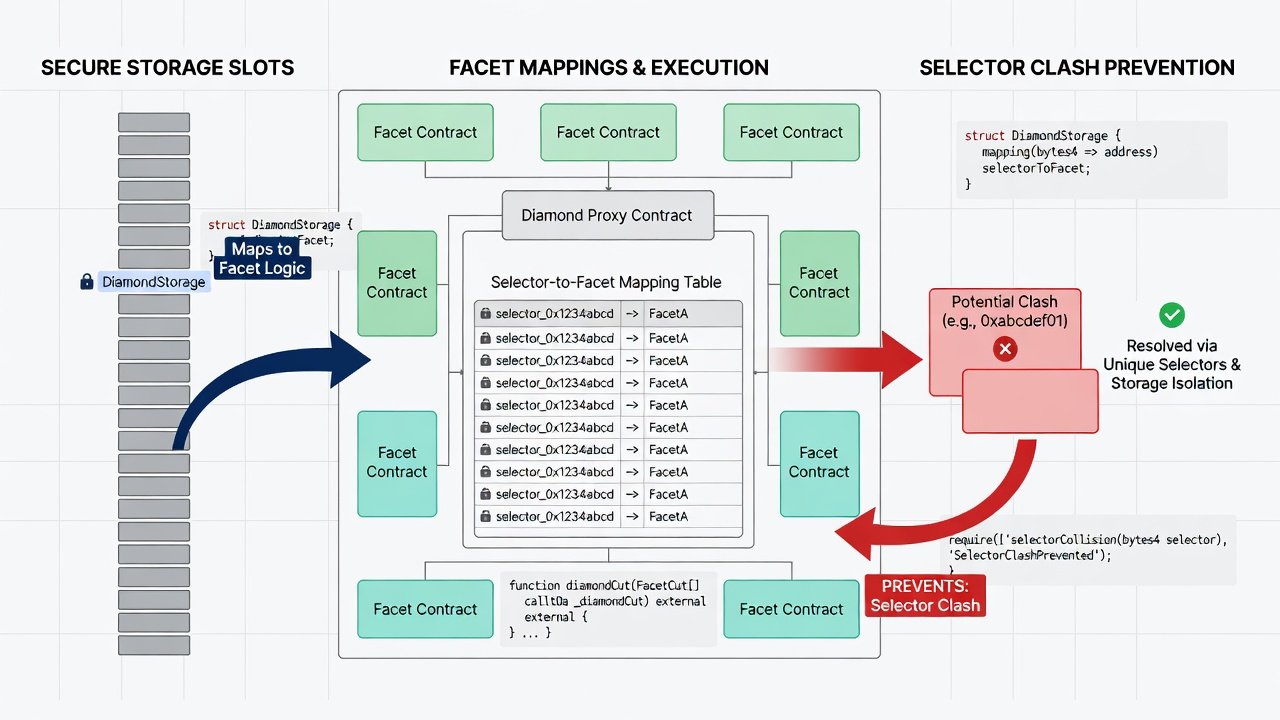
A Diamond contract acts as a proxy that delegates calls to multiple implementation contracts called facets. Each facet exposes a set of function selectors stored in the diamond's internal mapping. This design allows unlimited functions across many facets while keeping the proxy address constant. The core innovation lies in the diamond storage layout that separates facet addresses, function selectors, and initialization logic into a single, upgradeable structure.
Unlike traditional proxies, diamonds support atomic upgrades of individual functions, making them ideal for large-scale systems. The core storage layout uses a single struct containing mappings for facets and selectors, which must be handled carefully to avoid collisions. Developers often combine diamonds with libraries for reusable logic and events for transparency in upgrade histories.
Preventing Storage Collisions in Diamonds
Storage collisions remain one of the most dangerous risks. Always use the recommended storage layout from the official EIP. Define a struct with a fixed slot using assembly to ensure isolation. This prevents facets from accidentally overwriting critical proxy data such as selector mappings.
struct DiamondStorage {
    mapping(bytes4 => address) facetAddress;
    mapping(bytes4 => uint256) selectorToFacet;
    mapping(address => bytes4[]) facetToSelectors;
}
bytes32 constant DIAMOND_STORAGE_POSITION = keccak256("diamond.standard.storage");
function diamondStorage() internal pure returns (DiamondStorage storage ds) {
    bytes32 position = DIAMOND_STORAGE_POSITION;
    assembly { ds.slot := position }
}
This approach guarantees isolation from facet storage. Never declare state variables at the top level of the diamond contract itself. Teams should also document the exact storage slots used and share them during audits to prevent future layout drift when new facets are added.
Secure Facet Management Patterns
Implement strict access control on the diamondCut function. Only authorized addresses should add, replace, or remove facets. A common pattern integrates with OpenZeppelin’s AccessControl to enforce roles. Always verify that new selectors do not already exist unless an explicit replacement is intended. Emit events for every change to enable off-chain monitoring and historical tracking.
function diamondCut(FacetCut[] calldata _diamondCut, address _init, bytes calldata _calldata) external onlyRole(DEFAULT_ADMIN_ROLE) {
    // validation and execution logic here
    emit DiamondCut(_diamondCut, _init, _calldata);
}
Consider adding a timelock wrapper around diamondCut for high-value contracts so that upgrades require a delay period, giving users time to review changes.
Mitigating Selector Clashes
Selector clashes occur when two facets expose the same four-byte function selector. Use a pre-deployment script to scan all facets and reject any overlapping selectors. Tools such as the official diamond-3 implementation include built-in checks, but custom Foundry scripts provide stronger guarantees and can be integrated into CI pipelines.
Example Foundry test:
function testNoSelectorClash() public {
    bytes4[] memory selectors = getAllSelectors();
    // assert unique selectors across all facets
}
Step-by-Step Implementation with Foundry
1. Install dependencies using forge install for OpenZeppelin contracts and the diamond reference implementation.
2. Create a Diamond contract that inherits from the reference and initializes the storage position correctly.
3. Write deployment scripts that cut initial facets in a single transaction for atomicity.
4. Add comprehensive tests covering upgrade paths, access control failures, and reentrancy attempts.
5. Run gas snapshots with forge test --gas-report and optimize any functions exceeding typical limits.
6. Use fuzz testing to simulate random facet combinations and ensure no unexpected behavior occurs.
Gas Optimization Tips for Diamonds
Minimize storage writes during diamondCut by batching multiple facet changes in a single transaction. Cache the diamond storage pointer in memory when performing multiple operations within the same function. Prefer immutable variables for configuration that never changes after deployment. Avoid unnecessary loops over selector arrays by using efficient mapping lookups instead. These techniques can reduce upgrade costs significantly in production environments where frequent small updates are common.
Integrating Access Control
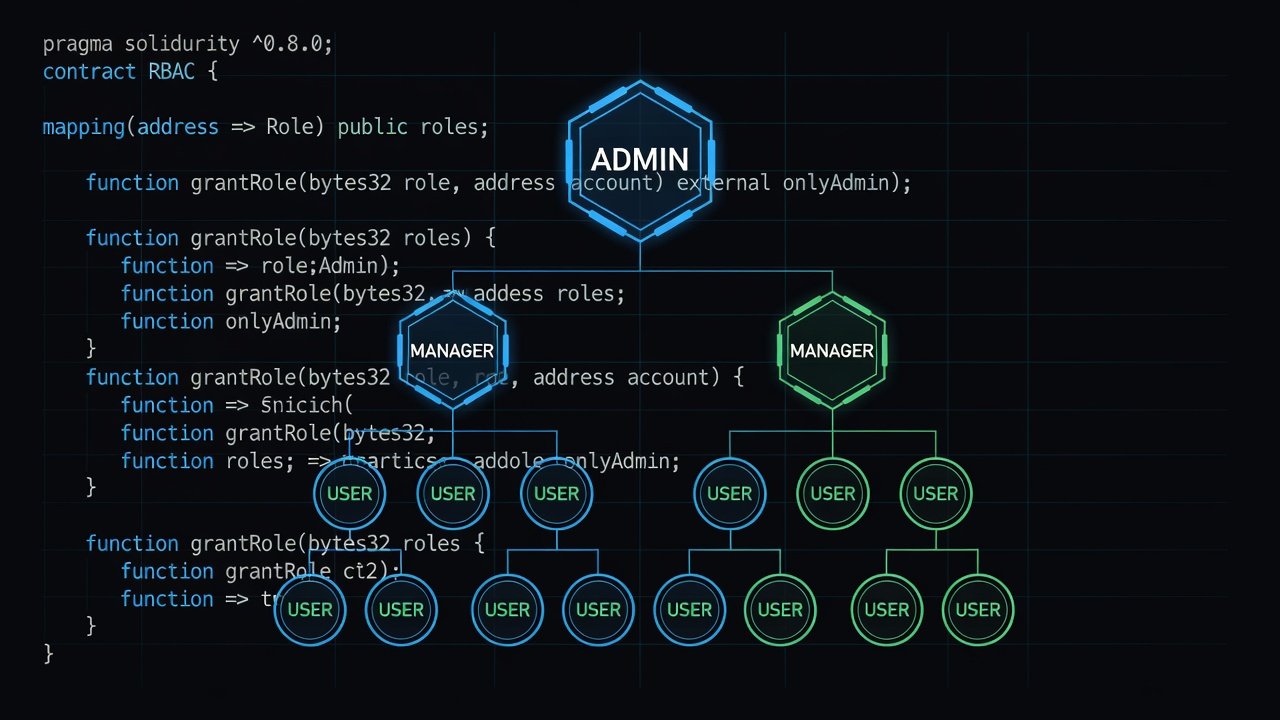
Combine the Diamond with role-based permissions. Store roles in the same DiamondStorage struct to avoid extra delegate calls. This pattern reduces gas costs while maintaining strong security boundaries. Consider hierarchical roles where a super-admin can grant temporary upgrade rights to automated bots for routine maintenance tasks.
Comparing Diamond, UUPS, and Transparent Proxies
Transparent proxies offer simplicity but suffer from function selector clashes with the proxy itself. UUPS proxies are gas-efficient yet require careful implementation of the upgrade logic inside each implementation, which can introduce upgrade-specific bugs. Diamonds excel in auditability because every function lives in its own facet, making code reviews modular and upgrade safety higher when proper checks are enforced. In practice, teams choose diamonds when the system exceeds roughly 50 functions or requires independent upgrade paths for different modules.
Official references include the Ethereum Improvement Proposals site and Solidity documentation.
Common Attack Vectors and Mitigations
- Unauthorized facet replacement – Mitigate with role-based access control and multi-signature requirements.
- Storage layout drift after upgrades – Use the same storage struct definition across all versions and enforce it in tests.
- Reentrancy during diamondCut – Add reentrancy guards around critical upgrade functions and validate inputs before state changes.
- Selector injection via malicious facets – Validate all incoming selectors against a known-good list before applying cuts.
- Initialization calldata abuse – Strictly control the _init address and calldata passed during upgrades.
Production Deployment Checklist
- Run full static analysis with Slither and Mythril on every facet and the core diamond.
- Conduct at least two independent audits focused on the diamondCut logic and storage layout.
- Deploy to a testnet and execute 1000+ upgrade scenarios with Foundry fuzzing and invariant tests.
- Implement event indexing for all facet changes so that off-chain systems can track the contract state.
- Document the exact storage layout and share it with auditors along with upgrade scripts.
- Use timelocks for major upgrades when possible and publish upgrade proposals publicly in advance.
- Maintain a rollback plan that allows quick restoration of previous facet versions if issues arise.
Additional authoritative resources are available at ethereum.org developers section and the Foundry book.
Real-World Applications and Best Practices
Many leading DeFi protocols have adopted diamonds for their lending and derivatives platforms because the pattern supports continuous feature additions without disrupting users. Best practices include maintaining a public registry of all deployed facets and using automated monitoring to alert on unexpected selector changes. Teams should also version their facets semantically so that breaking changes are clearly communicated to integrators.
Conclusion
The Diamond Standard continues to provide unmatched flexibility for modular Solidity contracts when implemented with rigorous security practices. By following the patterns outlined above—storage isolation, controlled facet management, clash prevention, and thorough testing—developers can deploy production-grade diamonds confidently in 2026 and beyond. Continuous education on evolving tooling and standards remains essential for maintaining security as the ecosystem matures.

No comments yet. Be the first!