 CryptoChain Blog
Introduction to ERC-4337 Account Abstraction
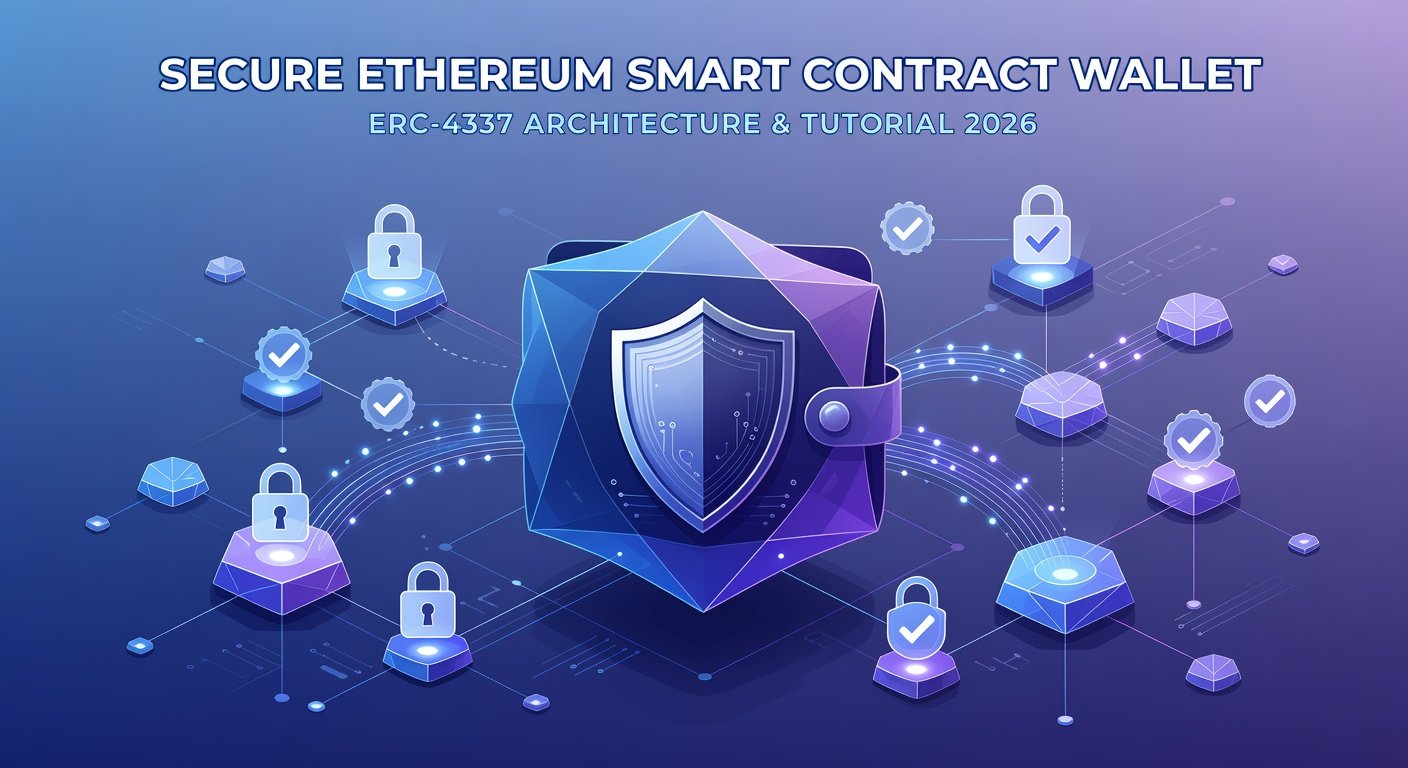
ERC-4337 represents a major advancement in Ethereum account abstraction, allowing developers to create smart contract wallets that offer enhanced security and flexibility compared to traditional externally owned accounts (EOAs). In this comprehensive 2026 tutorial, we explore building secure ERC-4337 accounts directly in Solidity, focusing on preventing common attacks through robust owner validation, signature verification, and nonce management.
Account abstraction enables features like gas sponsorship, social recovery, and batched transactions without relying on private keys alone. By the end of this guide, you will have a production-ready Account contract integrated with the EntryPoint, along with practical deployment steps on testnets.
ERC-4337 Fundamentals and EntryPoint Integration
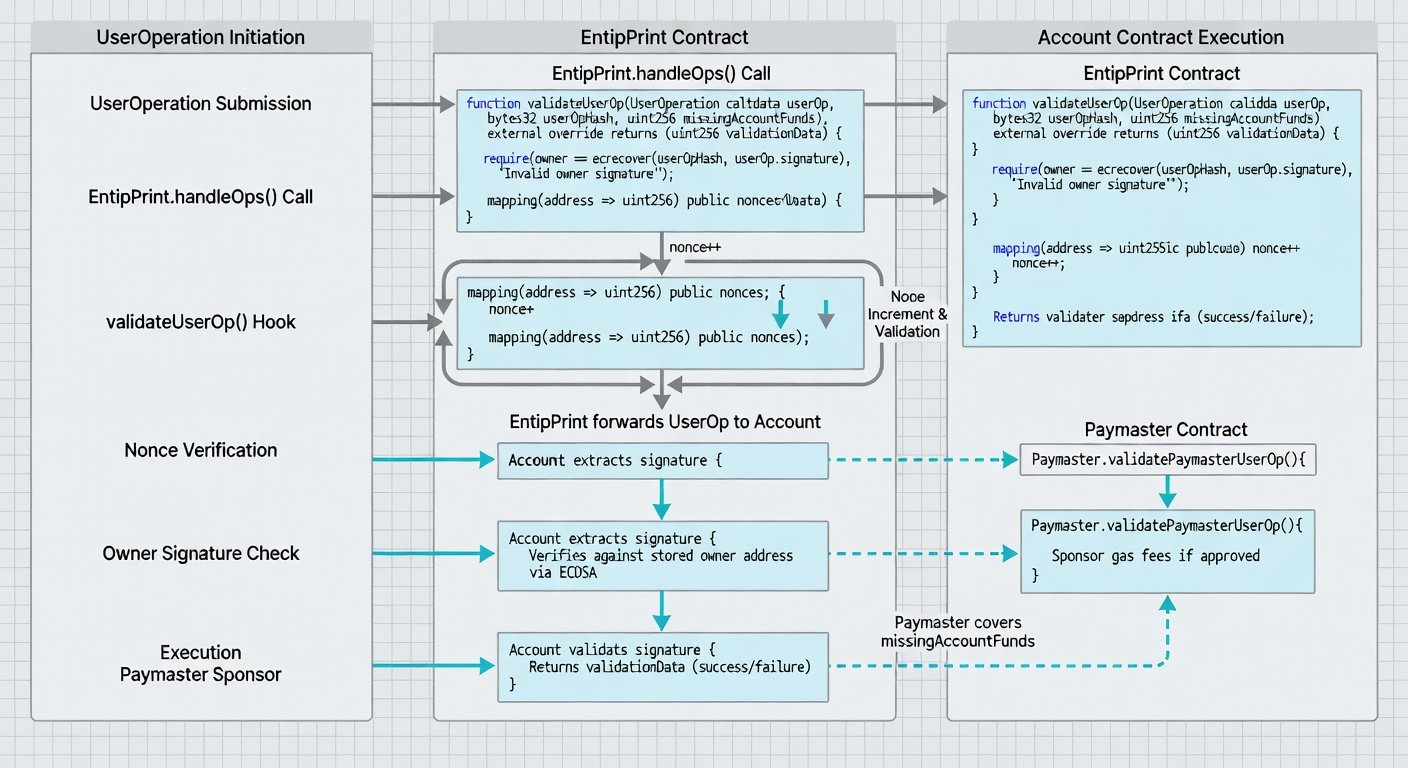
The core of ERC-4337 revolves around the EntryPoint contract, a singleton that validates and executes UserOperations. Developers must understand its interface to ensure their accounts interact correctly. A UserOperation is a struct containing sender, nonce, initCode, callData, and signature fields.
To integrate, your Account contract implements the IAccount interface and registers with the EntryPoint. Always verify the msg.sender is the official EntryPoint address to prevent unauthorized calls.
Creating a Robust Account Contract
Begin by defining your Account contract with essential security components. Include an owner address, a nonce mapping for replay protection, and functions for validation.
pragma solidity ^0.8.20;

import "@account-abstraction/contracts/interfaces/IAccount.sol";
import "@account-abstraction/contracts/interfaces/UserOperation.sol";

contract SecureAccount is IAccount {
    address public owner;
    mapping(uint256 => bool) public nonces;

    constructor(address _owner) {
        owner = _owner;
    }

    function validateUserOp(UserOperation calldata userOp, bytes32 userOpHash, uint256 missingAccountFunds)
        external override returns (uint256 validationData) {
        require(msg.sender == ENTRYPOINT, "Only EntryPoint");
        require(!nonces[userOp.nonce], "Nonce used");
        nonces[userOp.nonce] = true;

        bytes32 hash = keccak256(abi.encodePacked(userOpHash));
        require(recoverSigner(hash, userOp.signature) == owner, "Invalid signature");
        return 0;
    }
}
Signature Checks and Replay Protection
Implement ECDSA signature recovery using OpenZeppelin's libraries for safety. Nonce handling prevents replay attacks by marking each nonce as used after validation. For modular upgrades, consider using a proxy pattern with UUPS to allow secure logic updates without losing state.
Handling UserOperations and Paymaster Setup
UserOperations are constructed off-chain and submitted via bundlers. A basic example includes setting the sender to your deployed account address and providing valid callData for execution.
For paymasters, integrate a Paymaster contract to sponsor gas. The paymaster verifies sponsorship rules before the EntryPoint deducts fees. This is crucial for user-friendly onboarding where end-users pay zero gas.
Deploying on Testnets and Bundler Interactions
Deploy your contracts on Sepolia or Holesky testnets using Hardhat or Foundry. After deployment, interact with bundlers like those from Pimlico or Stackup by posting UserOperations to their RPC endpoints. Test thoroughly for edge cases including failed signatures and nonce collisions.
Security Measures and Common Pitfalls
- Always restrict critical functions to the EntryPoint only.
- Use time-bound signatures or session keys for advanced use cases.
- Avoid storing large data on-chain; prefer off-chain storage with merkle proofs.
- Regularly audit for reentrancy and access control issues.
Comparisons to Legacy EOAs and Real-World Use Cases
Unlike EOAs, ERC-4337 accounts support programmable logic such as multi-sig and automated payments. Real-world applications include DeFi yield aggregators and NFT marketplaces that benefit from sponsored transactions. For official specifications, refer to the Ethereum Improvement Proposals and Ethereum Foundation documentation.
FAQ on Gas Efficiency and Vulnerabilities
How does ERC-4337 improve gas efficiency?
By batching operations and enabling paymasters, users avoid separate approval transactions, reducing overall costs significantly compared to EOAs.
What are common vulnerabilities?
Signature malleability and improper nonce management are top risks. Always use libraries like OpenZeppelin and conduct formal verification where possible.
In conclusion, mastering secure ERC-4337 development empowers developers to build the next generation of Ethereum wallets. Follow these steps to deploy safely and stay updated with evolving standards.

No comments yet. Be the first!