 CryptoChain Blog
Introduction to Oracle-Free Smart Contract Security
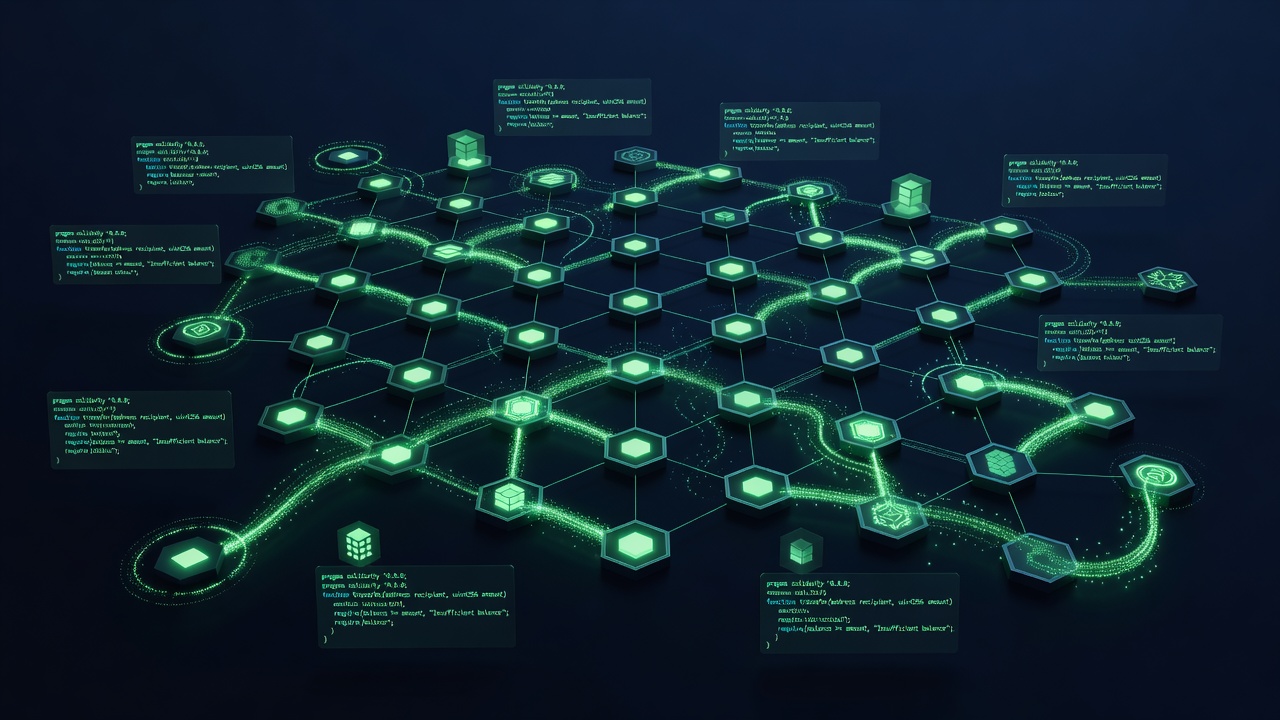
In 2026, developers building decentralized finance tools increasingly prioritize self-contained Solidity contracts that eliminate reliance on external oracles. This approach reduces attack surfaces while enhancing auditability and on-chain verifiability. By leveraging on-chain data aggregation, cryptographic proofs, and decentralized storage, contracts can operate securely without third-party data feeds. Oracle integrations introduce single points of failure and manipulation risks, as highlighted in multiple high-profile exploits over recent years. Oracle-free patterns address these concerns directly through native blockchain mechanisms, making contracts more resilient and easier to audit comprehensively.
The search for self-contained solutions stems from the need for greater trust minimization in DeFi protocols. Developers want systems where every data point can be verified directly on the Ethereum blockchain without external dependencies that could be compromised.
Why Oracle-Free Designs Matter in 2026
External oracles remain vulnerable to price manipulation, downtime, and centralized control. In contrast, oracle-free contracts pull data exclusively from on-chain sources such as token reserves, historical transactions, and event logs. This creates a fully auditable trail that aligns with the core principles of decentralization. Applications in lending, derivatives, and automated market makers benefit significantly because they can compute values like collateral ratios or exchange rates internally.
Core Alternatives to Oracles: On-Chain Data Aggregation
On-chain data aggregation involves collecting and verifying information directly from multiple on-chain sources within the contract itself. This method ensures all data originates from the Ethereum state rather than off-chain providers. Aggregation can combine liquidity pool reserves from several decentralized exchanges or calculate moving averages based on past block data.
Step-by-Step Implementation Tutorial
- Identify reliable on-chain data sources such as Uniswap V3 pool contracts or Aave lending positions.
- Define structs in Solidity to store aggregated snapshots at regular intervals.
- Implement view functions that iterate through recent blocks to compute weighted averages.
- Add access controls so only authorized contracts can trigger updates.
- Test extensively on testnets to verify gas costs and accuracy under varying network conditions.
Real-world code examples often employ structs to store aggregated values and view functions for calculations. For instance, a contract might maintain an array of recent price points derived from multiple DEXes and expose a function to return the median value.
Cryptographic Proofs for Data Integrity
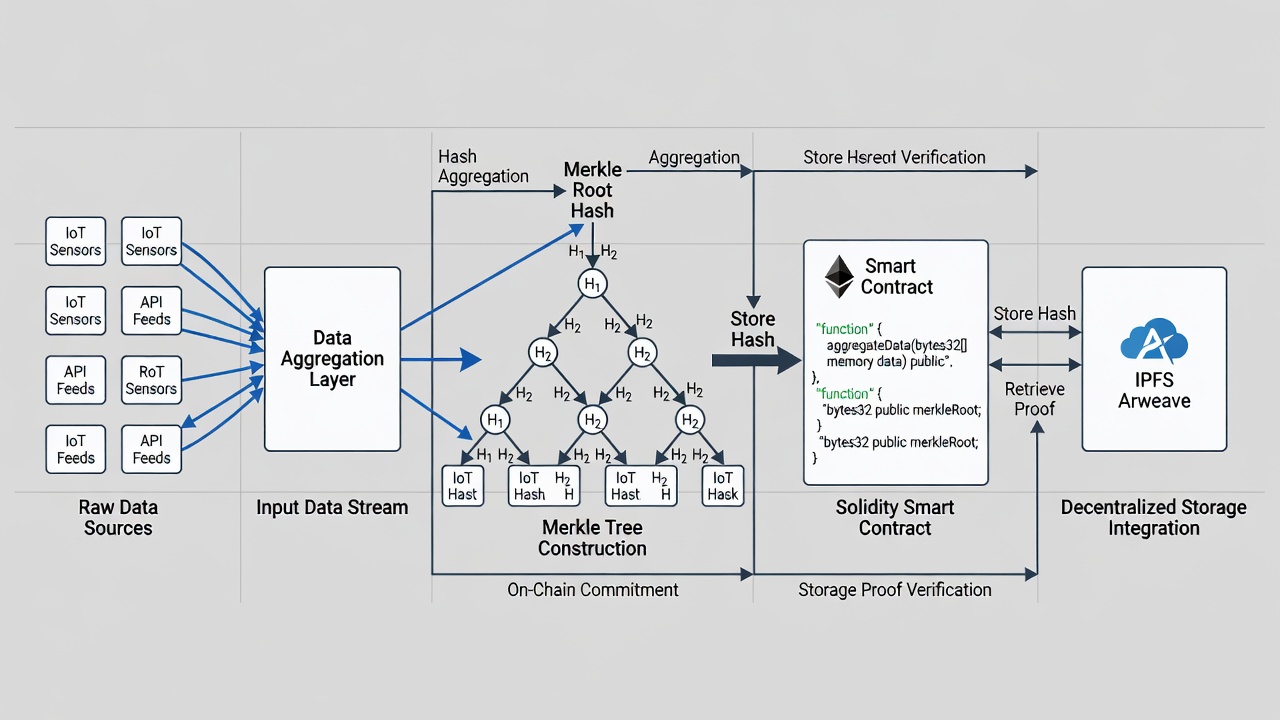
Cryptographic techniques such as Merkle trees and zero-knowledge proofs allow contracts to validate data without external inputs. These methods confirm that submitted data matches on-chain commitments. For DeFi applications like lending protocols, proofs can verify collateral ratios computed from on-chain token balances. Developers can deploy verifier contracts that check Merkle proofs against stored roots, ensuring data authenticity while keeping computation efficient.
Solidity documentation provides detailed guidance on implementing these patterns efficiently. Advanced usage includes pairing on-chain Merkle roots with off-chain generated proofs for complex calculations that remain verifiable on-chain.
Decentralized Storage Techniques
IPFS and Arweave integration enables persistent data storage referenced by on-chain hashes. Contracts store only the hash, retrieving full data off-chain when needed while maintaining integrity checks. This hybrid model keeps core logic fully on-chain while offloading bulky datasets. Developers can use content identifiers (CIDs) to reference documents containing historical market data or governance proposals, then verify the content matches the stored hash before processing.
Practical implementation involves libraries that handle IPFS uploads and return CIDs for storage in contract state. This technique proves especially useful for applications requiring large audit logs without bloating the blockchain.
Security Risk Comparisons Versus Oracle Integrations
Versus oracle-dependent contracts, oracle-free designs eliminate oracle manipulation vectors. However, they require careful gas management and may increase contract complexity. Key differences include:
- Oracle risks: Price feed tampering, downtime during network congestion, and dependency on third-party providers.
- On-chain risks: Higher gas costs for complex aggregations and potential state bloat from storing historical data.
- Mitigation strategies: Use modular contract design with upgradable proxies, implement circuit breakers for extreme market conditions, and conduct formal verification of aggregation logic.
Overall, oracle-free contracts present a lower attack surface for data integrity issues while shifting risks toward computational efficiency.
Gas Optimization Tips for 2026 Deployments
Optimize storage patterns by using packed structs and minimizing state writes. Batch aggregations in single transactions to reduce cumulative gas fees. Avoid unnecessary loops by pre-computing and caching aggregates in storage slots. Developers should also leverage immutable variables for constants and prefer memory arrays over storage when temporary calculations are needed. Testing on mainnet forks helps identify real-world gas usage before deployment.
Common Pitfalls and Mitigation Steps
Developers often overlook reentrancy in aggregation calls. Use checks-effects-interactions patterns and reentrancy guards from established libraries. Another issue is reliance on block timestamps; prefer block numbers for time-sensitive logic. State bloat can occur when contracts store excessive historical data—mitigate by implementing sliding window mechanisms that prune old entries. Finally, ensure all external contract calls are wrapped in try-catch blocks to handle failures gracefully without reverting the entire transaction.
Real-World Code Examples for DeFi Tools
Consider a simple collateral calculator contract that aggregates token prices from multiple DEX liquidity pools without oracles. The following example demonstrates basic on-chain aggregation:
contract OnChainAggregator {
    struct PriceSnapshot {
        uint256 price;
        uint256 timestamp;
    }
    PriceSnapshot[] public snapshots;
    function aggregatePrice(address token) public view returns (uint256) {
        // Pull reserves from multiple pools and compute average
        return calculateMedian(token);
    }
}
Extend this for automated market makers by incorporating proof verification functions that validate submitted Merkle proofs before updating internal state.
Expanded Implementation Considerations
When building production-grade oracle-free contracts, start with a minimal viable product that aggregates from two or three trusted on-chain sources. Gradually expand to include cryptographic verification layers. Always conduct multiple rounds of audits focusing on data flow integrity and gas efficiency. Integration with decentralized storage allows contracts to reference large parameter sets without increasing deployment costs.
FAQ
What are the main benefits of oracle-free contracts?
They offer greater security through reduced external dependencies and full on-chain auditability, allowing developers to verify every computation step directly on the blockchain.
How do cryptographic proofs integrate with Solidity?
Using libraries for Merkle proofs and zk-SNARK verifiers deployed as separate contracts that can be called from the main logic contract.
Are there trade-offs in gas efficiency?
Yes, but optimizations like storage packing and batching keep costs manageable for most DeFi use cases.
Can these patterns scale to complex financial instruments?
Absolutely, by combining aggregation with modular design patterns that separate concerns across multiple contracts.
Explore further resources at Ethereum.org developer resources and IPFS documentation for advanced patterns and storage integration.
In conclusion, adopting these patterns positions developers to create robust, future-proof DeFi infrastructure in 2026 and beyond, emphasizing security and transparency at every layer.
No comments yet. Be the first!